English
 Español
 Português
 عربي
عربي 한국어
한국어

Stone buyers often begin with color.
They compare white, beige, grey, black, cream, gold, green, or terrazzo tones. They look at veins, particles, movement, background color, and pattern balance. That is natural because stone is a visual material.
But color is only one part of the final result.
The surface finish can change almost everything.
The same stone may look refined and reflective when polished.
It may look softer and more architectural when honed.
It may feel more tactile when brushed or textured.
It may become more practical for certain floors when a suitable anti-slip finish is selected.
It may look too shiny, too flat, too dull, or too difficult to maintain if the finish is chosen without considering the application.
That is why stone finish selection for commercial projects should be discussed before fabrication, not after the material has already been cut and prepared.
A stone finish is not just a surface style. It affects appearance, lighting, cleaning, touch, installation, safety expectations, and long-term user experience.
Finish Changes How Stone Looks
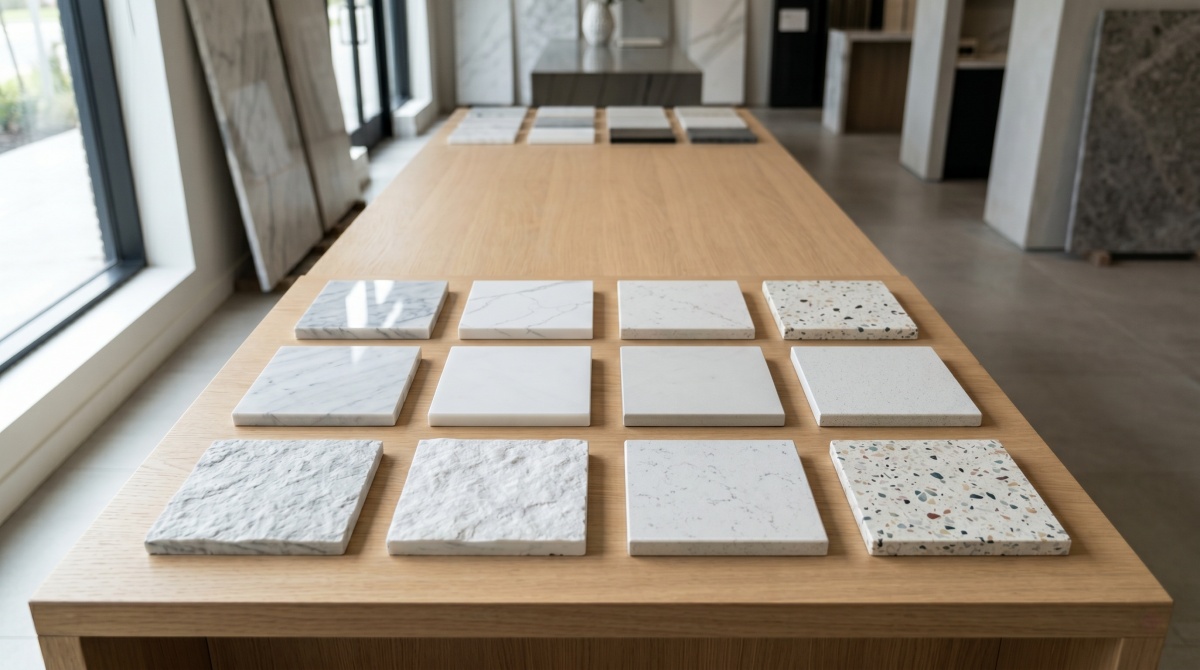
Many buyers are surprised by how different the same material can look under different finishes.
A polished finish usually makes the color appear richer and deeper. It can increase reflection, highlight veins, and create a more formal or premium look. This can be excellent for walls, reception counters, vanity tops, feature areas, and some interior floors when suitable.
A honed finish usually reduces reflection. It can make the material feel calmer, softer, and more architectural. It may be preferred in spaces where designers want a quiet, matte, or understated effect.
Brushed, leathered, sandblasted, flamed, or other textured finishes can change the touch and visual character more strongly. Some of these finishes are more common for certain natural stones and exterior or semi-exterior applications, while others may be less suitable depending on the material.
The important point is simple:
Do not approve a stone only by color.
Approve it by color and finish together.
A sample without finish confirmation can easily create misunderstanding later.
Different Applications Need Different Finish Thinking
A finish that works well on a wall may not be right for a floor.
A finish that looks beautiful on a reception counter may not be suitable for a staircase.
A finish that feels practical in a corridor may not be refined enough for a feature wall.
A finish that photographs well may be harder to clean in daily use.
Before confirming a finish, buyers should ask:
Is the stone used on a wall, floor, countertop, stair, bathroom, lobby, corridor, or exterior area?
Will people walk on it?
Will people touch it daily?
Will it be exposed to water, oil, dust, cosmetics, or cleaning chemicals?
Is reflection desirable or distracting?
Is slip resistance an important concern?
Will the finish be consistent across many pieces?
Can the selected material support this finish properly?
Finish should follow use condition.
A project should not choose a surface finish only because it looks good in a small sample photo.
Natural Marble Finish Selection Needs Realistic Expectations
Natural marble can look very different depending on finish.
For natural marble finishes for architectural interiors, polished surfaces often emphasize depth, movement, and veining. Honed finishes may make the same marble feel quieter and more contemporary. Some textured finishes may be possible for selected materials and applications, but they should be reviewed carefully because marble can respond differently depending on its composition, structure, and project use.
Natural marble finish selection should consider:
stone density and structure
vein and color movement
intended location
surface reflection
edge detail
cleaning expectations
sealing and maintenance
lighting condition
slip expectations for floors or stairs
The finish should support the marble’s natural character, not fight against it.
For a feature wall, polish may bring out depth and drama. For a calm residential floor, honed may feel more refined. For a staircase or public flooring, the finish should be discussed with safety and maintenance in mind.
There is no single best finish for all marble projects.
There is only the right finish for the right application.
Engineered Stone and Artificial Marble Still Need Finish Control
Some buyers assume engineered materials are easier because they are more consistent.
That is partly true, but finish still matters.
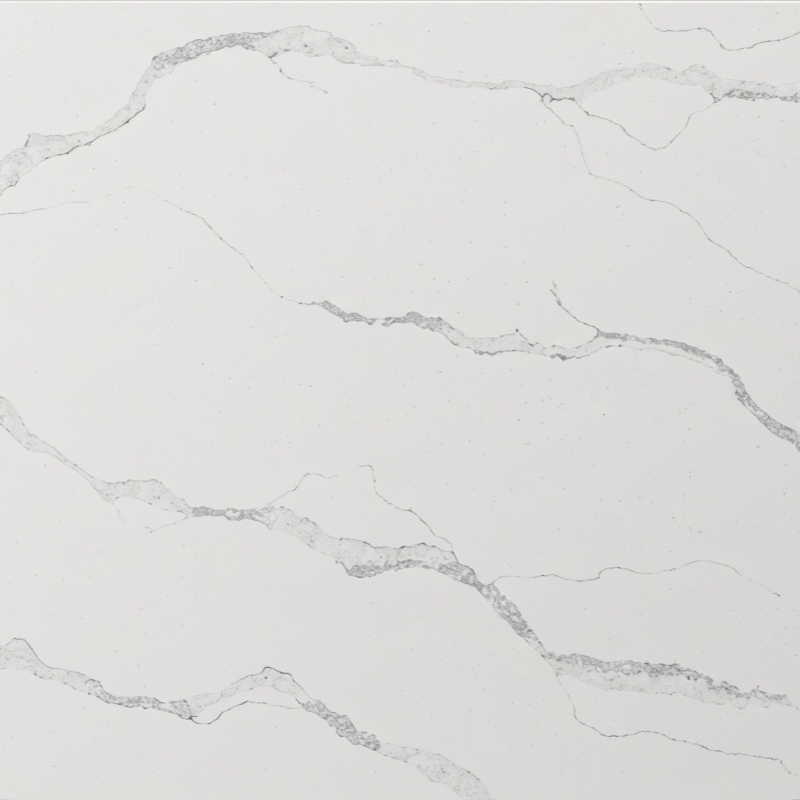
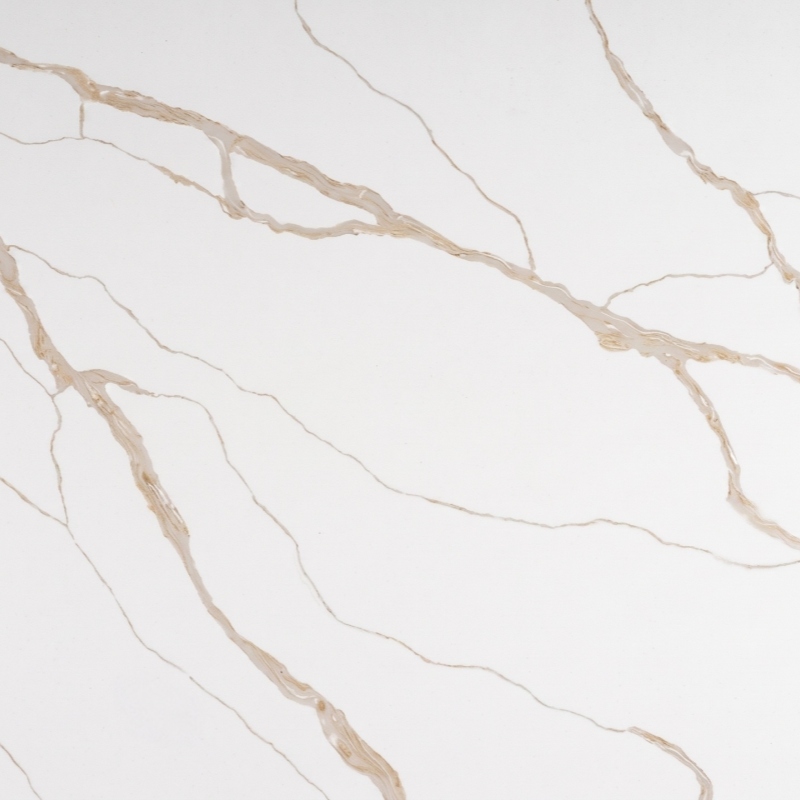
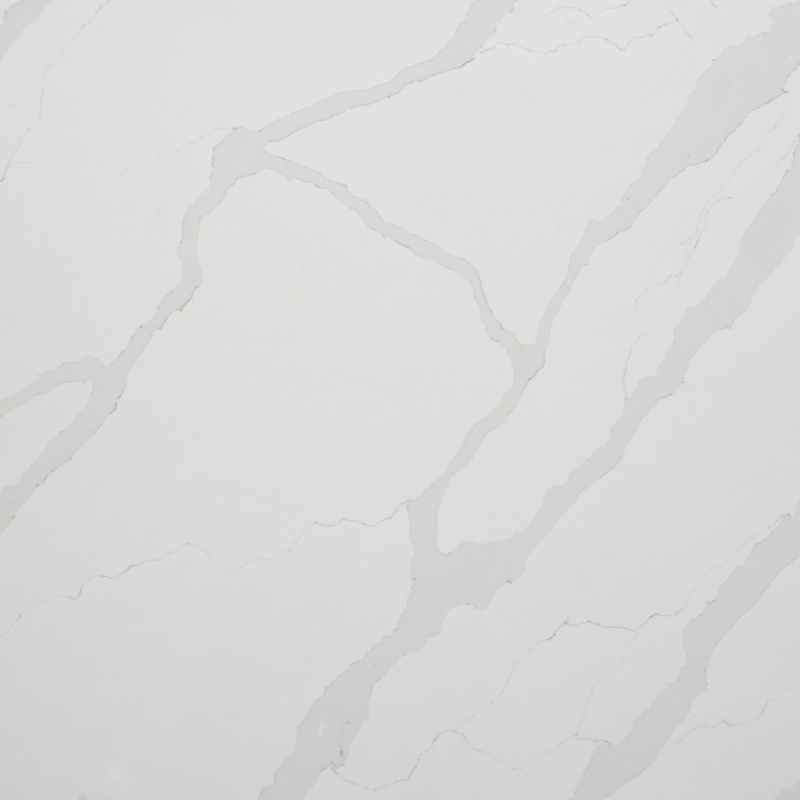
For artificial marble slabs with polished or honed finishes, buyers should confirm how the surface looks under real light, whether the gloss or matte level is consistent, and whether the finish suits walls, floors, vanity tops, stair components, or repeated commercial interiors.
Artificial marble may offer a controlled visual range, but the final project can still suffer if the finish is mismatched with the application.
A very glossy surface may look attractive in a product photo but create glare in a large wall area.
A matte or honed finish may look refined but require realistic discussion about cleaning and touch marks.
A floor application may need more careful review than a decorative wall application.
Consistency is an advantage only when the finish is correctly selected and controlled.
Quartz Stone Finish Should Match Daily Use
Quartz is often used for countertops, vanity tops, islands, and interior surfaces.
For quartz stone surfaces for countertops and vanity tops, finish affects not only appearance but also daily experience. A polished quartz surface may feel clean, bright, and easy to read visually. A matte or softer finish may suit certain design styles but should be checked for cleaning expectations, touch marks, and supplier availability.
For kitchens and bathrooms, buyers should think practically:
Will the surface be cleaned daily?
Will it show fingerprints or water marks more easily?
Does the finish match the edge detail?
Does the finish match the backsplash or wall panel?
Is the selected finish stable for the full batch?
Does the finish suit the project market and end user?
Quartz should not be approved only by slab photo.
It should be reviewed as a working surface.
Terrazzo Finish Affects Aggregate and Space Feeling
Terrazzo is especially sensitive to finish because aggregates, chips, cement or resin base, and polishing level all affect the final visual balance.
For terrazzo stone finishes for hotel and retail spaces, buyers should review how the finish changes the visibility of chips, the depth of color, the surface reflection, and the feeling of large areas.
A high polish may make aggregates more vivid and decorative.
A honed or softer finish may feel calmer and more architectural.
A textured finish may change the surface character and should be checked against the application.
A small terrazzo sample can be misleading. The finish may look balanced on a small piece, but much stronger when repeated across a large floor, wall, or counter.
For terrazzo projects, finish approval should be done with scale in mind.
Lighting Can Make the Same Finish Look Better or Worse
Stone finish and lighting cannot be separated.
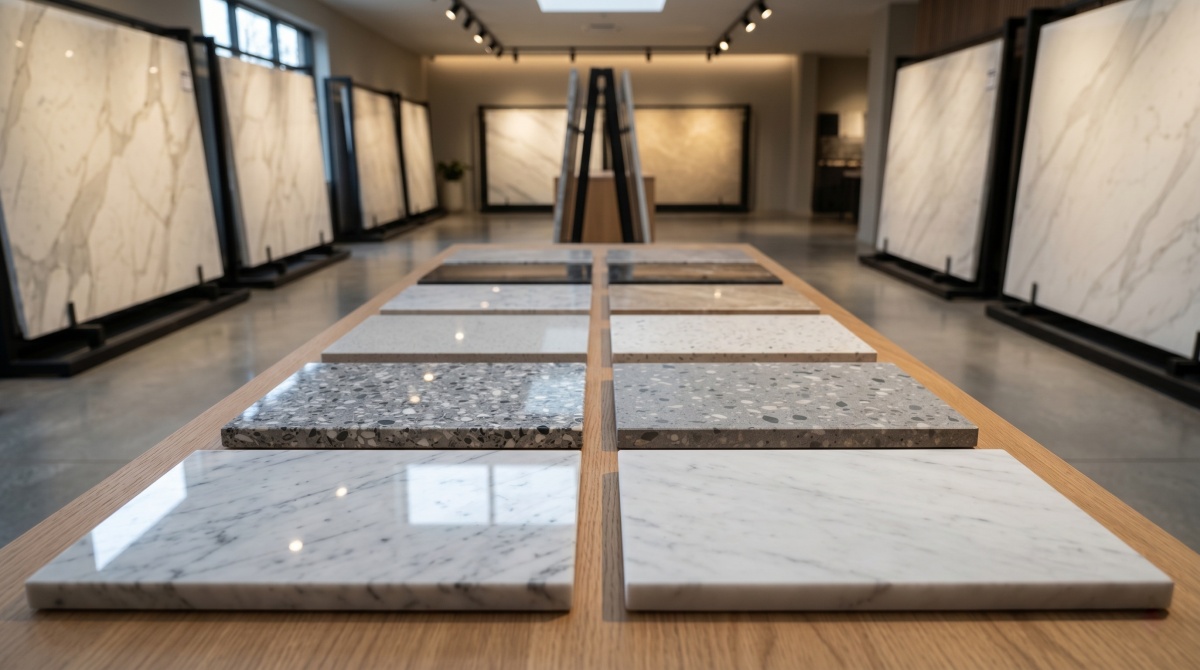
A polished wall under strong spotlights may show depth, but it may also reveal scratches, uneven polishing, or glare. A honed floor under soft lighting may feel elegant, but under harsh light it may show marks differently. A textured surface may look rich in angled light but too rough in another setting.
This matters in:
hotel lobbies
retail stores
bathrooms
corridors
reception areas
villas
elevator halls
commercial floors
feature walls
Buyers should review finish samples under lighting conditions close to the final space whenever possible.
Factory lighting, showroom lighting, daylight, warm interior lighting, and spotlighting can all change the result.
A finish should be approved in context, not in isolation.
Finish Selection Affects Edge Work and Fabrication
Surface finish does not stop at the flat face.
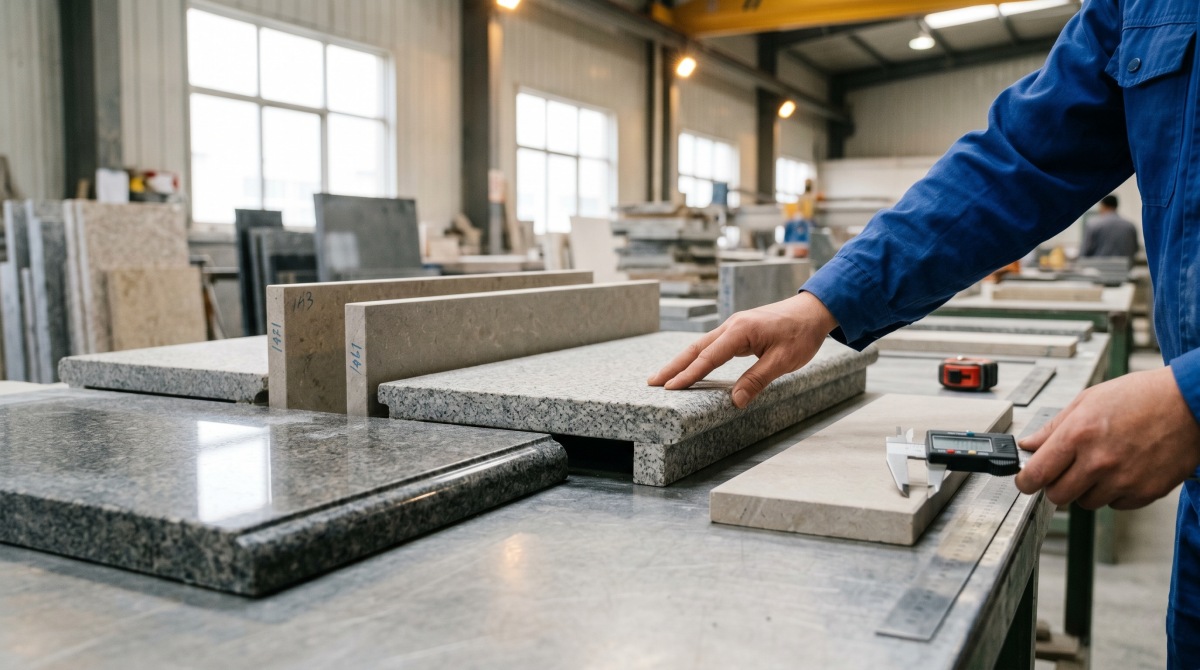
Edges, profiles, cutouts, stair noses, mitered corners, backsplash pieces, and side panels must match the selected finish. If the main surface is polished but the edge is dull, the detail looks unfinished. If the top surface is honed but the edge finish is inconsistent, the problem may be visible at close range.
For cut-to-size work, finish control should include:
top surface
exposed edges
inner cutout edges when visible
stair nosing
mitered corners
backsplash edges
side returns
wall panel faces
joint areas
repaired or adjusted areas
This is where stone manufacturing and fabrication capability becomes important. The supplier should understand how the selected finish affects both the main surface and fabricated details.
Slip Resistance Should Be Discussed Where People Walk
For floors, stairs, entrances, bathrooms, and public areas, finish selection should include practical safety discussion.
This does not mean one finish is automatically safe or unsafe in every situation. Use condition matters. Cleaning matters. Indoor or outdoor location matters. Water exposure matters. Local project standards may matter.
Buyers should be careful with vague claims like “anti-slip stone” without understanding the actual surface, testing, project condition, and maintenance.
For some projects, test reports or relevant documentation may be required. Buyers reviewing stone certificates and downloadable documents should understand that documentation supports decision-making, but the final finish choice still needs to match real application conditions.
For movement surfaces, finish is not only about beauty.
It is part of responsible project planning.
Finish Approval Should Be Documented
Finish approval should not depend on memory.
For serious orders, buyers and suppliers should record:
material name
finish name
sample photo
approved sample number if available
gloss or surface expectation
application area
edge finish requirement
special cleaning or maintenance notes
batch or slab reference when relevant
buyer approval date
This record helps prevent later disagreement.
A buyer may say the finish is too dull.
A supplier may say it matches the approved sample.
The installer may see a difference between edge and face.
The designer may expect less reflection.
Documentation does not solve every problem, but it reduces confusion.
Finish Should Be Confirmed Before Production, Not After
Changing finish after fabrication can be difficult.
It may add cost, delay production, create inconsistency, affect dimensions, weaken edge details, or require reworking finished pieces. In some cases, changing finish after packing or shipping is no longer realistic.
That is why finish selection belongs early in the process.
The best sequence is:
1.select material
2.confirm application
3.review finish options
4.approve sample with finish
5.confirm drawings and edge details
6.produce and inspect
7.pack and ship
If finish is treated as a late detail, the project is already taking unnecessary risk.
All in All
Stone finish selection is not a small decorative decision.
It affects color depth, reflection, touch, cleaning, safety expectations, fabrication details, lighting response, and long-term user experience.
A beautiful stone with the wrong finish can disappoint.
A simple stone with the right finish can feel refined, practical, and well considered.
For project buyers, architects, contractors, and importers, the right question is not only:
Which stone do we like?
The better question is:
Which stone and finish combination fits this application?
For material review, finish discussion, sample approval, and project supply support, buyers can contact Aoli Stone for stone finish and project supply support.



 IPv6 network supported