English
 Español
 Português
 عربي
عربي 한국어
한국어

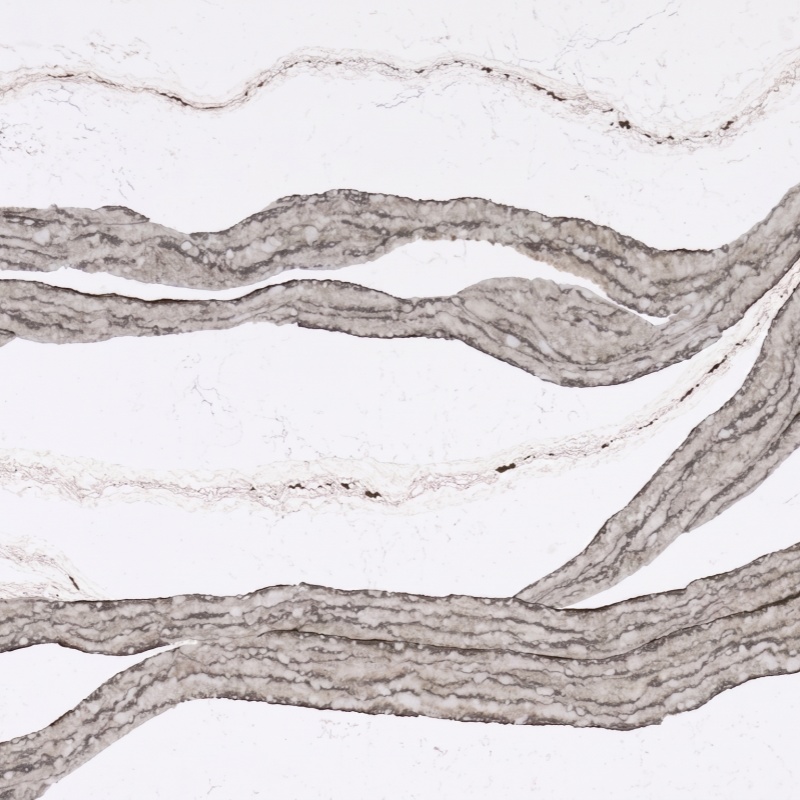
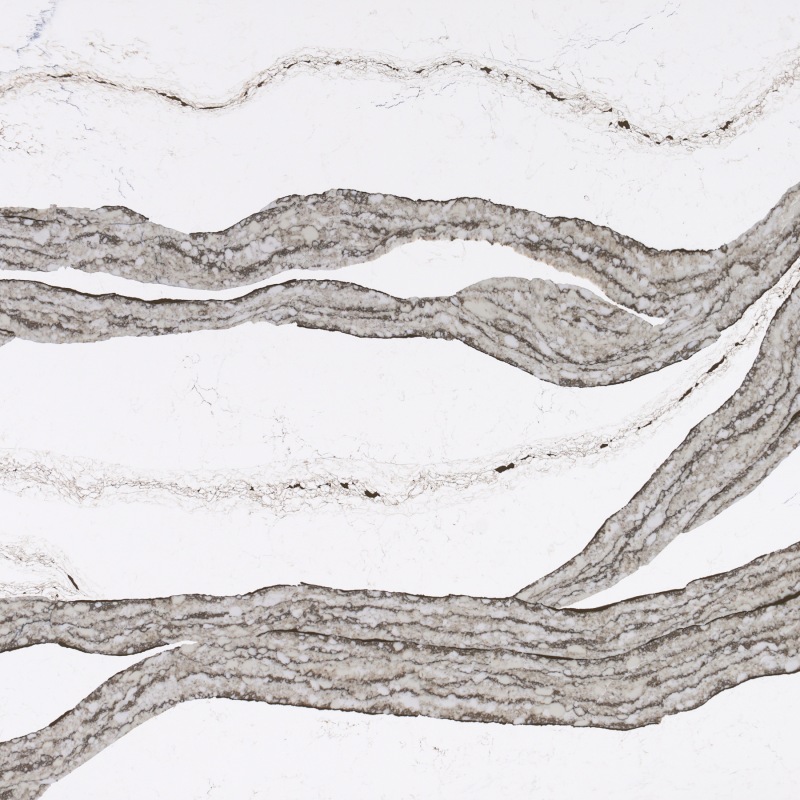
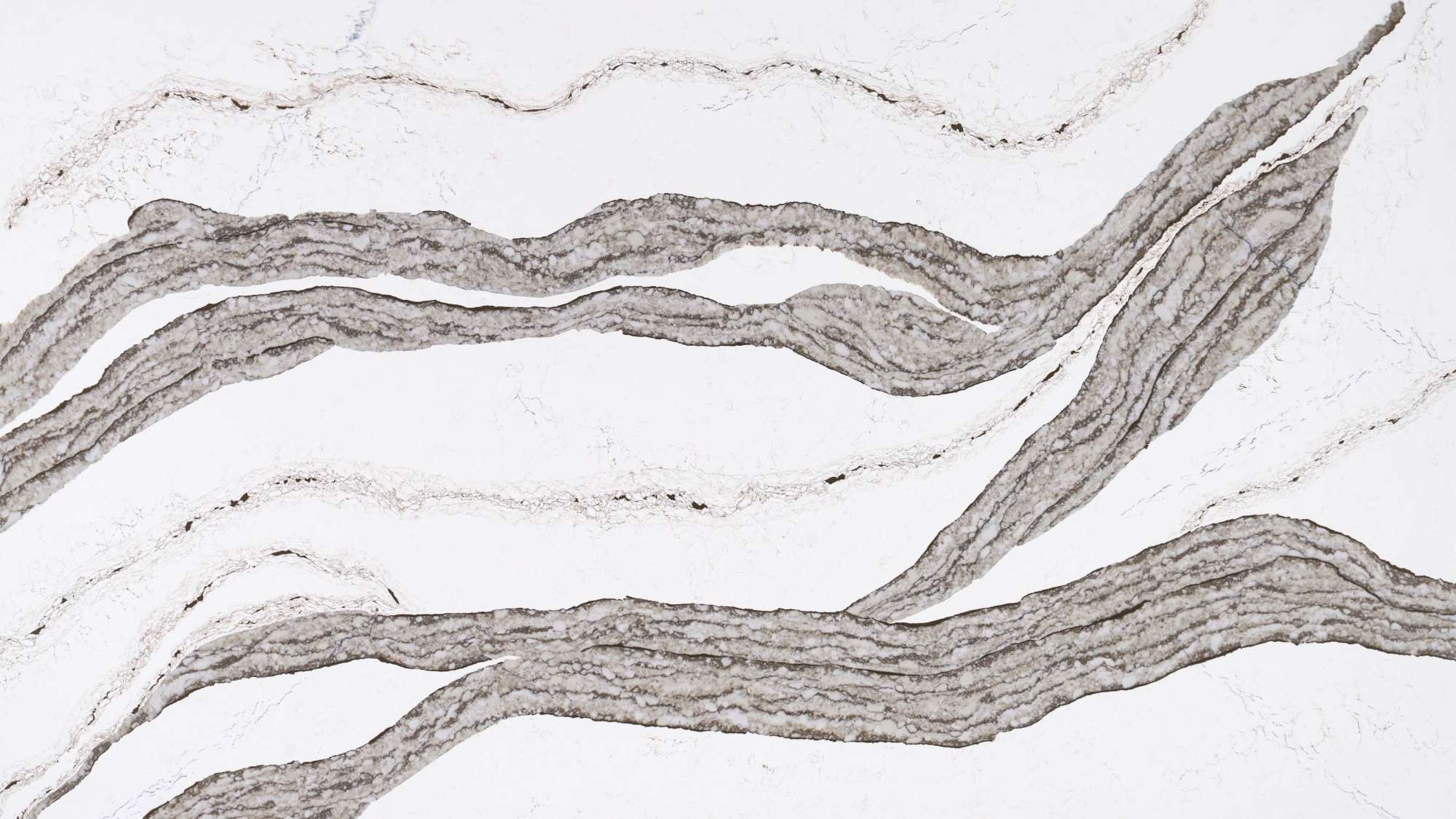
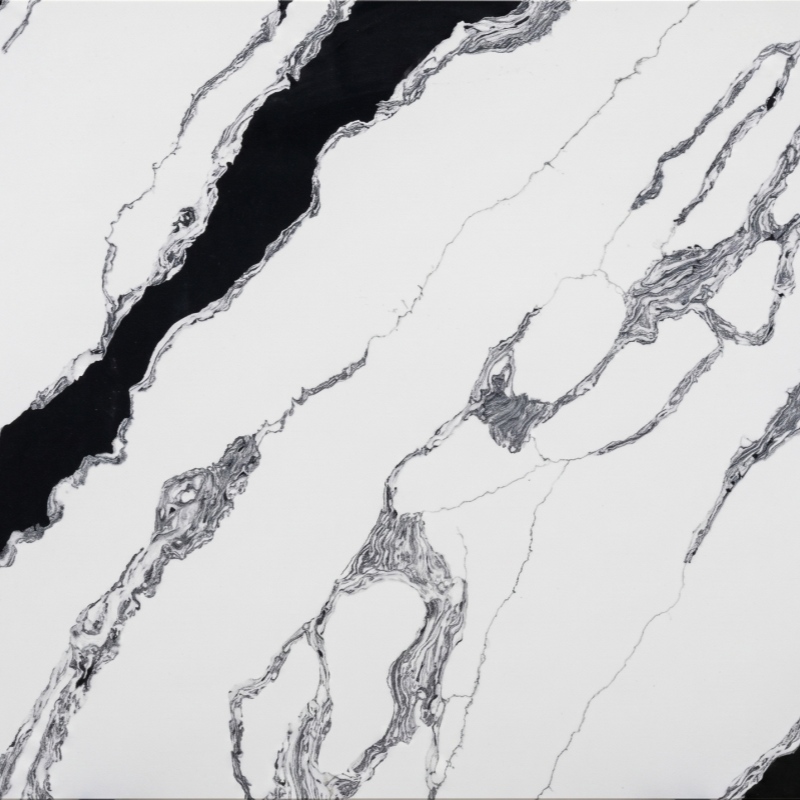
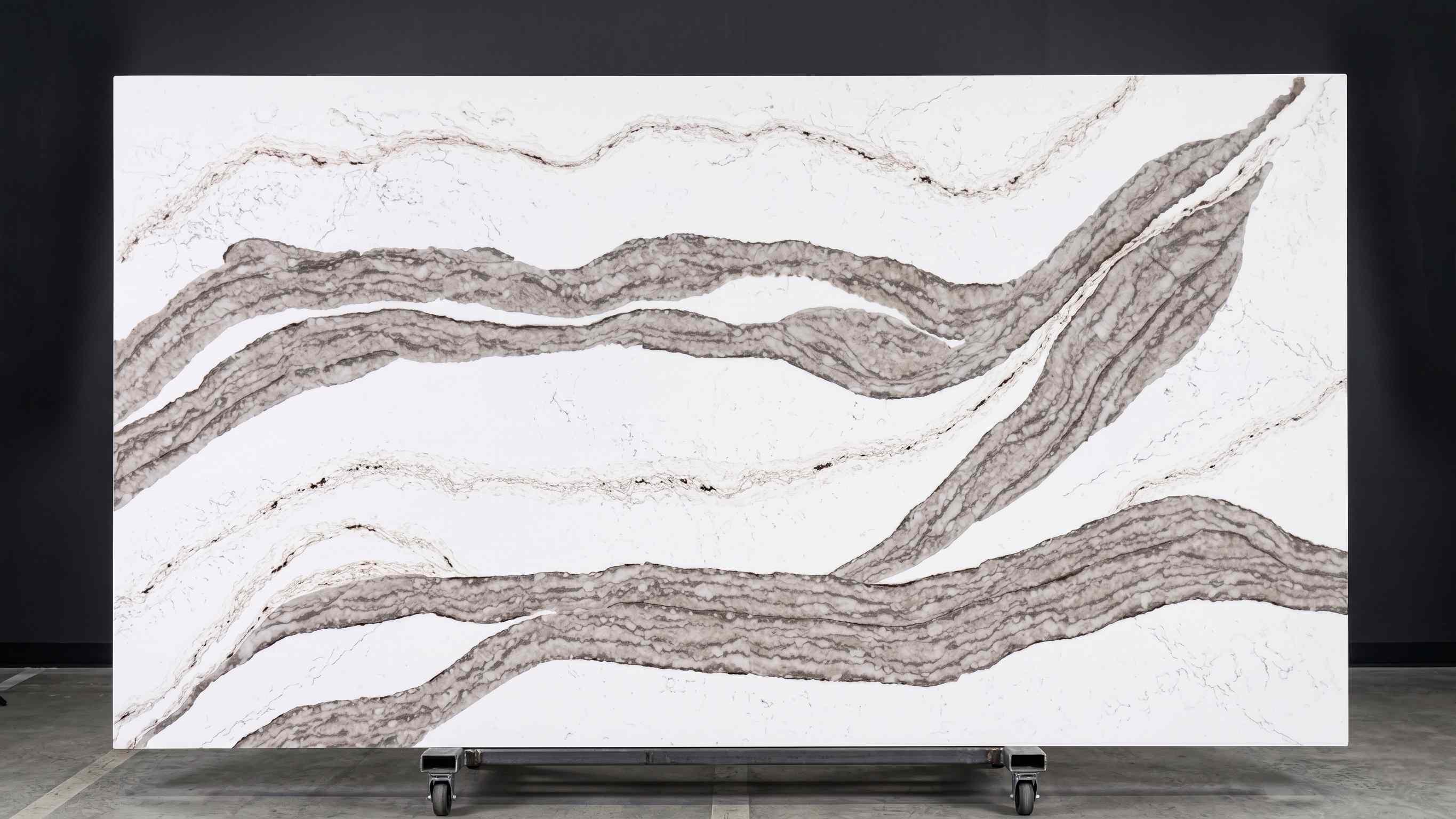
Pristine Organic Mountain Quartz is a white engineered quartz slab with broad layered taupe-grey veining inspired by natural mountain strata. A strong choice for statement kitchen islands, vanity tops, feature walls, and premium interior surfaces.
Item No :
ALQZV004Surface finish :
Polished or HonedOrder(MOQ) :
200 square metersPayment :
T/T, L/C, CashProduct Origin :
ChinaColor :
white and goldShipping Port :
Xiamen or other China portLead Time :
20 daysWeight :
2700 kg/M3Product Description
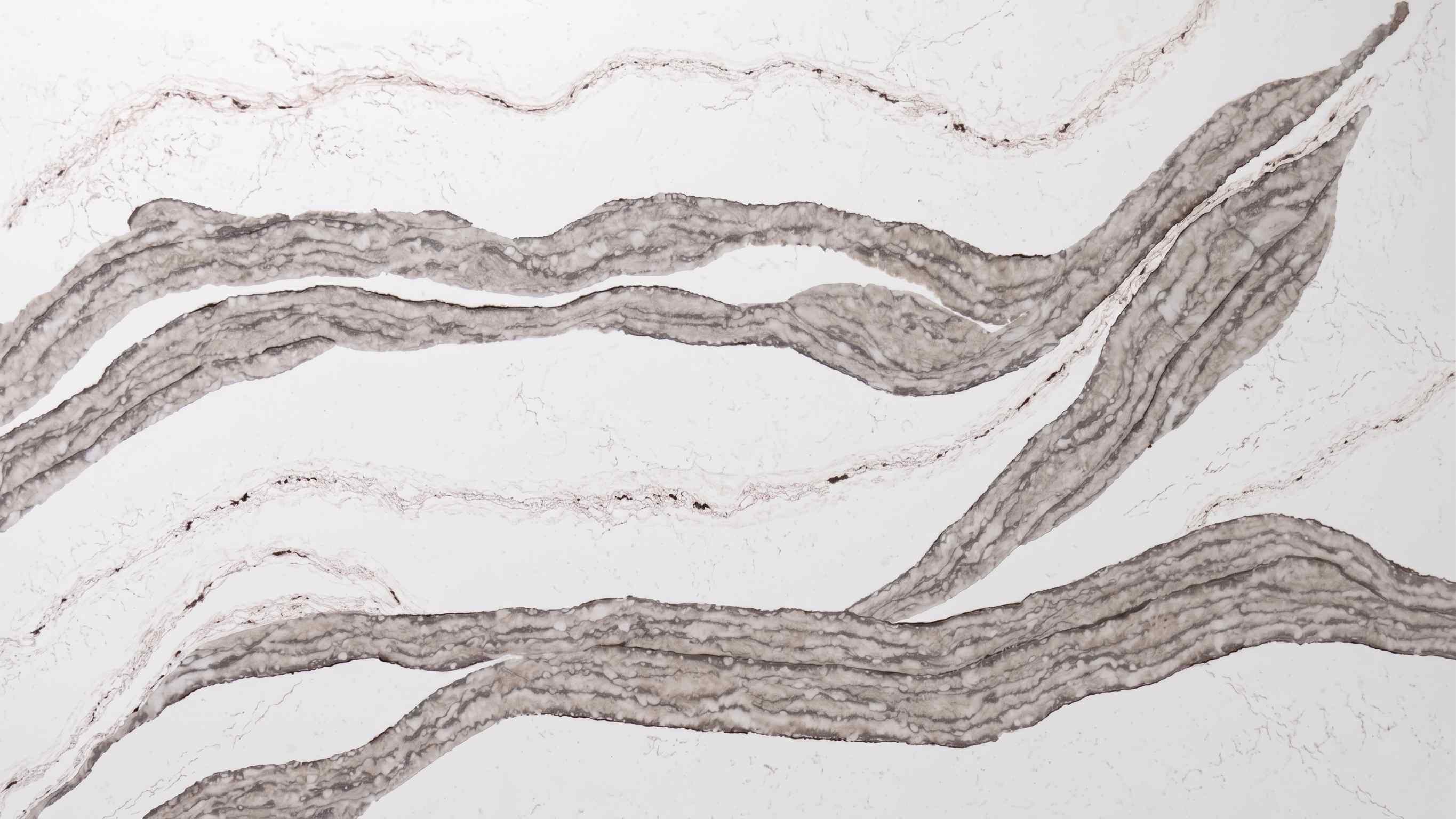
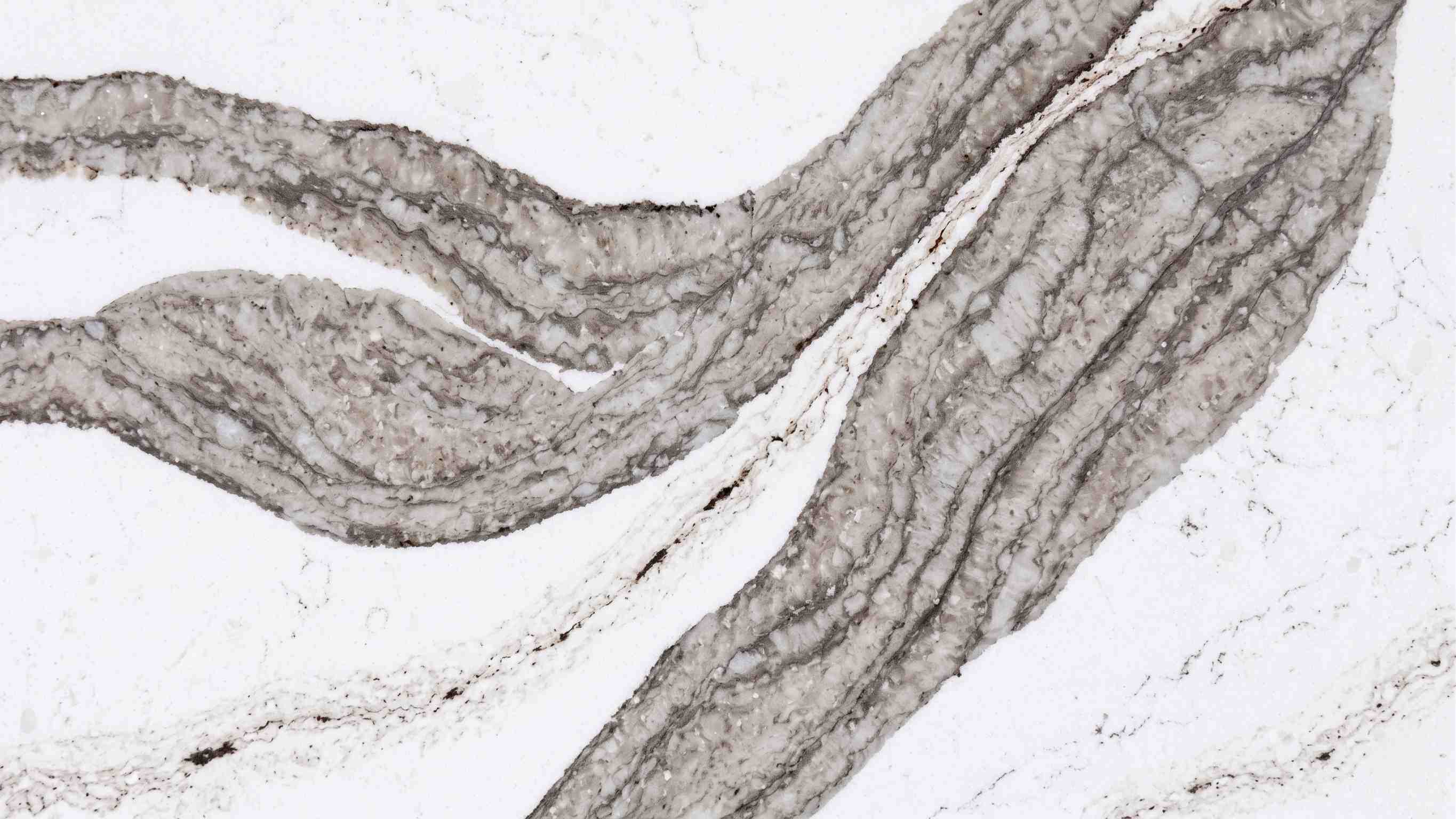
Pristine Organic Mountain Quartz is a white engineered quartz slab defined by broad layered veining that feels closer to natural mineral strata than to standard marble-look quartz. The clean base keeps the slab bright and usable across many interior palettes, while the sweeping taupe-grey movement gives it a stronger architectural identity. It is especially effective in spaces where the surface needs to do more than sit quietly in the background.
This design reads like a landscape seen in section.
The background is clean and open, but the pattern is not empty. Wide layered bands move across the slab with a geological rhythm, creating the impression of mountain lines, sediment layers, and natural compression over time.
What makes it work is contrast with restraint. The movement is bold enough for a focal island or wall, but the slab still leaves enough calm white space for modern interiors. It feels organic, not decorative for the sake of decoration.
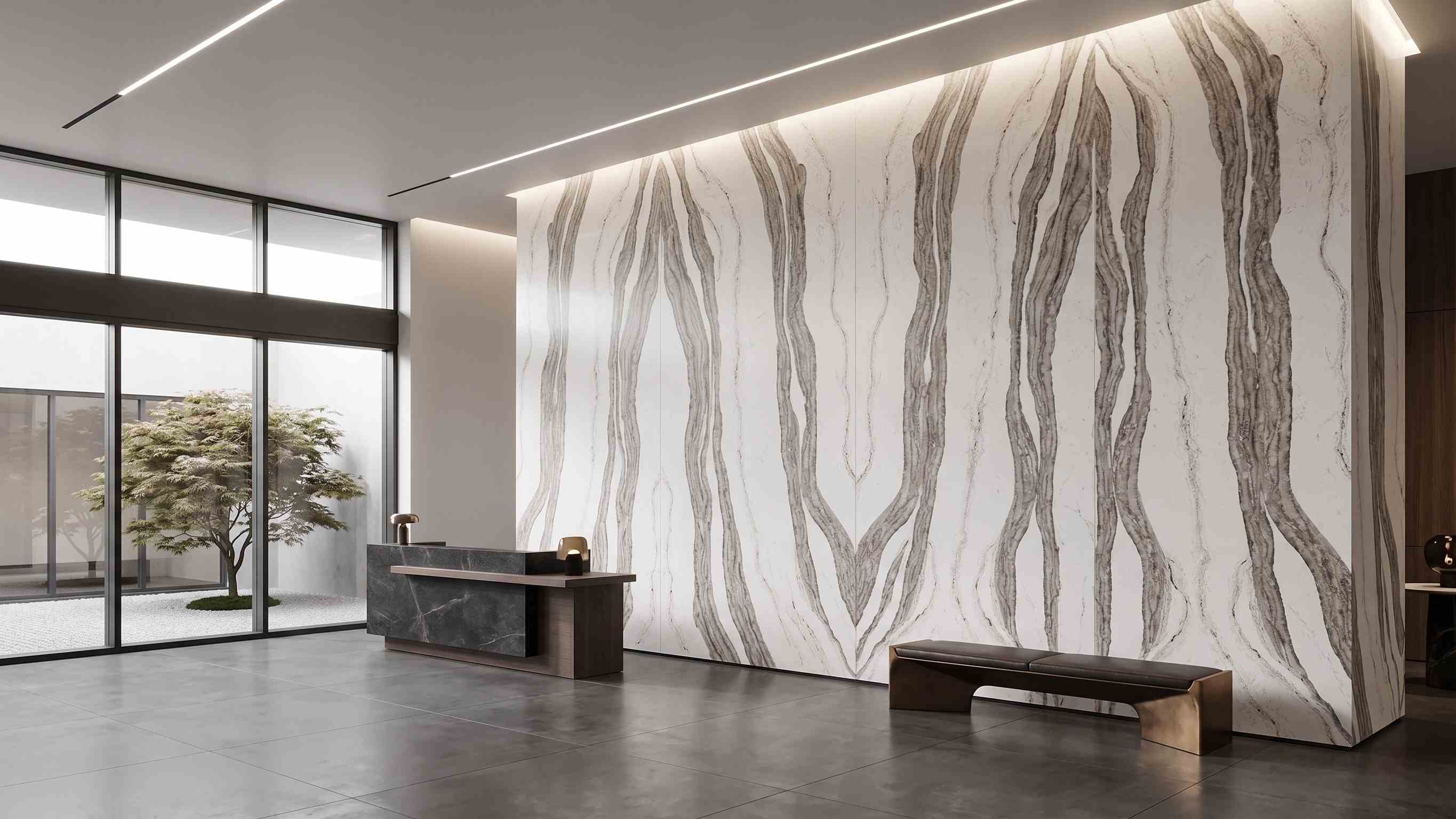
Pristine Organic Mountain Quartz is best for buyers who want:
· a white quartz surface with more identity than standard Calacatta-style options
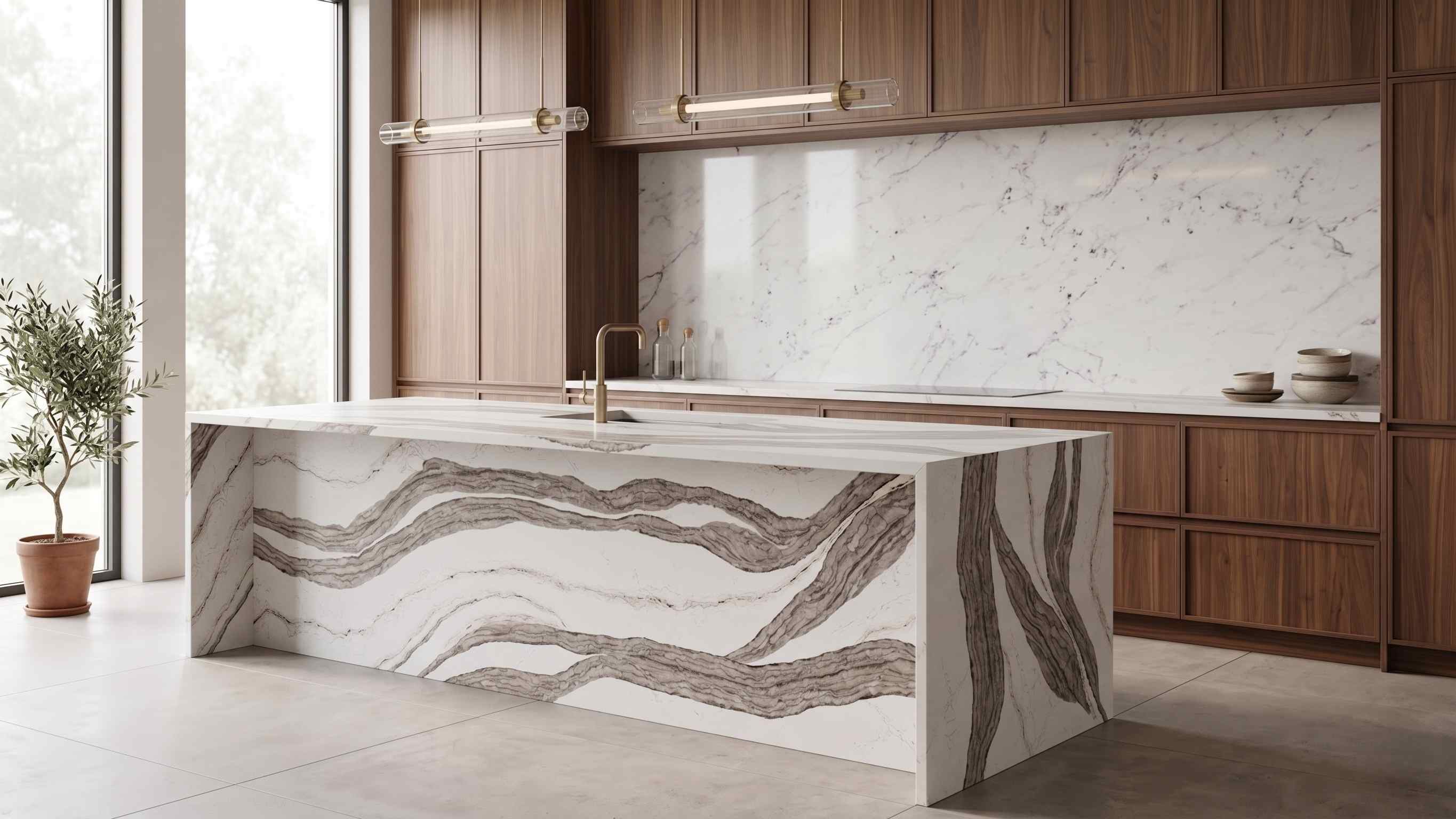
· a statement island or long countertop with visible pattern flow
· a feature wall or vanity top that feels architectural rather than generic
· a design that pairs well with warm wood, brushed metal, soft neutral cabinetry, and quiet luxury interiors
Why Buyers Choose It
Buyers usually choose this kind of design for three practical reasons.
First, it does not disappear. In a showroom or project presentation, it is easier to remember than a routine white-grey quartz slab.
Second, it performs better visually at large scale. Some quartz patterns look acceptable on samples but become flat on big islands. This one gains strength when the pattern is allowed to run.
Third, it gives designers a more natural and less overused language. It still fits clean contemporary interiors, but it avoids the feeling of a standard catalog surface.
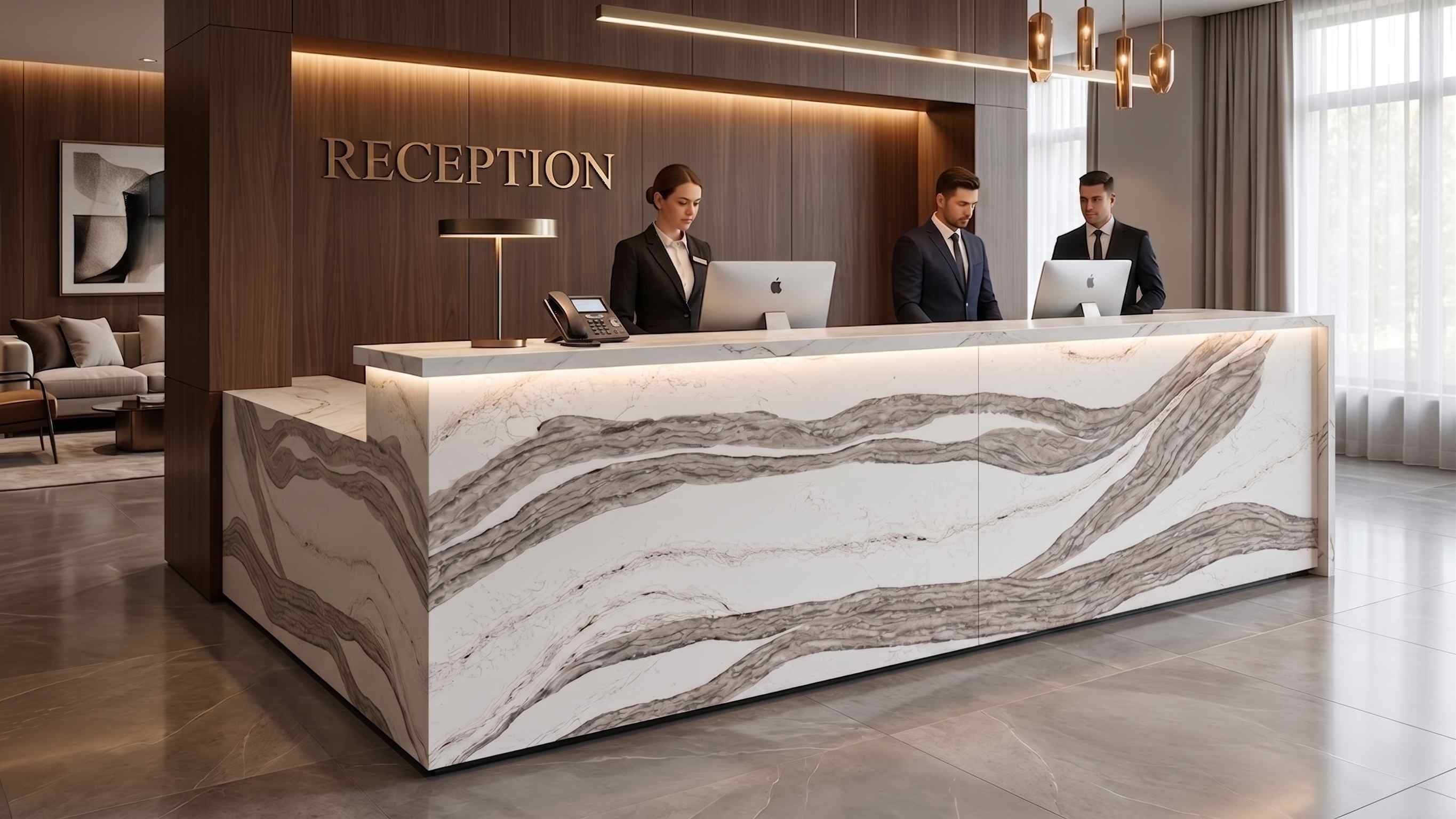
Suitable uses include kitchen countertops, waterfall islands, vanity tops, feature walls, bar counters, reception desks, fireplace surrounds, and selected interior cladding. The current Aoli page also lists countertop surfaces, kitchen islands, wall cladding, stair steps, flooring, and custom interior uses among its application directions.
This product works especially well where the pattern can be appreciated in a wider field rather than being cut into many small fragmented pieces.
This is not the best fit for every project.
If the buyer wants a very quiet, uniform white quartz with minimal visual movement, this design may feel too expressive. It is also less suitable for projects where most visible pieces are small cut parts, because the strength of the design comes from the broader layered flow rather than isolated fragments.
That is an important real-world judgment: this slab performs best when the design team intends to show the pattern, not hide it.
For distributors, this is a good model to position as a more differentiated white quartz option. It can sit above entry-level white-grey marble-look products because it offers a stronger visual story and a more design-led appeal.
It is especially useful in markets where buyers are already saturated with standard Calacatta-inspired slabs and want something that feels newer without becoming overly experimental.
The current product page lists MOQ at 200 square meters and lead time at around 20 days, which can be useful for early channel discussions, though final commercial terms should still be reconfirmed case by case.
For contractors and fabricators, this is a slab to use with layout awareness. The pattern direction matters. Large runs, waterfall edges, and book-matched or flow-conscious installations will produce a much better result than random cutting.
This is also the kind of design where pre-approval of slab layout can help avoid site disappointment. When the client is paying for visual impact, pattern planning becomes part of the value, not an extra.
The Aoli page lists standard slab sizes of 3000 × 1400 mm and 3200 × 1600 mm, with common thicknesses of 18 mm, 20 mm, and 30 mm, plus finishes such as polished, honed, and satin leather. Those options make it workable for a range of fabrication scenarios.
For procurement teams, the main commercial value of this product is that it offers a premium visual result while staying in the engineered quartz category, which is often easier to standardize across supply, fabrication, and maintenance programs than many natural stones.
The technical section on the current Aoli page states that the material is based on 93% high-purity quartz and lists water absorption at 0.05%, Class A radioactivity, Mohs hardness 6, and measured flexural and compressive strength data.
One point worth cleaning up internally before large-scale quoting: the product page shows both a 2700 kg/m³ field and a mean density of 2371 kg/m³ in the technical section. Procurement-facing material should use one verified density figure only.
For everyday maintenance, wipe the surface with a soft cloth and a mild pH-neutral cleaner. Avoid strong chemical exposure, harsh abrasive pads, and unnecessary impact at corners or unsupported areas.
Like most engineered quartz used in interior applications, it benefits from good fabrication, proper support, and sensible daily use. Buyers should also confirm local usage conditions before specifying it directly around extreme heat sources or demanding exterior exposure.
Aoli’s current page presents this material as an interior quartz product with multiple finish options and standard slab formats for fabricated applications.
Q1. What is the main visual difference between this slab and standard white marble-look quartz?
This slab has wider layered movement that feels more like natural mountain strata than a typical Calacatta-style vein network. It is more architectural and less repetitive.
Q2. Is it suitable for kitchen countertops?
Yes. It is well suited for kitchen countertops and especially strong on large islands where the pattern can run across the full surface. The Aoli page explicitly lists countertops and kitchen islands among its uses.
Q3. Is it better for small tops or large feature areas?
It is generally stronger on larger visible surfaces. The visual character comes from broad directional movement, so bigger applications usually show it better.
Q4. What slab sizes are available?
The current page lists 3000 × 1400 mm and 3200 × 1600 mm slab sizes.
Q5. What thicknesses are available?
The product page lists 18 mm, 20 mm, and 30 mm thickness options.
Q6. What finishes can be offered?
Aoli lists polished, honed, satin leather, and customized finish options on the current product page.
Q7. Is this a highly uniform quartz design?
No. It is controlled, but not plain. Buyers choosing this product are usually looking for a visible pattern story.
Q8. What should buyers confirm before ordering?
They should confirm final slab layout, finish, thickness, fabrication drawings, and the verified technical parameter sheet used in the quotation pack.
Looking for a quartz design with more presence than standard white marble-look slabs?
Contact Aoli Stone for slab photos, finish options, sample support, fabrication guidance, and quotation for your project or distribution program.
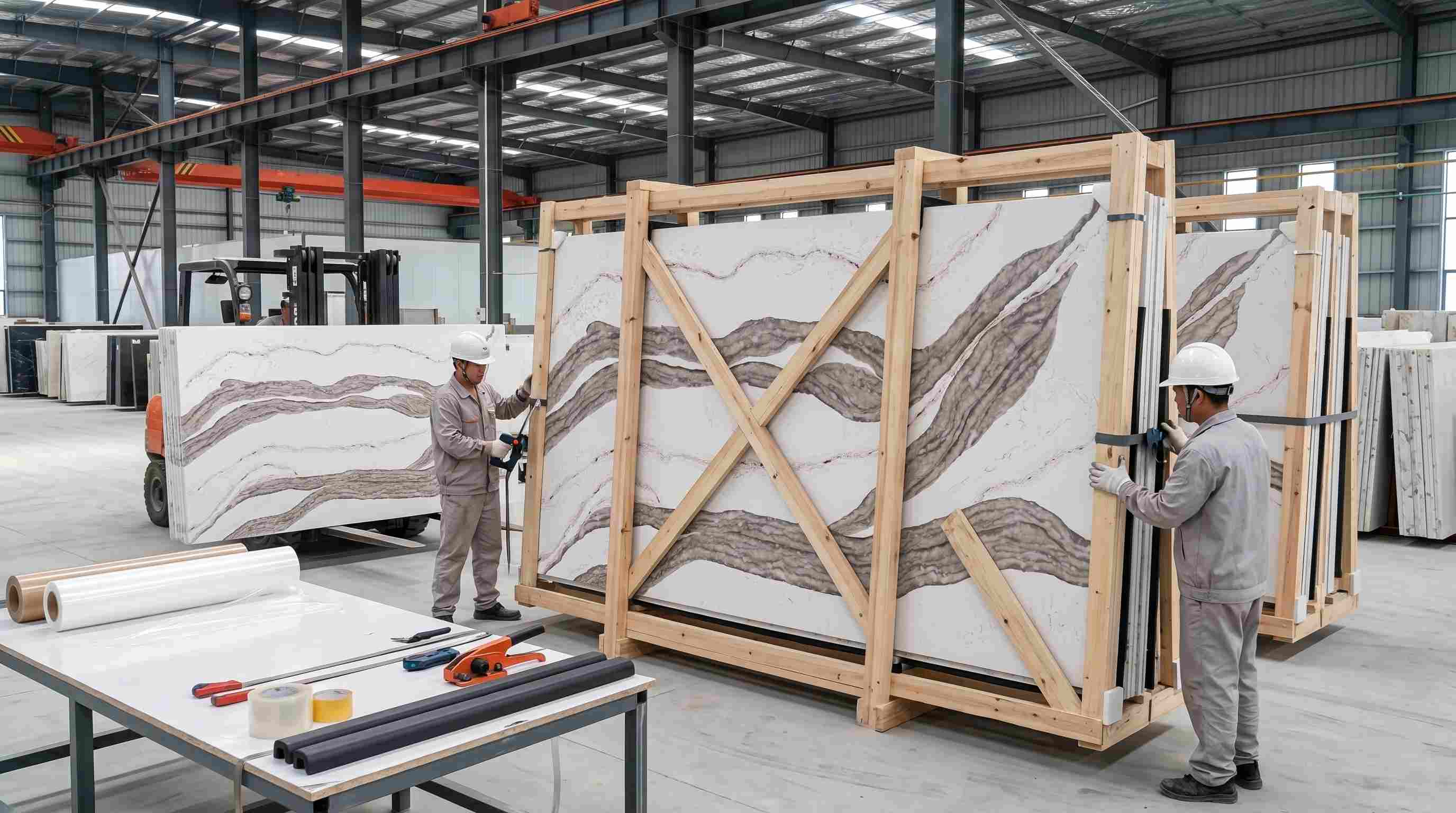
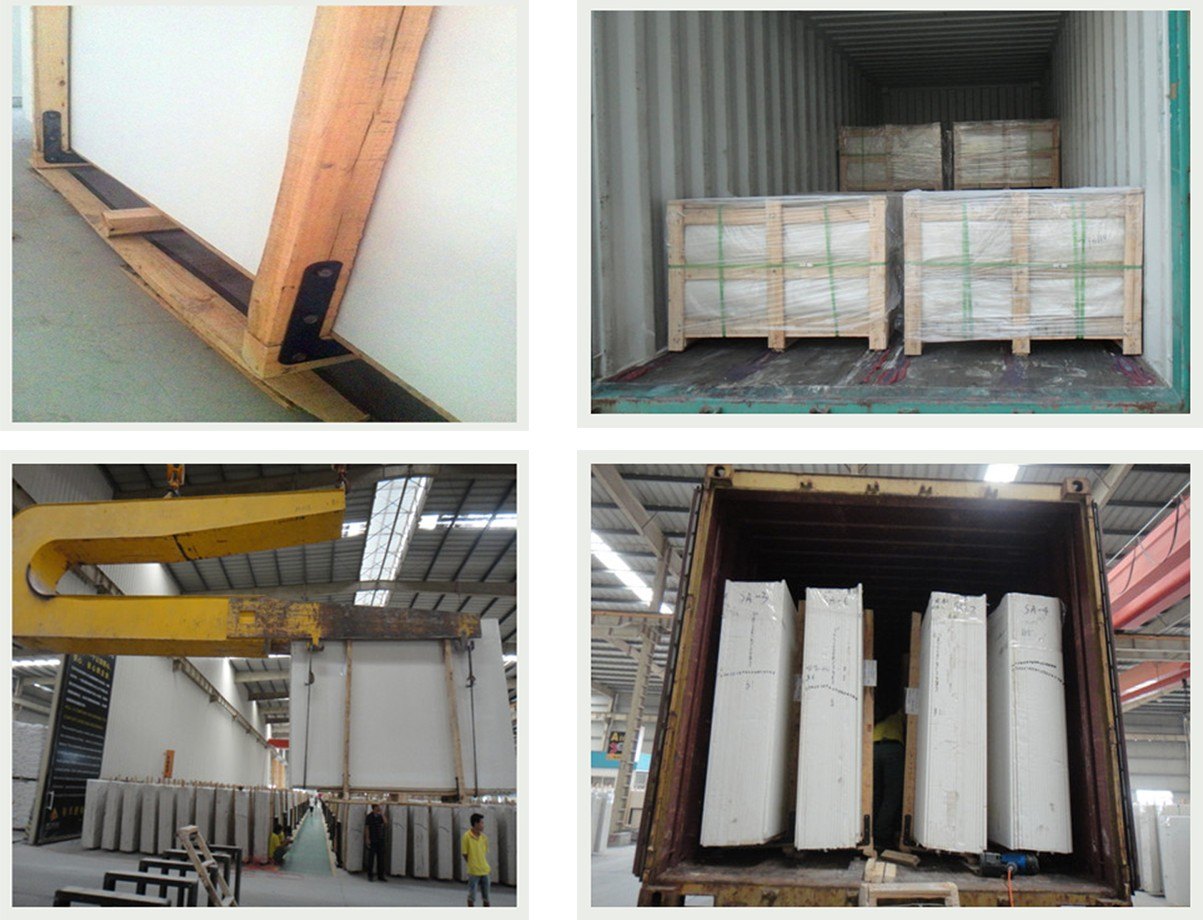
Packing
Technical information
The main component of quartz stone countertop material is 93% quartz sand and resin, color or others. It feels very similar to stone.
|
Test item(s) |
Test method(s) |
Test result(s) |
|
Absorption by weight |
ASTM C97/C97M-15 |
0.05% |
|
Density |
2371 kg/m³ |
|
|
Abrasion resistance (polished) |
ASTM C241/C241M-15e1 |
44 |
|
Flexural strength |
ASTM C880/C880M-15 |
Dry condition:35.6 MPa |
|
Wet condition:40.1 MPa |
||
|
Compressive strength |
Refer to ASTM C170/C170M-17 |
Dry condition:248 MPa |
|
Wet condition:240 MPa |
||
|
Coefficient of linear thermal expansion |
ASTM C531-00(2012 |
22.2×10⁻⁶/C |
|
Specular gloss(60) |
ASTM D523-14 |
38.2 |
|
Stain resistance test |
Refer to ANSI Z124.6-2007 |
Total stain resistance value:56 Maximum individual depth of staining:0.04mm |
|
Composition analysis |
FTIR,PGC-MS,XRF and TGA |
See Page 9 |
|
Radioactivity |
GB 6566-2010 |
Class A |
|
Mohs'hardness |
Refer to EN 101:1991 |
6 |
|
Specimens identification No. |
1 |
2 |
3 |
4 |
5 |
|
Absorption by weight (%) |
0.04 |
0.05 |
0.05 |
0.05 |
0.04 |
|
Mean water absorption (%) |
0.05 |
||||
|
Density (kg/m³) |
2358 |
2372 |
2375 |
2373 |
2376 |
|
Mean density (kg/m³) |
2371 |
||||
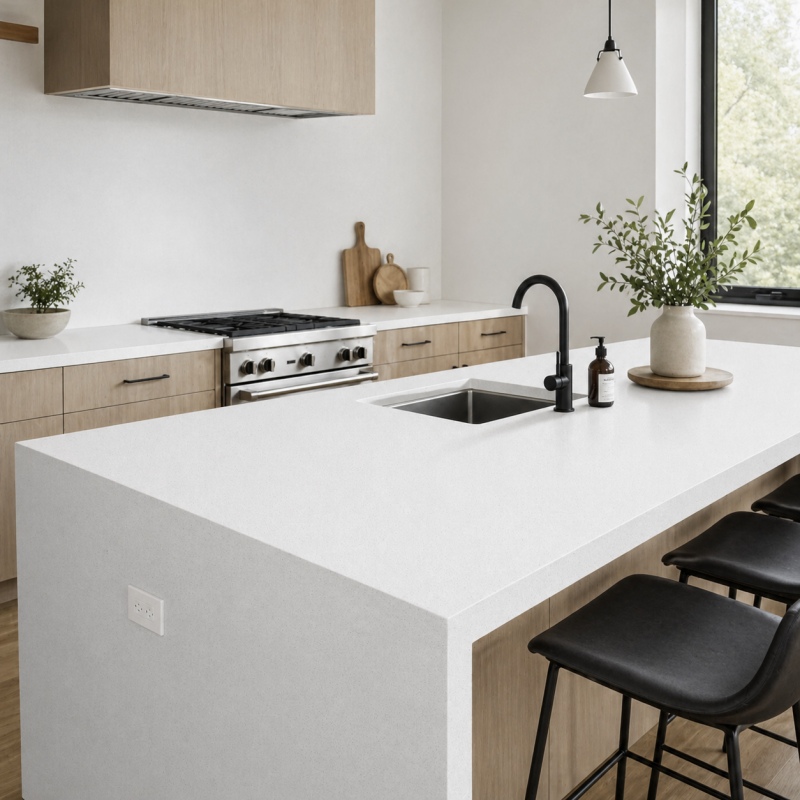
Pure White Quartz is a clean engineered quartz surface with a bright white base and a very subtle fine granular texture. It is a practical choice for countertops, islands, vanity tops, and modern interior projects that need a plain white surface with good visual consistency and everyday usability.
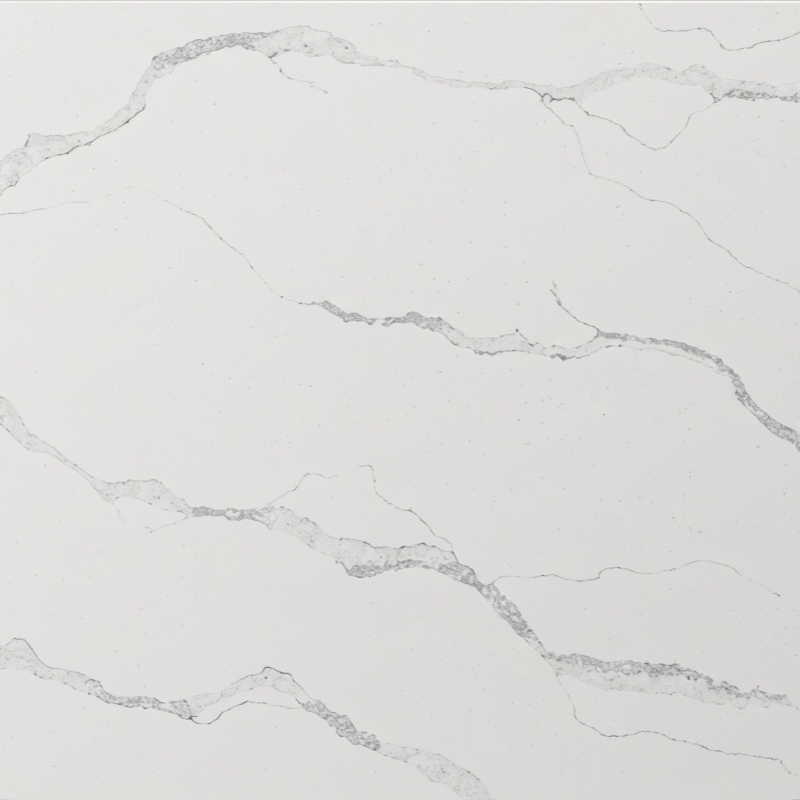
Cloud Vein White Quartz features a clean white base with soft pale grey marble-like veining, ideal for countertops, islands, vanity tops, and interior projects that need a calm and versatile white surface.
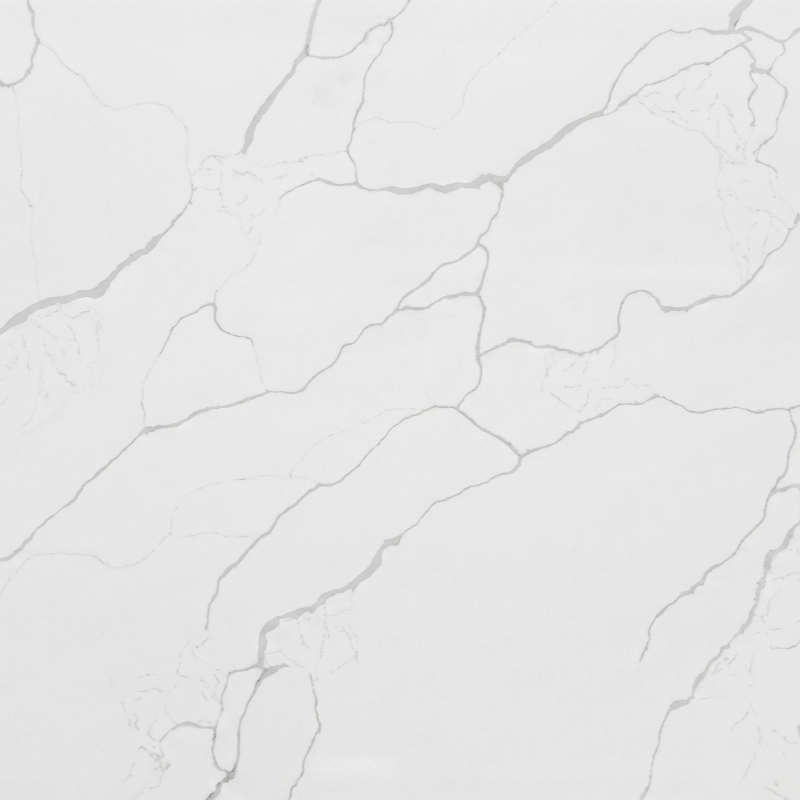
Classic Calacatta White Quartz features a clean white base and soft grey veining for countertops, islands, vanities, and interior projects. Suitable for distributors, contractors, and project buyers seeking a calm marble-look quartz surface.
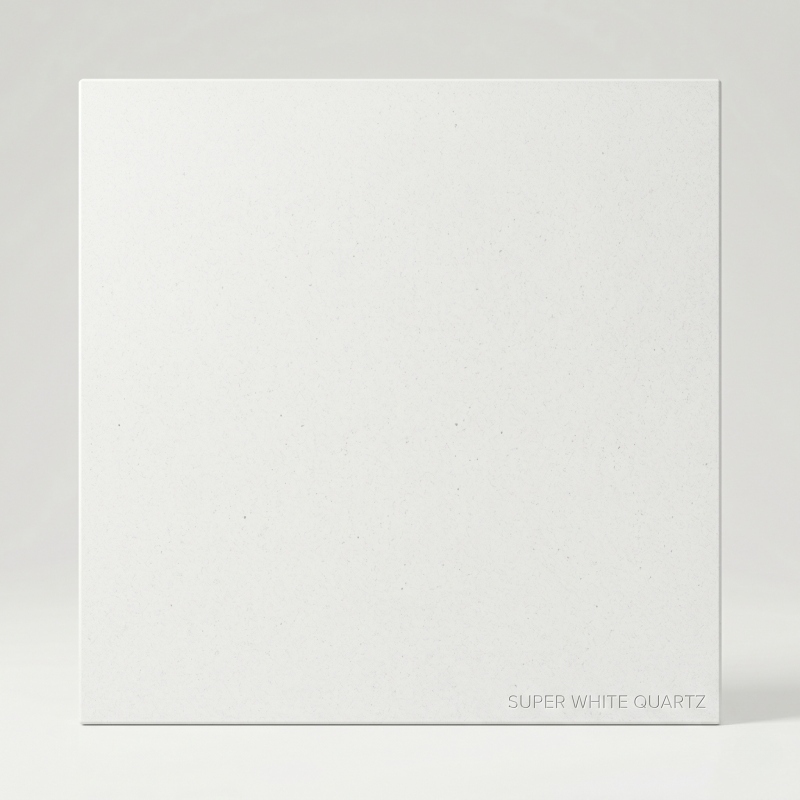
Super White Quartz is a high-purity engineered quartz surface with a cleaner white appearance and a finer, smoother visual texture than standard pure white quartz. It is well suited for countertops, islands, vanity tops, and modern interior projects that need a quiet, refined white surface.
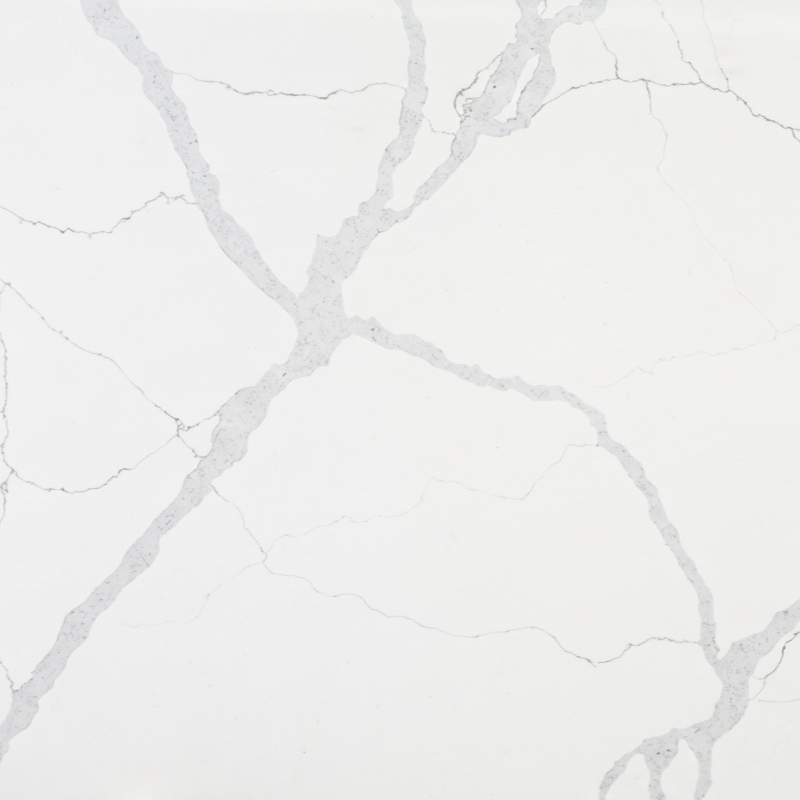
Soft Vein White Quartz features a clean white base with gentle pale grey veining, making it a practical choice for countertops, vanity tops, islands, and interior projects that need a calm and bright marble-look surface.
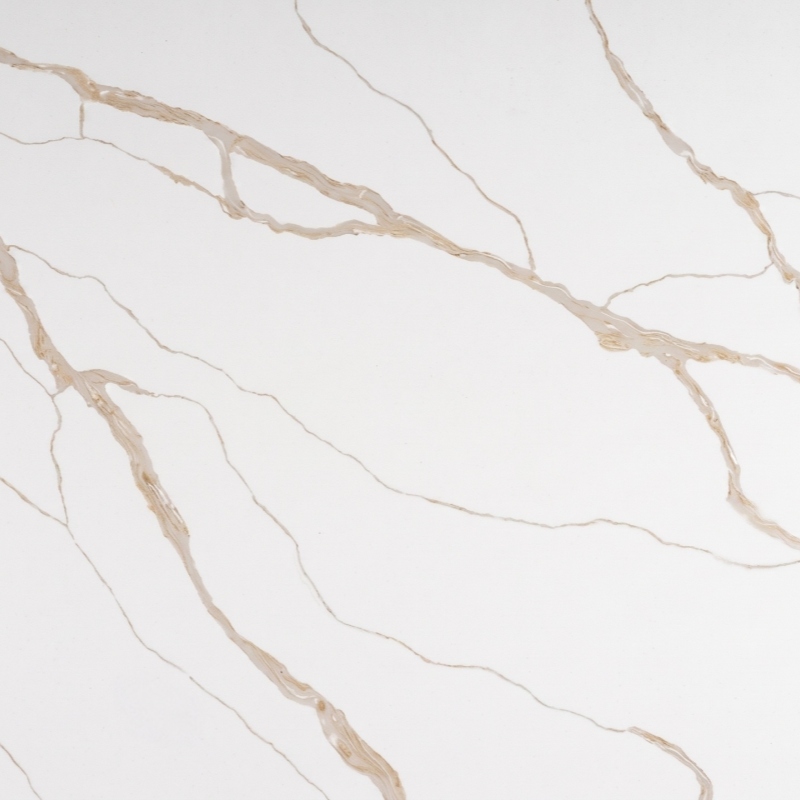
Arctic Calacatta Gold Quartz features a clean white base with warm champagne-gold veining, making it a strong choice for waterfall islands, countertops, vanity tops, and elegant modern interiors.
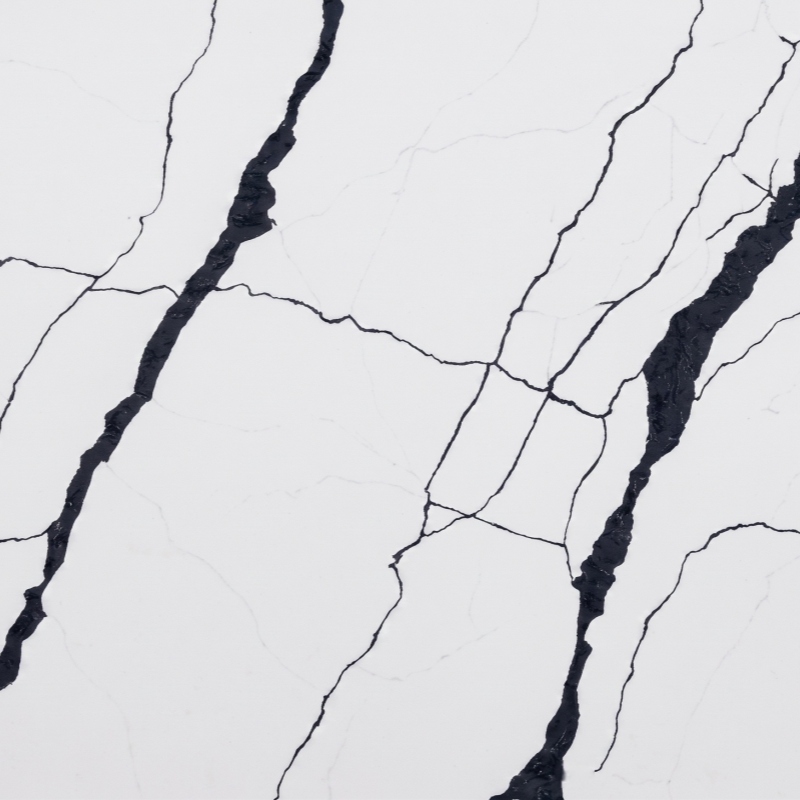
Steel Rift White Quartz features a clean white base with strong steel-grey veining and fine linear movement. A practical choice for kitchen countertops, islands, vanity tops, and modern interior projects that need a sharper architectural look.
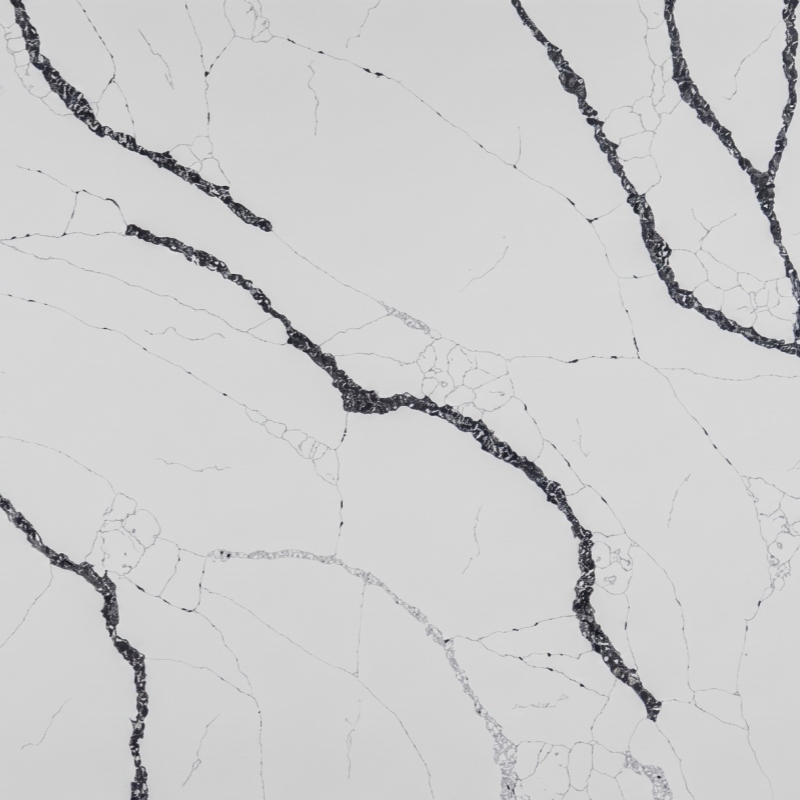
White quartz slab with bold graphite-black veining, open white field, and layered marble movement. A strong choice for statement countertops, islands, vanity tops, and selected interior wall applications.



 IPv6 network supported