English
 Español
 Português
 عربي
عربي 한국어
한국어

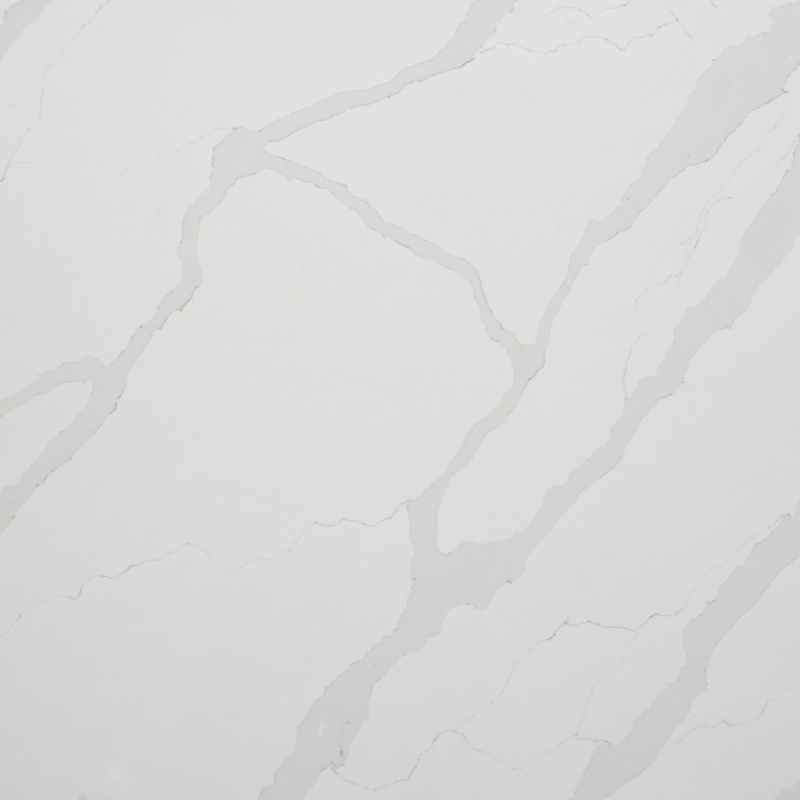
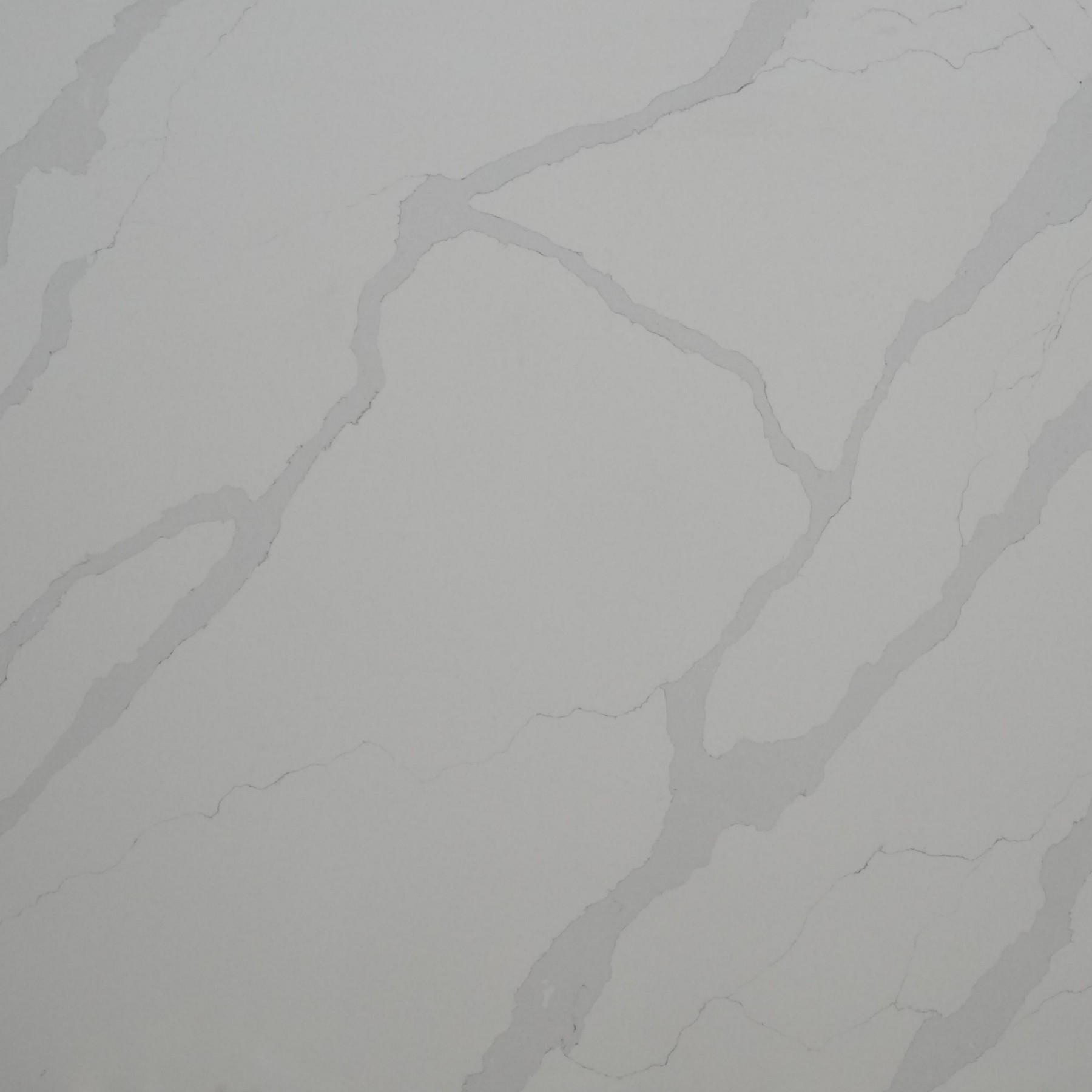
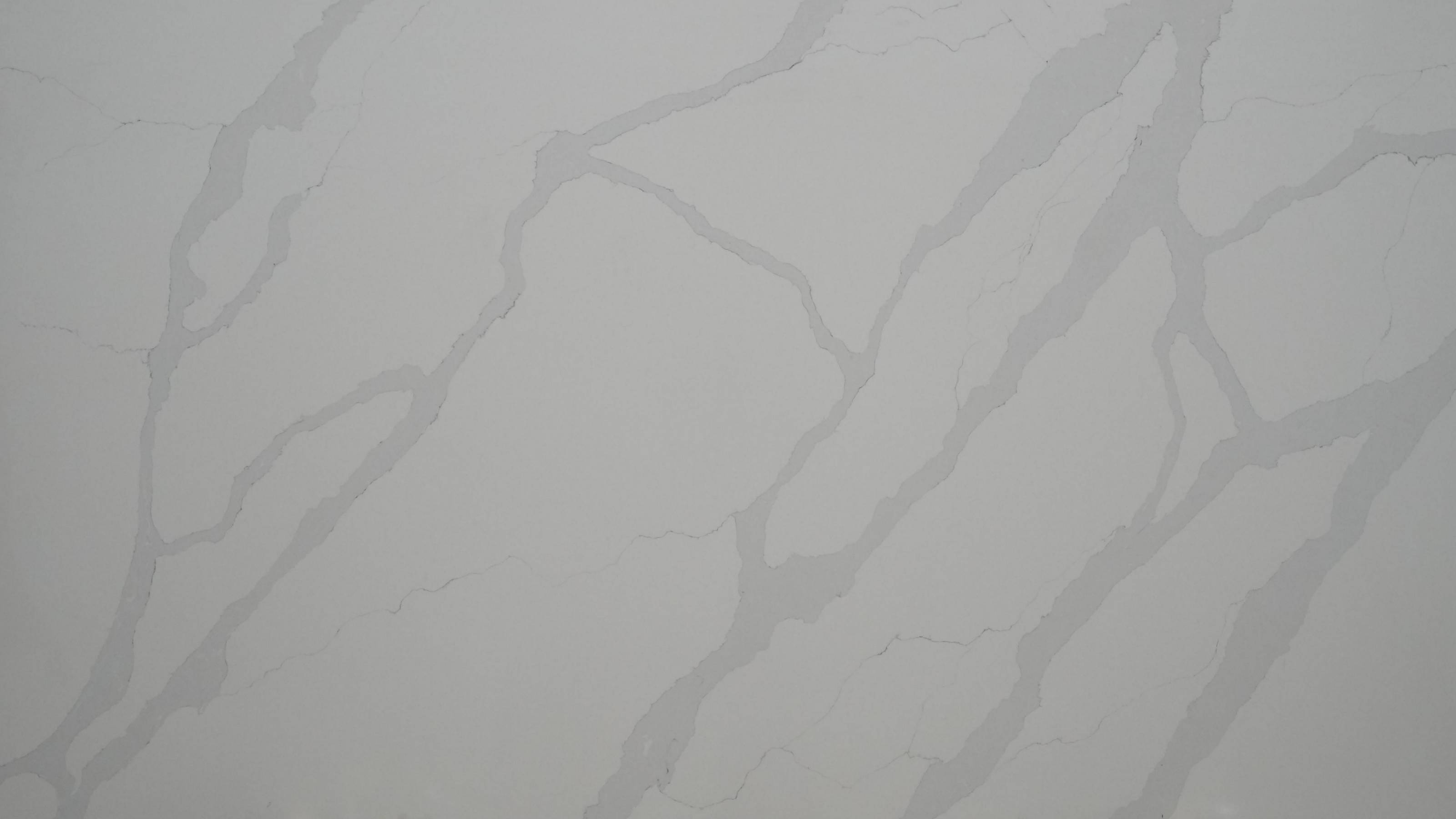
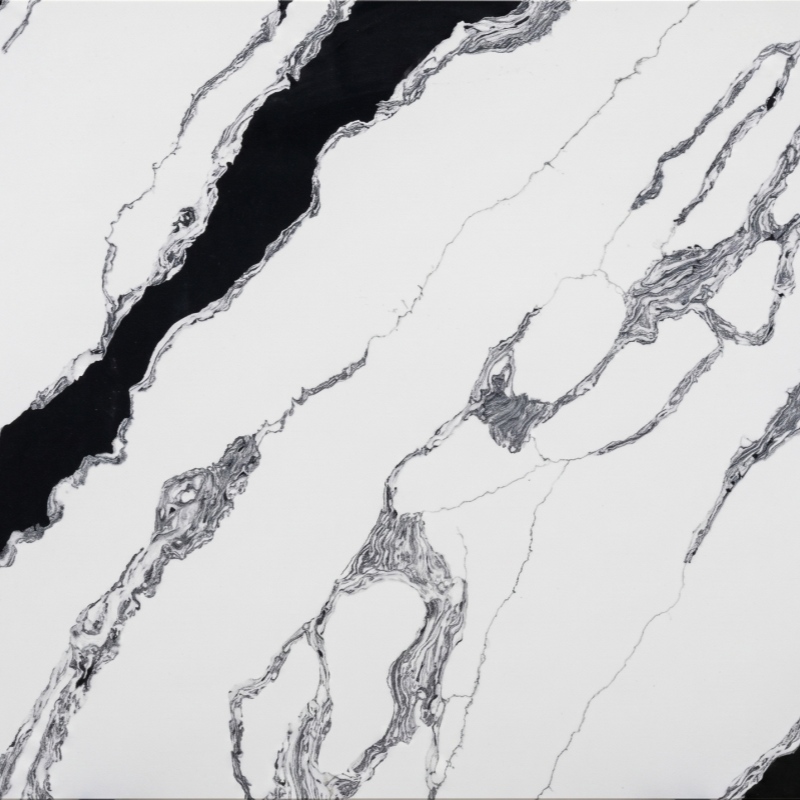
Soft Calacatta Quartz features a clean white base with wide soft grey veining. A practical choice for countertops, vanities, and light commercial interiors.
Item No :
ALQS2038Surface finish :
Polished or HonedOrder(MOQ) :
200 square metersPayment :
T/T, L/C, CashProduct Origin :
ChinaColor :
white and greyShipping Port :
Xiamen or other China portLead Time :
20 daysWeight :
2700 kgs/M3Product Description
Soft Calacatta Quartz is a white engineered quartz surface with broad, gentle grey veining and a calm marble-inspired look. It works well for buyers who want a bright surface with visible movement, but do not want the pattern to dominate the whole space. For many kitchen, vanity, and light commercial projects, this kind of quieter veining is easier to match across cabinets, walls, and flooring.
Visual Character
The slab has a clean white background with wide soft-grey veins that move in a slow, open pattern. The veins are not sharp or high-contrast. Instead, they read as pale ribbon-like flows, which gives the surface a lighter and more controlled appearance. Compared with stronger Calacatta styles, this design feels calmer, more architectural, and easier to use in repeat-unit projects.
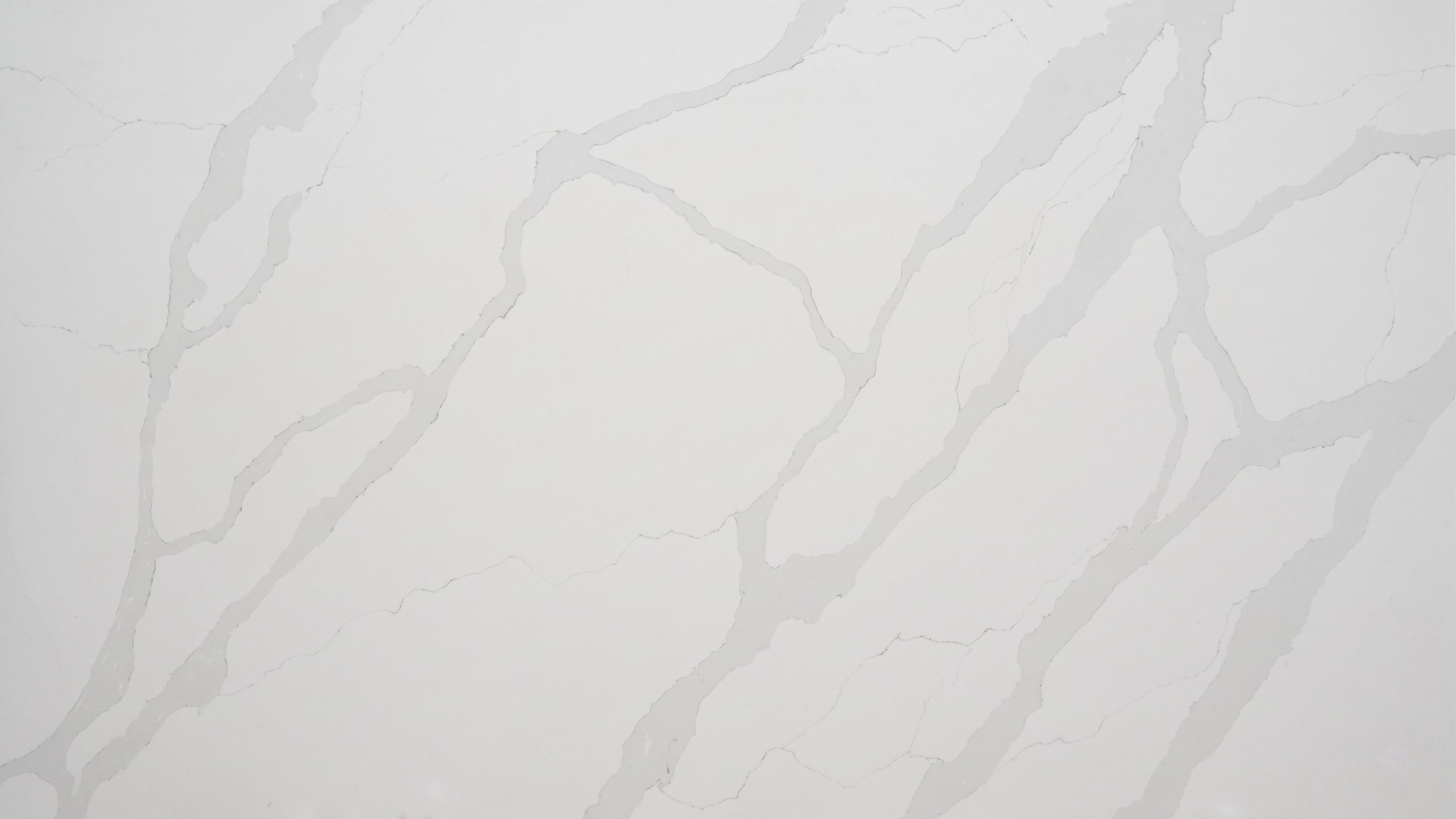
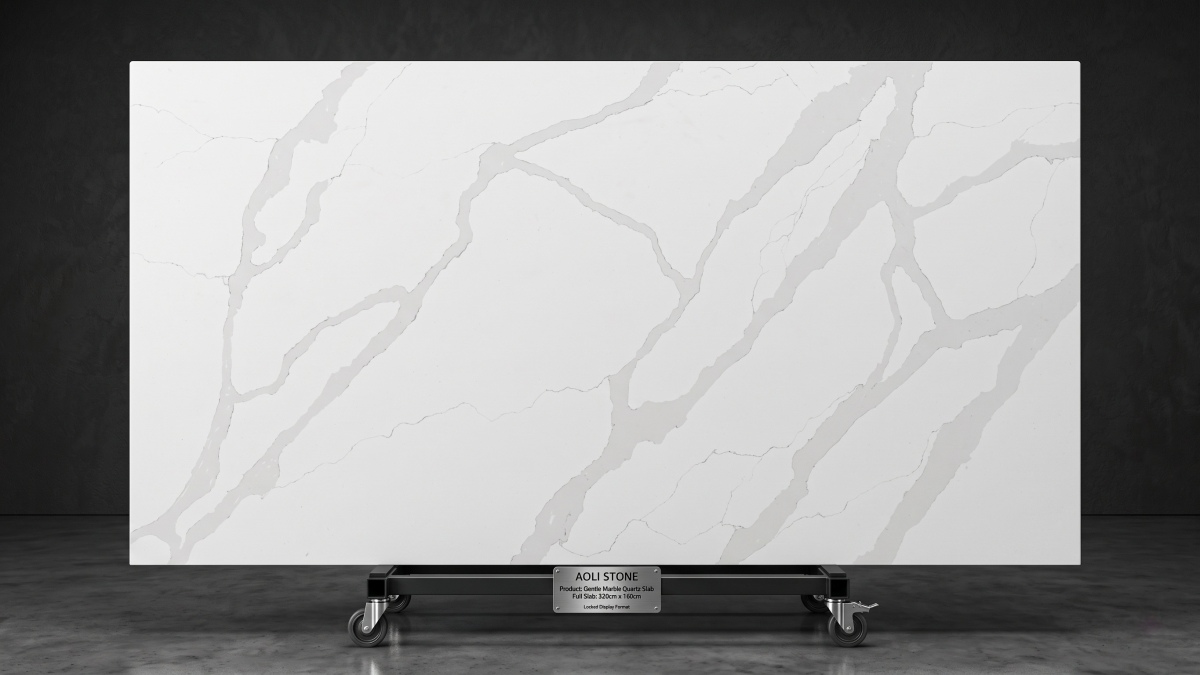
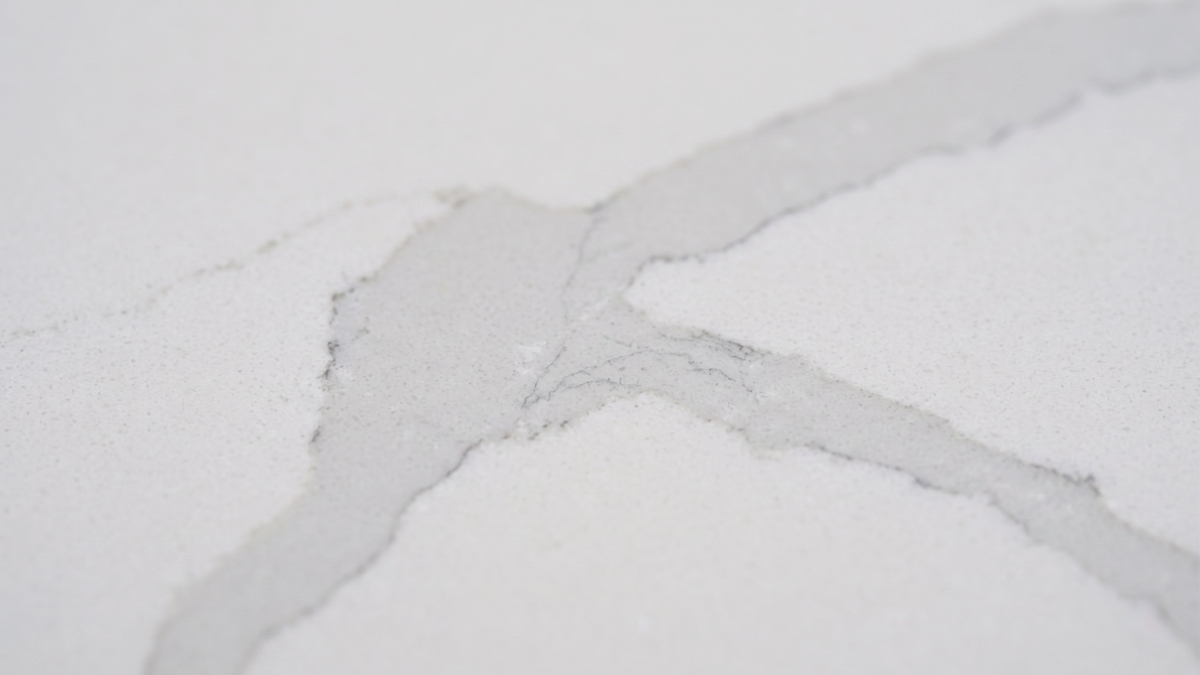
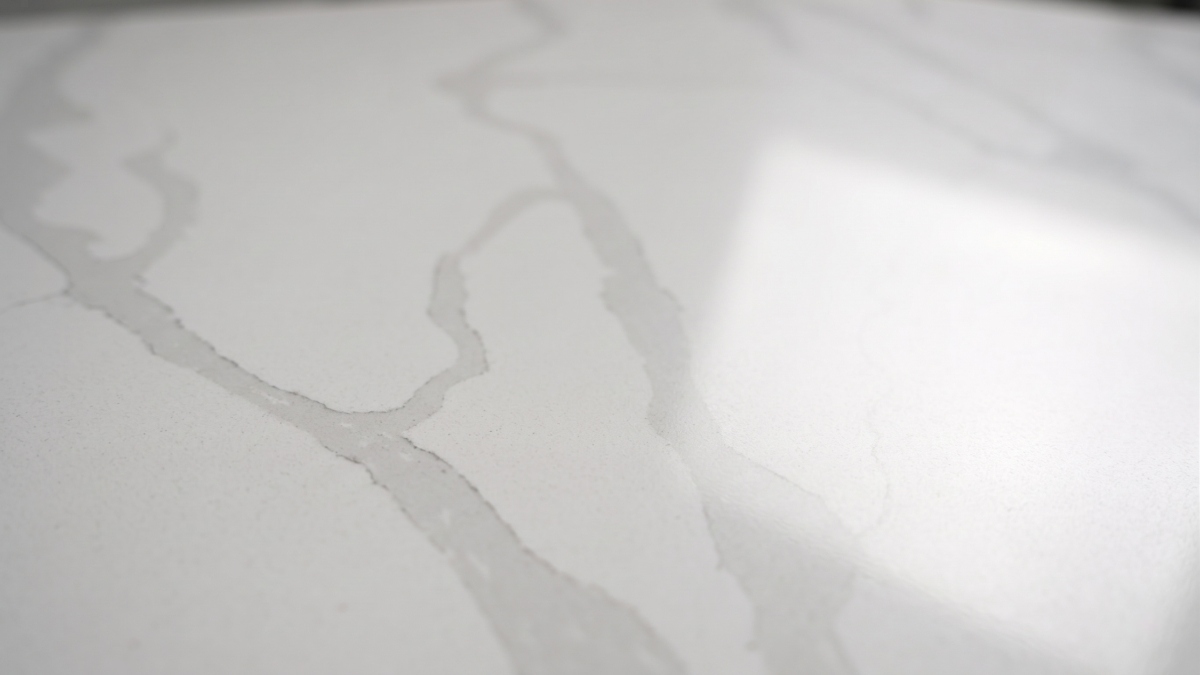
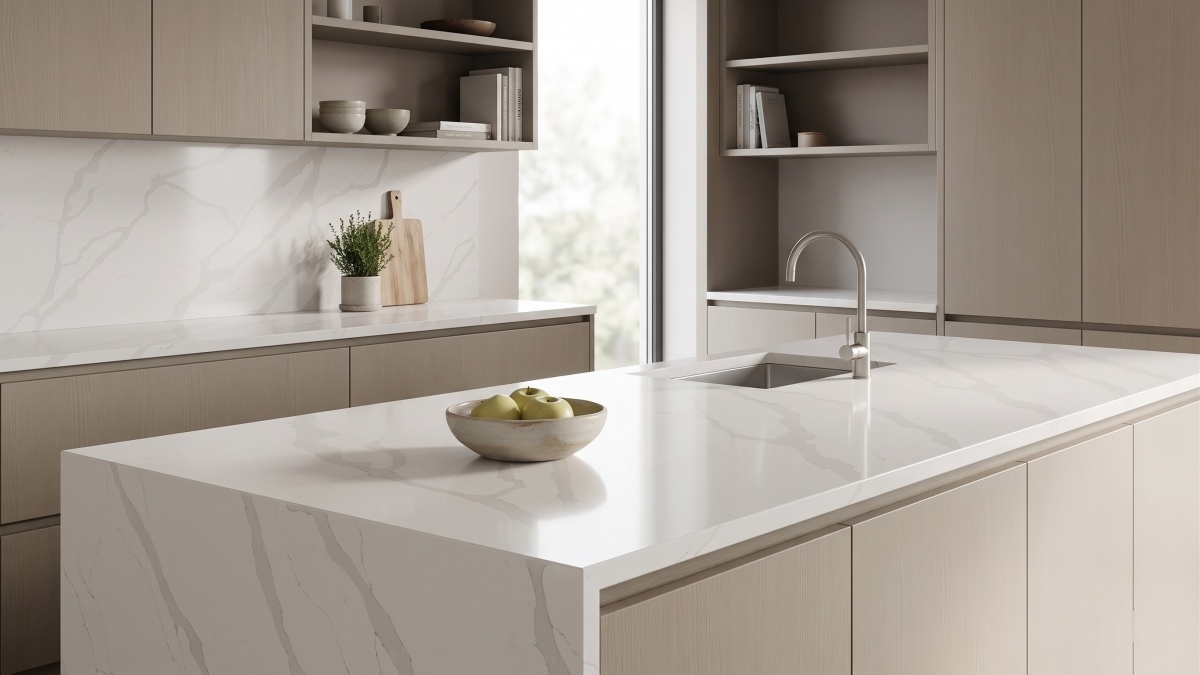
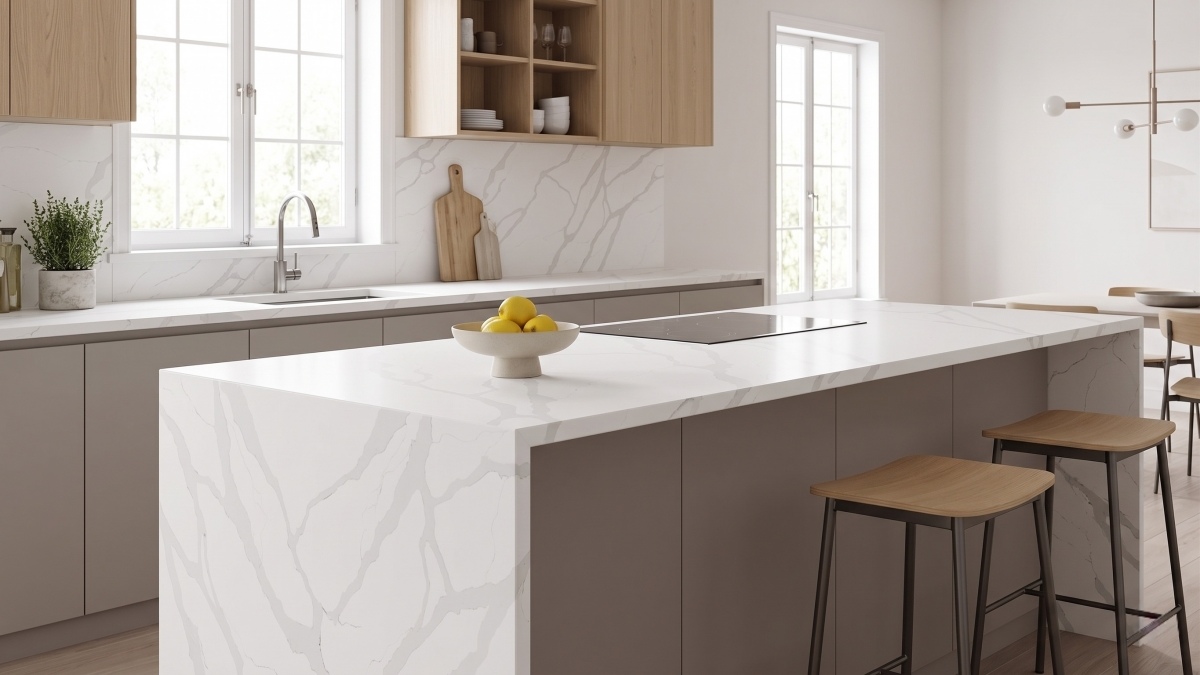
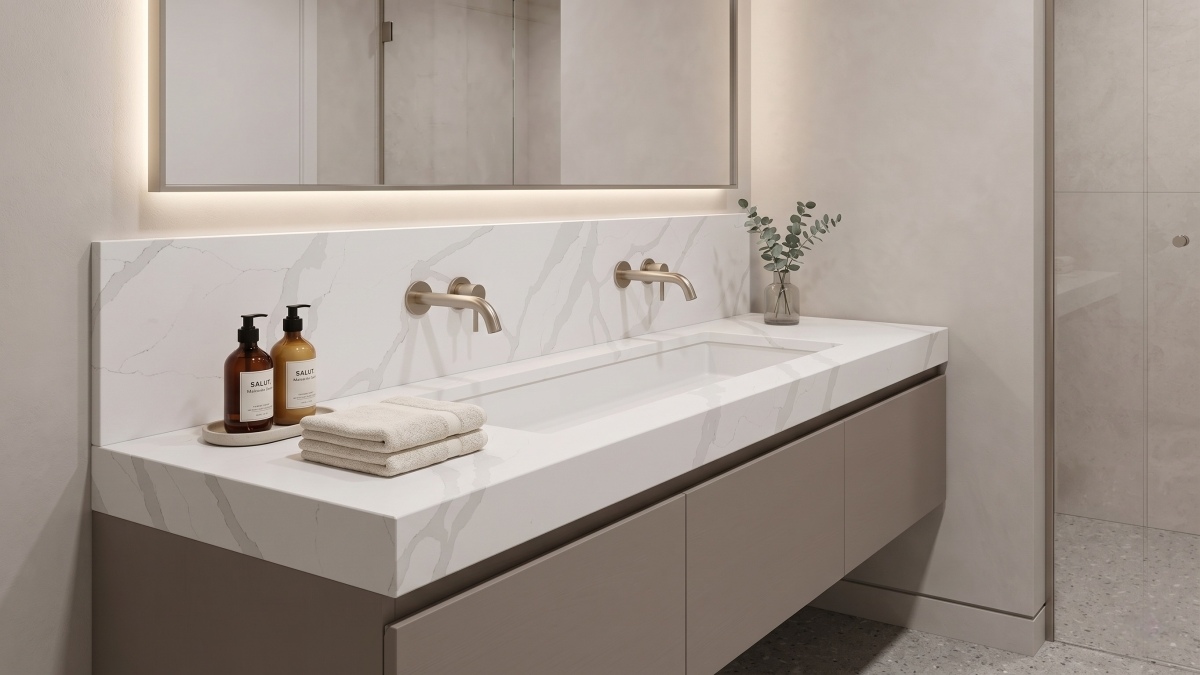
This design is best for modern kitchens, vanity tops, apartment interiors, hospitality bathrooms, and commercial spaces that need a bright stone look without heavy visual noise. It suits projects where the buyer wants a marble-inspired white quartz, but prefers a softer and more balanced result. It is also a sensible option when the slab needs to work across multiple units rather than only as a one-off statement island.
Buyers usually choose this design because it gives them a white Calacatta direction without the risk of an overly dramatic pattern. In real projects, that matters. A quieter slab is often easier to approve, easier to pair with wood, grey, beige, or matte black cabinetry, and easier to keep consistent across a wider product program.
For distributors, it fills the gap between plain white quartz and heavily veined statement slabs.
For contractors, it is easier to place into practical interior schemes without fighting the rest of the finishes.
For procurement teams, it is often a safer choice when multiple decision makers need a design that feels clean, current, and broadly acceptable.
This product is less suitable for buyers who specifically want bold, dramatic veining with strong contrast and high visual impact. It is also not the best fit where the design brief calls for an ultra-pure plain white slab with almost no movement at all. For heavy outdoor UV exposure or highly abusive environments, the final material selection should always be confirmed against the actual project condition and exact product specification.
This design is commercially useful because it sits in a broad middle range of demand: not too plain, not too aggressive. In many markets, that makes it easier to sell than a more extreme pattern. It is worth merchandising beside both solid white and stronger Calacatta styles, because its selling point is controlled movement, not visual drama.
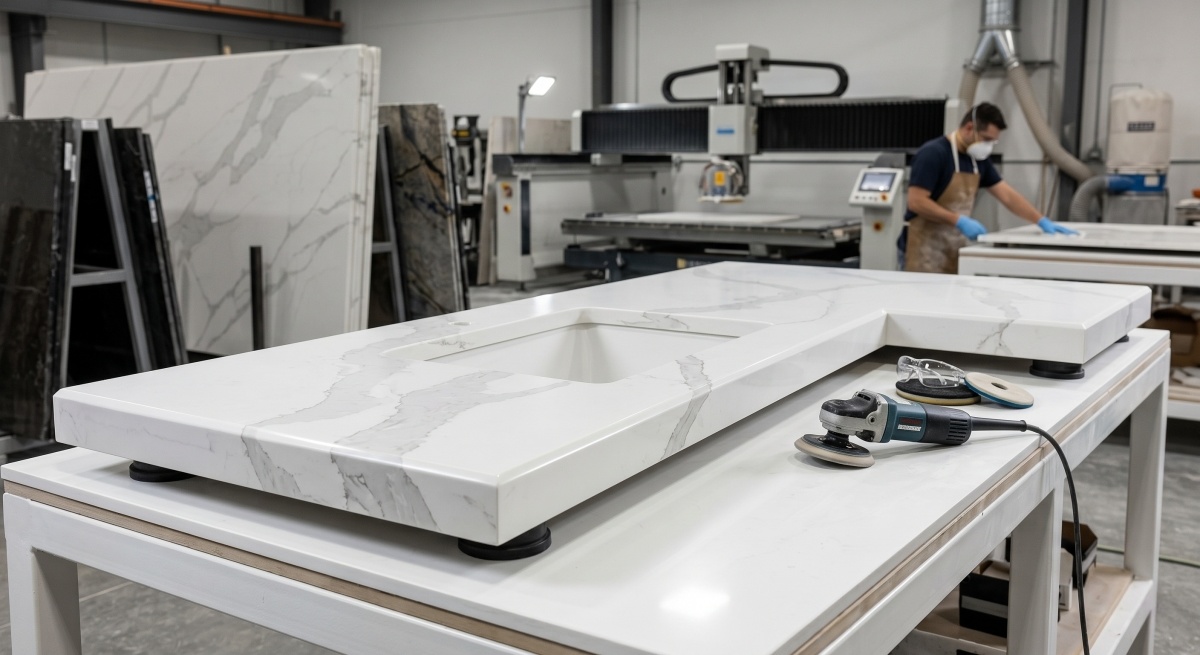
Soft Calacatta Quartz is easier to integrate when the design team wants a light and refined countertop without overcomplicating the space. It works especially well in projects where cabinetry, flooring, and wall finishes already carry enough texture. If edge buildup, seam planning, or splash continuity matters, vein direction should be reviewed from the slab layout before fabrication.
For multi-unit residential, hospitality, and commercial washroom programs, this type of pattern is often easier to standardize than stronger marble-look quartz. It gives a decorative result, but usually with less visual risk during approval. If your project has material compliance requirements, request confirmation based on the exact ordered version, especially if you are comparing Normal Quartz and available silica-free options.
Quartz is generally low-maintenance in daily interior use, but it should still be treated like a finished surface rather than an indestructible one. Clean with mild soap and water or a neutral cleaner. Wipe spills in a reasonable time, especially strongly colored liquids. Use chopping boards for food preparation and avoid placing hot cookware directly on the surface. For long-term performance, good fabrication and proper installation matter just as much as the slab itself.
Q1: Is this design pure white or warm white?
It reads closer to a clean neutral-to-cool white, with soft pale-grey veining.
Q2: Does it have strong Calacatta contrast?
No. This is a softer and quieter interpretation, which is part of its commercial advantage.
Q3: Where does this slab work best?
It works well on kitchen countertops, vanity tops, and light commercial interiors that need a bright, calm, marble-inspired surface.
Q4: Is it a good choice for large-volume projects?
Yes, in many cases it is. The pattern is controlled enough to be easier to approve across repeated units than more dramatic quartz designs.
Q5: Can this design be offered in Normal Quartz or silica-free versions?
Depending on the product line and project requirement, buyers can discuss Normal Quartz or an available silica-free option at quotation stage. Final composition and related documents should always match the actual order.
Q6: Is this the best option if I want a very bold island centerpiece?
Not necessarily. If the goal is maximum visual impact, a stronger and more contrasting vein pattern may be a better fit.
Looking for a white quartz design that feels clean, usable, and commercially sensible?
Contact Aoli Stone for slab details, available sizes, finish options, and project-based quotation support.
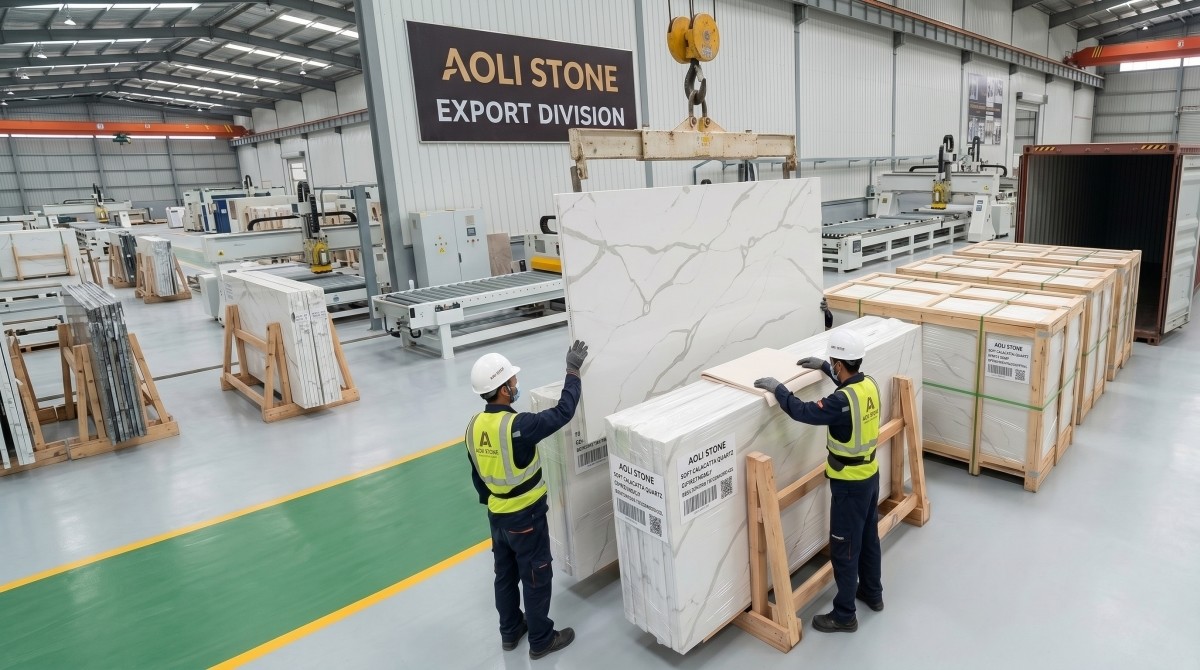
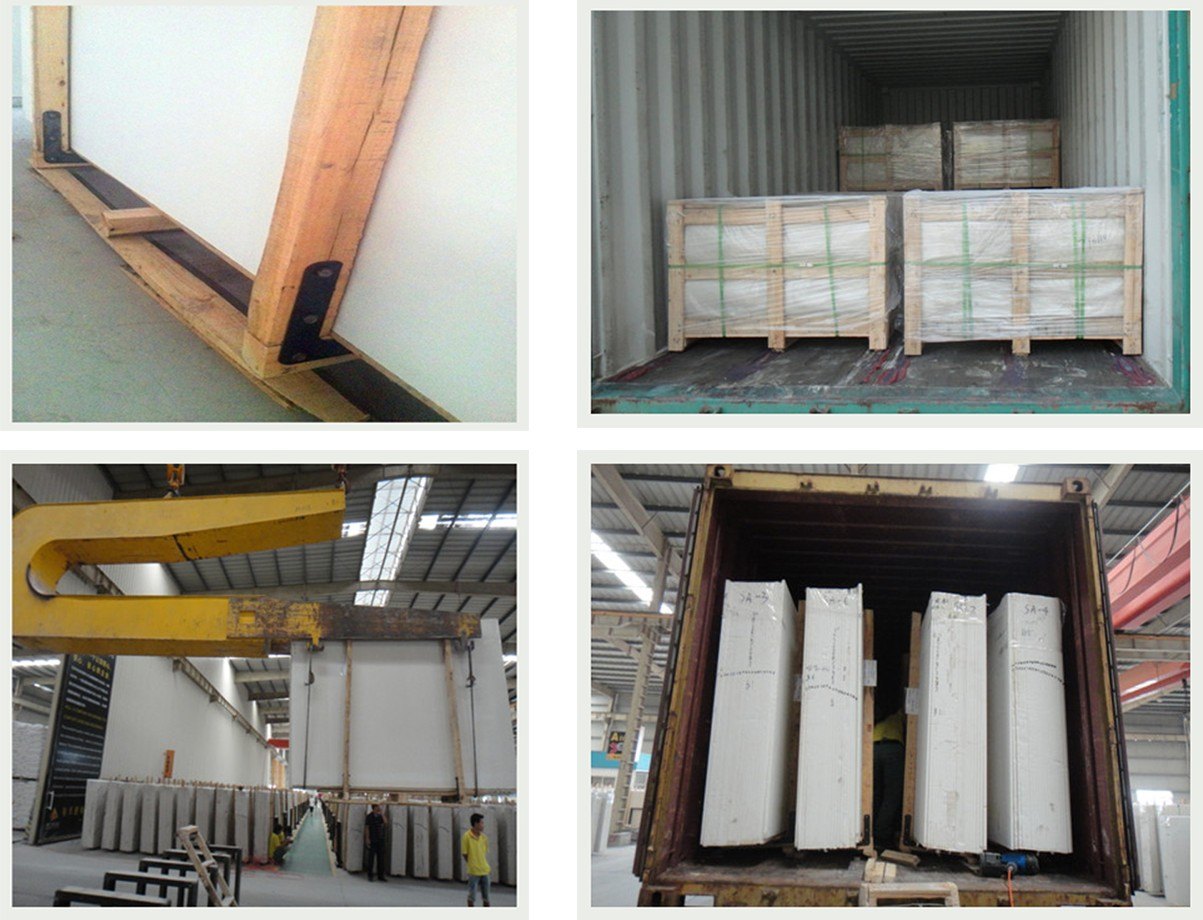
Packing
How quartz is been made?
High purity 93% natural quartz powder, plus7% epoxy Resin or other decorative particles.
Raw material collection (raw quartz powder, glass, quartz, resin, etc.) →→Remove impurities( remove impurities, iron filings, etc. from raw materials) →→ Raw material allocation ( The materials are fully mixed in the gravity-free mixer to eliminate the problem of material color difference and uneven particles) →→ Stirring and mixing (Stir the unsaturated polyester resin, pigments, additives and granular powder thoroughly) → → Distribution (The stirred mixed materials pass through the conveyor belt and enter the fabric car, and then the material is evenly distributed into the fabric mold frame by the fabric car) →→ Vacuum high-frequency vibration pressing (After the cloth is completed, it is transferred to the press equipment and vibrated and pressed under the vacuum condition of -0.1MPa) →→ Heating, curing and shaping (After the pressing is completed, the blank is put into the curing furnace for heating and shaping at 85-110°C) →→ Thickness grinding (After the blank is solidified, it is cooled for 24 hours and then enters the thickness setting equipment for thickness determination) →→ Polishing: (After the thickness is determined, use a 20-head polishing machine for water grinding and polishing. According to different needs, polish until the gloss reaches requirements) →→ Inspection ( Inspect the appearance quality of the board) →→ Cutting (Use vertical and horizontal cutting and bridge cutting machines to cut the product to the required size) →→ Packaging and storage (The cut products are packaged after drying and stored in the warehouse)
Technical information
The main component of quartz stone countertop material is 93% quartz sand and resin, color or others. It feels very similar to stone.
|
Test item(s) |
Test method(s) |
Test result(s) |
|
Absorption by weight |
ASTM C97/C97M-15 |
0.05% |
|
Density |
2371 kg/m³ |
|
|
Abrasion resistance (polished) |
ASTM C241/C241M-15e1 |
44 |
|
Flexural strength |
ASTM C880/C880M-15 |
Dry condition:35.6 MPa |
|
Wet condition:40.1 MPa |
||
|
Compressive strength |
Refer to ASTM C170/C170M-17 |
Dry condition:248 MPa |
|
Wet condition:240 MPa |
||
|
Coefficient of linear thermal expansion |
ASTM C531-00(2012 |
22.2×10⁻⁶/C |
|
Specular gloss(60) |
ASTM D523-14 |
38.2 |
|
Stain resistance test |
Refer to ANSI Z124.6-2007 |
Total stain resistance value:56 Maximum individual depth of staining:0.04mm |
|
Composition analysis |
FTIR,PGC-MS,XRF and TGA |
See Page 9 |
|
Radioactivity |
GB 6566-2010 |
Class A |
|
Mohs'hardness |
Refer to EN 101:1991 |
6 |
|
Specimens identification No. |
1 |
2 |
3 |
4 |
5 |
|
Absorption by weight (%) |
0.04 |
0.05 |
0.05 |
0.05 |
0.04 |
|
Mean water absorption (%) |
0.05 |
||||
|
Density (kg/m³) |
2358 |
2372 |
2375 |
2373 |
2376 |
|
Mean density (kg/m³) |
2371 |
||||
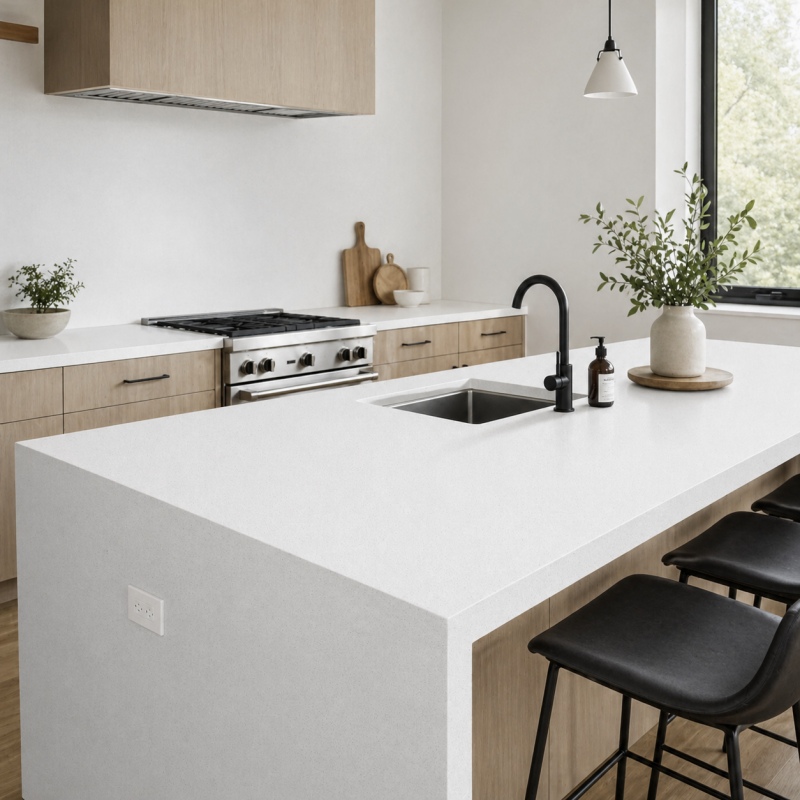
Pure White Quartz is a clean engineered quartz surface with a bright white base and a very subtle fine granular texture. It is a practical choice for countertops, islands, vanity tops, and modern interior projects that need a plain white surface with good visual consistency and everyday usability.
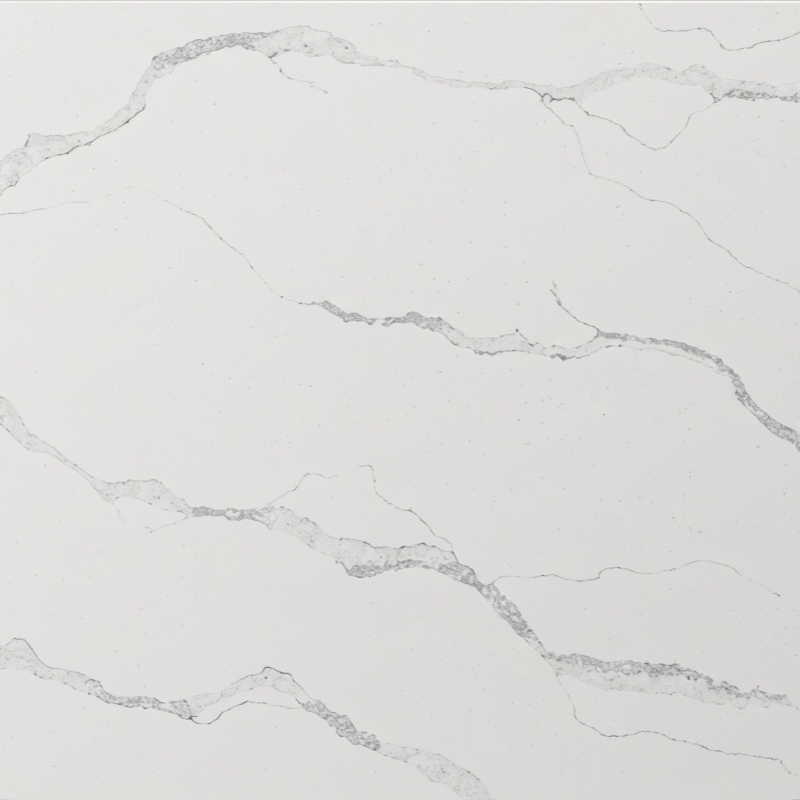
Cloud Vein White Quartz features a clean white base with soft pale grey marble-like veining, ideal for countertops, islands, vanity tops, and interior projects that need a calm and versatile white surface.
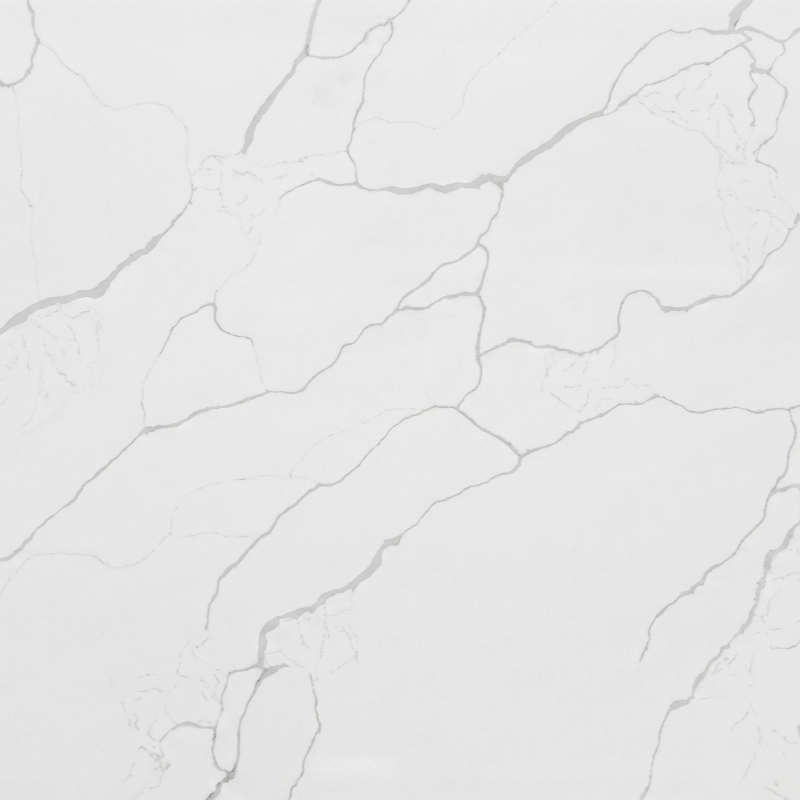
Classic Calacatta White Quartz features a clean white base and soft grey veining for countertops, islands, vanities, and interior projects. Suitable for distributors, contractors, and project buyers seeking a calm marble-look quartz surface.
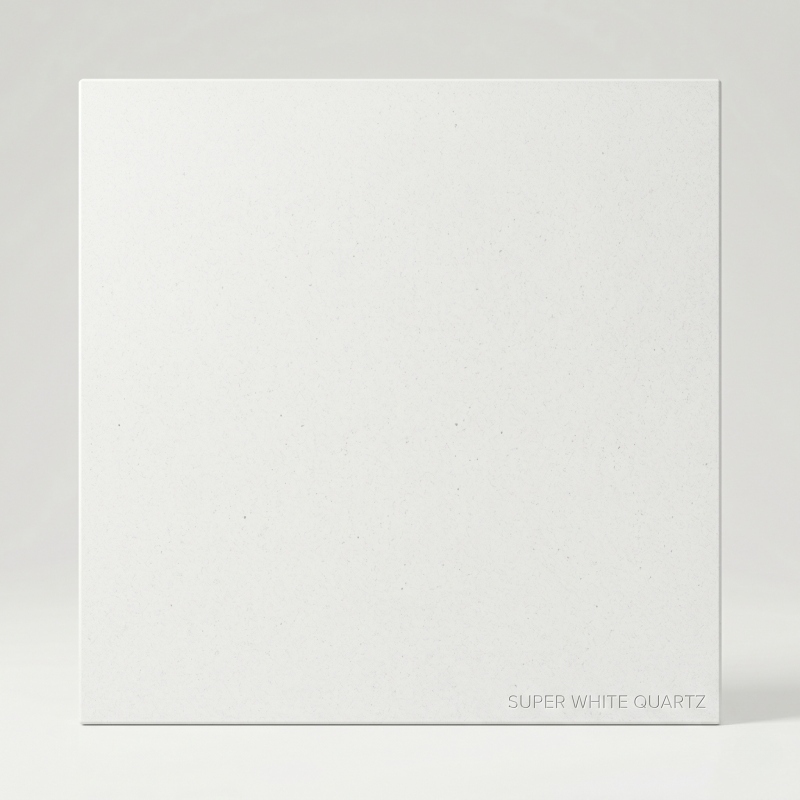
Super White Quartz is a high-purity engineered quartz surface with a cleaner white appearance and a finer, smoother visual texture than standard pure white quartz. It is well suited for countertops, islands, vanity tops, and modern interior projects that need a quiet, refined white surface.
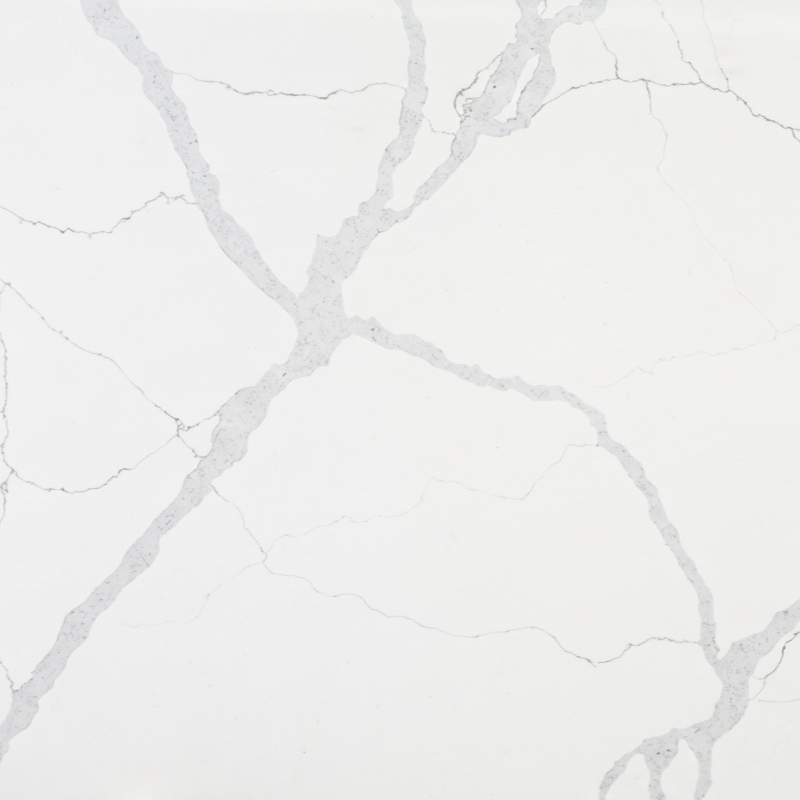
Soft Vein White Quartz features a clean white base with gentle pale grey veining, making it a practical choice for countertops, vanity tops, islands, and interior projects that need a calm and bright marble-look surface.
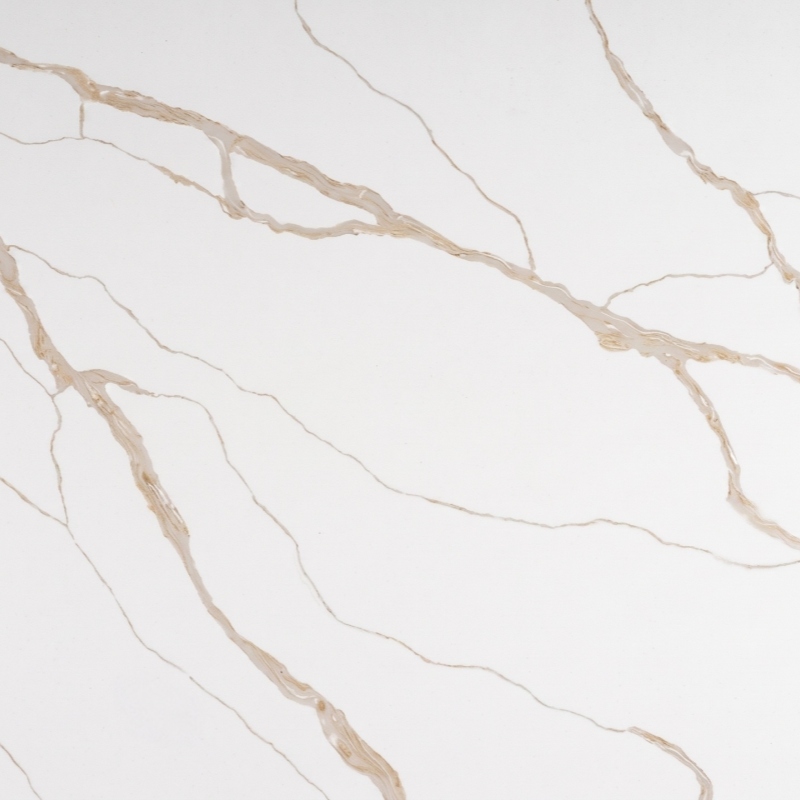
Arctic Calacatta Gold Quartz features a clean white base with warm champagne-gold veining, making it a strong choice for waterfall islands, countertops, vanity tops, and elegant modern interiors.
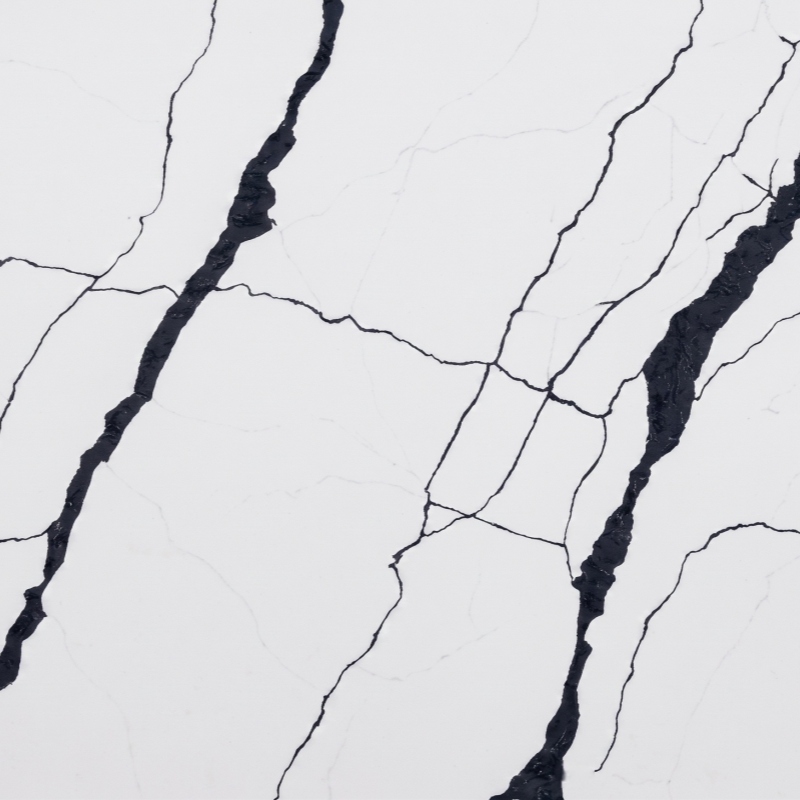
Steel Rift White Quartz features a clean white base with strong steel-grey veining and fine linear movement. A practical choice for kitchen countertops, islands, vanity tops, and modern interior projects that need a sharper architectural look.
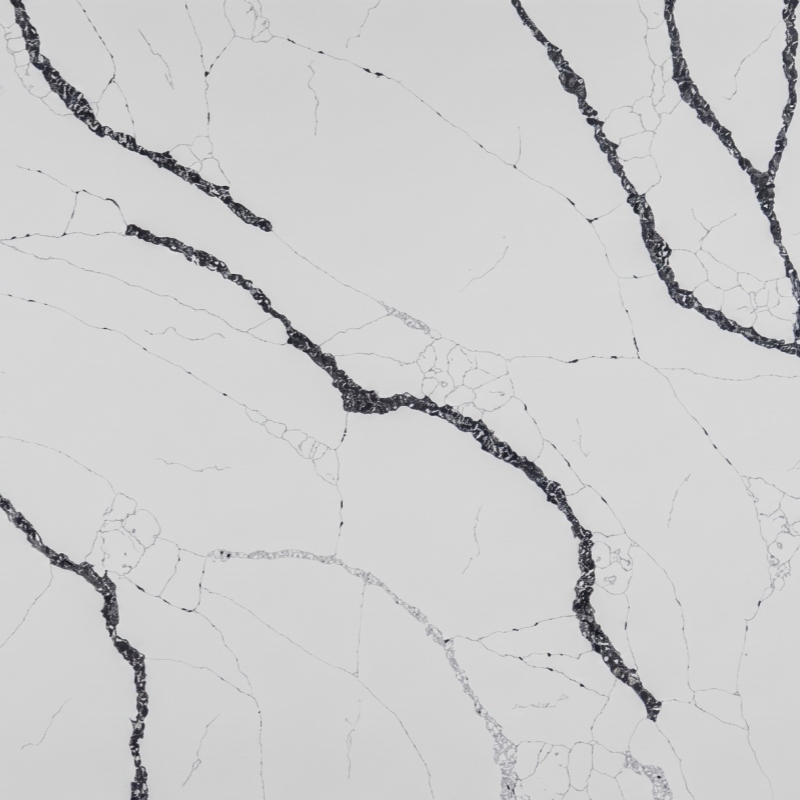
White quartz slab with bold graphite-black veining, open white field, and layered marble movement. A strong choice for statement countertops, islands, vanity tops, and selected interior wall applications.



 IPv6 network supported