English
 Español
 Português
 عربي
عربي 한국어
한국어

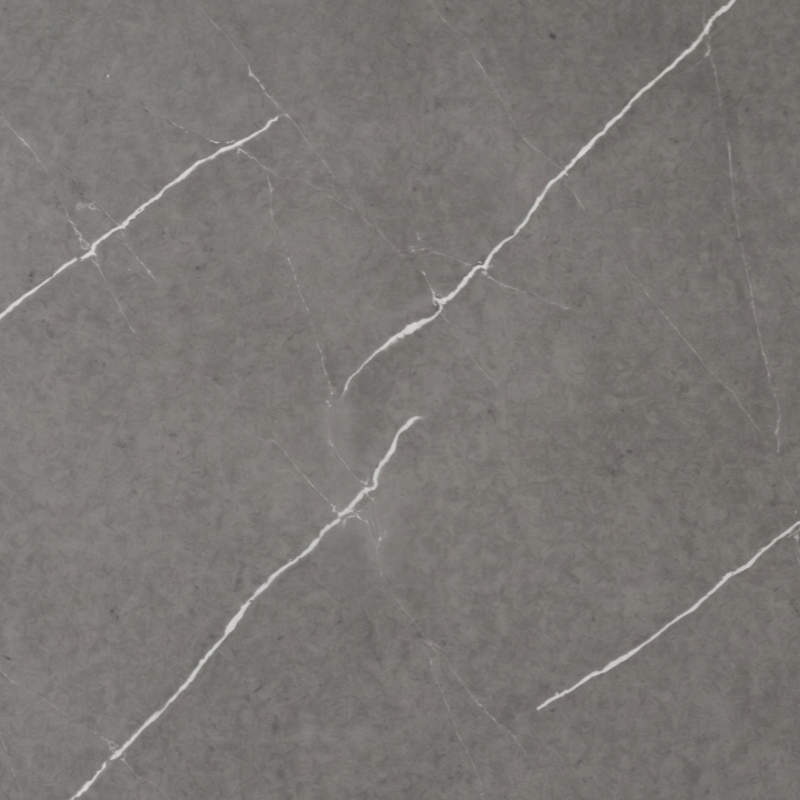
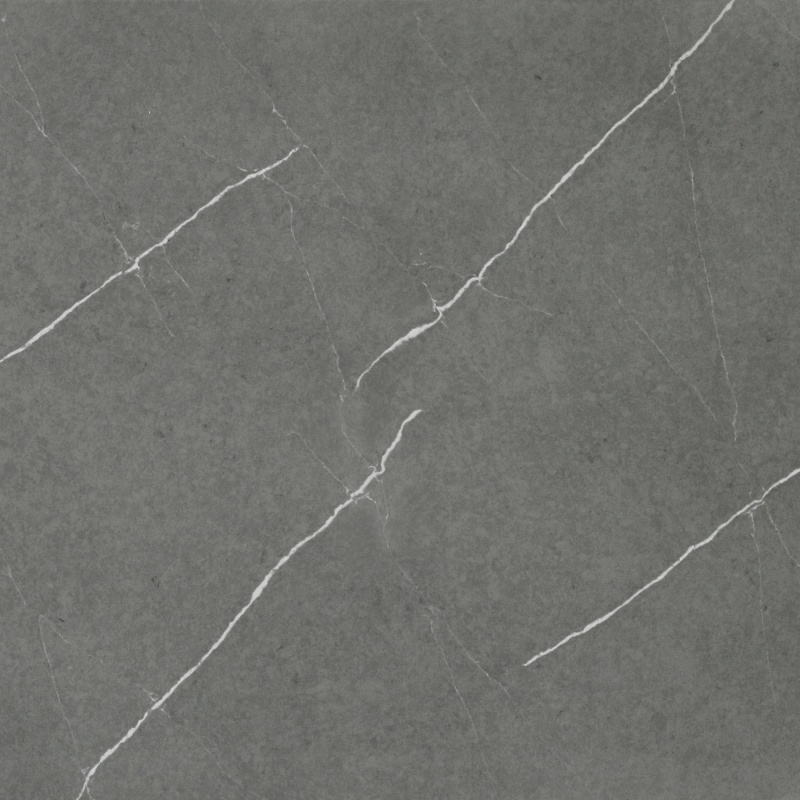
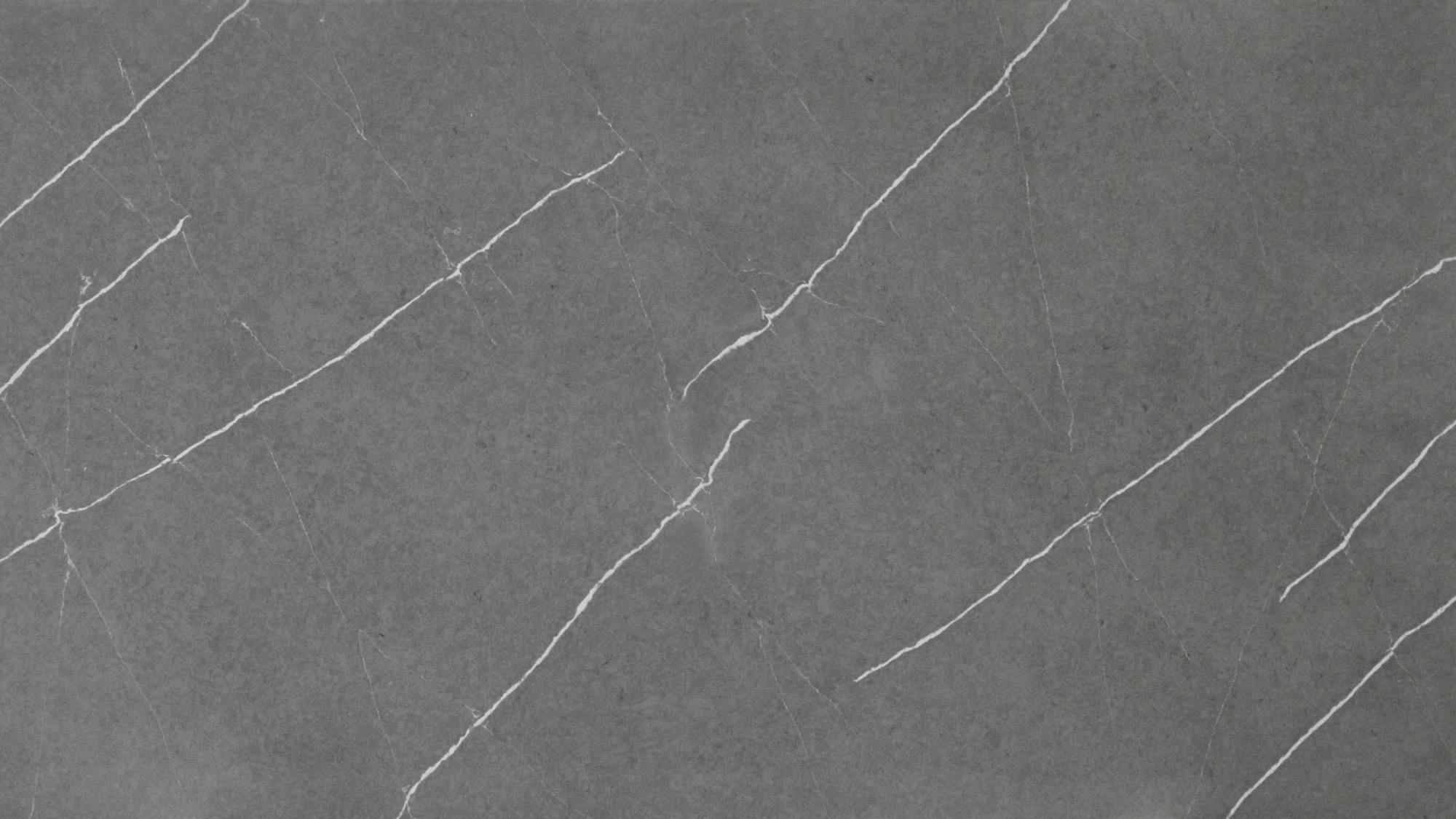
A calm grey quartz slab with fine white veining for countertops, islands, vanities, wall cladding, and interior projects. Practical, architectural, and easy to specify.
Item No :
ALQZ5260Surface finish :
Polished or HonedOrder(MOQ) :
200 square metersPayment :
T/T, L/C, CashProduct Origin :
ChinaColor :
GreyShipping Port :
Xiamen or other China portLead Time :
20 daysWeight :
2700 kg/M3Product Description
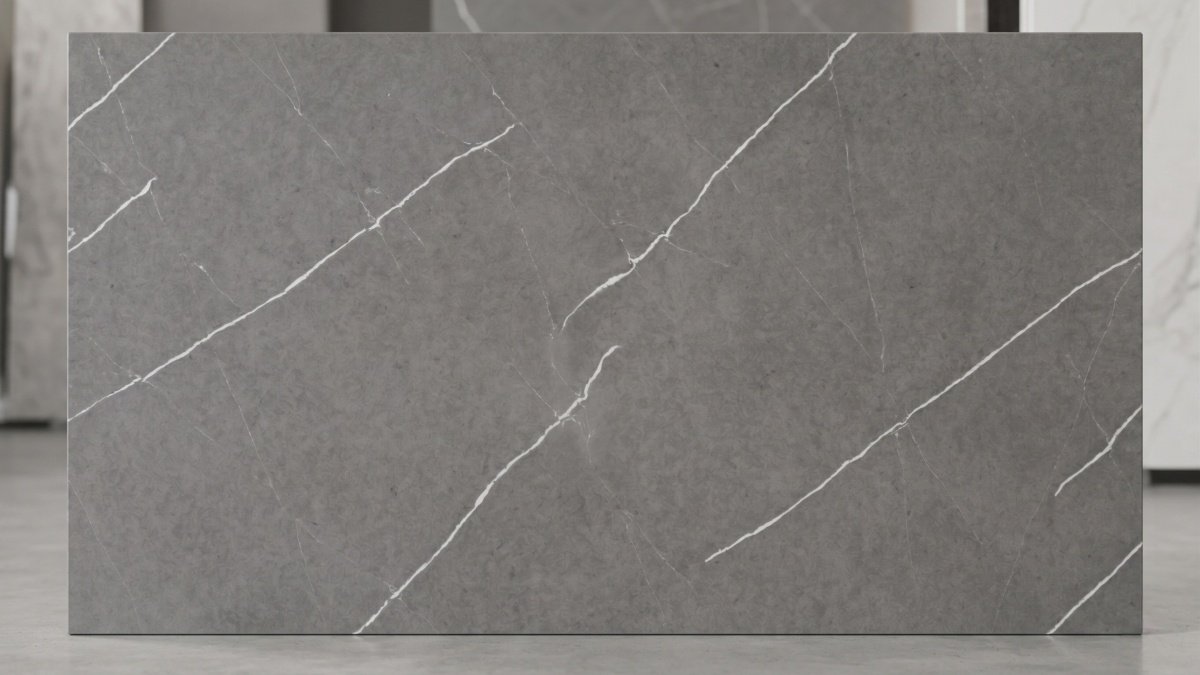
Slate Grey Veined Quartz is a controlled grey quartz surface with slim white veining that moves diagonally across the slab. It gives a project a cooler, more architectural look without becoming visually heavy. For buyers who want a modern stone look that is easier to place across kitchens, vanities, bars, and wall applications, this is a safer choice than louder high-contrast patterns.
Visual Character
The first impression is calm rather than dramatic.
The grey base reads as steady and urban, while the thin white veins add movement without making the slab feel busy. This matters in real projects, because materials like this usually stay comfortable in the space after installation instead of looking trend-heavy after a short time.
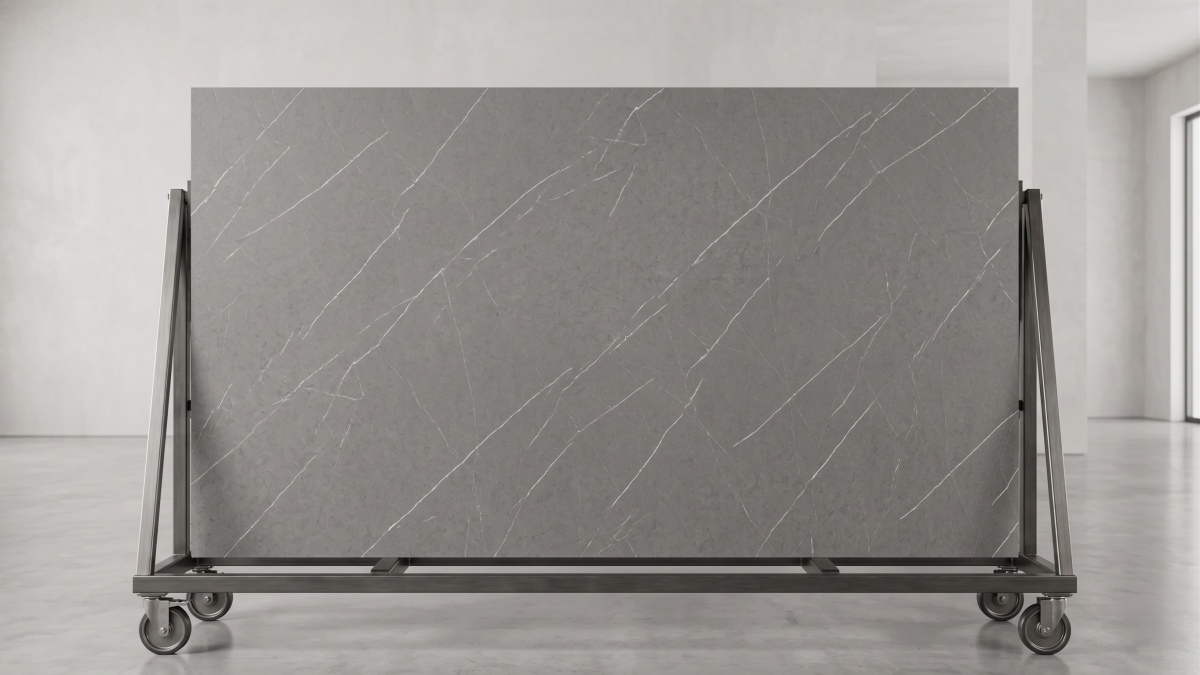
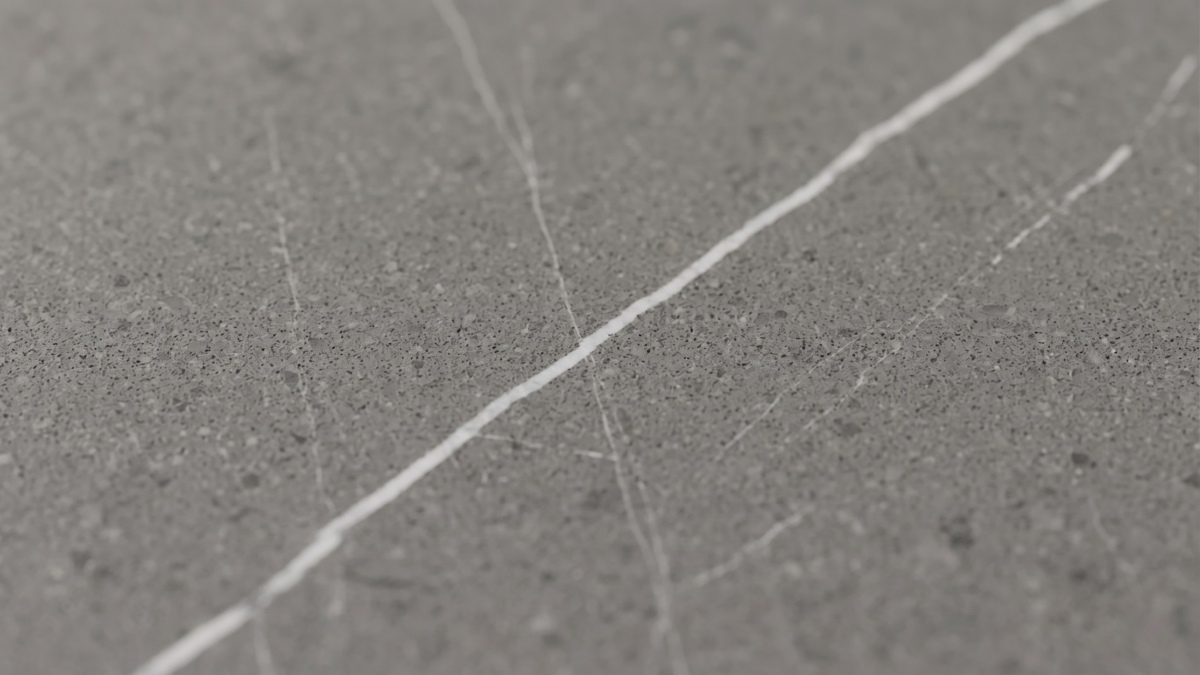
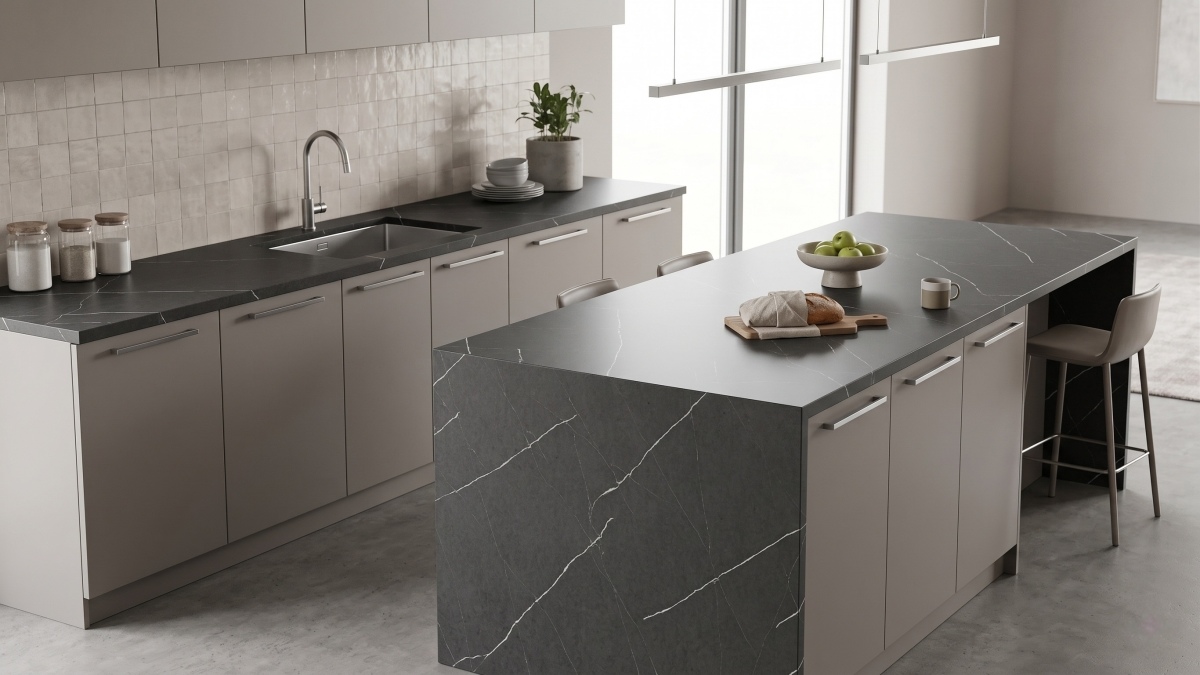
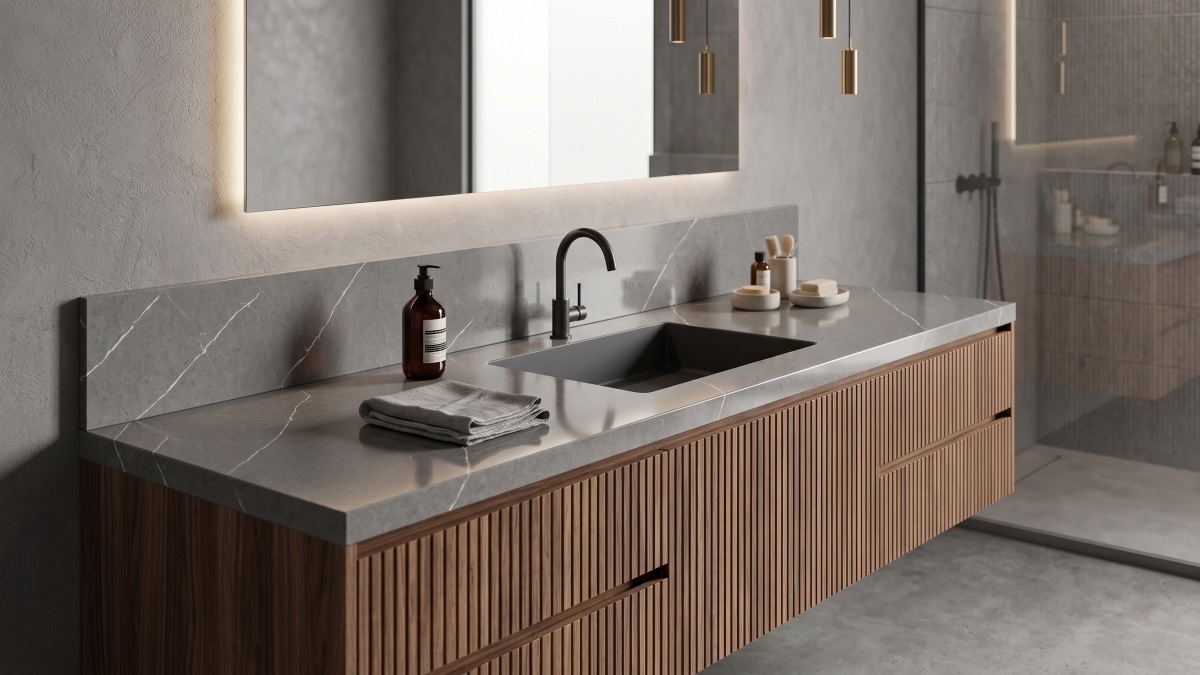
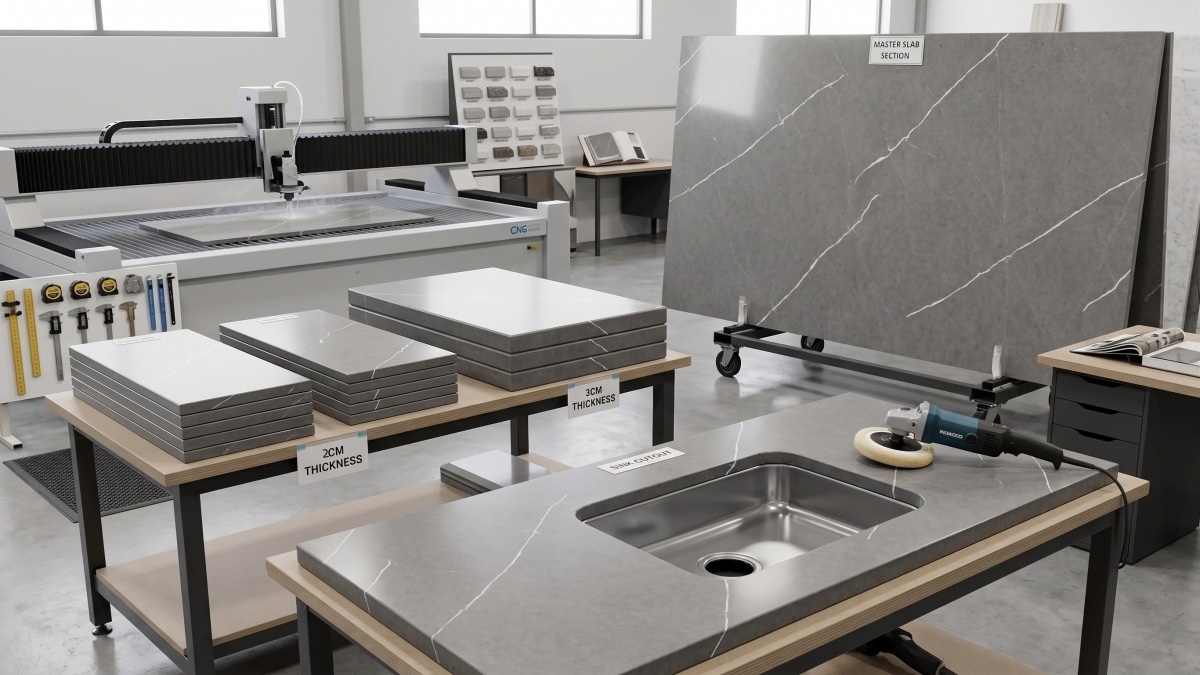

· Modern kitchens with grey, black, wood, or taupe cabinetry
· Apartment and hospitality vanity programs
· Long countertops and islands where visual control matters
· Bar tops, worktops, and reception counters with a cleaner design language
· Interior wall areas that need subtle movement rather than bold marble drama
· It gives a project a marble-like direction without forcing the space into a highly decorative look.
· The grey base is easier to coordinate with cabinet finishes, metal accents, and flooring than many fashion-driven white-and-gold designs.
· For repeated-unit projects, this type of pattern usually carries less aesthetic risk because it is easier to live with across many rooms.
· For fabricators, the finer linear movement is generally more forgiving than heavily fractured statement veins, although proper vein direction planning is still important.
· The current product page also lists large slab formats, multiple finish options, and common countertop thicknesses, which makes it more flexible for standard interior programs.
Kitchen countertops, waterfall islands, bathroom vanity tops, benchtops, bar tops, worktops, wall cladding, stair details, and other interior decorative applications where a cool grey surface fits the project language. The current page lists slab sizes of 3000 × 1400 mm and 3200 × 1600 mm, with polished, honed, and satin leather finish options, plus 18 mm, 20 mm, and 30 mm thicknesses.
This is not the best fit for buyers chasing a bright white Calacatta effect, warm beige interiors, or a bold bookmatched statement wall.
If the design brief depends on gold movement, strong luxury contrast, or dramatic visual impact from a distance, another pattern will usually work better.
This product sits in a commercially useful middle zone. It is decorative enough to avoid looking flat, but controlled enough to suit more than one market. That makes it easier to stock than trend-driven dramatic patterns that sell well for a short period and then slow down. The current product page positions it with common export sizes and standard interior applications, which supports broader resale use.
The pattern direction should still be checked before cutting, especially on long runs, islands, and L-shaped layouts. Even though the veining is finer than a dramatic Calacatta style, clean seam planning still matters. The current page lists edge options such as eased, beveled, bullnose, pencil, ogee, and radius, which is useful for matching different project details.
For multi-unit residential, hotel, and commercial interior work, this is a lower-risk visual choice than louder decorative slabs. It can help keep the design language consistent across repeat areas without making every installation feel identical in a negative way. The current page lists container-based MOQ, seaworthy fumigated wooden packing, and monthly production ability of 200,000 to 300,000 square meters, so it is reasonable to discuss it for volume programs, though final delivery planning should still be confirmed order by order.
Use a soft cloth and a pH-neutral cleaner for daily care.
Do not leave strong pigments, solvent-based chemicals, or aggressive cleaners sitting on the surface longer than necessary.
Use chopping boards and trivets in real kitchens.
For commercial work, it is worth giving the end user a simple care sheet, because good maintenance habits do more for long-term appearance than marketing claims.
Q1. Is the pattern directional?
Yes. The movement is subtle, but it is still directional enough that fabricators should review vein flow before cutting long pieces, islands, or waterfall ends.
Q2. What slab sizes are shown on the current page?
The current page lists 3000 × 1400 mm and 3200 × 1600 mm slab options.
Q3. What finishes and thicknesses are available?
The current page lists polished, honed, and satin leather finishes, with common thicknesses of 18 mm, 20 mm, and 30 mm.
Q4. Is it suitable for larger repeated projects?
It can be a strong candidate for repeated interior programs because the visual language is controlled and commercially broad. The current page also lists container-based MOQ and large monthly output, which supports volume discussion, but project teams should still confirm lot control, schedule, and finish selection early.
Q5. What test-backed information is currently shown on the page?
The page shows data including water absorption 0.05%, density 2371 kg/m³, flexural strength 35.6 MPa dry and 40.1 MPa wet, compressive strength 248 MPa dry and 240 MPa wet, Mohs hardness 6, and GB 6566-2010 Class A radioactivity. Those figures should be treated as the currently displayed product data on the page and checked again against the final order documents if the project requires formal submittals.
Looking for a grey quartz slab that is easier to specify across real interior projects?
Send Aoli Stone your target size, thickness, finish, and application list. We can help you review slab suitability, fabrication direction, and export packing before quotation.
Packing

Technical information
The main component of quartz stone countertop material is 93% quartz sand and resin, color or others. It feels very similar to stone.
|
Test item(s) |
Test method(s) |
Test result(s) |
|
Absorption by weight |
ASTM C97/C97M-15 |
0.05% |
|
Density |
2371 kg/m³ |
|
|
Abrasion resistance (polished) |
ASTM C241/C241M-15e1 |
44 |
|
Flexural strength |
ASTM C880/C880M-15 |
Dry condition:35.6 MPa |
|
Wet condition:40.1 MPa |
||
|
Compressive strength |
Refer to ASTM C170/C170M-17 |
Dry condition:248 MPa |
|
Wet condition:240 MPa |
||
|
Coefficient of linear thermal expansion |
ASTM C531-00(2012 |
22.2×10⁻⁶/C |
|
Specular gloss(60) |
ASTM D523-14 |
38.2 |
|
Stain resistance test |
Refer to ANSI Z124.6-2007 |
Total stain resistance value:56 Maximum individual depth of staining:0.04mm |
|
Composition analysis |
FTIR,PGC-MS,XRF and TGA |
See Page 9 |
|
Radioactivity |
GB 6566-2010 |
Class A |
|
Mohs'hardness |
Refer to EN 101:1991 |
6 |
|
Specimens identification No. |
1 |
2 |
3 |
4 |
5 |
|
Absorption by weight (%) |
0.04 |
0.05 |
0.05 |
0.05 |
0.04 |
|
Mean water absorption (%) |
0.05 |
||||
|
Density (kg/m³) |
2358 |
2372 |
2375 |
2373 |
2376 |
|
Mean density (kg/m³) |
2371 |
||||
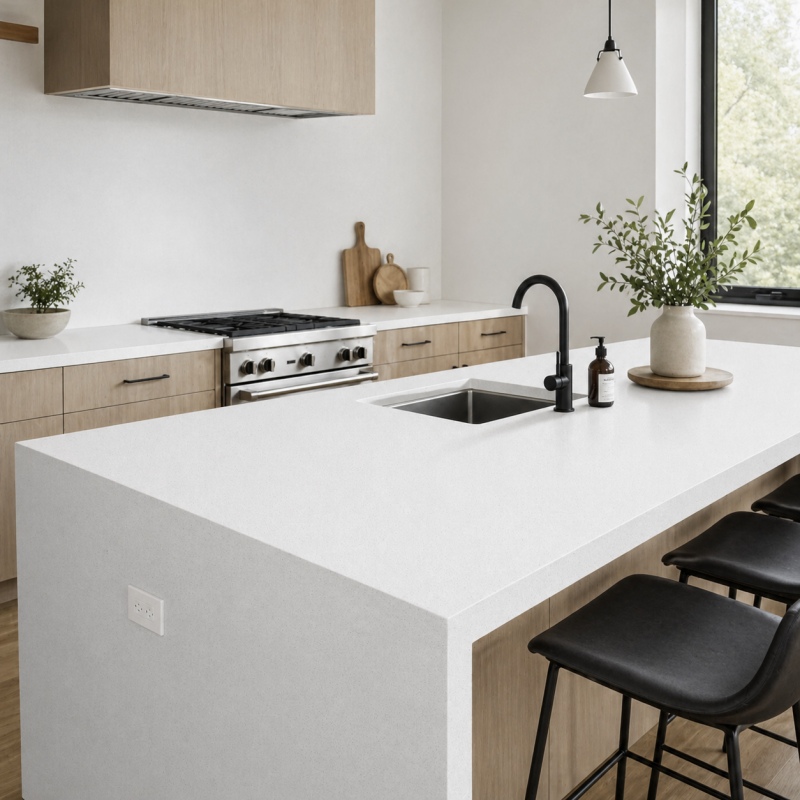
Pure White Quartz is a clean engineered quartz surface with a bright white base and a very subtle fine granular texture. It is a practical choice for countertops, islands, vanity tops, and modern interior projects that need a plain white surface with good visual consistency and everyday usability.
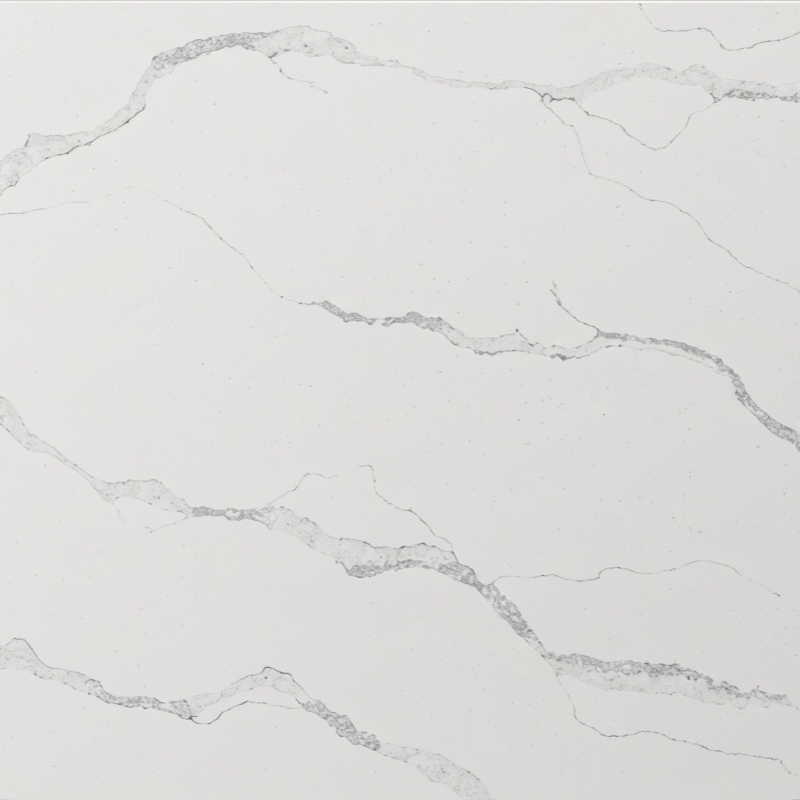
Cloud Vein White Quartz features a clean white base with soft pale grey marble-like veining, ideal for countertops, islands, vanity tops, and interior projects that need a calm and versatile white surface.
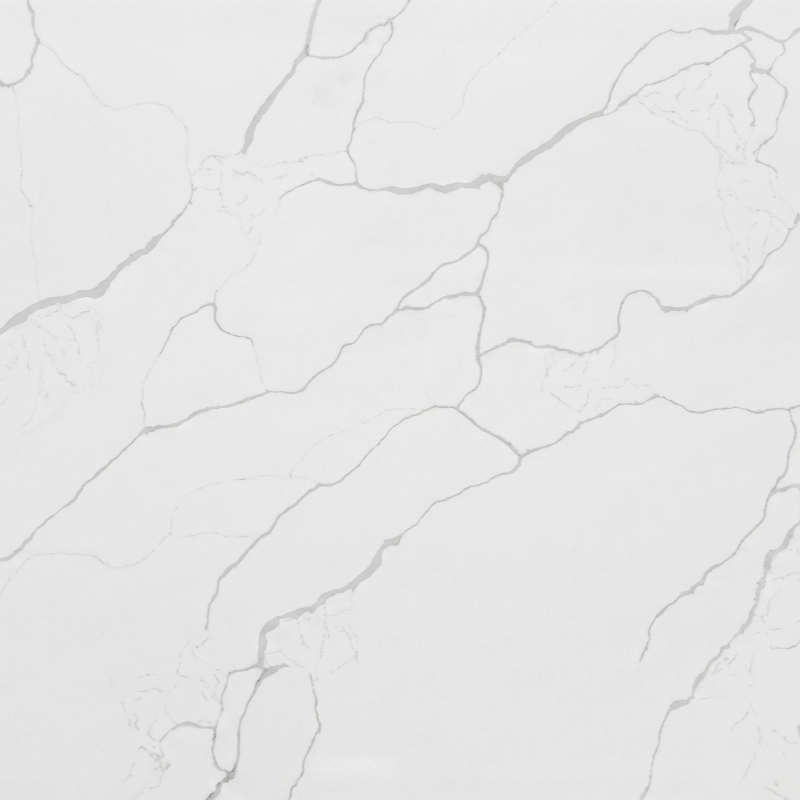
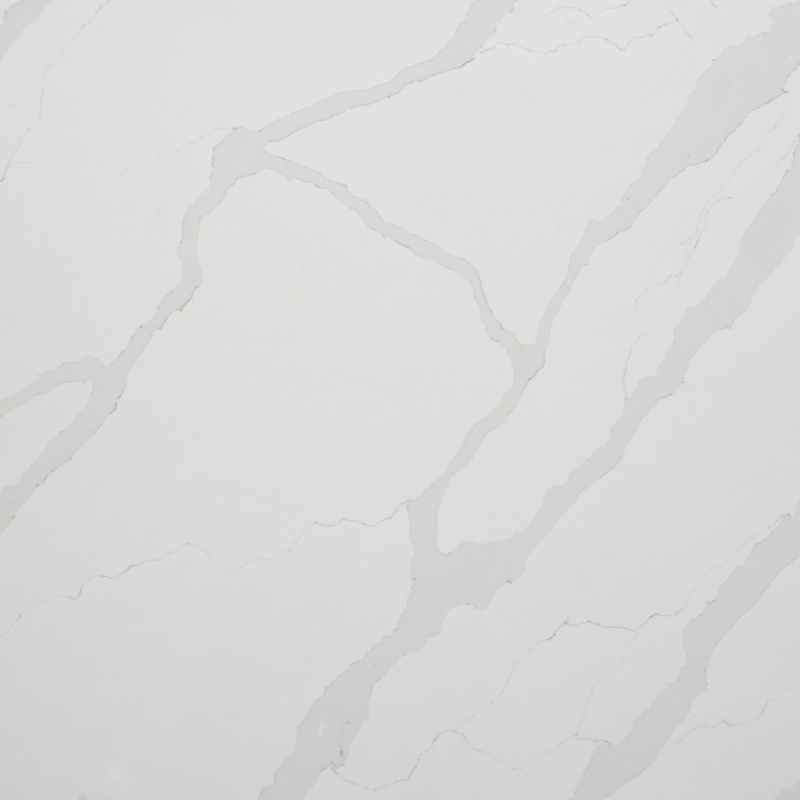
Classic Calacatta White Quartz features a clean white base and soft grey veining for countertops, islands, vanities, and interior projects. Suitable for distributors, contractors, and project buyers seeking a calm marble-look quartz surface.
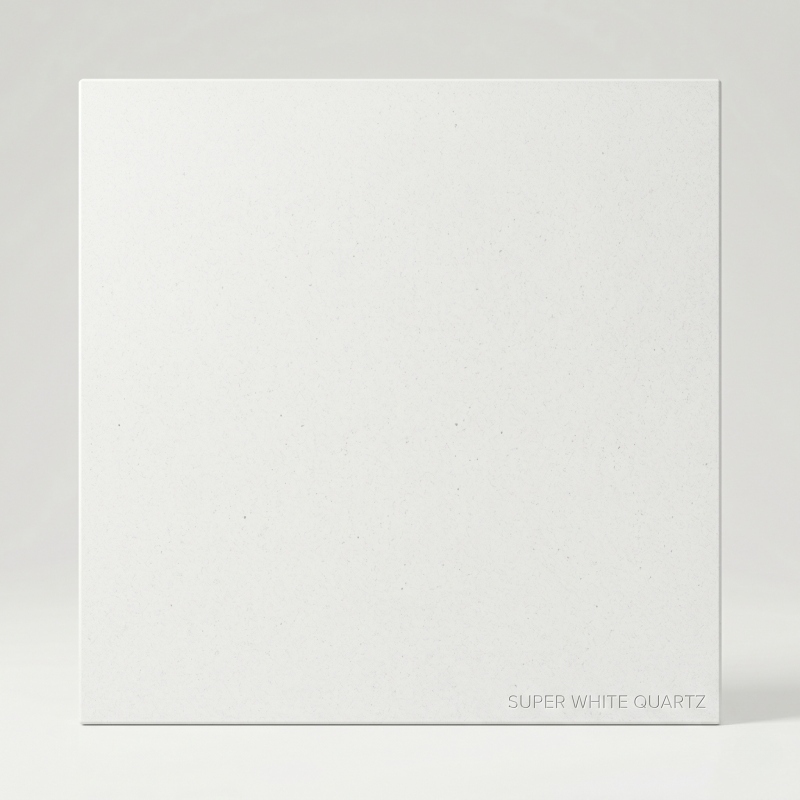
Super White Quartz is a high-purity engineered quartz surface with a cleaner white appearance and a finer, smoother visual texture than standard pure white quartz. It is well suited for countertops, islands, vanity tops, and modern interior projects that need a quiet, refined white surface.
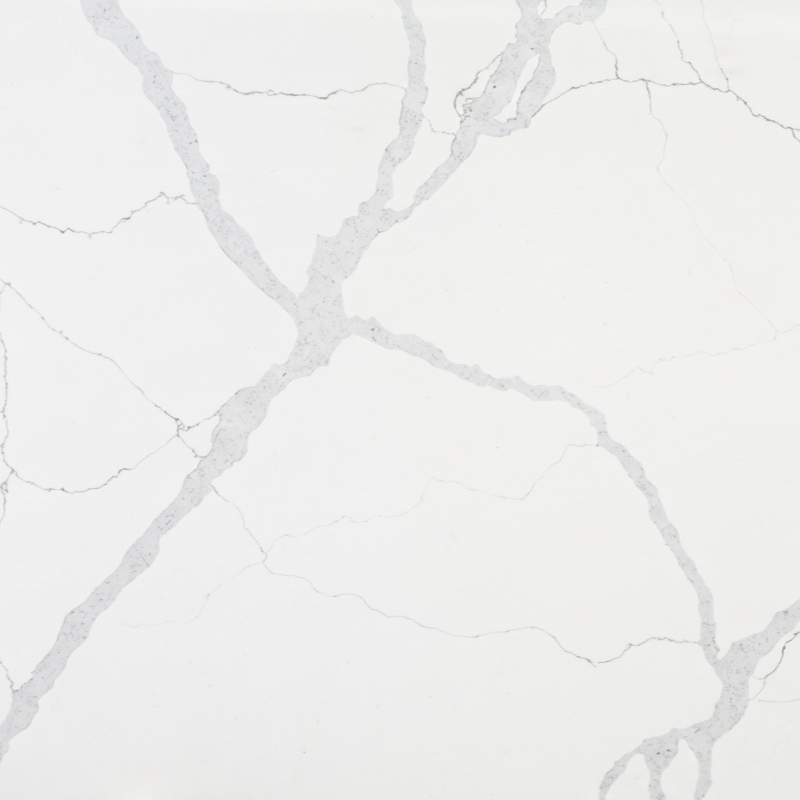
Soft Vein White Quartz features a clean white base with gentle pale grey veining, making it a practical choice for countertops, vanity tops, islands, and interior projects that need a calm and bright marble-look surface.
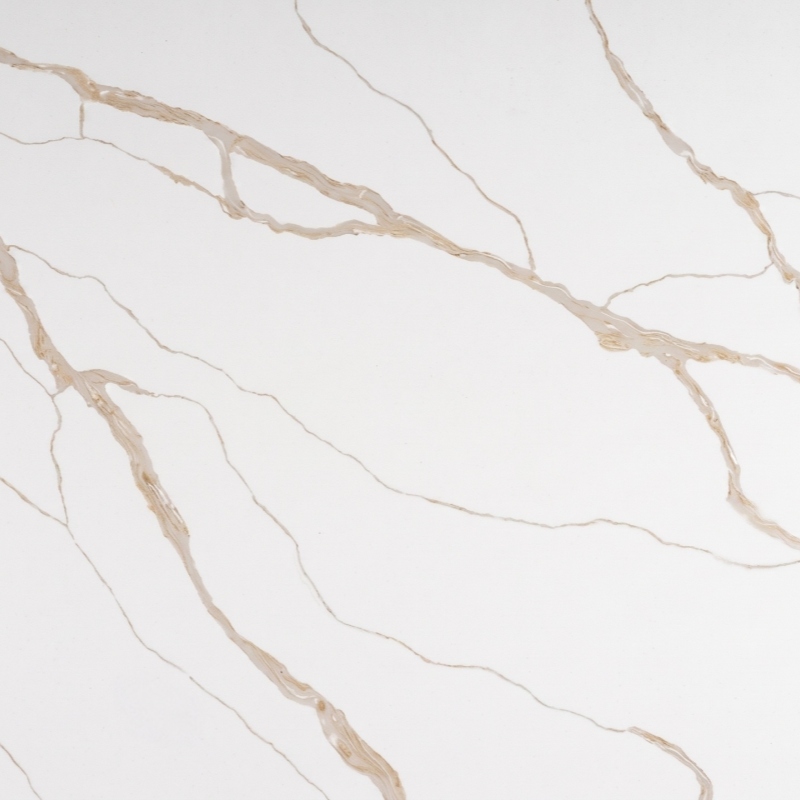
Arctic Calacatta Gold Quartz features a clean white base with warm champagne-gold veining, making it a strong choice for waterfall islands, countertops, vanity tops, and elegant modern interiors.
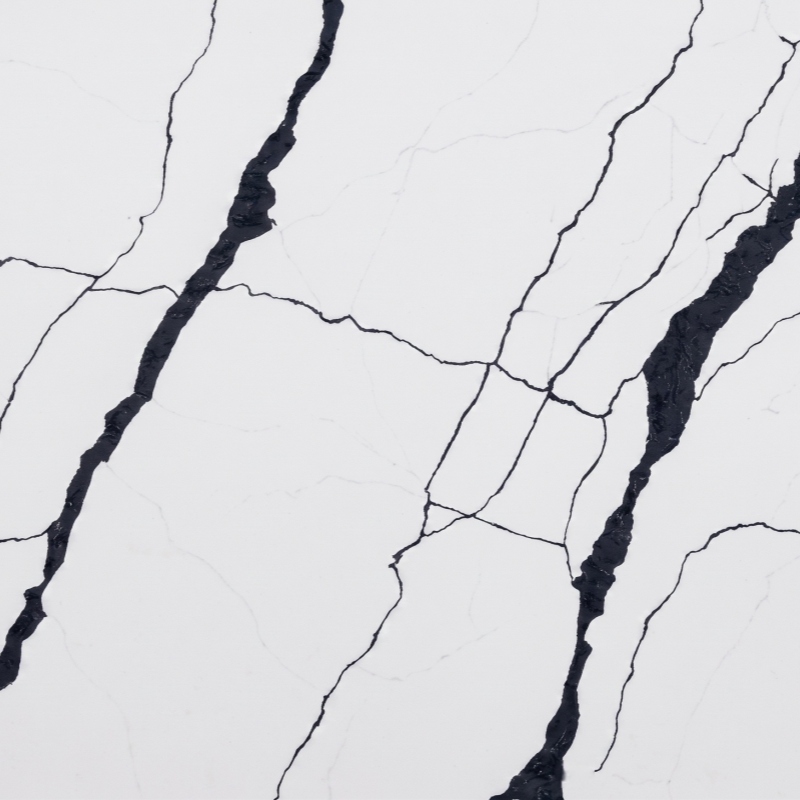
Steel Rift White Quartz features a clean white base with strong steel-grey veining and fine linear movement. A practical choice for kitchen countertops, islands, vanity tops, and modern interior projects that need a sharper architectural look.
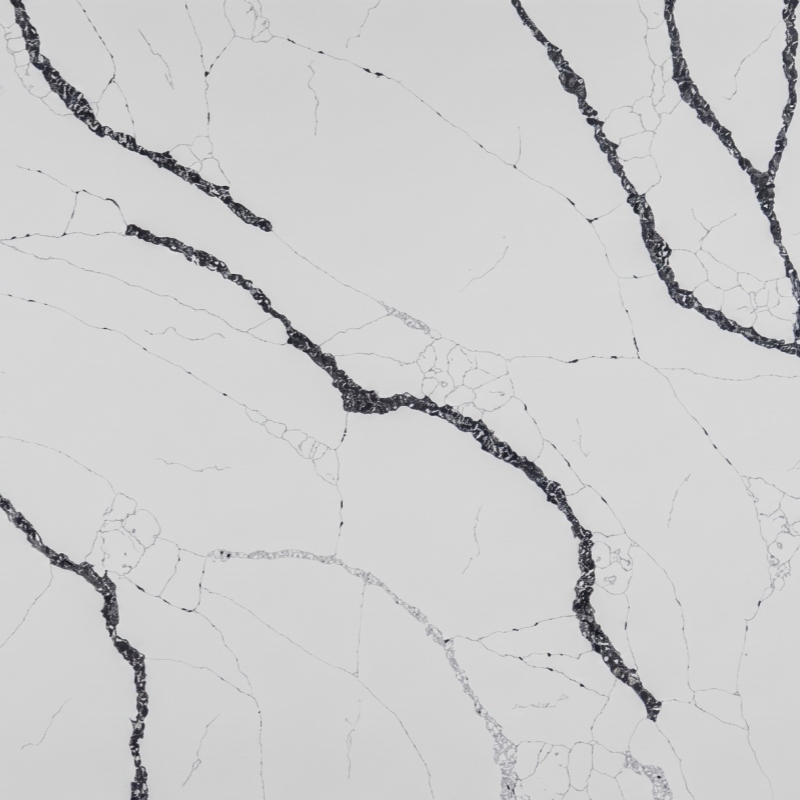
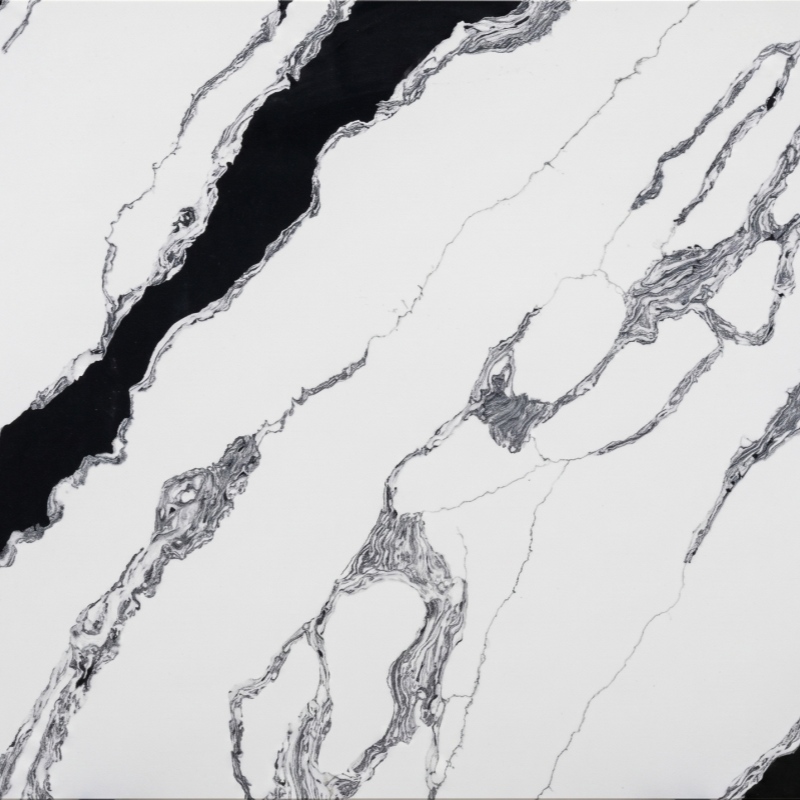
White quartz slab with bold graphite-black veining, open white field, and layered marble movement. A strong choice for statement countertops, islands, vanity tops, and selected interior wall applications.



 IPv6 network supported