English
 Español
 Português
 عربي
عربي 한국어
한국어

Apartment and residential stone projects can look simple at first.
A kitchen countertop. A bathroom vanity top. A shower wall. A threshold. A stair tread. A window sill. A corridor floor. An elevator lobby wall.
Individually, each item may seem manageable. But across an apartment building, serviced apartment, residential tower, villa development, or renovation package, these small stone elements can multiply quickly.
That is why apartment and residential stone project supply needs careful planning before ordering.
A residential project is not only about choosing a beautiful stone material. It is about making sure the material can be repeated, fabricated, packed, delivered, installed, and maintained across many rooms and units with fewer surprises.
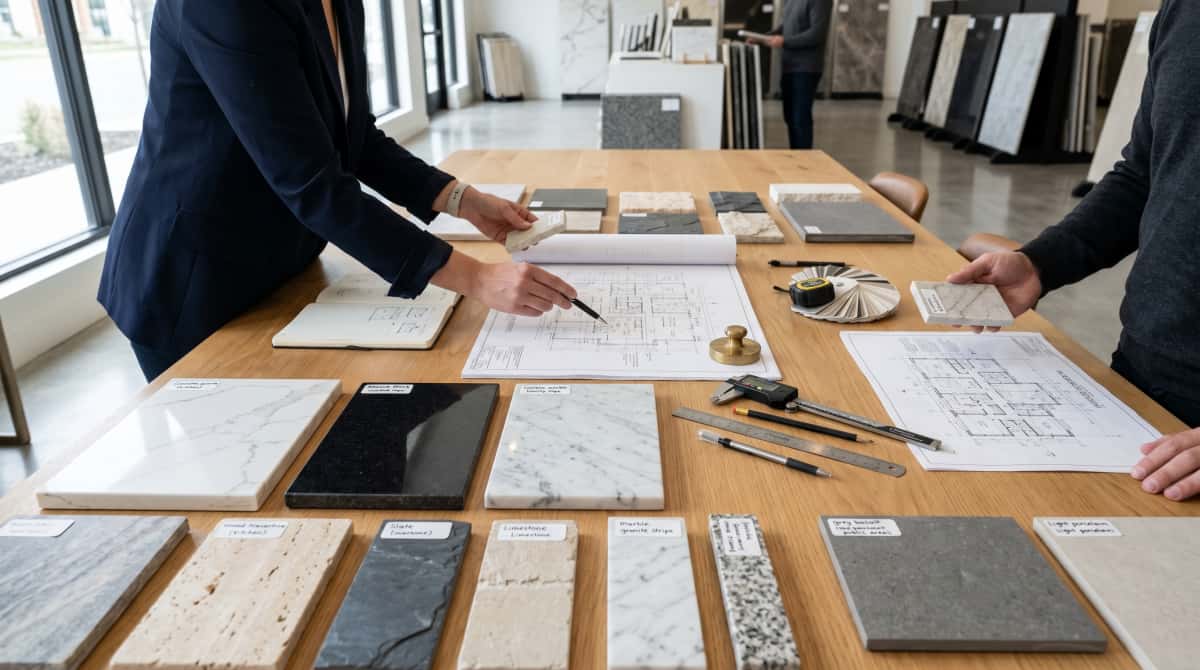
Residential Projects Need Practical Material Thinking
Residential interiors are used every day.
Unlike a showroom display, apartment and residential stone must handle real life: cooking, cleaning, water exposure, personal care products, foot traffic, furniture movement, family use, rental turnover, and long-term maintenance.
This means buyers should not choose stone only by appearance.
They should ask where the stone will be used, whether the surface will be touched daily, whether it needs frequent cleaning, whether it will be exposed to moisture, and whether the supplier can maintain a controlled range for the full project.
Kitchens and Vanity Tops Require Fabrication Accuracy
In apartment and residential projects, kitchens and bathrooms create many fabrication-sensitive details.
Countertops and vanity tops often include sink cutouts, faucet holes, cooker or hob cutouts, backsplash pieces, side splash pieces, edge profiles, cabinet alignment, wall tolerance, joint positions, and packing by unit or room type.
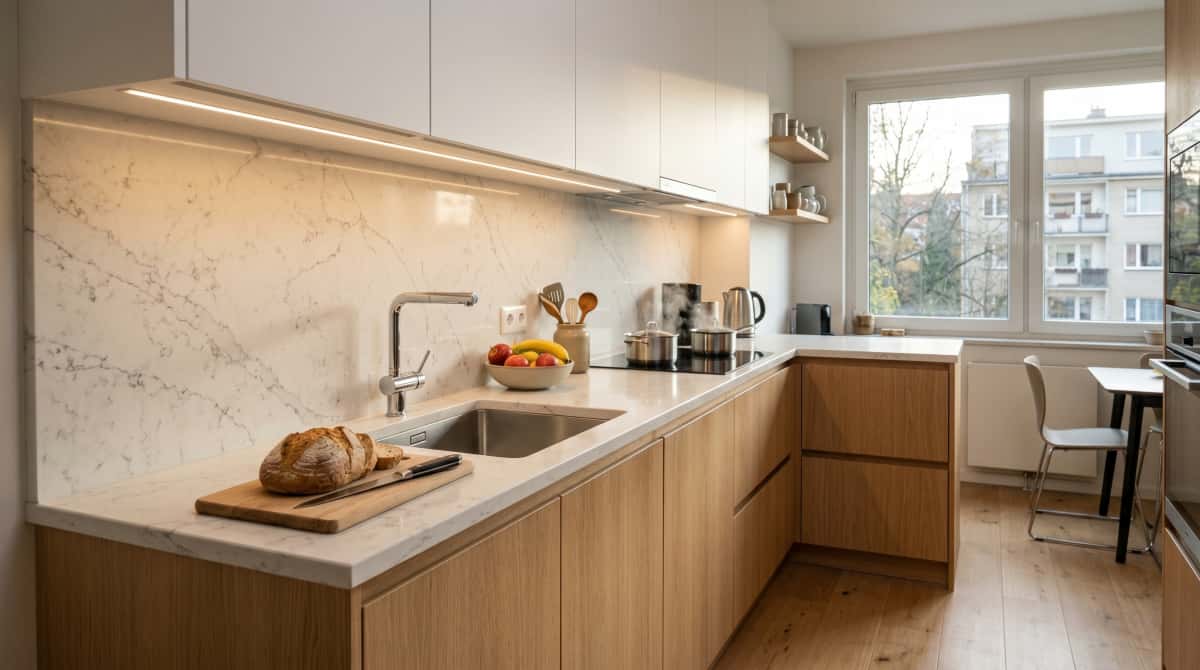
This is where quartz stone surfaces for kitchens and vanity tops can be a practical option when the project needs a controlled appearance and repeated fabricated surfaces.
A small cutout error can delay installation. A wrong faucet hole can affect plumbing. An inconsistent edge can be repeated across many rooms.

Repeatability Matters More Than One Beautiful Sample
One good sample is not enough for a residential project.
A building may include dozens or hundreds of units. Each unit may need similar kitchen tops, vanity tops, thresholds, bathroom walls, or window sills. If the material varies too much, the project can feel inconsistent.
For artificial marble slabs for residential interiors, controlled color and repeated visual softness may help certain projects achieve a consistent interior style.
For natural stone, repeatability needs a different kind of expectation. Natural materials will vary, so buyers should define an acceptable range instead of expecting every piece to match one small sample exactly.
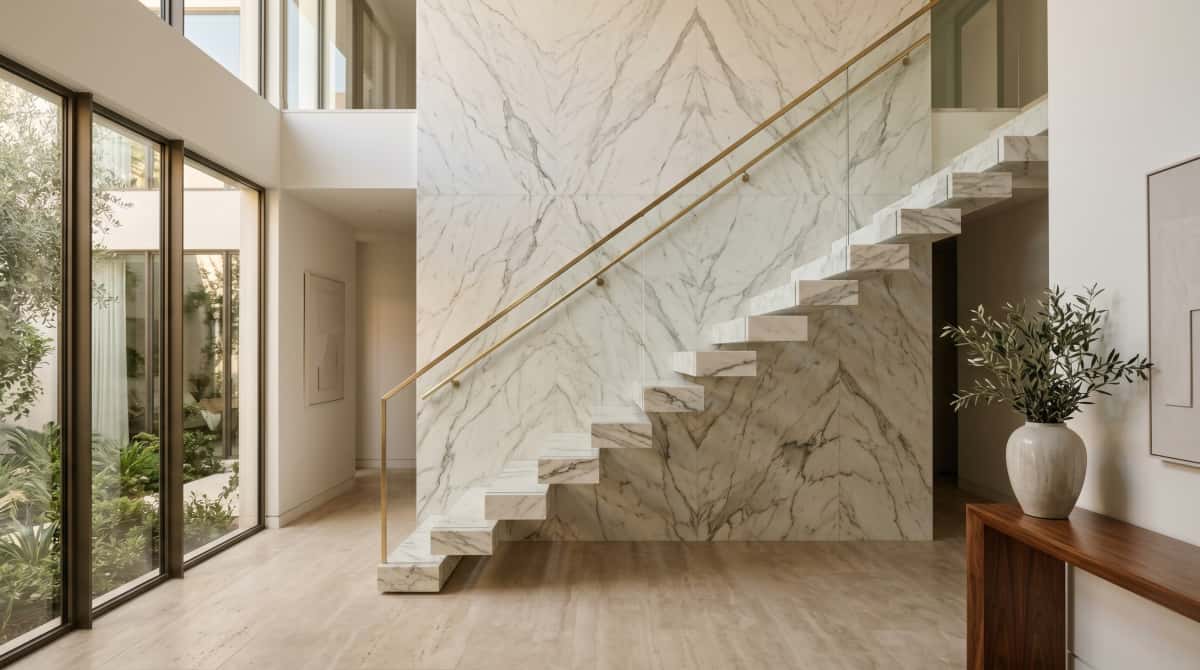
Natural Marble Can Work Well, But Expectations Must Be Clear
Natural marble can bring warmth, depth, and individuality to villas, premium apartments, private residences, and selected feature areas.
For natural marble materials for villas and residential projects, buyers should consider where the material will be used and how much natural variation is acceptable.
The problem is not natural variation itself. The problem is when variation is not explained before ordering.
Terrazzo Can Support Shared and Public Residential Areas
Apartment projects often include more than private units. They may also include entrance lobbies, elevator halls, corridors, stair landings, clubhouse areas, amenity spaces, and retail-connected public areas.
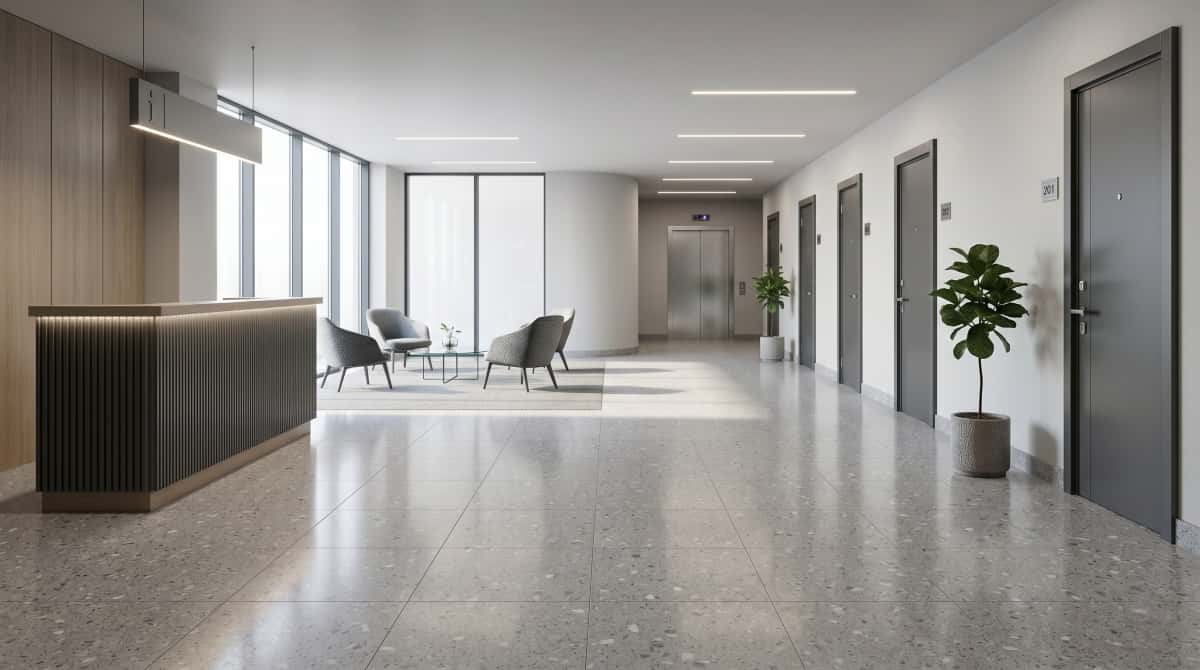
For these spaces, terrazzo stone for apartment and public area interiors can offer a design-led and practical surface when the aggregate size, color range, finish, and joint layout are properly planned.
Room Types and Unit Types Should Be Organized Before Production
Residential projects often repeat the same room types, such as Type A kitchens, Type B kitchens, master bathrooms, guest bathrooms, powder rooms, balcony thresholds, corridor areas, elevator lobbies, duplex staircases, and penthouse upgrade packages.
If this information is not organized before production, mistakes become more likely.
This is where stone manufacturing and fabrication capability becomes important. A capable supplier should not only cut stone pieces, but also help organize repeated components so the project can be installed more smoothly.
Bathrooms Need Special Attention
Bathrooms are one of the most sensitive areas in residential stone supply.
They may include vanity tops, shower walls, tub surrounds, thresholds, wall panels, floor pieces, niches, and small ledges. These areas involve water exposure, cleaning, lighting, cutouts, slopes, and joint coordination.
Before ordering bathroom stone, buyers should clarify vanity top size, sink type, faucet hole positions, backsplash and side splash, wall panel layout, shower area requirements, floor finish, threshold details, maintenance expectations, and packing by bathroom type.
Flooring and Wall Cladding Should Be Planned Differently
Residential flooring and wall cladding have different responsibilities.
Floors must handle movement, furniture, cleaning, slip expectations, and long-term wear. Wall panels are more visual, but they require layout planning, joint control, lighting awareness, and corner detail.
The same material may work well on a wall but require more careful discussion for a floor.
Packing Should Follow Unit and Room Logic
Residential project packing should not be random.
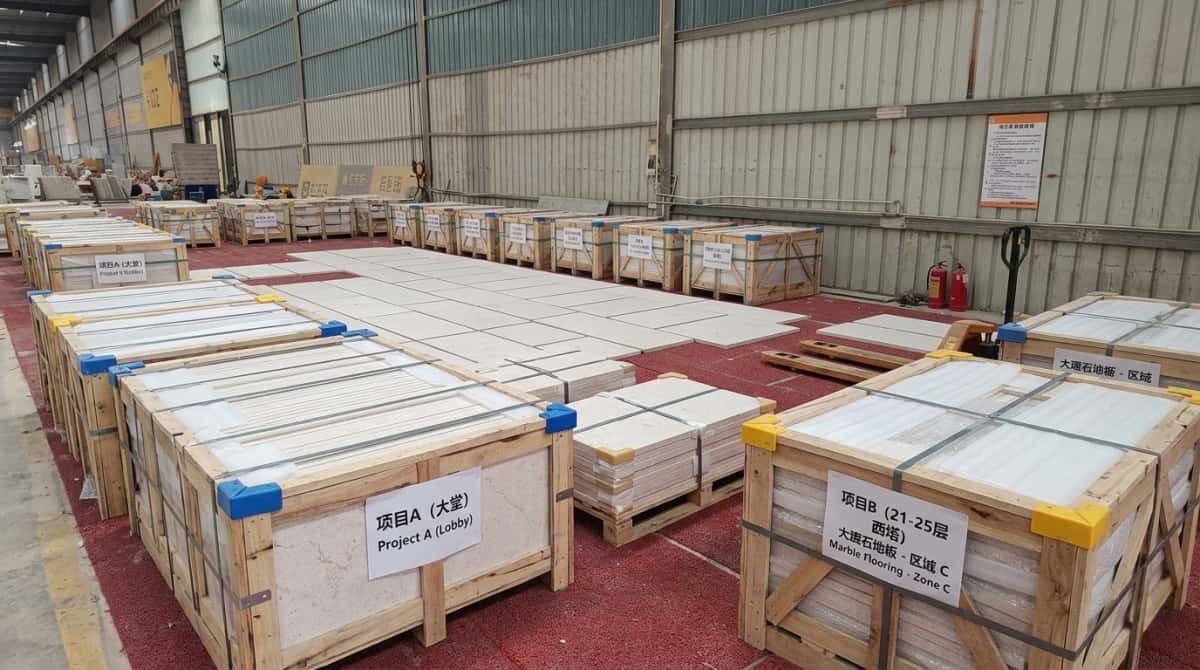
If many similar pieces arrive without clear labels, the site team may spend unnecessary time sorting. Worse, pieces may be installed in the wrong unit or room.
Good packing logic may include packing by floor, building, unit type, room type, crate numbers linked to cutting lists, labels connected to drawings, separate protection for fragile pieces, and clear photos before shipment.
For international stone project supply from China, packing and documentation should help the buyer understand the order before it arrives, not only after the container is opened.
Maintenance and Replacement Should Be Considered Early
Residential projects do not end after installation.
The building will be used for years. Units may be sold, rented, renovated, repaired, or maintained. Public areas may need future replacement pieces. Homeowners may ask about cleaning and care.
That means buyers should consider spare pieces, future replacement, batch records, maintenance notes, cleaning expectations, material suitability for end users, and how easy it will be to match later.
All in All
Apartment and residential stone projects are not only about attractive materials.
They are about daily use, repeated room types, fabrication accuracy, bathroom details, kitchen cutouts, public area durability, unit-by-unit packing, and long-term maintenance.
A beautiful sample may help the project begin. A controlled supply process helps the project finish with fewer problems.
For material selection, fabrication coordination, and export support, buyers can contact Aoli Stone for residential stone project support.



 IPv6 network supported