English
 Español
 Português
 عربي
عربي 한국어
한국어

Hospitality stone supply is different from supplying stone for a single private room, one feature wall, or one custom residence.
A hotel project may include dozens or hundreds of bathrooms, repeated vanity tops, corridor flooring, elevator surrounds, lobby areas, wall panels, stair elements, reception counters, and back-of-house stone details. Each part may look simple when viewed alone. But when repeated across rooms, floors, and phases, small inconsistencies become much easier to notice.
That is why repeatability matters so much in hospitality stone supply.
A beautiful sample can open the conversation. A good slab can support the design direction. A well-made mock-up can help win approval. But a hotel project is not won by one good piece.
It is won by the ability to reproduce the approved standard again and again, with controlled material selection, consistent fabrication, clear numbering, reliable packing, and practical coordination from factory to site.
A hotel guest may only see one bathroom, one corridor, or one elevator area. But the project team sees the entire system.
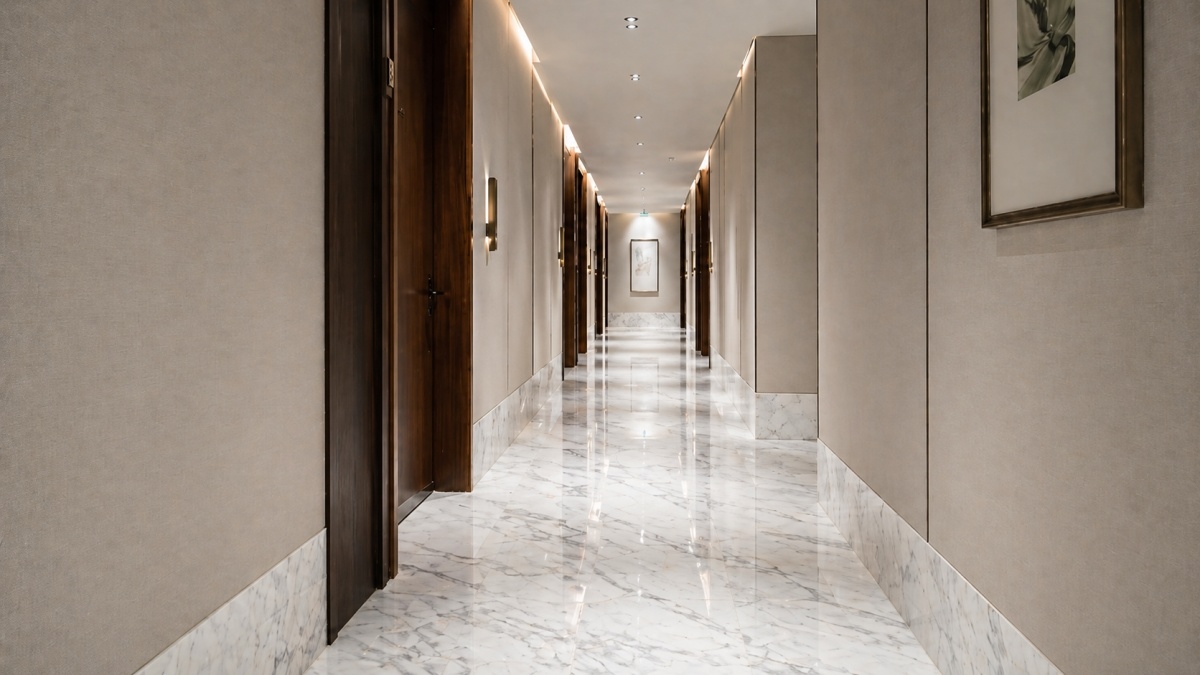
They see whether the same vanity type looks consistent across guest rooms, whether corridor flooring changes too much from floor to floor, and whether repeated bathroom details are fabricated with the same logic.
In a private project, one special piece may be enough. In a hotel project, the question becomes: can this result be repeated without losing control?
Hospitality projects usually go through approval stages: samples, finish samples, slab photos, mock-up rooms, vanity prototypes, edge details, and bathroom layouts.
Once approved, the project expects the following production to remain close to that standard.
The risk is that later batches or repeated pieces quietly drift away from the approved version. A single inconsistency may be acceptable. Repeated inconsistencies become a project problem.
Repeatability does not mean every stone piece must look identical.
Natural stone has variation. Terrazzo may have chip distribution differences. Engineered marble and quartz can be more controlled, but still require batch and finish management.
The goal is not fake sameness. The goal is controlled expectation.
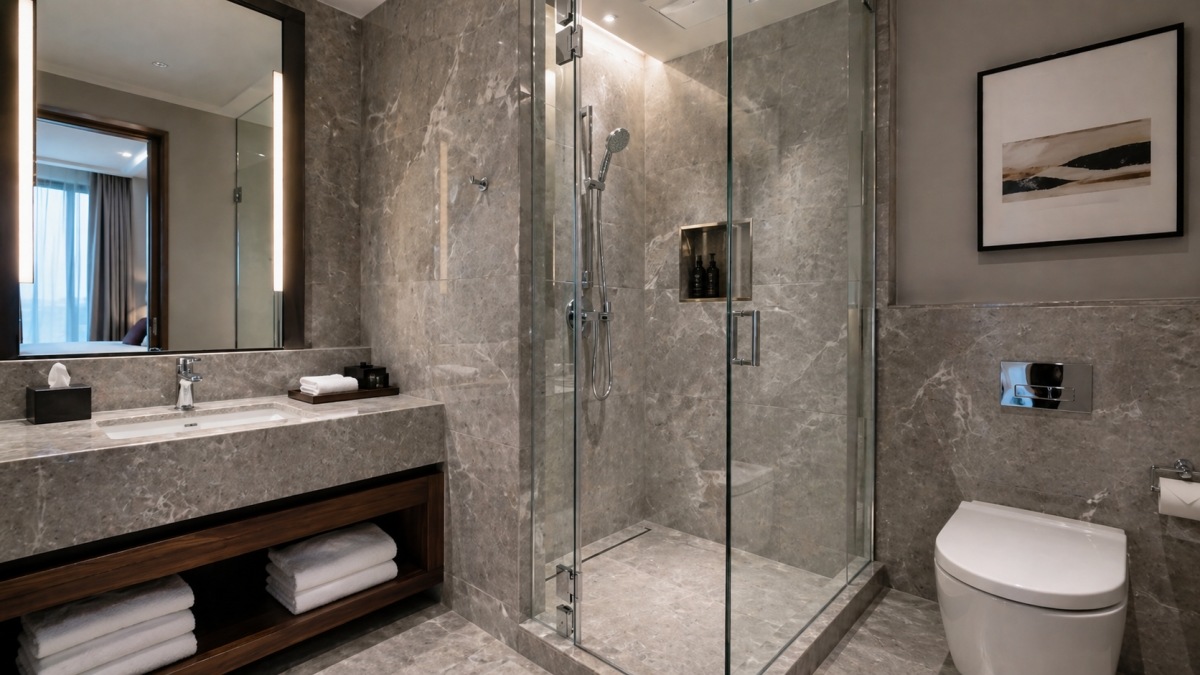
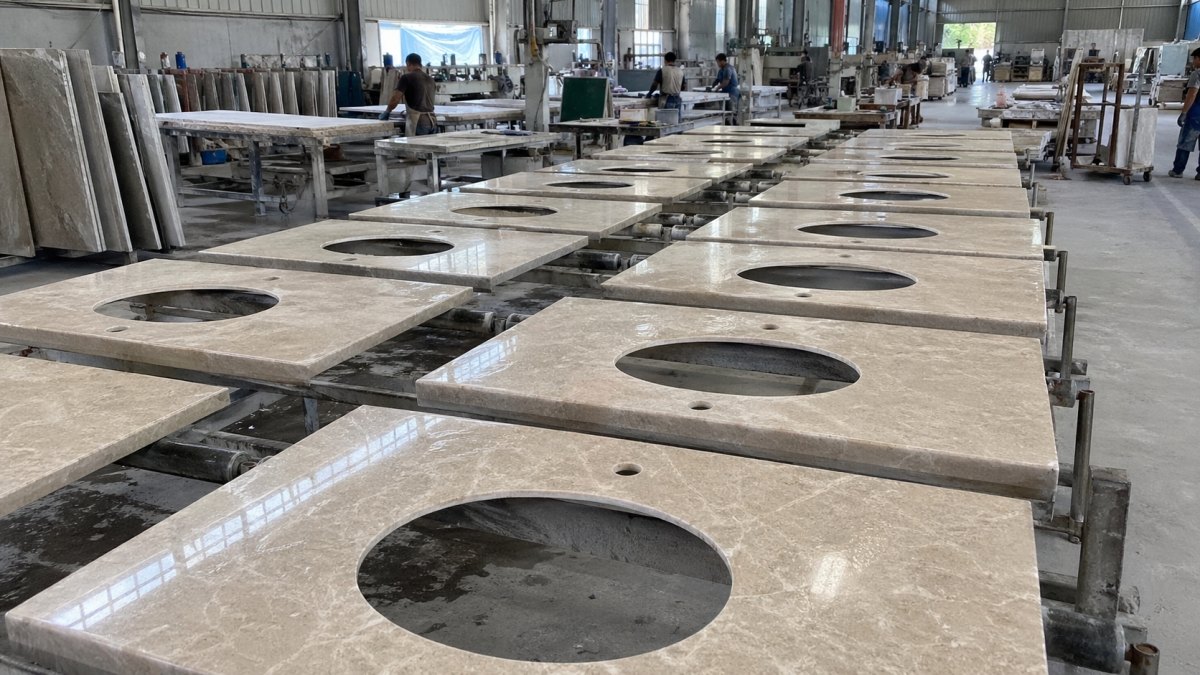
Hotel bathrooms often require repeated vanity tops, shower curbs, thresholds, wall panels, ledges, shelves, and flooring pieces.
That repetition makes control important. Vanity tops should have consistent dimensions, sink cutouts should align correctly, exposed edges should feel consistent, and packing should support room-by-room installation.
One room may look fine. Ten rooms show variation. Fifty rooms make the issue obvious.
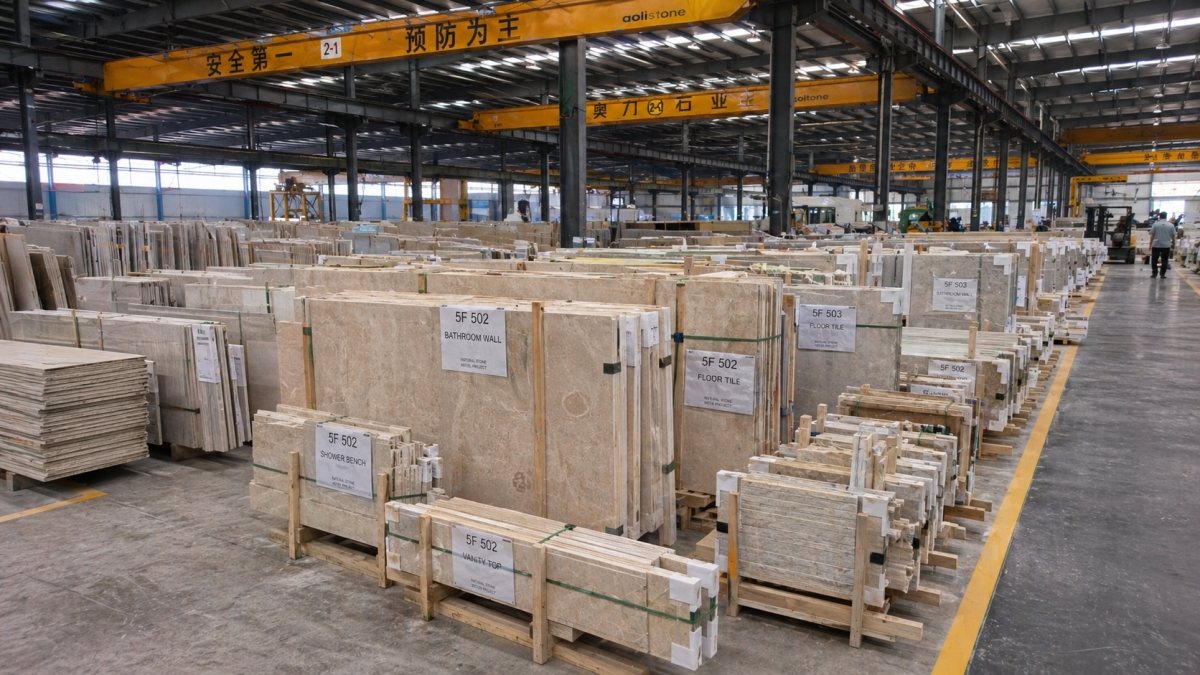
Repeatability begins with material selection.
For hospitality projects, the supplier and buyer need to clarify the acceptable material range, which areas require tighter visual control, whether slabs should come from the same selection group, which pieces can tolerate more variation, and whether reserve material should be held.
Material control is the foundation of repeatable project supply.
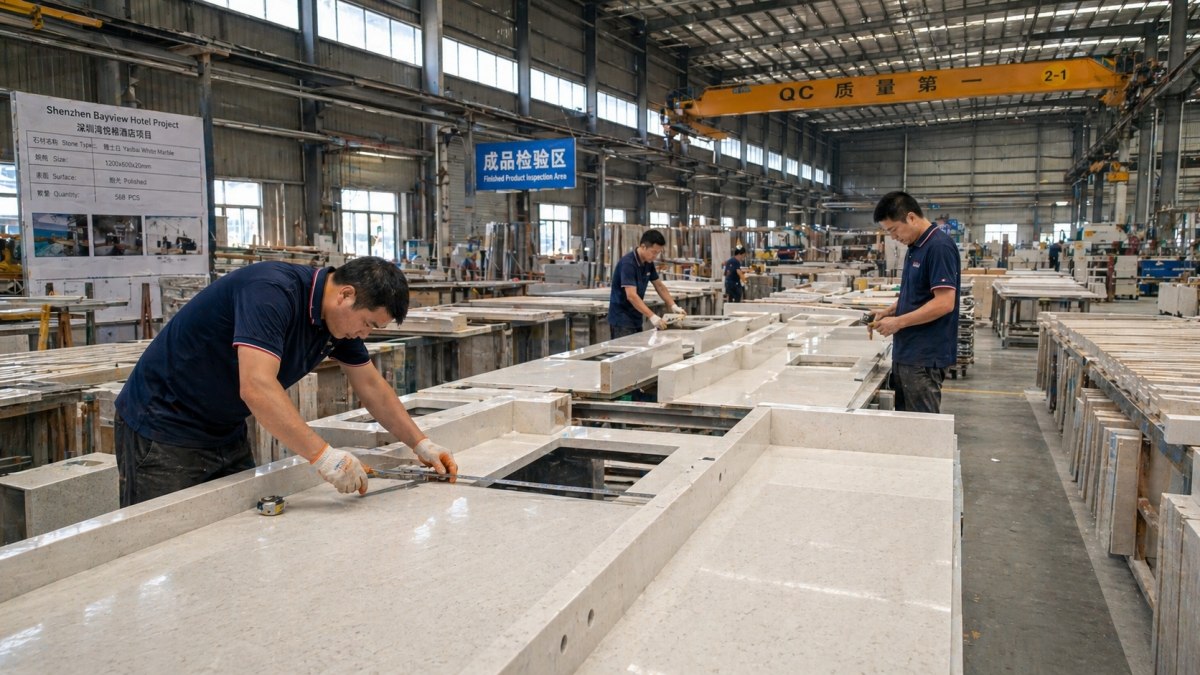
In hotel projects, workmanship consistency is as important as material consistency.
A repeated vanity top program depends on consistent thickness, edge profile, cutout execution, polishing quality, hole positions, backsplash dimensions, and packing logic.
A hotel project does not want each room to become a new problem to solve.
When stone pieces are consistent, labeled clearly, and packed according to project logic, installers can build rhythm. They do not need to stop repeatedly to interpret, sort, adjust, or question each piece.
This matters because hospitality projects are often schedule-sensitive.
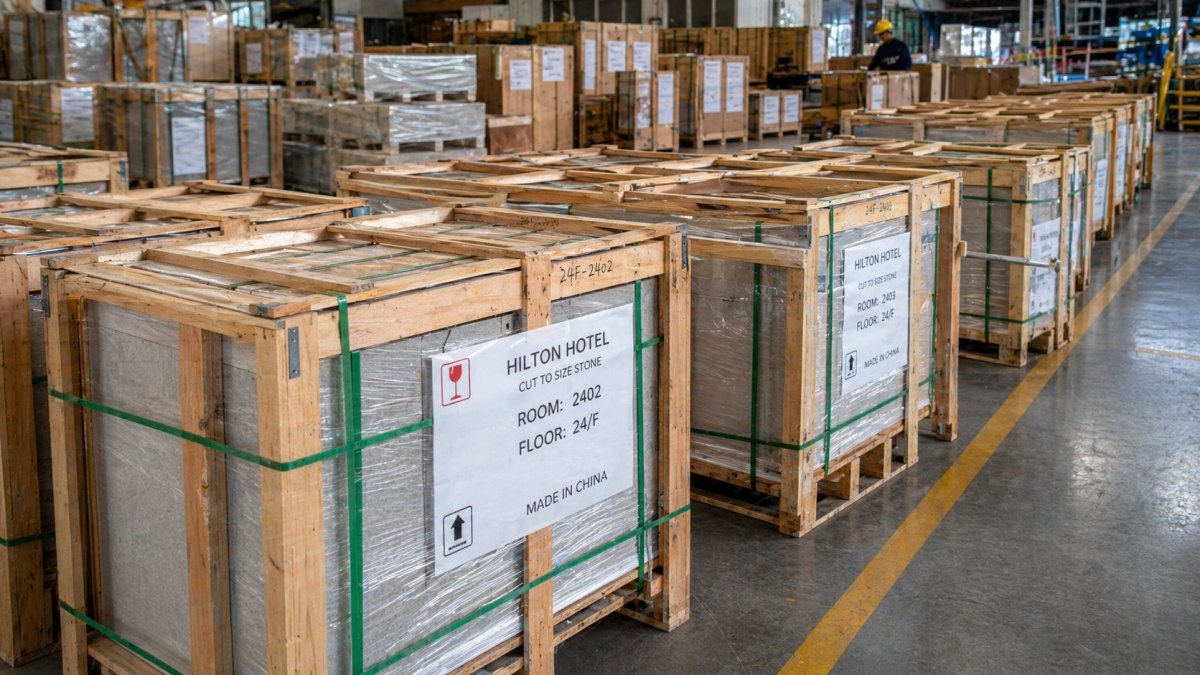
Many hotel projects move through phases: mock-up room supply, first batch production, main guest room production, public area supply, later replacement pieces, and future maintenance.
If the first batch looks good but later batches cannot stay close enough to the approved standard, the project may face continuity problems.
For buyers managing multiple hospitality stone requirements across different project stages, a structured supply workflow can reduce coordination risks. Our Hotel Stone Supply Package for Hospitality Projects connects material selection, fabrication, dry layout, quality checking, packing, and replacement planning into one coordinated process.
A hotel project needs beauty, but it also needs discipline. It needs material selection, fabrication control, batch planning, labeling, packing, and delivery logic that can be repeated across many rooms and areas without losing the approved standard.
In serious hospitality projects, repeatability is not a small detail. It is part of quality itself.



 IPv6 network supported