English
 Español
 Português
 عربي
عربي 한국어
한국어

In stone projects, many problems are not discovered when the stone is produced. They are discovered when the installer opens the crates on site.
By then, the project may already be under pressure.
The site team is waiting. The contractor is asking for progress. The buyer is checking the delivery schedule. The installer wants to start fixing the stone. But suddenly, the stone layout does not look right. The vein direction is confusing. Some pieces are too different in tone. A stair piece seems reversed. A wall panel sequence is unclear. Floor pieces are mixed between areas. The packing list does not help the installer understand the layout.
This is why stone dry lay inspection matters.
Dry lay is not only about placing stone pieces on the floor for a photo. For serious cut-to-size stone projects, it is a practical control step before packing and shipment. It helps the buyer, supplier, and project team check whether the material, layout, sequence, and visual result make sense before the stone leaves the factory.
Once the goods are packed and shipped, many problems become harder, slower, and more expensive to correct.
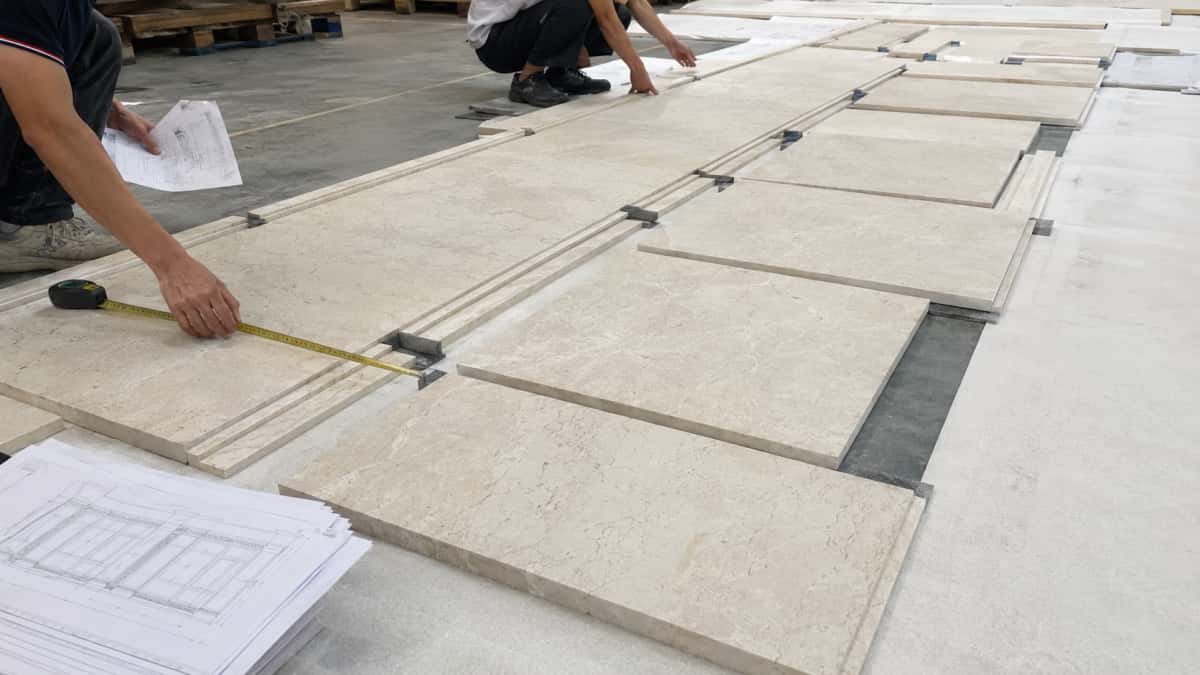
Dry lay means arranging stone pieces before installation without adhesive, mortar, or permanent fixing.
In a factory or workshop setting, dry lay is usually done before packing. The goal is to check the layout, color, vein direction, piece sequence, joint rhythm, and visible surface before the goods are loaded into crates.
For some projects, dry lay may be simple. The supplier places several pieces together and confirms color range. For more complex projects, dry lay may involve a full area layout, such as a lobby floor, feature wall, bookmatched marble panel, staircase, elevator surround, bathroom wall set, or custom-shaped stone package.
Dry lay is especially useful when the project includes:
· natural marble with strong veins
· limestone with natural tonal movement
· terrazzo flooring or wall panels
· artificial marble cut-to-size pieces
· large wall cladding panels
· hotel bathroom sets
· floor patterns
· stair treads and risers
· reception counters
· curved stone elements
· stone pieces with special numbering
· bookmatched or continuous veining layouts
A good dry lay stone layout helps answer one essential question:
Will these pieces work together before they are packed?
That question sounds simple, but in real projects it can prevent many avoidable problems.
Buyers should understand one important point: dry lay is a checking process, not the final installation.
A factory dry lay cannot fully reproduce site conditions. It does not include final lighting, adhesive, wall tolerance, floor level, installer skill, joint filler, surrounding materials, or long-term use conditions.
So dry lay should not be misunderstood as a perfect preview of the finished project.
Its value is different. Dry lay helps check the parts that can still be controlled before shipment:
· Does the material match the approved range?
· Do the pieces follow the drawing?
· Are the numbers clear?
· Does the layout sequence make sense?
· Is the vein direction acceptable?
· Are strong color differences placed in the right area?
· Are visible pieces selected carefully?
· Are wrong pieces found before packing?
· Does the packing order support installation?
For international stone project coordination, this step is often more valuable than a simple production photo because it shows how the stone pieces relate to each other, not only how one piece looks alone.
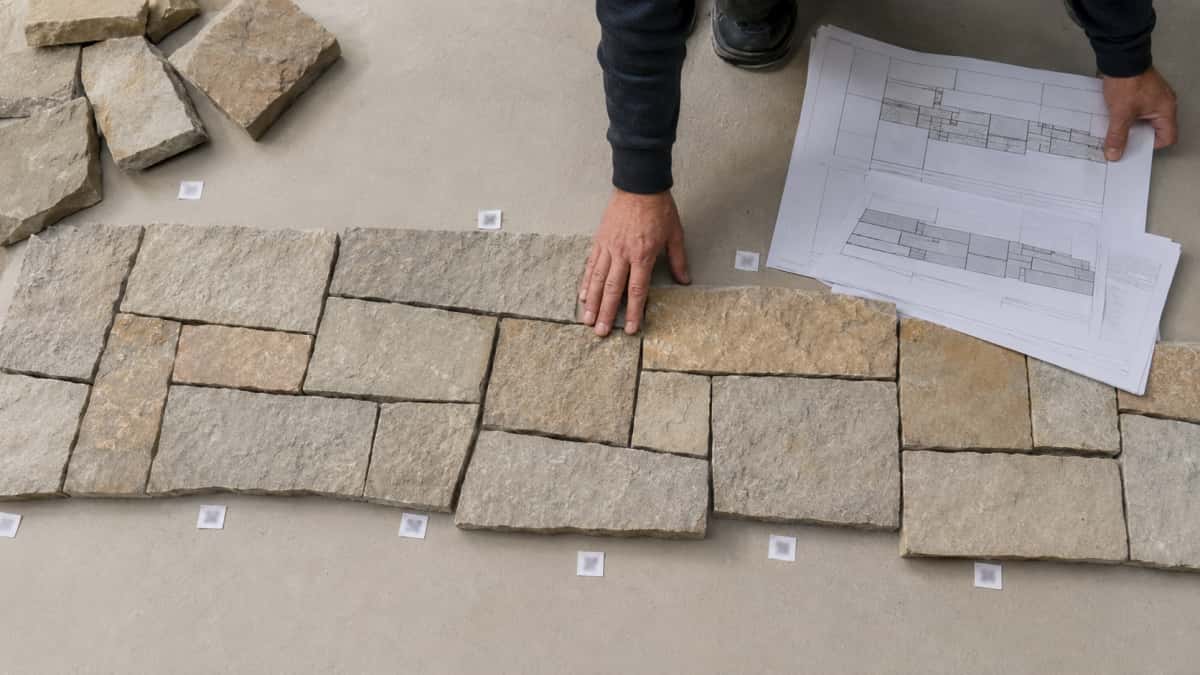
Natural marble is one of the materials that benefits most from dry lay.
The reason is simple: natural marble is not printed, copied, or repeated by machine. It comes from real blocks. Veins, clouds, tone, crystals, fossils, and movement can change from slab to slab and even within the same slab.
This is not a defect. It is the nature of the material.
The risk appears when natural variation is not organized.
For natural marble dry lay before packing, the supplier and buyer should check:
· vein direction
· tone range
· strong and weak areas
· bookmatch sequence
· visible wall or floor areas
· whether adjacent pieces look balanced
· whether darker pieces are placed intentionally
· whether high-variation pieces are moved to less visible zones
· whether the dry lay matches approved slab photos or selection range
For natural marble dry lay review, the main question is not whether every piece is identical. That would be unrealistic. The real question is whether the finished area will look intentional, balanced, and suitable for the project.
A natural marble floor can look elegant when variation is planned. The same material can look chaotic when pieces are installed randomly.
Dry lay gives the project team a chance to control that difference before the stone is packed.
Limestone has a quieter visual language than many marbles, but it still needs careful review.
Many limestone materials include soft movement, shell marks, fossils, pores, small tonal changes, and natural surface character. In architectural projects, these features can create warmth and depth. But if the project needs a calm wall, a large floor, or a sculptural stone element, piece arrangement still matters.
For limestone project material review, dry lay can help check:
· tone consistency across panels
· fossil and shell mark distribution
· surface finish consistency
· visible face direction
· panel sequence
· joint rhythm
· whether highly marked pieces are placed appropriately
· whether the overall architectural feeling remains calm
Limestone should not be judged like quartz stone or sintered stone. Its value is natural softness, not industrial uniformity. But natural softness still needs layout control.
A dry lay review helps the buyer avoid surprise after installation.
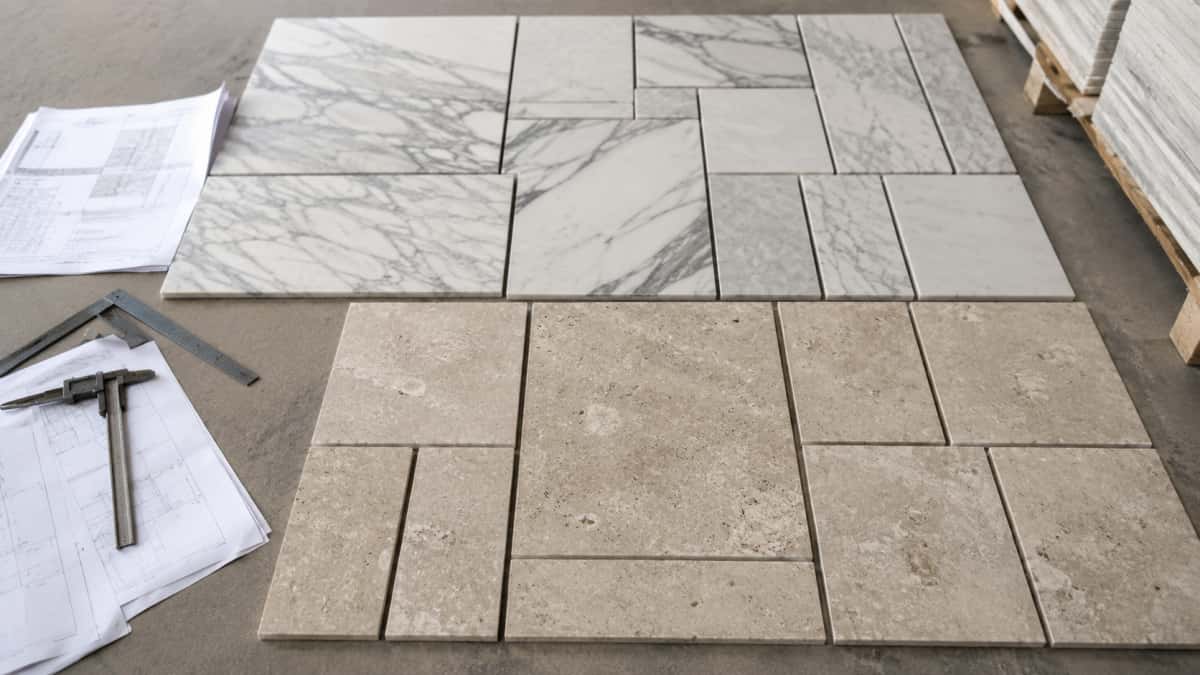
Terrazzo stone has a different inspection logic.
The buyer is not checking vein movement. The buyer is checking aggregate distribution, chip size, background tone, joint layout, surface finish, and visual balance across a larger area.
For terrazzo stone layout control, dry lay is useful because a single terrazzo tile or panel may look acceptable on its own, but the overall area may look different when many pieces are placed together.
The project team should check:
· whether chip density feels balanced
· whether the background tone is consistent
· whether large chips are too concentrated in one area
· whether joint lines match the design
· whether the finish looks consistent across pieces
· whether stair, skirting, and floor pieces work together
· whether the installed field will look controlled from normal viewing distance
Terrazzo is often used in commercial interiors, public spaces, hospitality areas, and design-led floors. In those settings, the overall visual field matters more than one isolated piece.
Dry lay helps the buyer see the field before the project reaches the site.
Artificial marble and agglomerated marble are engineered materials, so buyers may think dry lay is less necessary.
Sometimes that is true. If the order is simple slabs or standard tiles from a consistent batch, full dry lay may not be required.
But for cut-to-size projects, large wall areas, hotel room packages, commercial floors, stairs, or repeated interior units, dry lay or pre-assembly inspection can still be useful.
For artificial marble and agglomerated marble project supply, dry lay can help confirm:
· batch tone consistency
· piece size
· edge polish
· room code
· installation sequence
· repeated unit consistency
· joint alignment
· whether similar pieces are properly separated by area
Artificial marble is more controlled than natural marble, but controlled does not mean the project can ignore numbering, layout, and packing order.
The main value here is not dramatic vein matching. The main value is production accuracy and project organization.
Quartz stone and sintered stone may not always require dry lay in the same way as natural marble.
For quartz stone countertops, vanity tops, islands, and commercial counters, the review should focus more on:
· finished size
· edge profile
· sink cutout
· faucet hole
· cooktop opening
· backsplash
· overhang
· joint position
· surface condition
· piece label
· packing protection
The buyer may not need a full floor-style dry lay. But a cut-to-size stone pre-assembly inspection is still helpful for complicated countertop or vanity packages.
Sintered stone requires another kind of attention. Large-format panels, thin pieces, cutouts, and fragile corners need careful handling. Pre-assembly inspection should check:
· panel size
· edge condition
· corner protection
· cutout risk
· visible face
· surface pattern direction
· support and handling instructions
· packing safety
The key is to use the right inspection method for the right material.
A natural marble feature wall may need visual dry lay. A quartz countertop may need cutout confirmation. A sintered stone panel may need handling and corner inspection.
Good project control does not force every material into the same process.
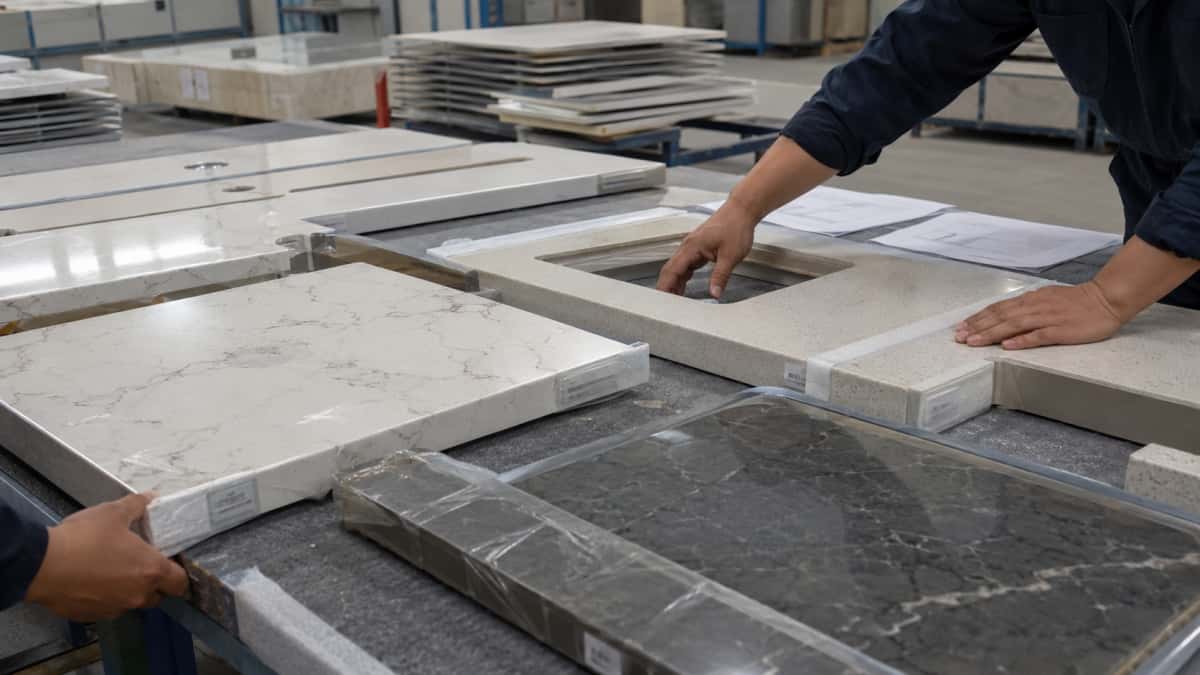
Dry lay is useful, but it can become confusing if there is no drawing reference.
The dry lay should be checked against:
· approved shop drawings
· area layout
· piece numbers
· room codes
· floor plan
· elevation drawing
· slab selection photos
· approved samples
· installation sequence
· packing list
Without drawings, people may judge only by personal feeling. One person may prefer a stronger vein in the center. Another may want the tone to be quieter. A designer may care about visual rhythm. A contractor may care about installation order. A buyer may care about avoiding claims.
The best dry lay process combines visual judgment with document control.
The question should not be only, “Does it look good?”
It should also be:
· Does it match the approved drawing?
· Does it match the approved material range?
· Does the sequence help installation?
· Does the numbering connect with packing?
· Are visible areas reviewed more carefully than hidden areas?
· Are special pieces checked before crating?
This is where cut-to-size stone manufacturing capability matters. Dry lay is not just about space on the floor. It requires drawing reading, piece control, labeling, production coordination, and packing discipline.
A dry lay photo should help the buyer make decisions. It should not be just a random photo from the factory floor.
Useful dry lay photos should show:
· full layout from above or front view
· piece numbers if possible
· close-up of important joints
· high-visibility areas
· edge details
· vein direction
· color transition
· bookmatch or pattern sequence
· surrounding reference if available
· any questionable pieces separated for review
For natural marble, the buyer may need both full-view and close-up photos. For terrazzo, full-area photos are important because aggregate balance is judged across the field. For limestone, photos should show tone and fossil distribution. For artificial marble, photos should show batch consistency and repeated pieces. For quartz stone and sintered stone, photos should focus more on fabrication details, cutouts, and panel protection.
A good dry lay record should make the project easier to install later.
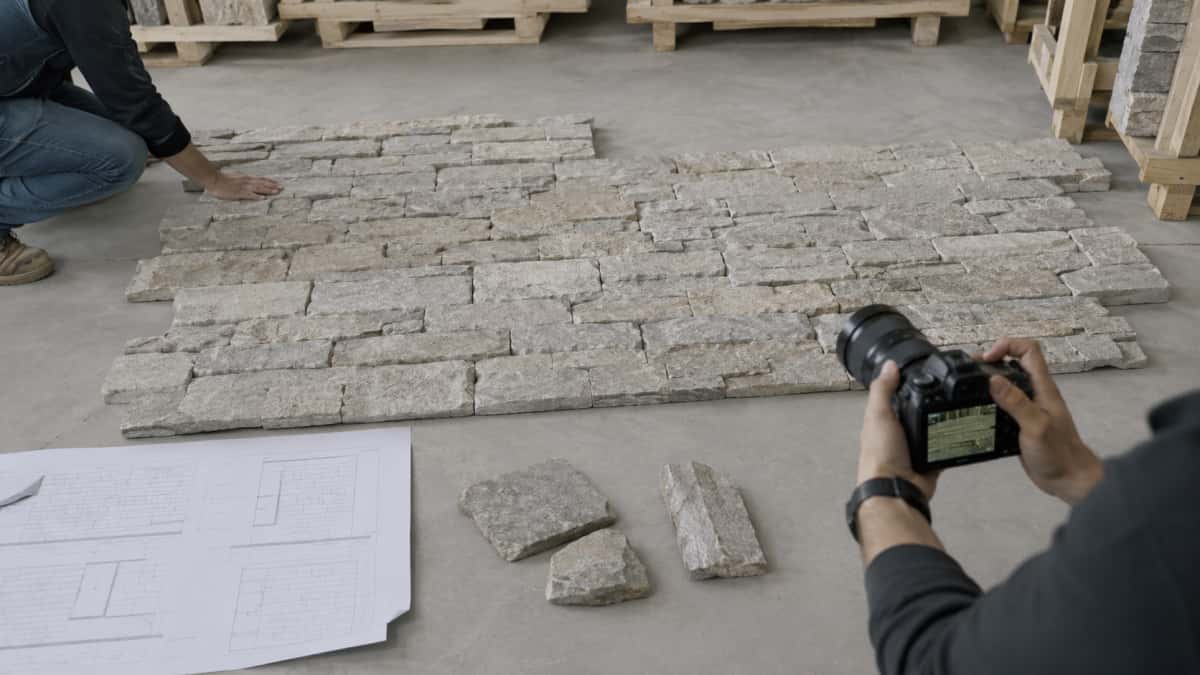
Dry lay and packing should be connected.
If the dry lay confirms the correct order but the pieces are packed randomly, much of the value is lost.
For stone project packing before shipment, the supplier should consider how the installer will receive and use the pieces on site. This is especially important when the project includes several floors, rooms, areas, or installation stages.
Good packing logic may include:
· keeping one area together
· separating floors or rooms
· protecting visible faces
· packing fragile pieces with extra care
· marking piece numbers clearly
· matching crate numbers with packing lists
· keeping installation sequence practical
· avoiding mixing similar pieces from different areas
· packing replacement or spare pieces clearly
The buyer should ask whether the packing sequence supports installation.
This is not only a logistics question. It is a project risk question.
A crate can be strong, but if the wrong pieces are mixed together, the site team may still waste time and make mistakes.
Dry lay cannot prevent every problem, but it can catch many issues before they become site problems.
Typical problems include:
· strong color mismatch
· broken visual rhythm
· wrong vein direction
· wrong bookmatch sequence
· incorrect piece number
· wrong room code
· wrong size mixed into a layout
· missing piece
· incorrect edge direction
· uneven finish impression
· panel sequence confusion
· stair tread and riser mismatch
· too many strong pieces in one visible area
· unclear packing order
The earlier these problems are found, the easier they are to solve.
Before packing, the supplier may still be able to rearrange pieces, adjust sequence, replace a questionable piece, re-label the order, re-check drawings, or separate crates more logically.
After shipment, the same problem may require site sorting, extra communication, replacement production, air freight, installation delay, or negotiation.
That is why dry lay inspection is not a decoration process. It is a risk-control process.
Not every stone order needs full dry lay.
Buyers should be practical. Full dry lay takes space, time, manpower, and coordination. It should be used where it creates value.
Full or partial dry lay is more important for:
· natural marble feature walls
· bookmatched marble
· large floor patterns
· high-end lobby floors
· limestone wall panels
· terrazzo flooring
· staircases
· curved stone pieces
· hotel bathroom sets
· elevator surrounds
· custom stone cladding
· complex cut-to-size orders
Full dry lay may be less necessary for:
· simple slab orders
· standard tile orders
· small repeated pieces
· low-visibility utility areas
· materials with highly consistent patterns
· orders where only size and packing need confirmation
The decision should depend on project risk, not habit.
A serious buyer does not ask for dry lay just to create more work. A serious buyer asks for dry lay when the visual layout or installation sequence matters.
Dry lay approval should be clear.
A vague message such as “looks okay” may not be enough for a complex project. Buyers should confirm what they are approving.
A practical dry lay approval may include:
· approved area
· approved drawing reference
· approved piece sequence
· approved color range
· approved vein direction
· approved visible panels
· pieces needing adjustment
· pieces needing replacement
· whether supplier can proceed to packing
· whether additional photos are required
If something is uncertain, it should be discussed before packing.
For example:
“Area L-02 dry lay approved. Please keep current sequence, mark piece numbers clearly, pack by installation order, and send packing photos before shipment.”
This kind of approval is much more useful than a casual reply.
Clear approval protects both buyer and supplier.
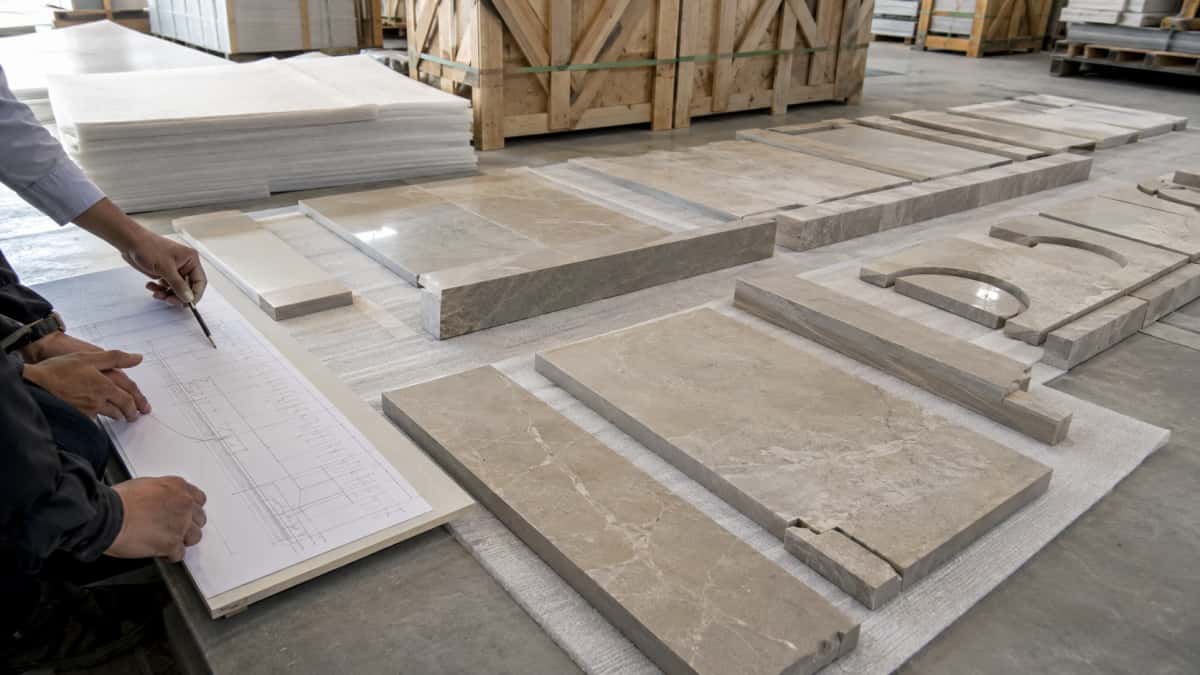
Before approving dry lay and packing, buyers can use this checklist:
1. Does the dry lay match the latest drawing?
2. Are all pieces included?
3. Are piece numbers clear?
4. Are room or area codes clear?
5. Is the material type correct?
6. Is the finish correct?
7. Is the color range acceptable?
8. Is the vein direction correct where required?
9. Is the bookmatch or layout sequence correct?
10. Are visible areas reviewed carefully?
11. Are strong natural variations placed intentionally?
12. Are joints and lines visually controlled?
13. Are edge details checked?
14. Are special pieces separated and reviewed?
15. Are missing or questionable pieces recorded?
16. Does the layout support installation?
17. Does the packing sequence follow the layout?
18. Are photos clear enough for future reference?
19. Has the buyer clearly approved or requested revision?
20. Has the supplier confirmed before packing?
This checklist is simple, but it can reduce many avoidable stone project disputes.
Buyers should contact the supplier before packing when the dry lay shows unclear sequence, strong color concerns, missing pieces, wrong numbering, questionable edges, or material differences that may affect visible areas.
Good communication should include:
· project name or reference
· area code
· drawing number
· piece numbers
· dry lay photo mark-up
· clear question or request
· approval or rejection of specific pieces
· packing instruction if needed
The supplier should not have to guess what the buyer means.
Instead of saying, “The color is not good,” a better message is:
“Please check pieces W-06 and W-07 in the dry lay photo. They look much darker than the surrounding wall panels. Can these two pieces be moved to a less visible area or replaced before packing?”
This kind of message gives the supplier something practical to solve.
For buyers who want to reduce layout, packing, and installation risk before shipment, it is better to contact Aoli Stone before packing and discuss dry lay expectations early.
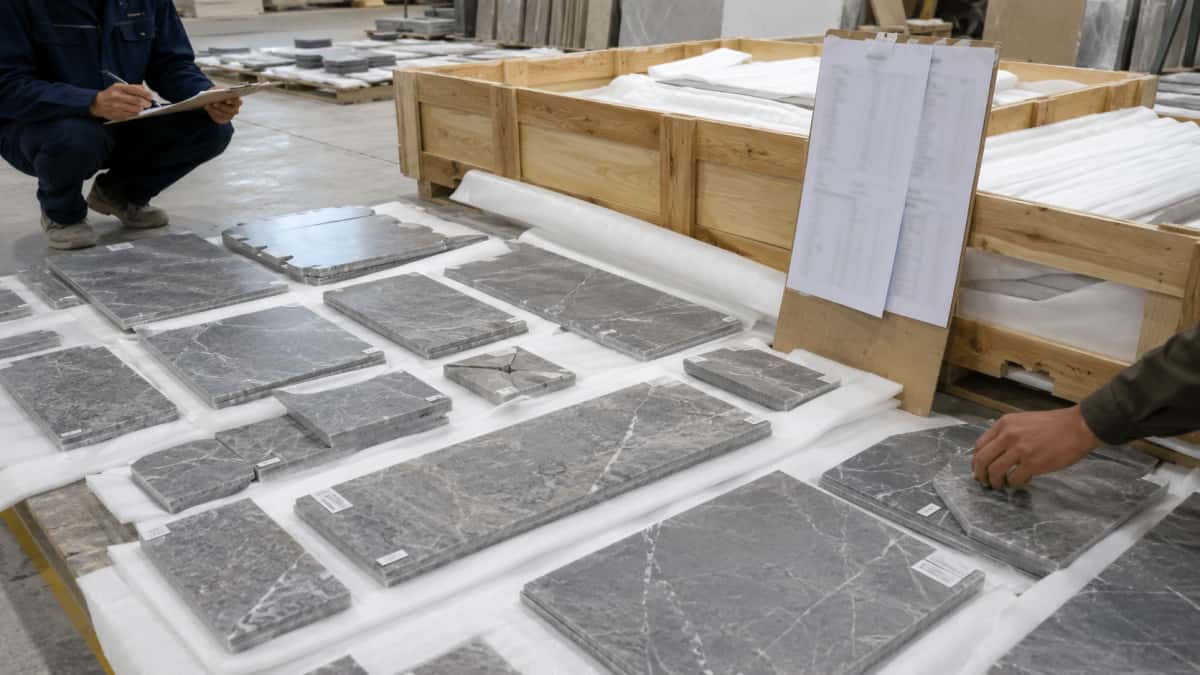
Dry lay inspection is not about making the factory take nice photos. It is about making sure the stone project still makes sense before the goods are packed and shipped
Natural marble needs vein and color control. Limestone needs tone and surface character review. Terrazzo stone needs aggregate balance and layout checking. Artificial marble and agglomerated marble need batch consistency and sequence control. Quartz stone needs cutout and fabrication detail confirmation. Sintered stone needs panel, edge, and handling review. Granite needs finish, size, edge, and practical placement control.
Different materials need different inspection logic.
But the core principle is the same:
The best time to find a layout problem is before packing.
Once the stone is inside the crate, on the vessel, or already at the jobsite, every correction becomes slower and more expensive.
A good dry lay process does not guarantee a perfect project. But it gives the buyer and supplier a much better chance to prevent avoidable mistakes before shipment.



 IPv6 network supported