English
 Español
 Português
 عربي
عربي 한국어
한국어

Container loading is one of the last moments when a stone buyer can still check the shipment before it leaves the factory.
By this stage, the material has usually been produced, inspected, packed, labeled, and prepared for export. The buyer may already have seen production photos, dry lay photos, packing photos, and the packing list. It may feel like the project is almost finished.
But container loading is not just a transport step.
For stone projects, loading affects safety, unloading, crate identification, site sequence, and future claims. A well-packed order can still create problems if crates are loaded carelessly, mixed without logic, placed in an unsafe sequence, or documented poorly before the container door is closed.
This is why stone container loading inspection matters.
The goal is not to control every movement from far away. The goal is to confirm that the shipment is loaded in a way that matches the packing list, protects the crates, supports safe transport, and helps the receiving team understand what has arrived.

1. Container loading should start with the approved packing list
Before looking at loading photos, buyers should first check the packing list.
The packing list is the reference document. Loading photos are the visual proof. They should support each other.
A practical packing list should make it clear:
how many crates are included
which crate numbers are being loaded
what material is inside each crate
which sizes and quantities are inside each crate
whether the order is separated by area, room, floor, or product type
whether special pieces are marked clearly
whether the shipment is complete before loading
If the buyer receives stone container loading photos but cannot connect them with the packing list, the photos are not very useful.
The question should be:
Can we identify which crates are being loaded and confirm they match the shipment documents?
For international stone export project coordination, the loading stage should connect documents, crates, labels, and shipment records into one clear chain.
2. Check the container condition before crates go inside
The container itself should be checked before loading begins.
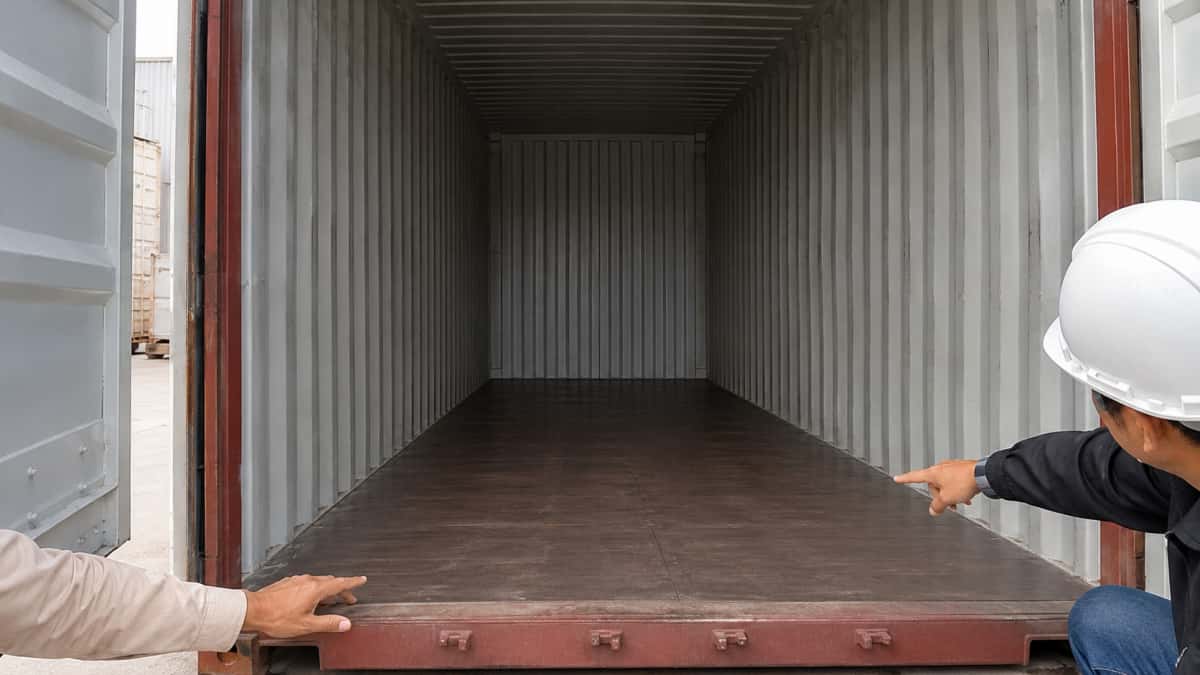
A clean and suitable container reduces avoidable risk. Buyers do not need to inspect the container personally in most cases, but they should expect basic photo records before loading.
Useful container condition photos should show:
empty container interior
container floor condition
side walls
roof area if visible
door condition
whether the container looks dry
whether there are obvious holes, severe rust, or water marks
whether the floor looks strong enough for heavy cargo
whether there is old debris or contamination inside
Stone is heavy. Some shipments include thick slabs, stone crates, countertops, stairs, panels, or mixed materials. A weak, wet, or dirty container can create unnecessary risk.
A container does not need to look new. But it should look suitable for export loading.
3. Confirm the stone crate loading sequence
Stone crate loading sequence matters more than many buyers realize.
If the shipment is a simple full-container slab order, the sequence may be straightforward. But for cut-to-size stone projects, hotel packages, wall panels, stairs, flooring sets, countertops, or several material types in one container, loading sequence can affect unloading and site organization.
Buyers should ask:
Are crates loaded according to the packing list?
Are area-specific crates kept together?
Are fragile crates positioned carefully?
Are heavy crates placed safely?
Are crates needed first at site loaded in a practical order if possible?
Are mixed materials separated clearly?
Are crate numbers visible before loading?
Are there photos showing the sequence from first crate to final crate?
The purpose is not to create unnecessary work for the supplier. The purpose is to reduce confusion when the shipment arrives.
If the receiving team needs to unload everything just to find one urgent crate, the loading sequence may already have failed the project.
4. Look at the loading environment, not only the crates
The loading environment can reveal a lot about shipment control.
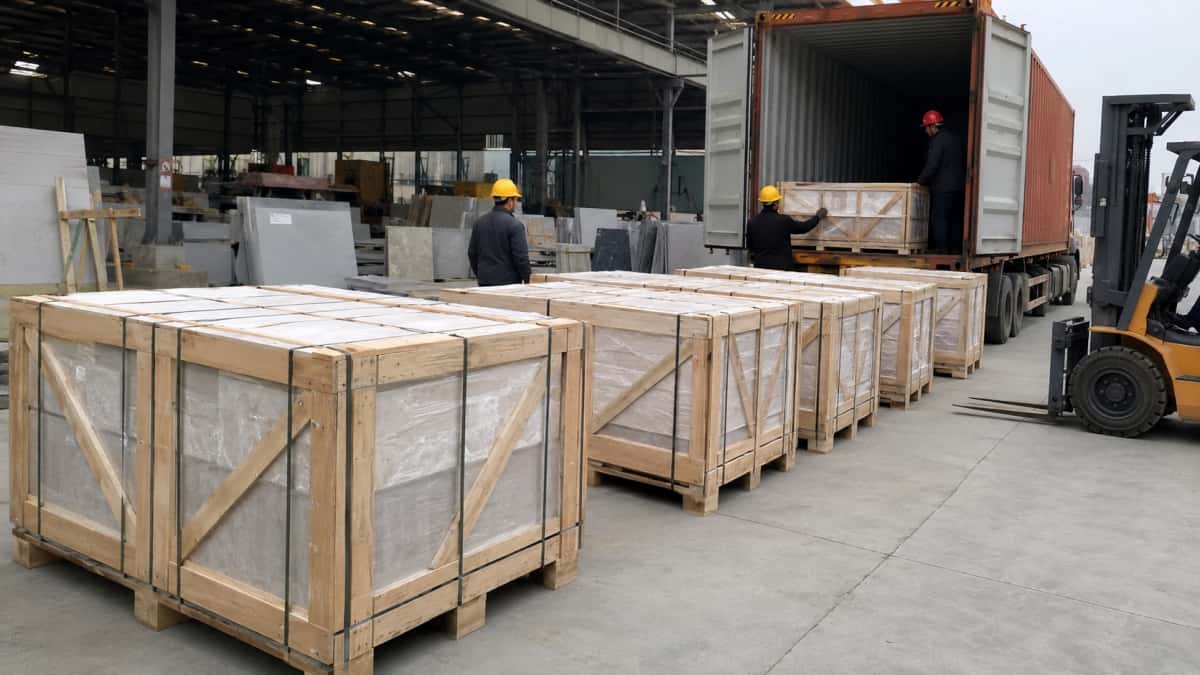
A clean, dry, and organized stone factory loading and packing environment does not guarantee zero damage, but it shows whether the process is being handled with discipline.
Buyers should look for:
dry ground
organized crate staging
safe forklift or pallet jack movement
enough space around the container
no chaotic mixing of different orders
no broken crate materials
no visible water around packed stone
no loose pieces placed randomly
workers handling crates in a controlled way
clear separation between loaded and unloaded crates
The buyer does not need cinematic loading photos. The buyer needs practical evidence.
A simple photo showing sealed crates arranged in order near the container may be more useful than a beautiful but unclear image.
5. Confirm crate marks before loading
Crate marks are easier to check before crates enter the container.
Once a crate is deep inside the container, the mark may no longer be visible. If there is any confusion later, it becomes harder to prove what was loaded and where.
Before loading, buyers should confirm:
crate number
project reference if needed
destination reference if needed
handling mark if needed
gross weight if shown
fragile mark if needed
area or room code if needed
whether the mark matches the packing list
The crate mark does not need to include too much information. But the crate number should be clear.
For project orders, unclear crate marks can create problems after arrival. The site team may open the wrong crate, mix materials, or lose the installation sequence. This is especially risky when several crates contain similar-looking beige limestone, white marble, grey artificial marble, terrazzo panels, or quartz countertops.
Clear marks help people who were not involved in production understand the shipment later.
6. Natural marble needs extra attention during shipment handling
Natural marble is not only a material. In many projects, it is also part of a visual layout.
A marble crate may contain bookmatched panels, dry-laid floor pieces, stair components, wall cladding, or a carefully selected sequence. If these crates are not loaded and recorded clearly, the receiving team may lose the connection between layout and crate.
For natural marble shipment handling, buyers should confirm:
crate numbers match the dry lay or layout approval if applicable
bookmatched or sequential pieces are not separated without reason
polished faces are protected before loading
crates are handled upright or according to the packing method
fragile marble pieces are not placed in risky positions
loading photos can show which marble crates entered the container
Natural marble variation is manageable when sequence is controlled. It becomes more difficult when crates are mixed and the site team cannot identify the order.
Container loading is one more chance to keep that sequence clear.
7. Granite, terrazzo, and limestone need stable support
Granite, terrazzo, and limestone are different materials, but they share one loading concern: weight and support.
Granite can be heavy and strong, but corners and finished edges can still be damaged if crates shift. Terrazzo panels or tiles may be used in large quantities and need stable stacking and crate separation. Limestone may have softer edges, pores, fossils, and honed surfaces that require careful protection against rubbing and impact.
For these materials, buyers should check:
crate stability
bottom support
whether crates are placed securely
whether heavy crates are loaded safely
whether there is unnecessary movement space
whether finished faces and edges were protected before loading
whether similar materials are separated by crate number and packing list
Durability does not remove the need for safe loading.
A strong stone can still suffer from poor handling.
8. Quartz stone and fabricated tops need cutout awareness
Quartz stone is often shipped as slabs, countertops, vanity tops, islands, or commercial surfaces. For fabricated pieces, sink cutouts, cooktop openings, faucet holes, mitered edges, and polished profiles should be protected before loading.
For quartz stone countertop shipment protection, buyers should look for:
crate protection around cutouts
safe position of fabricated tops
protected polished edges
separated backsplash pieces
correct crate labels for countertop sets
whether fragile fabricated pieces are loaded with care
whether the loading photos show the relevant crates before the container is closed
The risk is not only surface scratching. Cutout corners and unsupported openings are often more sensitive during movement.
Loading photos should not show fabricated tops loose, unsupported, or mixed with unrelated heavy crates.
9. Artificial marble, agglomerated marble, and sintered stone need different checks
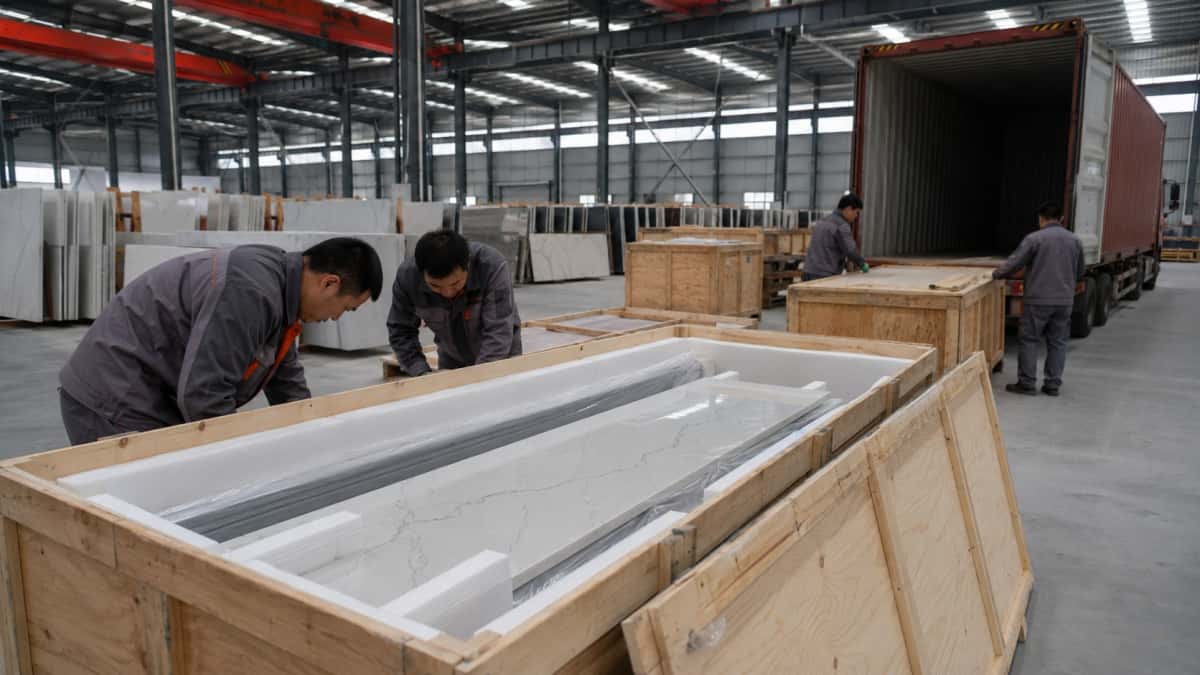
Artificial marble and agglomerated marble are often used for commercial interiors, repeated hotel units, wall panels, floors, stairs, and cut-to-size pieces. These shipments may include many similar pieces. The loading record should help confirm area separation, crate sequence, and label clarity.
Buyers should check:
whether repeated pieces are grouped correctly
whether room or area codes remain clear
whether crates match the packing list
whether surface and edge protection was completed before loading
whether similar-looking pieces from different zones are not mixed without clear labels
Sintered stone has a different risk profile. It may include large-format or thin panels. The buyer should check whether crates are suitable for panel handling and whether loading avoids unstable positions, unsafe leaning, or pressure on vulnerable corners.
The important point is this:
Engineered materials may be more visually consistent than some natural stones, but they still require disciplined loading records.
Consistency does not replace crate control.
10. Confirm whether loading photos show the complete process
One or two random photos may not be enough for a project shipment.
Useful stone container loading photos should show the shipment at several stages:
empty container before loading
crates staged before loading
crate marks before loading
first crates entering the container
middle-stage loading
final crates before closing
container interior after loading
closed container doors if useful
seal photo if required by the buyer or shipping process
The buyer does not need hundreds of images. But the photo record should be complete enough to answer what was loaded and how.
A useful loading record should make it possible to confirm:
the container was suitable
the crate numbers match the packing list
the crates were loaded in a controlled way
the final container load looks stable
the shipment was ready before the door was closed
Photos should not include readable private information, fake marks, or unnecessary branding. For project evidence, clarity matters more than decoration.

11. Check whether the load looks stable before closing the container
Before the container is closed, buyers should review the final interior photo if available.
This photo should help confirm that crates are placed safely and do not look unstable, tilted, broken, or loosely positioned.
Buyers should look for:
crates standing correctly
no obvious broken crate frames
no dangerous leaning
no loose unpacked stone pieces
no wet floor or visible water
no chaotic mix of loose materials
no obvious empty space that could allow movement if not secured
no signs that the container was loaded in a rushed or unsafe way
The buyer should be careful here. It is not always possible to judge every technical loading detail from a photo. But obvious problems should be questioned before the container leaves.
This is where cut-to-size stone fabrication and packing control continues into shipment preparation. A project is not fully controlled just because the pieces were cut correctly. The crates must also be loaded in a way that protects the work already done.
12. Stone shipment documents before loading
Before container loading is approved, buyers should check whether key shipment documents are aligned with the packed goods.
The required documents depend on country, order type, customs requirement, and buyer arrangement. But common references may include:
commercial invoice
packing list
booking information
bill of lading details when available
certificate documents if required
fumigation or wood packing documents if applicable
inspection photos
loading photos
container number and seal record if provided
The purpose is not to create paperwork for its own sake.
The purpose is to make sure the shipment documents and physical goods are consistent.
Buyers who need project records, compliance files, or customs-related support should keep stone shipment certificates and documents organized before the shipment leaves the factory.

13. What can loading photos prove later?
Loading photos can become useful if questions appear after arrival.
They may help confirm:
which crates were loaded
whether the container was empty and clean before loading
whether the crate numbers matched the packing list
whether crates were closed before shipment
whether visible crate damage existed before loading
whether the final load looked stable
whether the shipment was complete before container closure
whether the container number or seal record was documented if needed
Loading photos cannot prove everything. They cannot replace marine insurance, arrival inspection, professional logistics handling, or proper unloading. But they are useful records in the project chain.
In a dispute, people often rely on memory. Good loading records reduce that problem.
They help the buyer, supplier, forwarder, and contractor discuss facts instead of guesses.
14. A practical stone loading checklist for buyers
Before the container leaves the factory, buyers can use this stone loading checklist for buyers:
1.Packing list checked
2.Crate numbers confirmed
3.Crate marks photographed before loading
4.Empty container condition photographed
5.Container appears dry and suitable
6.Crates staged in organized order
7.Fragile crates identified
8.Heavy crates handled safely
9.Cut-to-size project crates separated by area if needed
10.Natural marble sequence protected if required
11.Quartz countertop cutout crates handled carefully
12.Sintered stone panel crates checked for safe positioning
13.Limestone and terrazzo crates protected from rubbing and impact
14.Loading sequence recorded
15.Middle-stage loading photo received if needed
16.Final container interior photo received
17.No obvious unstable crates visible
18.Shipment documents checked against packed goods
19.Container number and seal record confirmed if required
20.Final shipment approval given clearly
This checklist does not make shipping risk disappear. But it helps reduce avoidable confusion before export.
15. How buyers should communicate loading questions
Good loading communication should be specific.
Instead of saying:
“Please load carefully.”
A better message is:
“Please send photos of the empty container, crate marks for Crates 1–8, and the final loaded container before closing the doors.”
Instead of saying:
“Make sure the marble is safe.”
A better message is:
“Please confirm the bookmatched marble wall panel crates are loaded according to the approved sequence and send photos before closing the container.”
Instead of saying:
“Send loading photos.”
A better message is:
“Please send photos showing the empty container, staged crates, first loading stage, final interior loading, and seal record if available.”
Specific requests produce useful records.
Vague requests produce random photos.
For buyers who want to confirm container condition, crate sequence, loading records, or shipment readiness before export, they can contact Aoli Stone before loading and review the shipment details before the container leaves the factory.
Before the Container Doors Close
Container loading is not only a logistics event. For stone projects, it is the final checkpoint before the shipment moves out of the supplier’s control.
Natural marble needs sequence awareness. Granite needs stable heavy-crate handling. Quartz stone countertops need cutout and edge protection. Artificial marble and agglomerated marble need area and label control. Terrazzo stone needs stable support and finish protection. Sintered stone needs panel handling care. Limestone needs protection for its softer surface and natural edges.
Different materials require different loading attention.
But the buyer’s main question is the same:
Can this shipment be identified, unloaded, and installed with less confusion when it arrives?
A container loading record does not guarantee a perfect project. It does not replace arrival inspection or professional site handling. But it gives the buyer one final chance to confirm that the packed stone shipment is organized, documented, and ready to leave the factory.
The best time to ask loading questions is before the container doors close.



 IPv6 network supported