English
 Español
 Português
 عربي
عربي 한국어
한국어

Approving a stone mockup sample looks like a small step, but in real project supply it often becomes the point where future disputes are either prevented or quietly created. For hotels, villas, commercial lobbies, apartment buildings, restaurants, and retail interiors, the mockup is not just a nice-looking sample board. It is the buyer’s chance to confirm color range, finish, texture, veining, tolerance, layout logic, edge details, and what will be considered acceptable before bulk production begins.

The problem is that many project teams approve a mockup too quickly. A sample is placed on a table, the color looks close, the surface feels acceptable, and the buyer says “approved.” Later, when the full order arrives, the real material may show wider shade variation, stronger veins, different aggregate distribution, open pores, edge chipping, or a finish that behaves differently under site lighting. At that stage, the question is no longer “Do we like the sample?” The question becomes: “What exactly did we approve?”
That is why project stone mockup approval should be treated as a documented decision, not a casual visual confirmation.
A Mockup Sample Is Not the Same as a Perfect Sample
One of the biggest misunderstandings in stone projects is expecting the approved mockup to represent a perfectly controlled industrial product. That may be possible with some engineered surfaces, but it is not how every stone material behaves.
Natural marble may have veins, clouds, shade movement, fissure-like natural lines, resin-treated areas, and different cutting directions. Limestone may show fossil marks, small holes, soft tonal movement, and more delicate edges. Terrazzo may vary by aggregate size, chip density, cement or resin base tone, and polishing effect. Quartz stone usually gives better color consistency, but slab batch, veining direction, and cutout planning still need confirmation. Artificial marble and agglomerated marble can be more controlled in pattern and quantity, but batch matching, thickness, label control, and surface finish should still be checked.
A mockup is not a promise that nature will repeat itself. It is a boundary-setting document for what is acceptable in the project.
Before the buyer approves the sample, the supplier and project team should clarify whether the mockup represents:
one exact production batch
a general color family
a possible range of natural variation
a specific finish and thickness
a layout direction for the final installation
a minimum acceptable quality standard
These are very different meanings. If nobody defines them, both sides may assume different things.
What Should Be Checked During Stone Sample Board Review?
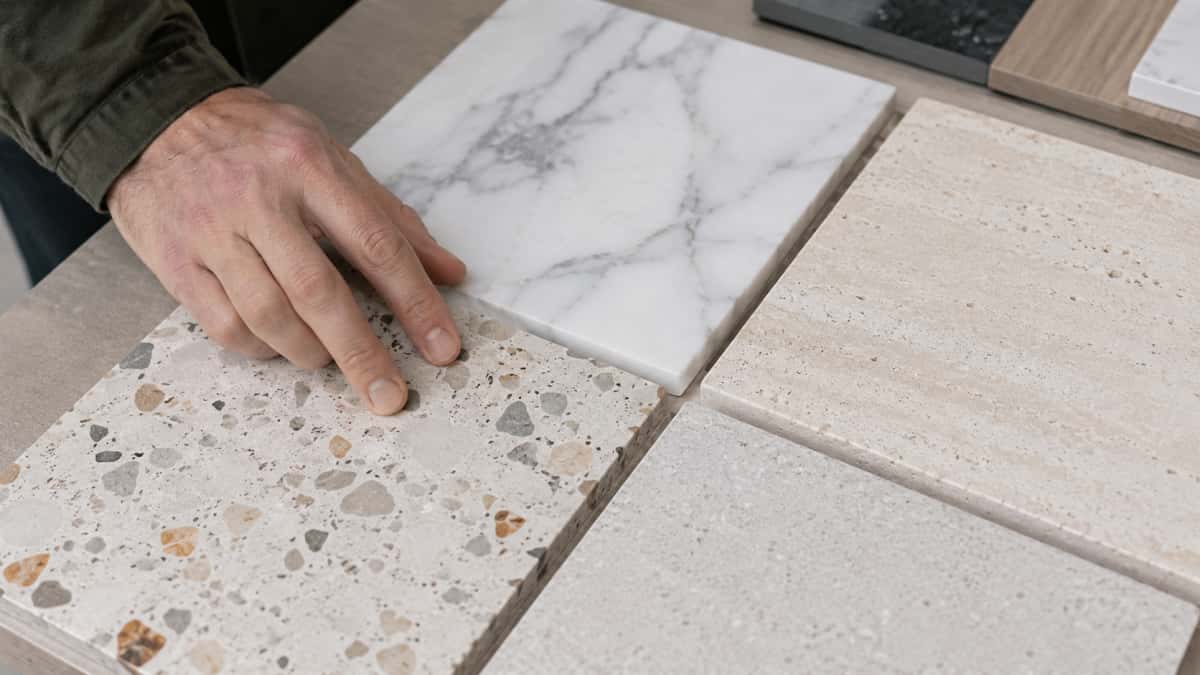
A proper stone sample board review should look beyond whether the material is beautiful. Beauty matters, of course. But project buyers need to ask whether the sample can survive the realities of production, installation, lighting, maintenance, and client inspection.
The sample board should be checked under neutral light and, if possible, under lighting similar to the final project space. A polished marble that looks elegant in daylight may show stronger reflection under hotel lobby lighting. A honed limestone may feel warm and architectural, but it may also show fingerprints, water marks, or edge sensitivity more easily than expected. A terrazzo sample may look balanced in a small piece, but the aggregate distribution needs to be judged on a larger surface if it will be used for flooring or wall panels.
For a useful review, buyers should clarify:
Is this sample from current available stock or only from a previous reference batch?
Does it show the lightest and darkest acceptable color range?
Does it show the normal vein movement, aggregate spread, fossil marks, pores, or background variation?
Is the surface finish final, or only a temporary reference finish?
Is the thickness the same as the order requirement?
Are edge details, chamfering, cutouts, or grooves included in the mockup?
Will the final production follow this sample only, or also follow shop drawings, packing lists, and approved photos?
The most expensive sample mistake is not approving the wrong color. It is approving an unclear standard.
Clarify the Purpose of the Mockup Before Judging It
Not every mockup sample serves the same purpose. A small stone sample, a large sample board, a dry-laid panel set, and a full installation mockup do not answer the same questions.
A small sample can help confirm basic color and material direction. A larger board can show a more realistic range of veins, grains, fossils, or aggregate distribution. A dry lay can confirm layout sequence and visual balance before cutting or packing. A full installation mockup can test joint width, lighting, edge details, fixing method, sealant color, and site handling.
For material approval before production, the buyer should ask which decision the sample is supposed to support.
If the project is still in early design, a small sample may be enough. If the order is moving into cut-to-size fabrication, a simple hand sample is not enough. At that stage, the buyer may need slab photos, batch confirmation, finish photos, shop drawings, dry lay images, tolerance standards, and packing sequence.
The closer a project is to production, the less vague the approval can be.
Color Range: Approve a Range, Not a Single Beautiful Corner
Stone buyers often fall into the “best piece problem.” The supplier sends a beautiful sample. The designer likes it. The client approves it. But later the project requires hundreds or thousands of square meters, and the full stock contains natural variation that the original sample did not show.
This is especially important for natural marble, limestone, travertine, and some terrazzo products. Even within the same material name, color tone and texture may shift from block to block or batch to batch.
Before approval, buyers should ask for a realistic range:
the lightest acceptable tone
the darkest acceptable tone
normal vein density
unacceptable vein or spot conditions
acceptable fossil marks or pores for limestone
acceptable aggregate spread for terrazzo
batch limit for engineered stone or artificial marble
A good supplier should not only show the “prettiest” part of the material. For project work, the buyer needs to see the range that may actually arrive on site.
Finish and Surface Behavior Need Separate Approval
Color approval does not equal finish approval. This is a common source of problems.
Polished, honed, brushed, sandblasted, leather finish, antique finish, flamed finish, and bush-hammered surfaces all create different visual and practical results. The same stone can feel completely different after finishing. A polished marble emphasizes depth and reflection. A honed marble feels softer but may reveal scratches or marks more easily. A leather finish may hide some daily use marks but changes how the color is perceived. A sandblasted or brushed limestone can feel more architectural but may require better stain and dust control.
For stone project risk control, finish approval should include practical questions:
Will this finish be used on floors, walls, countertops, stairs, or exterior cladding?
Is it suitable for wet areas, heavy traffic, or commercial use?
Will the finish be easy to clean after installation?
Does it need sealing before or after installation?
Will the surface look different under warm indoor light?
Does the approved sample show the final level of polishing, brushing, or texturing?
A finish is not just a look. It affects maintenance, installation risk, and the client’s long-term satisfaction.
Thickness, Tolerance, and Edge Details Should Be Written Down
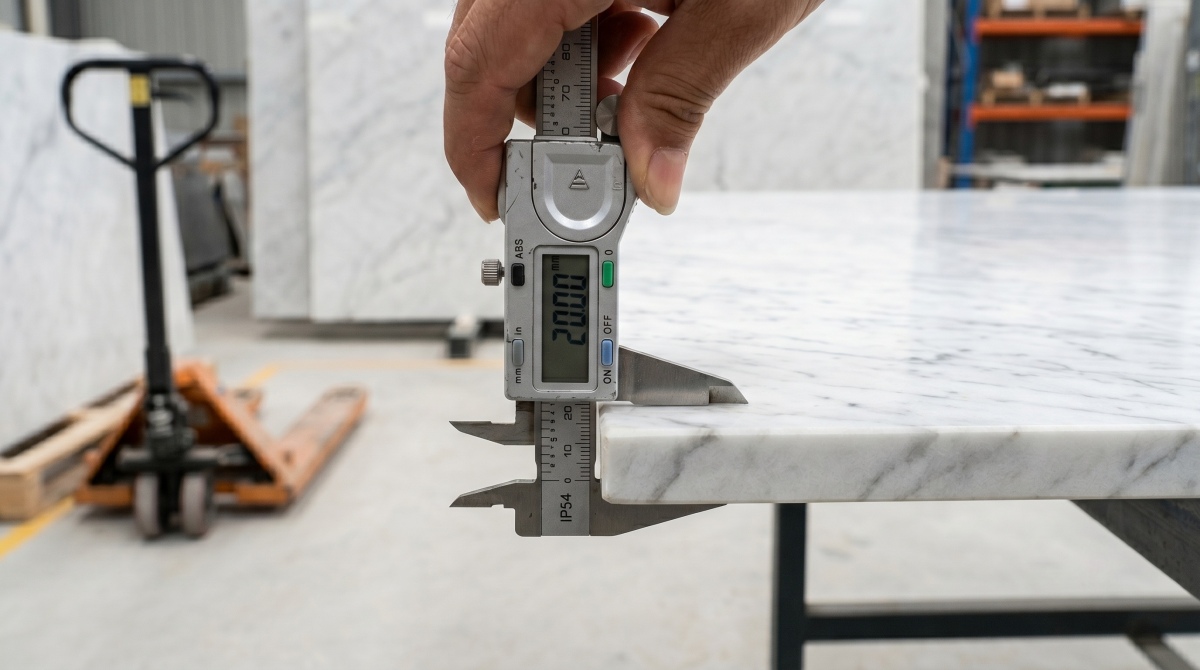
Many project buyers focus on the face of the sample and ignore the edges. That is risky.
For countertops, vanity tops, stair treads, wall panels, skirting, thresholds, and custom cut-to-size pieces, edge details often decide whether installation is smooth or painful. If the buyer approves only the surface but not the thickness, edge profile, bevel, cutout radius, groove, or miter detail, the mockup is incomplete.
A practical mockup inspection should confirm:
nominal thickness and acceptable thickness tolerance
edge polishing quality
bevel or chamfer size
corner radius
cutout quality for sinks, taps, sockets, or fixtures
back mesh, reinforcement, or resin treatment if required
panel back side condition where relevant
piece labels and installation sequence
For QC images, the measurement method also matters. When checking stone thickness, the caliper should clamp the board edge accurately to measure the edge thickness, not float loosely on the surface. Small technical details like this are not decoration. They show whether the inspection process is real.
Vein Direction, Layout, and Dry Lay Logic
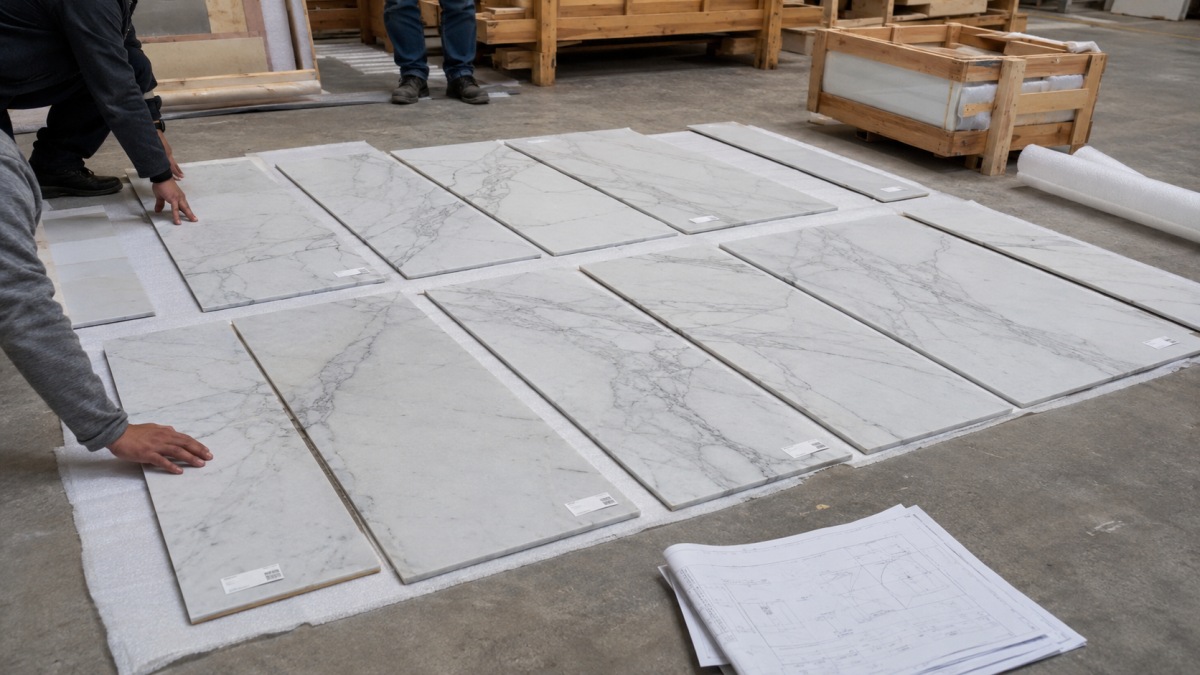
For marble, limestone, terrazzo, and patterned engineered materials, layout approval is often more important than sample approval.
A sample may show the material. It does not automatically show how the material will flow across a wall, floor, staircase, reception desk, bathroom, lift lobby, or corridor. Book-matching, vein continuation, panel sequence, border lines, joint alignment, and cut-to-size distribution should be discussed before production, not after installation.
A mockup inspection checklist should include layout-related points when the project requires visual control:
Does the vein direction need to be horizontal, vertical, random, or matched?
Are panels numbered according to elevation drawings?
Does the floor require border lines, wave lines, or a central medallion?
Are wall panels grouped by area and installation sequence?
Are stair treads and risers matched by flight or by floor level?
Are replacement pieces expected to match a previous batch?
For floor layout, details such as border lines near the wall, joint spacing, and the relationship between the main field and edge pieces should be checked against drawings. In real installation, even a beautiful material can look wrong if the layout logic is careless.
Application Area Changes the Approval Standard
A mockup approved for one application should not automatically be used for another.
The same stone may be acceptable for a feature wall but risky for a high-traffic floor. A limestone surface may be beautiful for interior wall cladding but need more careful protection as a floor or stair material. A dramatic marble may be perfect for a reception background but difficult to control across long corridors. Quartz may be practical for countertops, but cutouts, seams, edge build-up, and slab size still need approval. Sintered stone may offer large-format design flexibility, but edge protection and handling details are critical.
The buyer should connect the sample to the real application:
Wall panels need visual continuity, anchoring logic, thickness control, and clean edge finishing.
Floor tiles need slip resistance, finish durability, thickness tolerance, joint control, and packing sequence.
Countertops need slab size, cutout accuracy, edge protection, surface consistency, and installation drawings.
Stairs need tread thickness, nosing detail, anti-slip treatment, riser matching, and corner protection.
Commercial furniture or feature pieces need fabrication drawings, dry lay photos, edge samples, and crate protection.
The sample is only useful when it is judged against where the stone will actually be used.
Who Should Approve the Mockup?
In many projects, sample approval becomes messy because too many people give informal opinions, but nobody owns the final decision.
The architect may care about design intent. The interior designer may focus on tone and texture. The contractor may focus on installation tolerance. The developer may focus on budget and schedule. The importer or distributor may focus on repeatability, packing, and claims risk. The end client may approve only the visual impression.
A clear buyer approval workflow should define:
who reviews the sample
who has final approval authority
what files or photos are attached to the approval
whether approval includes color, finish, size, edge, and layout
whether changes after approval will affect price or schedule
how rejected samples will be handled
what happens if the final production falls within the approved range but looks different from one small sample
For international stone projects, written approval is not bureaucracy. It protects the buyer, the supplier, the contractor, and the final project.
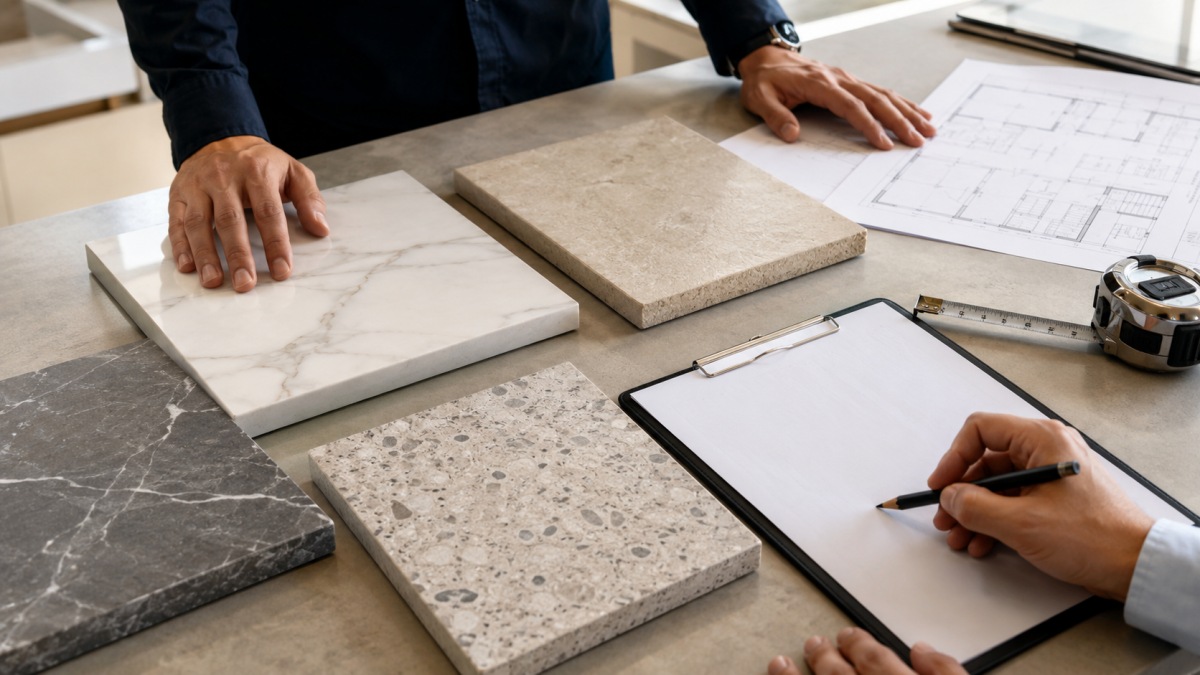
Practical Mockup Inspection Checklist for Project Buyers
Before approving a stone mockup sample, buyers can use the following checklist as a working reference.
Material identity
Stone name or product name confirmed
Natural stone, quartz, artificial marble, terrazzo, sintered stone, or limestone clearly identified
Current stock or batch availability confirmed
Alternative batch risk discussed
Color and pattern
Light and dark range shown
Vein movement or aggregate distribution reviewed
Natural marks, pores, fossils, or tonal movement understood
Unacceptable visual defects defined
Surface finish
Final finish confirmed
Gloss level or texture level checked
Cleaning and maintenance expectations discussed
Sealing requirement clarified if relevant
Size and thickness
Final thickness confirmed
Tolerance range written down
Panel size or slab size checked against drawings
Cut-to-size details reviewed
Edge and fabrication
Edge profile approved
Bevel, chamfer, miter, groove, or cutout details checked
Corner protection considered
Fragile parts identified before packing
Layout and sequence
Dry lay required or not required
Vein direction confirmed
Panel numbering method agreed
Area-by-area packing sequence discussed
Documents and approval record
Approval photos saved
Shop drawings connected to the sample
Packing list or area list aligned
Final approval person confirmed
Change request procedure understood
This checklist does not need to be complicated. It simply needs to be specific enough that both buyer and supplier understand the same standard.
Common Mistakes When Approving Stone Mockups
Several approval mistakes appear again and again in stone projects.
The first mistake is approving only one small sample for a large project. A small sample can start the conversation, but it cannot show the full range of a natural material.
The second mistake is approving color but forgetting finish. A honed surface, polished surface, and leather finish may come from the same stone, but they will not behave the same in real use.
The third mistake is not connecting the sample to drawings. If the mockup is not linked to size lists, elevations, floor plans, or countertop drawings, it remains a loose reference.
The fourth mistake is treating approval as a verbal message. “Looks good” is not enough for international supply. The approval should be attached to photos, date, batch information, finish, thickness, and project area.
The fifth mistake is assuming the supplier understands the buyer’s local market expectations. European projects may prefer a softer warm touch and more natural material character. Some U.S. commercial interiors may accept stronger dramatic veining for visual impact. Middle East hotel and villa projects may require more visual richness, large-scale matching, and stronger presentation. These expectations should be discussed before approval, not guessed during production.
What Buyers Should Remember Before Saying Approved
A good stone mockup does not remove all variation from a project. It removes avoidable confusion.
Before approving a mockup sample, the buyer should ask one simple question: if the full shipment arrives within the same range as this sample and these documents, will the project team still accept it?
If the answer is uncertain, the approval is not ready.
For project buyers, a better mockup process means slower approval at the beginning and fewer problems later. Ask for sample photos, finish confirmation, layout logic, tolerance notes, and area-based production records before the order moves into cutting or packing. That is how a sample becomes a working project standard, not just a pretty piece of stone on a table.
FAQ
What is a stone mockup sample?
A stone mockup sample is a physical reference used to confirm material appearance, finish, texture, thickness, edge detail, or layout direction before production. It may be a small hand sample, a larger sample board, a dry-laid panel set, or a full installation mockup depending on the project stage.
Is one stone sample enough for project approval?
Usually not for large or visually sensitive projects. One small sample may help confirm basic material direction, but larger orders often need color range photos, slab or batch images, finish confirmation, and sometimes dry lay approval.
What should buyers check before approving a stone sample board?
Buyers should check color range, veining or aggregate distribution, surface finish, thickness, tolerance, edge quality, application area, layout direction, batch availability, and approval records. The sample should be connected to drawings and project requirements.
Why does natural stone look different from the approved sample?
Natural stone varies by block, layer, cutting direction, and surface finish. A small sample may not show the full range of the material. This is why buyers should approve a realistic range, not only the most attractive piece.
Should finish approval be separate from color approval?
Yes. Color and finish should be approved separately because polishing, honing, brushing, leather finish, or sandblasting can change both appearance and practical performance.
When is dry lay approval necessary?
Dry lay approval is useful when the project requires vein matching, panel sequence, floor layout control, wall elevation matching, stair matching, or terrazzo aggregate balance. It helps reduce visual disputes before packing and shipment.
What documents should be kept after mockup approval?
The buyer should keep approval photos, sample description, material name, batch or stock reference, finish, thickness, tolerance notes, drawings, area list, and approval date. For complex projects, a signed approval record is recommended.



 IPv6 network supported