English
 Español
 Português
 عربي
عربي 한국어
한국어


Ordering cut-to-size stone is rarely just a buying decision. It is a coordination decision. Many project problems do not begin because the material was wrong in name, color, or price. They begin because too many details were assumed instead of checked. In cut-to-size work, the gap between drawing approval and final installation can become expensive very quickly if dimensions, finishes, edge details, labeling, packing, or slab logic are not clarified early enough.
This is why project buyers should not treat cut-to-size stone like a simple slab purchase. Once stone is being fabricated into panels, vanity tops, stair components, wall cladding, flooring sets, reception counters, or custom pieces, the risk profile changes. The supplier is no longer only supplying material. They are affecting how smoothly the project will be produced, packed, shipped, installed, and finally seen.
Many buyers spend time reviewing the material itself, but much less time reviewing how the order will actually be executed.
They look at the sample. They compare price. They confirm the quantity. Then they assume the rest will naturally fall into place. In cut-to-size projects, that is often where trouble starts.
A beautiful stone can still produce a frustrating order if the fabrication logic is weak. A correct drawing can still lead to site problems if the edge details were not confirmed clearly enough. A finished piece can still arrive in poor condition if the labeling and packing system was not designed for installation reality.
Cut-to-size orders are not won by the stone alone. They are won by control.
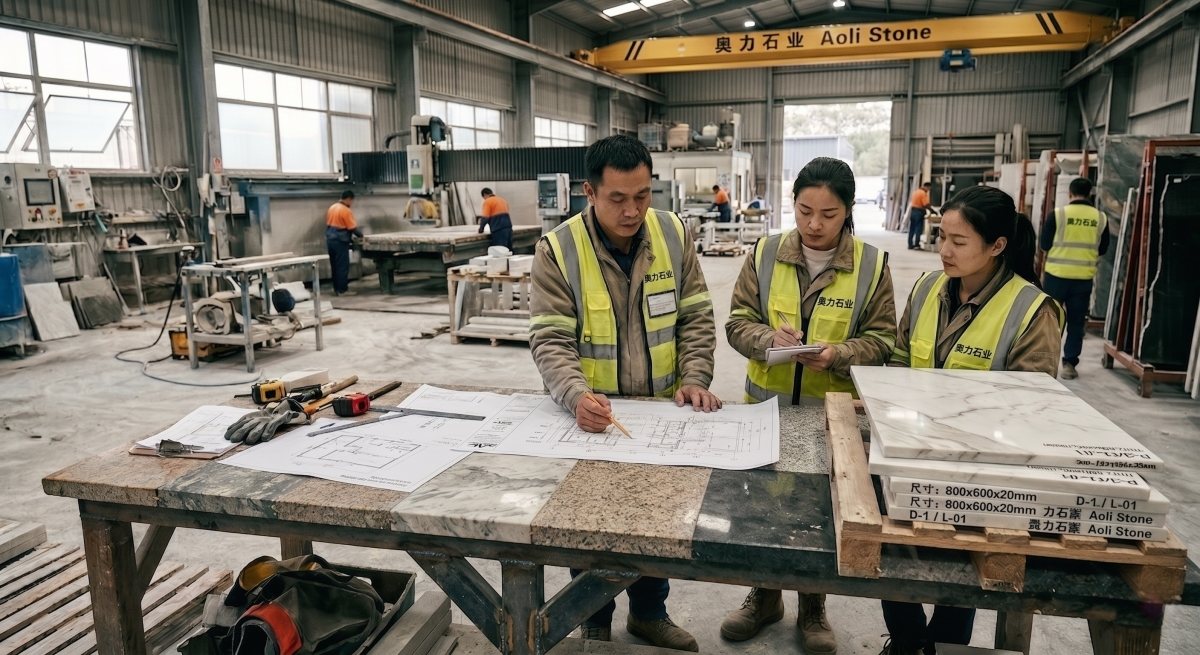
Price matters, but in cut-to-size work, unclear drawings often cost more than a higher quote.
Before comparing quotations too aggressively, buyers should confirm whether the drawing package is complete enough to support production. Dimensions should be clear. Thickness should be specified. Surface finish should be identified. Edge profiles should be confirmed. Cutouts, holes, grooves, slopes, and special treatments should not be left to assumption.
It is also important to check whether the same drawing means the same thing to everyone involved. A buyer may think a detail is obvious because the design team discussed it internally. The factory may not see it that way. If something is important visually or technically, it should be explicit.
The best suppliers often ask more questions at this stage, not fewer. That is usually a good sign.
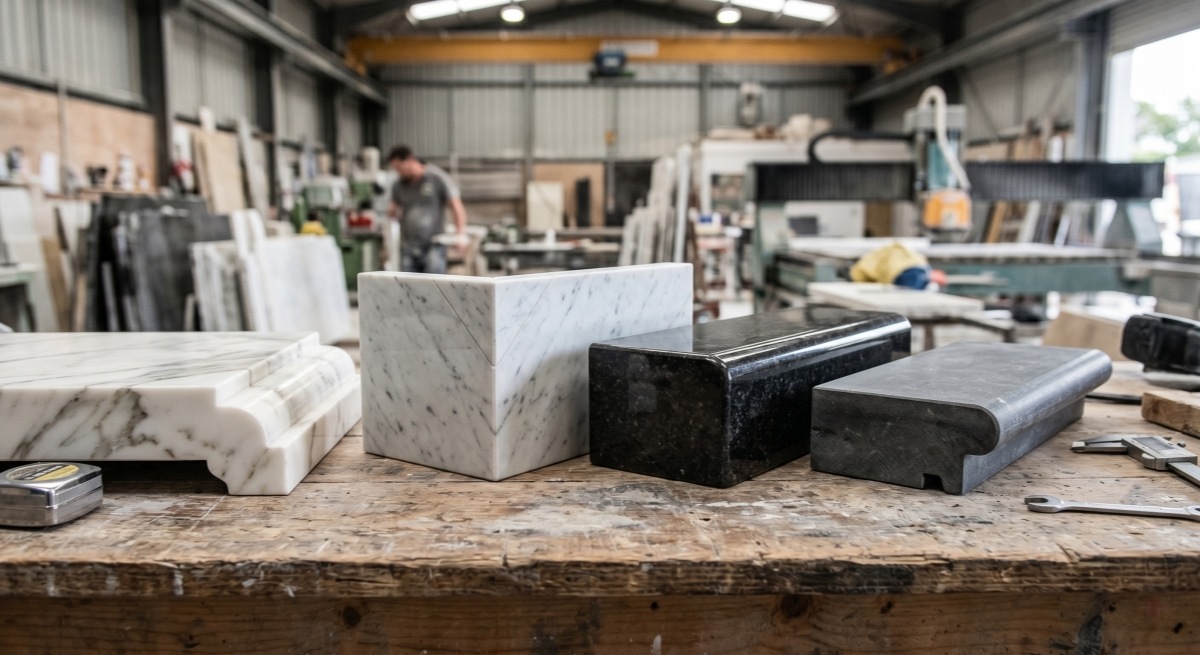
One of the most common project mistakes is treating material approval and fabrication planning as two different conversations.
For cut-to-size stone, they are closely connected.
Natural stone variation can affect where pieces should be cut from, which faces should be most visible, how vein direction should run, and whether adjacent pieces should be selected from the same slab zone. Even engineered materials benefit from planning when pattern flow, tone consistency, or finish direction matters.
A project buyer does not need to control every technical detail personally, but they do need to ask whether the supplier has connected the material with the fabrication plan.
A cut list without visual logic is not enough.
Not every piece matters equally.
Some surfaces will be highly visible and define the first impression of the space. Others will be more secondary. A reliable cut-to-size process should reflect that difference.
Buyers should ask which surfaces are considered face surfaces, which edges will remain exposed, and which parts need the cleanest selection or strongest finish control. This is particularly important for reception counters, vanity tops, staircase pieces, wall cladding joints, bookmatched areas, and any application where lighting will highlight the stone directly.
A project does not need perfection everywhere, but it does need clarity about where precision matters most.
In many finished stone pieces, the edge is what turns a raw slab into a project component.
Yet edge details are often reviewed too late or too casually. Buyers should confirm the profile, thickness build-up if any, arris or eased treatment, polishing level, corner condition, and whether the edge design suits both the visual intent and the practical use of the piece.
This matters because the edge is one of the first areas where site complaints appear. It is easy for a drawing to look acceptable and still produce an unsatisfying edge in real life if no one checked how the detail would actually feel and look after fabrication.
In cut-to-size work, small edge decisions can have large visual consequences.
Many disputes in stone supply are not really about whether the order was good or bad. They are about whether the expected tolerance was ever discussed clearly.
Buyers should ask what tolerance standard is being followed for size, thickness, straightness, angle, hole position, and edge accuracy. This is especially important when the stone will connect with metal, glass, cabinetry, or prefabricated site conditions.
Tolerance is not a minor technical issue. It determines whether installation becomes smooth or stressful.
The earlier this is discussed, the fewer surprises appear later.
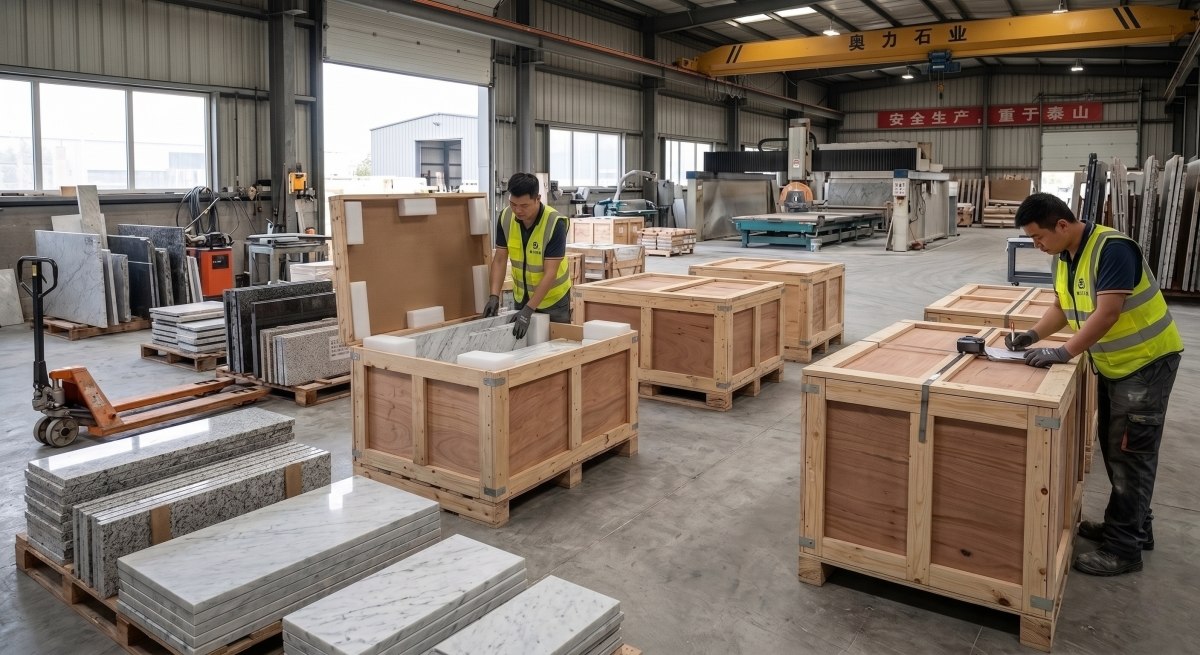
A cut-to-size order is not finished when the last piece is polished.
For project work, labeling and packing are part of whether the order is truly usable. Pieces should be identifiable. Installation teams should be able to connect the delivered goods with the drawing or piece list. If the order is large, the organization method becomes even more important.
Buyers should ask how each piece will be marked, how bundles or crates will be grouped, whether installation sequence is reflected in the labeling, and how fragile or finished surfaces will be protected during transport.
A well-made piece that arrives damaged or impossible to identify is not a successful project outcome.
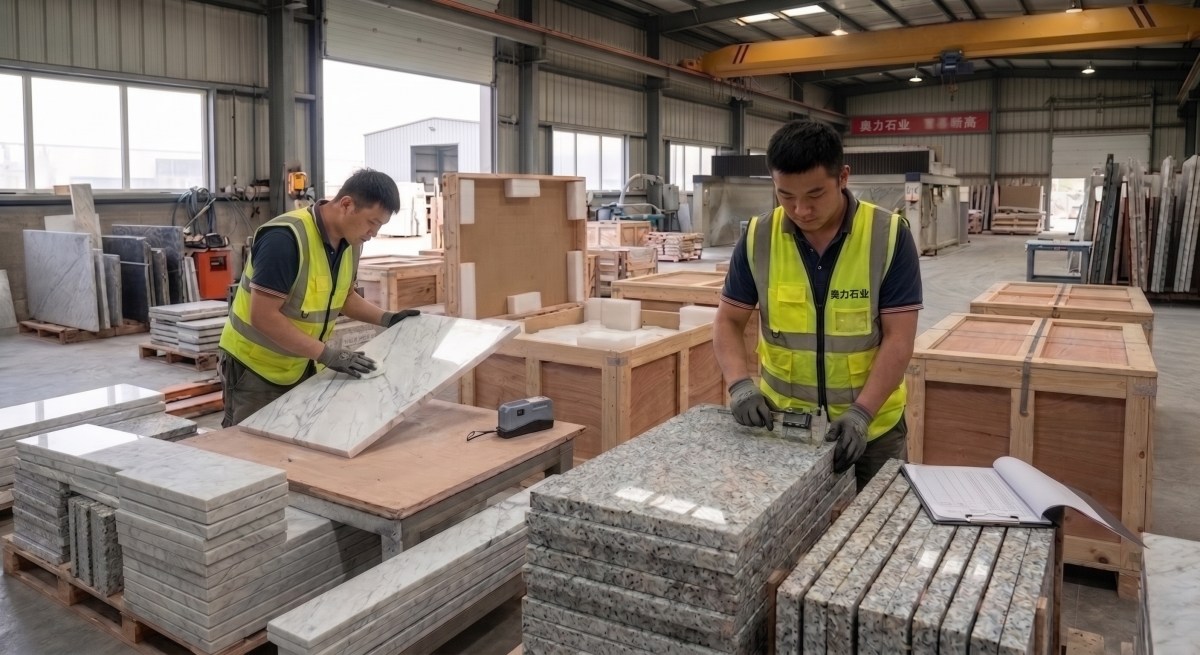
One of the most practical questions a project buyer can ask is simple: what is the final review process before loading?
A reliable supplier should not move directly from fabrication to shipment without a checking step. There should be a process to review dimensions, finish consistency, piece count, visible defects, labeling accuracy, and packing condition.
Photos and videos can help, but the real issue is whether someone is taking responsibility for checking the order as a project, not merely as a production batch.
This is where project confidence is built.
Not every cut-to-size order should be judged in the same way.
A luxury hotel lobby package may require stronger visual control and closer slab logic. A residential tower vanity program may care more about repeatability and quantity discipline. A commercial façade or cladding package may focus more on dimensional accuracy, fixing logic, and installation coordination. A retail project may be especially sensitive to lead time and replacement risk.
This is why a useful supplier conversation should begin with application, not just quantity.
The stronger the supplier understands the project role of the stone, the stronger the execution usually becomes.
The smartest project buyers do not only ask whether the factory can produce the pieces. They ask whether the factory understands the pressure points of the order.
They want to know:
That is a very different mindset from simply asking for a quotation.
And in cut-to-size work, it usually produces much better results.
Project buyers often think the main risk in stone supply is choosing the wrong material. In cut-to-size work, the bigger risk is often choosing a process that is not controlled well enough.
The stronger orders are usually not the ones with the cheapest quote or the fastest promise. They are the ones where drawings, material logic, edge details, tolerance, labeling, packing, and pre-shipment review are all treated as part of the same system.
That is what makes cut-to-size stone feel professional rather than merely produced.
The first thing to check is whether the drawing package is complete enough for production. Many later problems begin with unclear dimensions, finishes, or details that were assumed rather than specified.
Because fabrication introduces more variables. Once the stone is cut into project components, details such as tolerance, edge finish, labeling, and packing become much more important.
Yes. For project work, packing should not be treated as a last-minute logistics issue. It affects protection, identification, and installation efficiency.
No. Good material alone does not guarantee a good project result. The fabrication plan, piece logic, and control process matter just as much.
A stronger supplier usually asks practical questions early. They want to clarify drawings, edge details, application conditions, and packaging logic before production begins.
If a cut-to-size order is tied to a real project, the most useful discussion starts with the drawings, application list, and critical details, not only the price sheet. That is usually where avoidable problems are reduced before production even begins.



 IPv6 network supported