English
 Español
 Português
 عربي
عربي 한국어
한국어

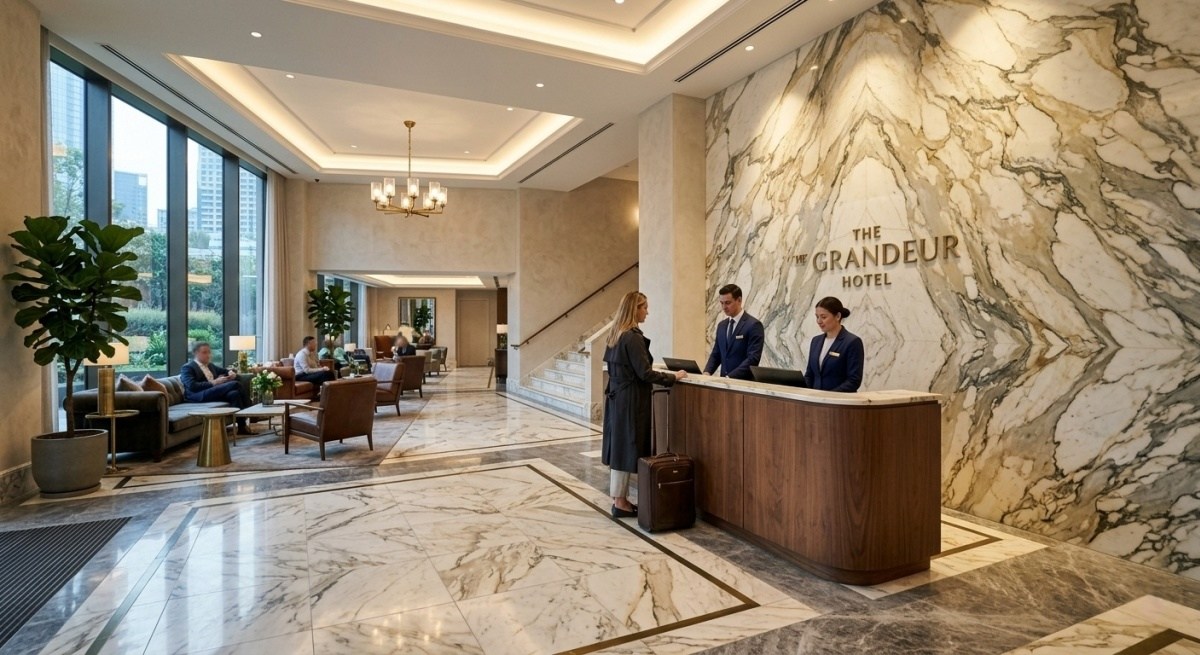
Marble and quartz are both widely used in hotel and commercial interiors, but they do not solve the same problem. Marble usually brings identity, depth, and a stronger visual impression. Quartz usually brings control, repeatability, and a more predictable result across larger quantities. The better choice depends less on which material looks better in isolation and more on what the project actually needs the surface to do.
In many projects, this comparison is handled too casually. Teams often look at a sample, react to the appearance, and move on. But once the material is repeated across guest room vanities, reception counters, lobby walls, washroom tops, restaurant tables, or feature surfaces, the decision becomes more serious. At that point, appearance is only one part of the picture. Fabrication, consistency, maintenance, replacement risk, and long-term use all start to matter.
Marble is often the stronger choice when the project wants a space to feel memorable.
Its natural veining, tonal movement, and geological depth can create a sense of richness that is difficult to replace with a more controlled surface. In hospitality design especially, that quality matters. A hotel lobby, feature staircase, reception backdrop, statement bathroom wall, or decorative floor pattern often needs more than just a clean finish. It needs material presence.
This is one reason marble remains so important in high-visibility spaces. When it is selected and controlled well, it does not feel generic. It gives the project character. It helps the space feel designed rather than merely finished.
A strong marble application can make a project feel more expensive without needing to become louder. That is part of its value.
The strength of marble is also the reason it demands more discipline.
Because it is natural, variation is part of the material. That can be beautiful, but it can also become a problem when the project expects uniformity without planning for it. Slab selection, vein flow, shade range, finish choice, and layout direction all influence the final visual result. A good sample does not automatically guarantee a good installation.
This is where many commercial projects make the wrong assumption. They approve the material, but they do not manage the visual logic of the order.
Marble can also be the wrong answer when a project wants every repeated unit to look almost identical. In those cases, the issue is not whether marble is premium enough. The issue is whether its natural behavior matches the program.
Marble rewards projects that can manage complexity. Without that control, it can quickly turn from a design asset into a coordination risk.
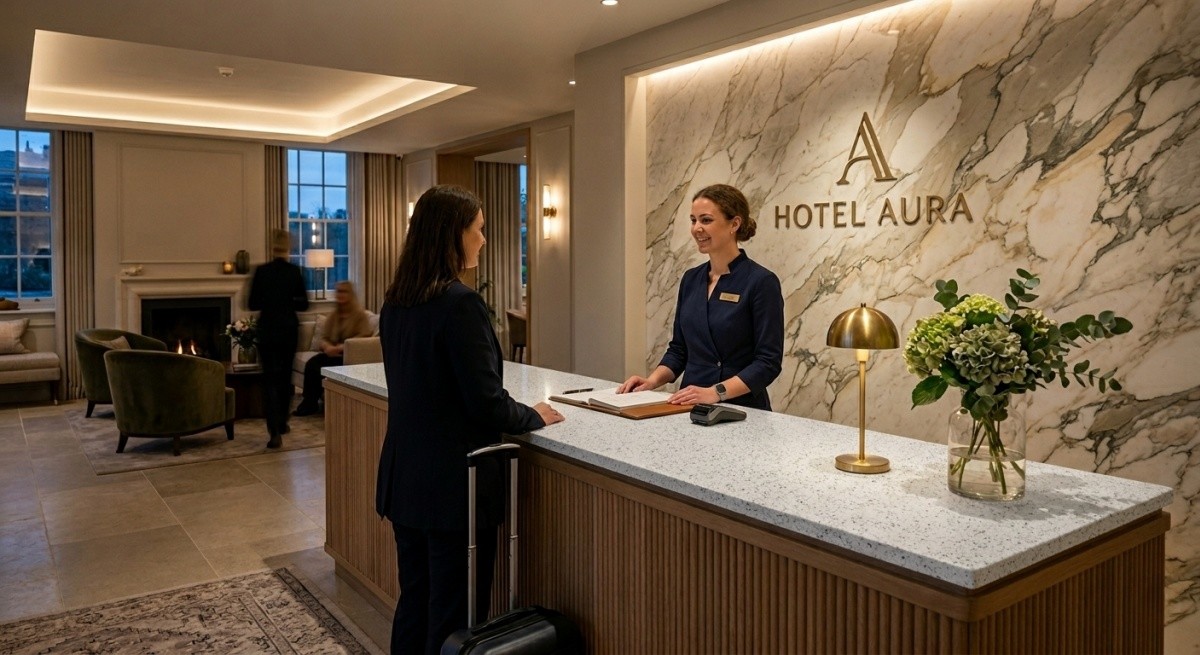
Quartz is often strongest when the project needs order.
That does not make it less refined. In the right interior, quartz can feel clean, elegant, composed, and highly professional. Its real advantage is that it usually gives the project a more controlled relationship between approved sample and final delivery.
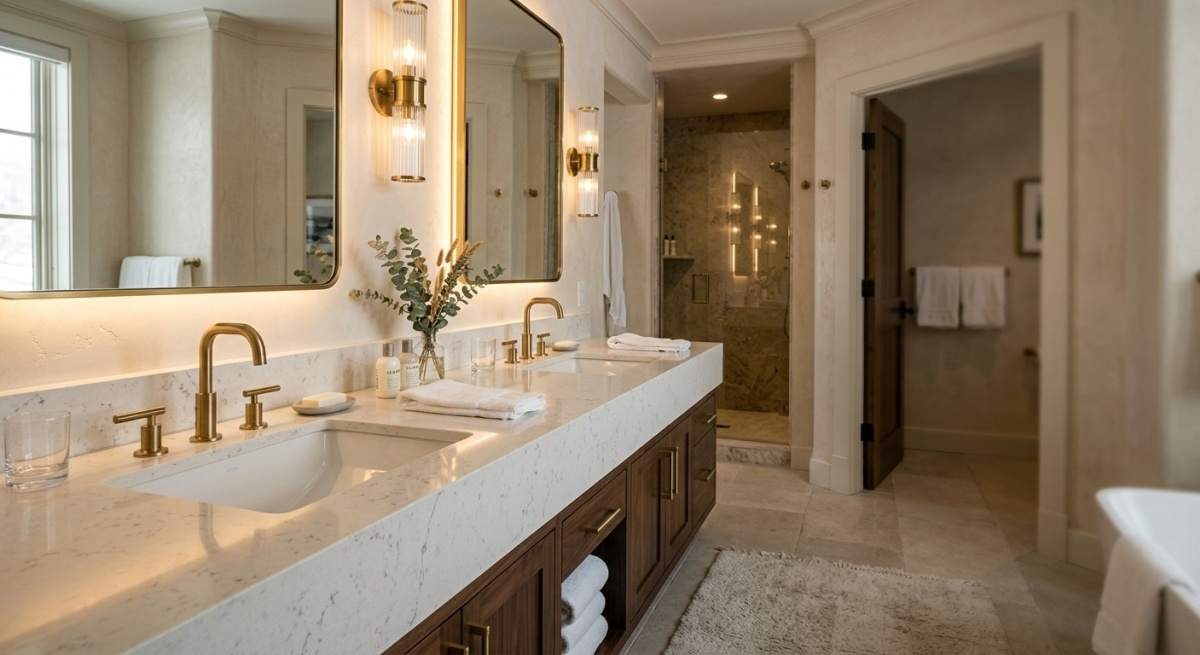
This matters in hotel and commercial work because many surfaces are repeated. Guest room vanity tops, bathroom countertops, service counters, table tops, worktops, and commercial washroom surfaces often need to look consistent across many pieces. Quartz usually makes that easier.
It is also valuable when the design language is calm and precise. Some projects do not want strong geological drama. They want clarity. They want the surface to support the architecture quietly and reliably. Quartz often works well in that role.
In other words, marble gives a project identity. Quartz gives it discipline.
Quartz is often treated as the practical choice, and in many cases it is. But practical does not always mean better.
A project can choose quartz for the right technical reasons and still lose something visually if the concept depends on natural depth, variation, or material individuality. A highly controlled surface may perform well and still feel slightly flat in a space that needs more emotional texture.
Quartz also still requires judgment. Pattern choice matters. Tone matters. Finish matters. Edge details matter. Fabrication quality matters. A weak quartz selection can make a project feel anonymous very quickly.
The point is not that quartz is less valuable. The point is that controlled appearance is not the same as strong design.
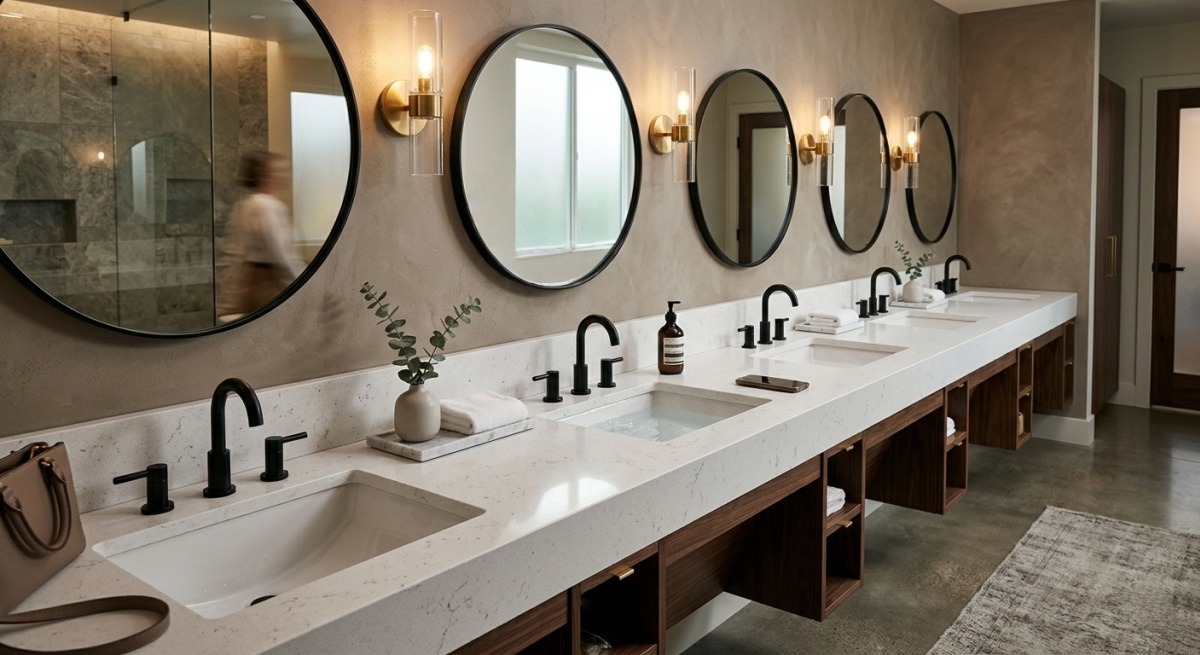
The better question is: what is this surface being asked to do?
If the answer is to create first impression, identity, richness, and focal value, marble often has the advantage.
If the answer is to support repeated fabrication, cleaner standardization, and more stable visual control across quantity, quartz often becomes the stronger option.
Once the question is framed that way, the comparison becomes much more useful.
Too many teams still choose marble because it sounds more luxurious, or quartz because it sounds easier to manage. Neither reason is strong enough on its own. Material decisions become better when they are made by role, not by habit.
Designers usually look for atmosphere, visual hierarchy, and material presence. From that perspective, marble often feels more expressive and memorable.
Procurement teams usually care more about repeatability, quantity control, and coordination risk. From that angle, quartz often feels safer.
Contractors often focus on fabrication logic, installation control, and how to keep results stable across multiple pieces. Operators and owners are more likely to think about maintenance, upkeep, and what the space will look like after daily use begins.
A better project happens when these priorities are balanced early, not when one side forces the decision too quickly.
For larger hospitality projects, balancing these priorities also requires coordination beyond material selection. Buyers need to consider fabrication details, dry layout, quality control, packing sequence, and future replacement requirements as part of the overall supply process.
Buyers managing multiple hotel stone requirements together can review our Hotel Stone Supply Package for Hospitality Projects, which brings material selection, fabrication, dry layout, QC, packing and replacement planning into one coordinated project workflow.

For hotel and commercial interiors, the best strategy is often not to force one material across every surface.
Marble may be the right choice for the lobby wall, reception backdrop, staircase cladding, or other focal areas where the project needs visual authority.
Quartz may be the right choice for guest room vanity programs, repeated countertops, service surfaces, or other areas where cleaner control matters more than uniqueness.
That is not compromise. It is a more intelligent division of roles.
The strongest projects usually understand that different materials solve different kinds of pressure.
Marble and quartz are both excellent materials for hospitality and commercial work, but they should not be treated as interchangeable. Marble is often stronger where the project wants character, visual emotion, and natural presence. Quartz is often stronger where the project needs repeatability, cleaner control, and a more predictable large-scale result.
The right question is not which material sounds more premium. The right question is which one is more suitable for the role it needs to play.
That is where better specifications begin.
Not always. Marble often carries stronger natural prestige, but quartz can also look highly refined when the project wants a cleaner and more controlled visual language.
In many cases, yes. Quartz is often easier to standardize across multiple fabricated pieces, which makes it a strong choice for repeated hospitality applications.
No. Marble can work extremely well in commercial and hotel projects, especially in focal spaces. It simply requires better visual control and a more realistic understanding of variation.
Yes, and in many projects that is the stronger strategy. Marble can be used where identity matters most, while quartz can support repeated functional areas.
The biggest mistake is comparing them as if they should do the same job. In most projects, they are solving different problems.
If you are comparing marble and quartz for a hotel, retail, residential tower, or commercial interior project, start with the real application list rather than the sample box. A useful recommendation only becomes possible when the role of each surface is very clear.



 IPv6 network supported