English
 Español
 Português
 عربي
عربي 한국어
한국어

Slabs or Cut-to-Size Stone: Which Ordering Method Fits Your Project?
Stone buyers often focus on material first.
Marble, quartz, artificial marble, terrazzo, limestone, granite, or sintered stone.
That is important.
But after the material is selected, another question becomes just as important:
Should the buyer order slabs, or should the supplier fabricate cut-to-size pieces before shipment?
There is no single correct answer for every project.
Slab supply gives buyers more flexibility after arrival. Cut-to-size supply can reduce local fabrication work when drawings are clear and production details are confirmed.
That is why buyers should compare slabs or cut-to-size stone for project orders according to application, drawing readiness, local labor cost, installation plan, packing risk, schedule, and total project responsibility.
The right choice is not only about unit price.
It is about which method reduces the real project risk.

What Slab Supply Means
Slab supply usually means the buyer purchases stone in large slab format.
The buyer or local fabricator later handles cutting, edge work, cutouts, installation preparation, and final adjustment.
Slab supply may be suitable when:
the buyer has a trusted local fabricator
drawings are not final yet
site measurements may change
the project needs flexibility after arrival
the buyer wants to inspect or select slabs locally
the material is for stock or distribution
the local market prefers slab inventory
the project involves many uncertain sizes
the buyer wants to control final fabrication near the site
Slabs can be practical for importers, distributors, fabricators, contractors with local workshops, and buyers who want flexibility.
But slab supply also means the buyer must manage local cutting, wastage, labor, schedule, and fabrication quality after arrival.
A cheaper slab price may not be the final project cost.
What Cut-to-Size Stone Means
Cut-to-size supply means the supplier fabricates pieces according to confirmed drawings, sizes, and processing details before shipment.
This may include:
floor tiles
wall panels
stair treads and risers
vanity tops
countertops
thresholds
window sills
skirting
reception counter pieces
bathroom packages
hotel room sets
project panels by area or floor
Cut-to-size stone can be useful when drawings are clear, the project needs controlled production, and local fabrication cost or capacity is a concern.
A supplier with real stone manufacturing and fabrication capability should be able to review drawings, confirm sizes, process edges, label pieces, inspect finished parts, and pack them according to project logic.
Cut-to-size supply can save site work, but it requires much better confirmation before production.
If drawings change after fabrication, the risk becomes higher.
Natural Marble: Slab Selection Often Comes First
For natural marble materials for architectural projects, slab selection is often important before deciding whether to ship slabs or fabricate cut-to-size pieces.
Natural marble has natural variation. Color range, vein direction, movement, and slab character can affect the final result.
Slab supply may be better when the buyer wants to select slabs locally or keep flexibility for final layout.
Cut-to-size may be better when:
slabs have already been approved
drawings are final
visible layout has been reviewed
dry layout is needed
piece sequence matters
bookmatching or vein direction must be controlled
the project needs ready-to-install components
For natural marble feature walls, staircases, hotel lobbies, and decorative panels, cut-to-size can be valuable only if slab approval and layout planning are handled carefully.
Natural marble should not be cut blindly from a name alone.
Artificial Marble: Cut-to-Size Can Support Repeated Commercial Interiors
Artificial marble is often used where consistency and project repetition matter.
For artificial marble slabs for commercial interiors, buyers may choose slabs for stock, distribution, or local fabrication. They may choose cut-to-size for wall panels, vanity tops, counters, flooring, hotel bathrooms, and commercial interior packages.
Cut-to-size artificial marble can be useful when the project needs:
repeated sizes
consistent visual effect
commercial interior wall panels
bathroom packages
vanity tops
counter pieces
faster site installation
controlled factory fabrication
clear labeling and packing
But the buyer still needs to confirm finish, thickness, edge details, drawings, quantity, and packing method before production.
Artificial marble is not natural marble, and it should not be presented as natural marble. Its value is in controlled appearance, project supply efficiency, and practical interior use.
Quartz: Cut-to-Size Is Often Important for Countertops
Quartz stone is commonly used for countertops, vanity tops, reception counters, and work surfaces.
For quartz stone surfaces for countertops and vanity tops, cut-to-size work may include sink cutouts, faucet holes, edge profiles, backsplash pieces, side splash, polished edges, mitered details, and packing by unit or room.
Slab supply may be suitable for distributors or fabricators who cut locally.
Cut-to-size quartz may be suitable when:
drawings are final
unit sizes repeat
local fabrication is expensive
the buyer wants factory-made countertop sets
edge and cutout details are clear
packing can follow apartment, room, or project sequence
The risk is also clear:
If cabinets, sinks, faucets, or site dimensions are not final, cut-to-size quartz can become risky.
For countertops, accurate drawings and site confirmation are very important.
Terrazzo: Project Format Matters
Terrazzo can be supplied as slabs, tiles, panels, or cut-to-size components depending on the project.
For terrazzo stone for hotel and retail spaces, buyers should think about area size, tile format, panel size, aggregate direction, finish, thickness, traffic, and installation method.
Slab supply may be useful for local cutting or design flexibility.
Cut-to-size terrazzo can be useful for:
hotel flooring
retail floors
wall panels
stair treads
counter pieces
restaurant interiors
public interior packages
repeated design modules
For terrazzo flooring, buyers should confirm finish, slip-related expectation, maintenance plan, and installation layout before deciding.
A beautiful terrazzo sample does not automatically mean the full project format is ready.
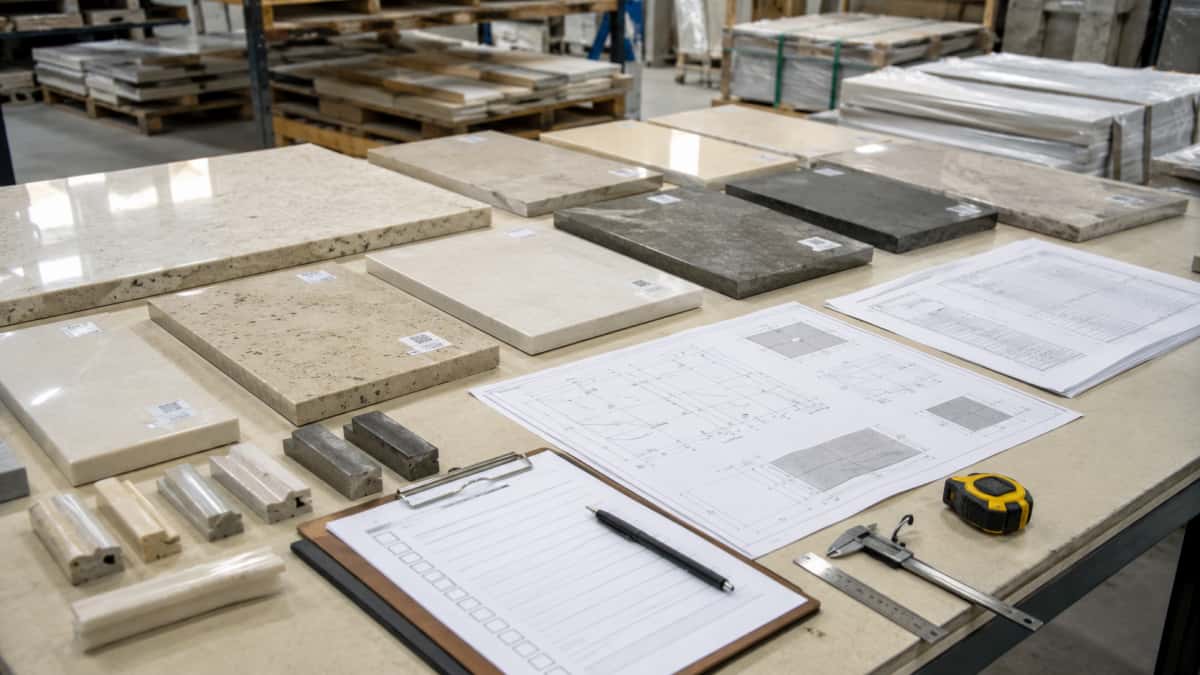
When Slabs Are Usually the Better Choice
Slabs may be the better choice when the buyer needs flexibility.
This often applies when:
drawings are not final
site measurements may change
the buyer has strong local fabrication
the material is for stock sales
the buyer wants to inspect slabs after arrival
the project has many design changes
the final layout depends on site conditions
local installers prefer to cut on site
the buyer wants to reduce risk from wrong pre-cut sizes
Slabs keep decisions open.
But they also move fabrication responsibility to the buyer or local team.
If local fabrication is strong, this can work well. If local fabrication is weak, slab supply may create hidden problems later.
When Cut-to-Size Is Usually the Better Choice
Cut-to-size may be better when the project needs factory-controlled preparation.
This often applies when:
drawings are final
sizes repeat
local fabrication is costly or limited
the buyer wants less site cutting
the project needs labeled pieces
installation sequence matters
hotel rooms repeat
bathroom packages repeat
stair components need accuracy
countertop details are clear
wall panels need planned layout
packing by room or floor is required
Cut-to-size can reduce site work and improve project organization.
But it only works well when details are confirmed early.
A cut-to-size order with unclear drawings is not professional. It is risky.
Do Not Choose Cut-to-Size Too Early
Cut-to-size sounds efficient, but it should not be started before the project is ready.
Before cut-to-size production, buyers should confirm:
final drawings
size list
thickness
finish
quantity
edge details
cutouts and holes
sink and faucet models if relevant
stair details
wall panel sequence
dry layout if needed
packing method
labeling method
destination and installation plan
If these details are still changing, slab supply or delayed fabrication may be safer.
A serious supplier should not push cut-to-size production just to close the order faster.
The goal is correct production, not rushed production.
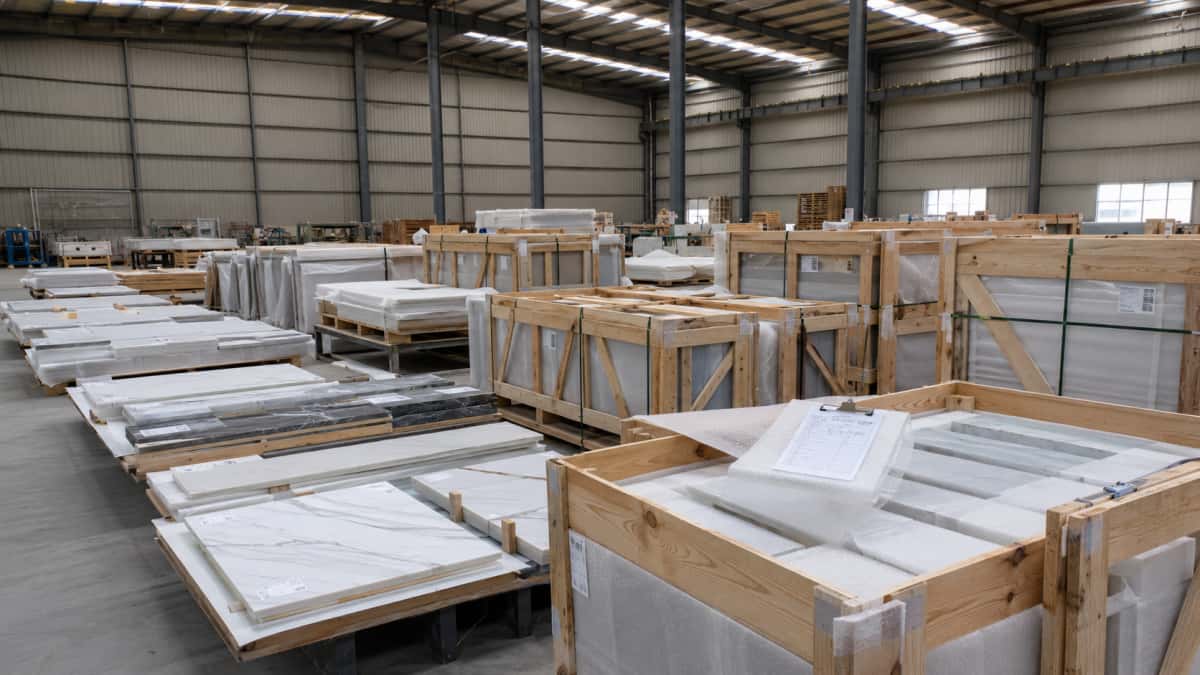
Packing Is More Important for Cut-to-Size Orders
Cut-to-size pieces often need more careful packing than slabs.
Why?
Because each piece may belong to a specific room, wall, floor, stair, counter, or drawing number.
For international stone project supply from China, packing should protect the stone and help the project team identify each piece after arrival.
Buyers should confirm:
crate numbers
piece labels
room or floor codes
edge protection
foam and separators
cutout protection
stair nosing protection
countertop packing
packing list by area
photos before shipment
A cut-to-size order should not arrive as random pieces.
It should arrive as an organized project package.
Compare Total Cost, Not Only Unit Price
Slabs and cut-to-size pieces are often priced differently.
A slab quotation may look cheaper because it does not include local cutting, edge work, wastage, cutouts, packing by piece, or project labeling.
A cut-to-size quotation may look higher because more work is included before shipment.
Buyers should compare total cost:
material
cutting
wastage
edge work
cutouts
dry layout
inspection
packing
local labor
installation preparation
damage risk
schedule risk
replacement risk
communication cost
The lowest unit price is not always the lowest project cost.
This does not mean cut-to-size is always better.
It means the buyer should compare the full responsibility of each method.
A Practical Decision Checklist
Before choosing slabs or cut-to-size, buyers can use this checklist:
Project area:
Material type:
Application:
Slab supply or cut-to-size:
Drawings final or not:
Site measurement confirmed:
Local fabrication available:
Local labor cost:
Finish:
Thickness:
Edge details:
Cutouts or holes:
Repeated sizes:
Dry layout needed:
Labeling needed:
Packing by room or floor:
Installation sequence important:
Risk if size is wrong:
Total cost compared:
Lead time:
Remaining open questions:
This checklist helps buyers make a decision based on project reality.
Not only on habit or price.
Here Comes Final Thought
Slabs and cut-to-size stone both have value.
Slabs are useful when buyers need flexibility, local fabrication, stock, or final site adjustment.
Cut-to-size stone is useful when drawings are confirmed, fabrication details are clear, and the project needs organized ready-to-install components.
The wrong choice can create extra cost, delay, waste, or installation confusion.
The right choice helps the project move more smoothly.

For slab supply, cut-to-size fabrication, drawing review, packing planning, and project stone support, buyers can contact Aoli Stone for slab and cut-to-size project support.



 IPv6 network supported