English
 Español
 Português
 عربي
عربي 한국어
한국어

Choosing stone for a project should not start with only one question:
“Which color looks beautiful?”
Color matters, of course. But a serious project buyer also needs to ask where the material will be used, how much traffic the area receives, who will maintain it, what fabrication is required, what budget range is realistic, and what risk the project cannot accept.
A hotel lobby floor, a bathroom vanity top, a retail wall panel, a kitchen countertop, a staircase, and a feature wall do not need the same stone logic.
That is why buyers should choose the right stone material for your project based on application, not only appearance.
The best material is not always the most expensive one.
It is the material that fits the project use, visual goal, maintenance condition, fabrication requirement, and commercial expectation.
Start With the Project Area
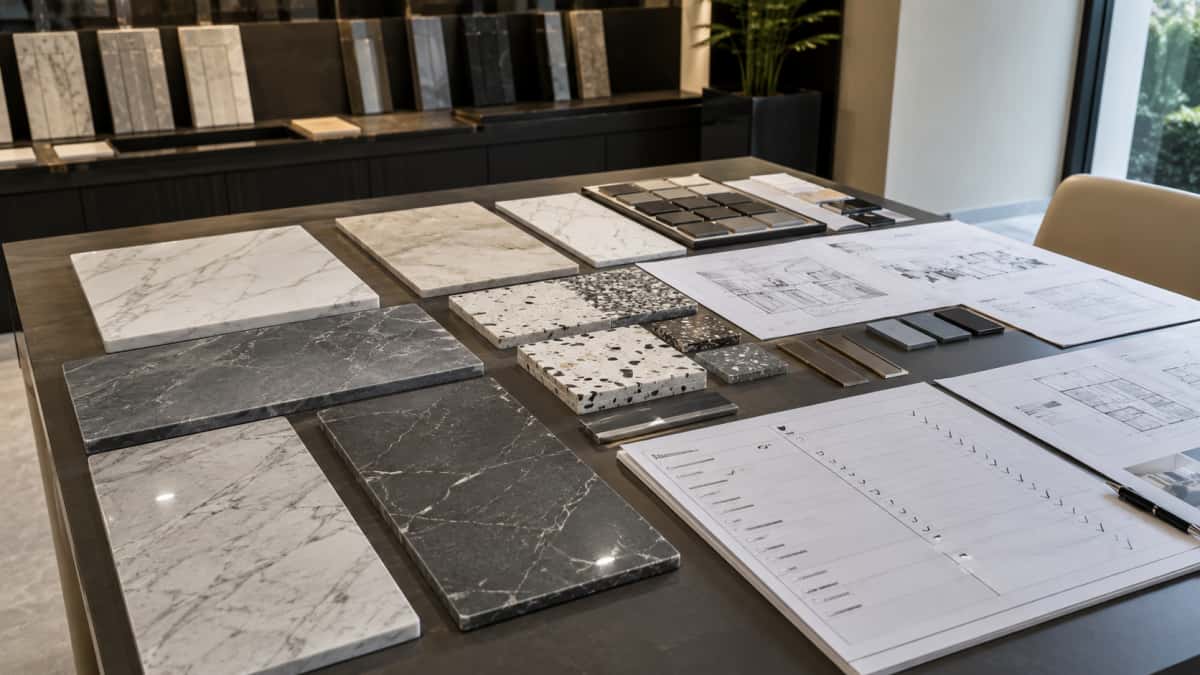
Before choosing a stone material, define the project area clearly.
Is it a floor?
A wall?
A countertop?
A vanity top?
A staircase?
A reception desk?
A hotel bathroom?
A retail display area?
A lobby feature wall?
A residential kitchen?
A public commercial corridor?
Each area has different demands.
Floors need to handle traffic, abrasion, cleaning, and slip-related expectations.
Countertops need to handle daily use, edges, cutouts, stains, cleaning, and possible heat exposure.
Wall panels focus more on visual effect, weight, fixing method, panel size, joints, and consistency.
Staircases need careful attention to nosing, edge strength, slip expectation, thickness, and installation accuracy.
A material that works well on a decorative wall may not be the best choice for a busy floor. A beautiful natural marble may be perfect for a feature wall, but a project may choose another material for repeated bathroom vanity tops if consistency, budget, or maintenance is more important.
Natural Marble Is Strong in Visual Character
Natural marble is often chosen when the project needs natural movement, depth, luxury, and architectural identity.
For natural marble materials for architectural projects, buyers should pay attention to slab selection, tone range, veining, finish, layout, and natural variation.
Natural marble is suitable for many architectural and interior uses, especially:
feature walls
lobby walls
bathroom walls
vanity tops in selected projects
staircases with proper design
flooring where the finish and maintenance plan are suitable
decorative columns
luxury residential interiors
hotel and villa spaces
But buyers should understand one important point:
Natural marble is not a printed product.
Tone, veins, movement, and natural features can vary. This is part of its value, but it also means the buyer should review slab photos, approve acceptable range, and consider dry layout for important visible areas.
Natural marble is a good choice when the project values natural beauty and accepts the need for selection and maintenance.
Artificial Marble Is Useful Where Consistency and Practical Project Supply Matter
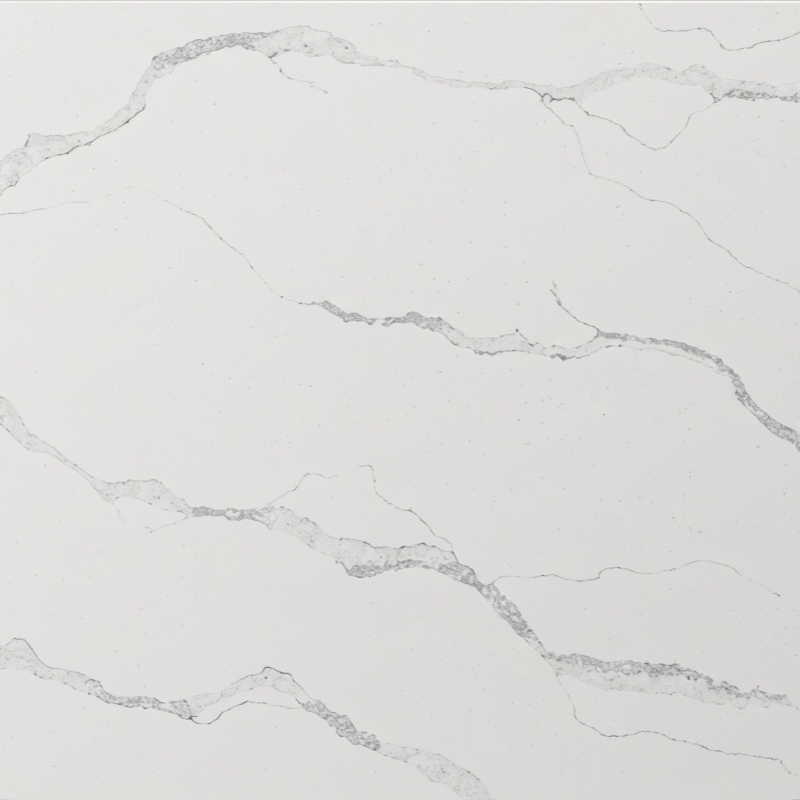
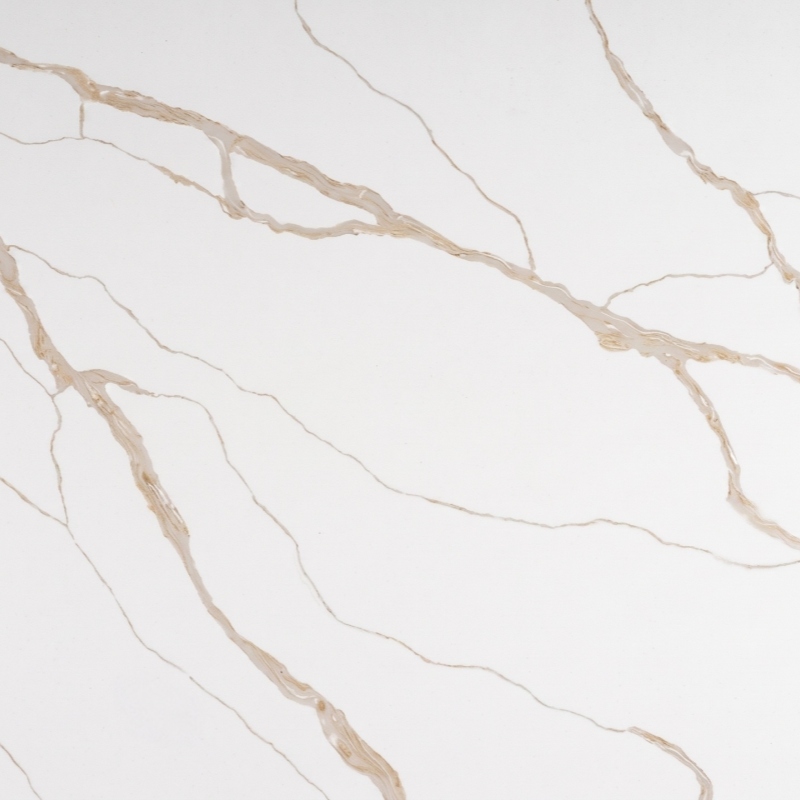
Artificial marble is often chosen when buyers need a marble-like or decorative stone effect with more controlled visual consistency across repeated areas.
For artificial marble slabs for commercial interiors, buyers may consider it for wall panels, vanity tops, counters, interior flooring, commercial surfaces, and cut-to-size project components.
Artificial marble can be useful when the project needs:
stable color direction
repeated slab supply
controlled appearance
cost-effective commercial interiors
matching wall or counter elements
project cut-to-size supply
large quantity consistency
faster decision-making than natural slab selection
It is not the same as natural marble. It should not be sold as natural stone. Its value is different.
Artificial marble works best when the buyer wants a consistent engineered surface for interior decorative use, especially in commercial projects, hospitality interiors, retail spaces, bathrooms, walls, and repeated project packages.
The buyer should still check sample, finish, slab size, thickness, edge details, and application suitability before ordering.
Quartz Stone Is Often Chosen for Countertop Use
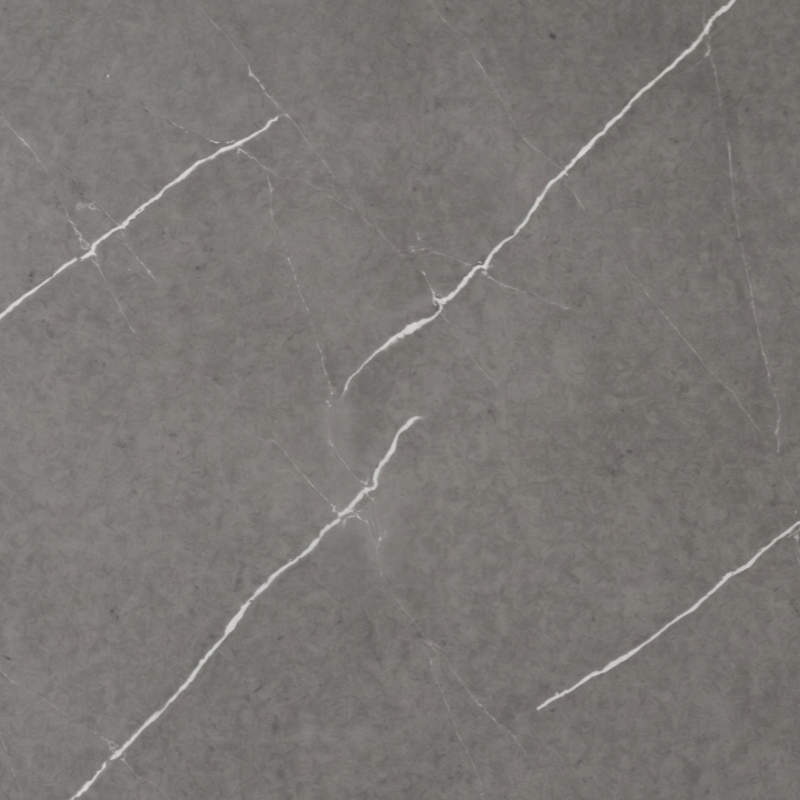
Quartz stone is widely used for countertops, vanity tops, reception counters, kitchen surfaces, and commercial work surfaces.
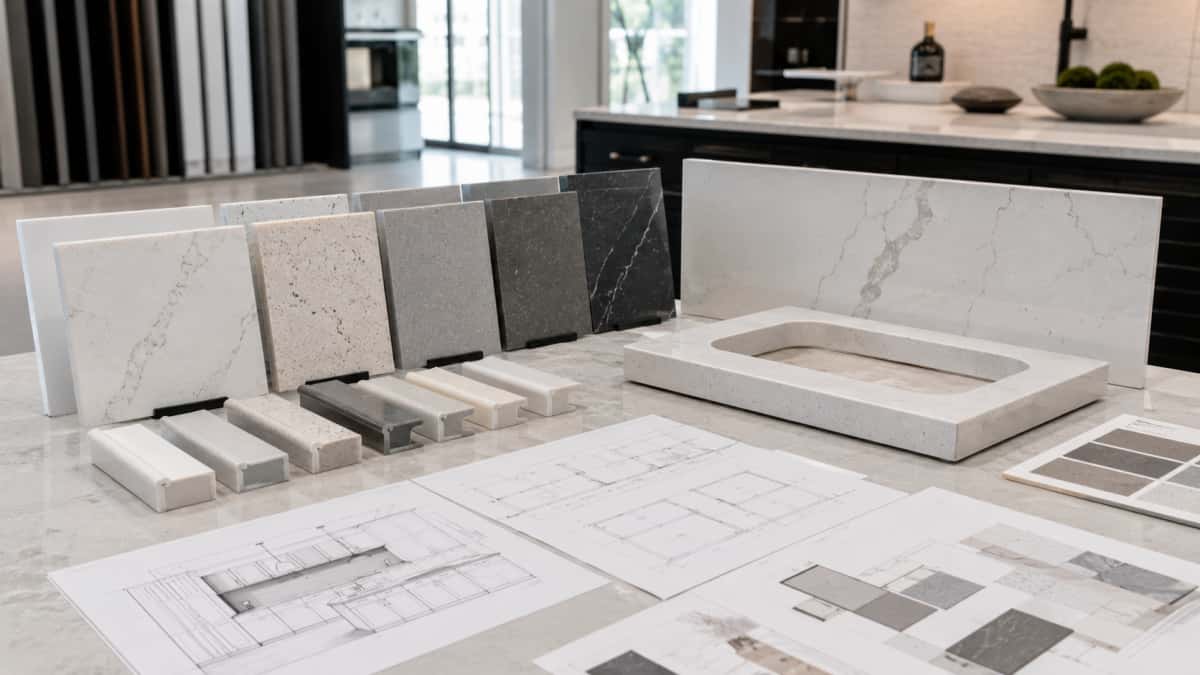
For quartz stone surfaces for countertops and vanity tops, buyers should focus on slab size, thickness, pattern direction, surface finish, cutouts, edge profile, backsplash, seams, and daily use expectations.
Quartz is often selected when the project needs:
countertop surfaces
vanity tops
reception desks
consistent slab supply
engineered surface appearance
cutout and edge fabrication
repeated kitchen or bathroom units
clean modern interiors
Quartz is a strong option for many countertop applications, but buyers should not treat it as impossible to damage. Edges, corners, seams, sink cutouts, and mitered details still need correct fabrication and proper use.
Quartz is usually not chosen because it looks exactly like natural marble. It is chosen because it offers an engineered surface solution for practical countertop and interior uses.
Terrazzo Works Well for Design-Led Commercial Spaces
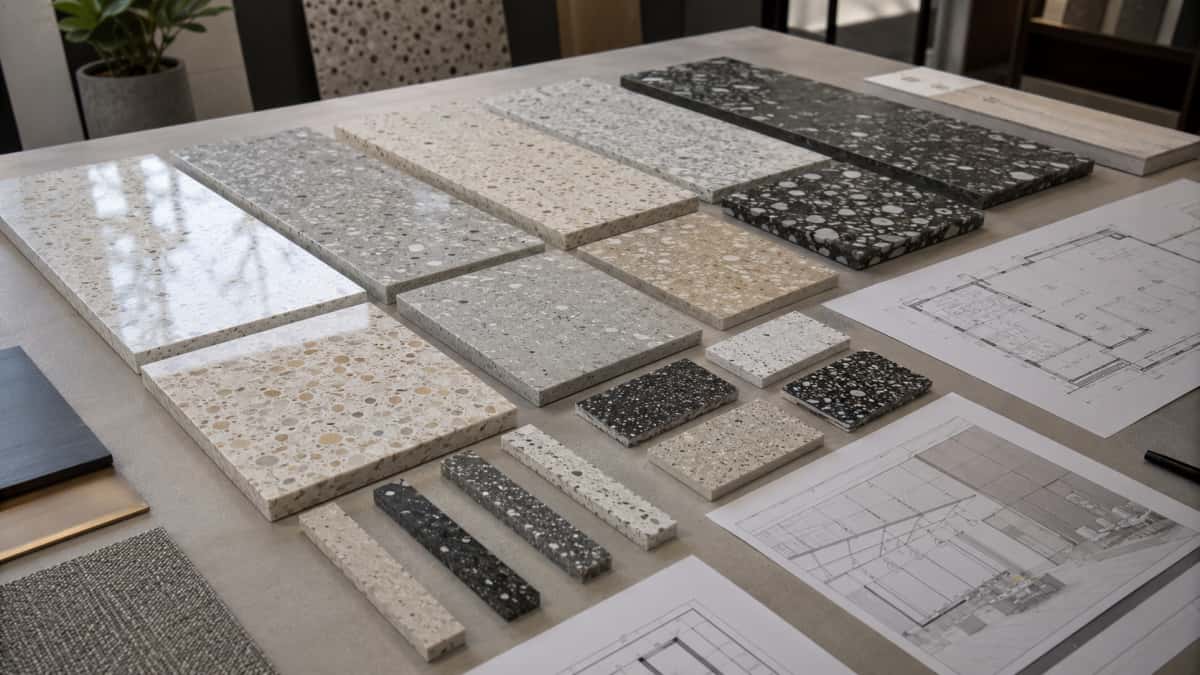
Terrazzo is often used in hotels, retail spaces, restaurants, public interiors, floors, walls, counters, and design-focused commercial environments.
For terrazzo stone for hotel and retail spaces, buyers should review base color, aggregate size, particle distribution, finish, thickness, slab or tile format, and maintenance expectation.
Terrazzo can be a good choice when the project needs:
strong design identity
public interior flooring
hotel and retail spaces
decorative commercial surfaces
custom color direction
aggregate-based visual texture
floor and wall coordination
modern architectural material expression
But terrazzo should be selected carefully.
Aggregate size, base color, finish, and surface treatment can change the final look significantly. For flooring, buyers should also consider traffic, cleaning, slip-related requirements, and maintenance plan.
Terrazzo can look calm, playful, modern, or premium depending on design direction.
It is not only a “floor material.” But if used on floors, the project must respect real floor-use conditions.
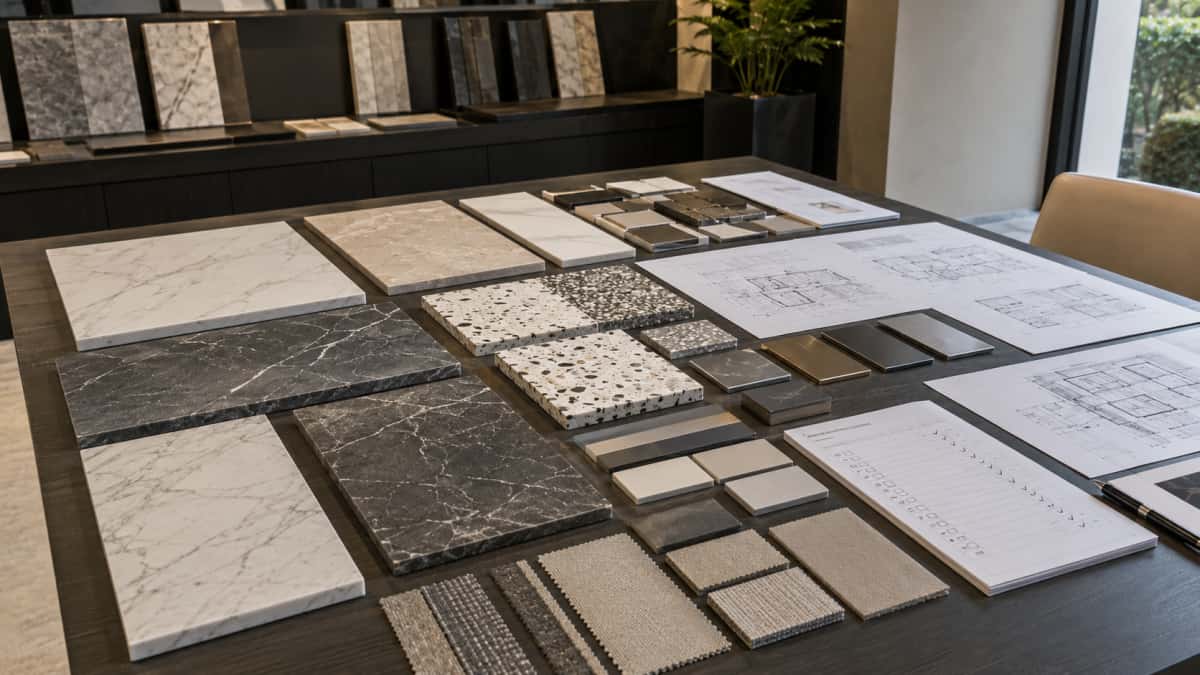
Do Not Choose Stone Only by Photo
Photos are useful for first screening, but they are not enough for final material decision.
A photo can show color direction and general style. But it may not show:
true finish
surface reflection
thickness
edge behavior
variation range
actual slab size
small particles or veins
maintenance expectation
how the material looks under project lighting
how pieces match across a large area
For natural marble, slab photos and range approval are important.
For artificial marble and quartz, samples and batch expectations should be reviewed.
For terrazzo, aggregate size and finish should be checked carefully.
A serious buyer should use photos, samples, slab images, drawings, and supplier discussion together.
Material choice should not rely on one attractive image.
Match Material With Maintenance Ability
Some projects have strong maintenance teams. Some do not.
This should influence material choice.
A luxury hotel may accept natural marble if the operator understands correct care. A busy retail floor may prefer a material and finish that match traffic and cleaning routines. A residential kitchen may need a practical countertop surface. A commercial bathroom package may require consistency, easy replacement planning, and clear cleaning instructions.
Before confirming a material, buyers should ask:
Who will clean it?
How often will it be cleaned?
Will the area face heavy foot traffic?
Will acidic or colored liquids appear?
Will furniture or carts move across the surface?
Will the surface be exposed to heat, water, cosmetics, oil, or cleaning chemicals?
Will the owner accept natural variation?
Will the project need replacement pieces later?
Maintenance is not only an after-sales issue.
It should be considered before material selection.
Consider Fabrication Before Final Selection
A material may look good, but fabrication details can change the decision.
Cutouts, edges, grooves, stairs, curves, mitered corners, wall panels, large panels, bookmatching, and dry layout all require production control.
This is where stone manufacturing and fabrication capability matters.
Before choosing a material, buyers should check whether the supplier can support:
slab selection
cut-to-size work
edge processing
surface finishing
sink cutouts
countertop fabrication
stair components
wall panel sizing
dry layout if needed
export packing
project labels
document support
A material decision is not complete until the buyer knows how the material will be fabricated, packed, shipped, and installed.
Think About Budget Honestly
Budget does not only mean material price.
The real project cost may include:
material
selection
cutting
edge work
surface finish
special processing
packing
shipping
wastage
replacement allowance
installation complexity
maintenance cost
risk of delay or rework
A cheaper slab may not be cheaper if it creates more waste, more sorting, weaker packing, or more installation confusion.
A more expensive material may be reasonable if it reduces project risk or creates the intended visual value.
The goal is not to choose the cheapest material.
The goal is to choose the material that makes sense for the project.
For stone project supply from China, buyers should compare not only material unit price, but also production support, packing, communication, and project execution.
A Simple Material Selection Guide
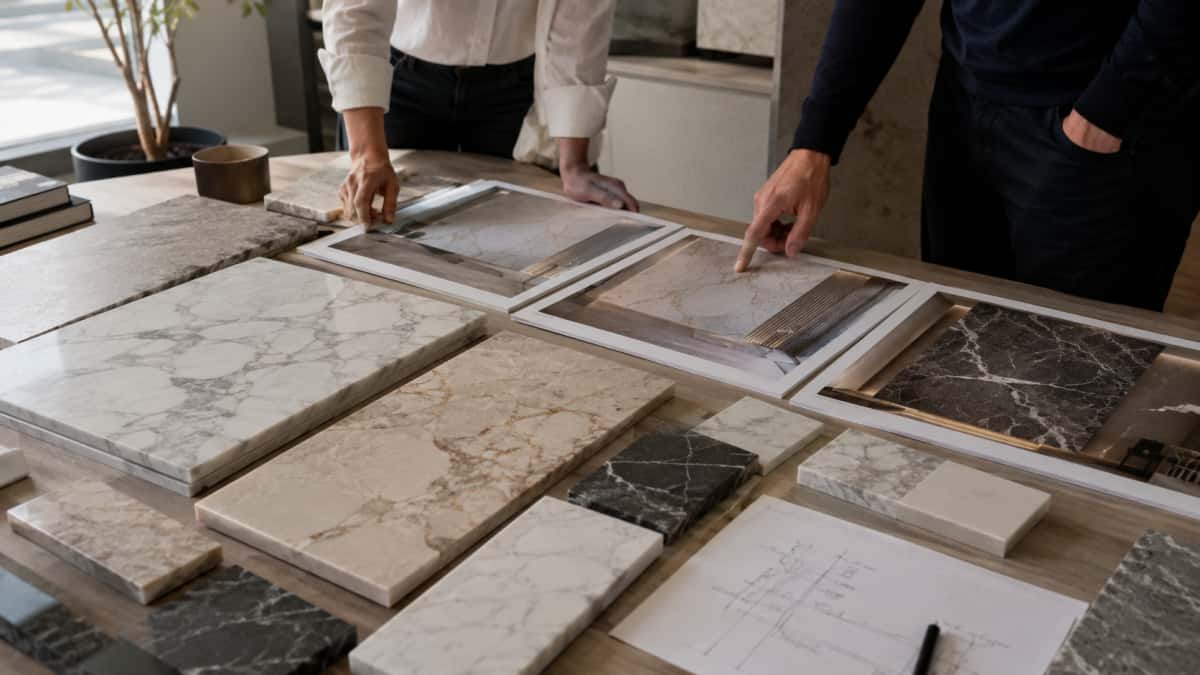
Here is a practical way to think about stone selection:
For high-value feature walls:
Natural marble may be a strong choice when natural movement and visual uniqueness are important.
For repeated commercial wall panels:
Artificial marble may be useful when consistency, cost control, and repeated supply matter.
For countertops and vanity tops:
Quartz stone is often considered because of its engineered surface logic and countertop fabrication suitability.
For hotel, retail, or public flooring:
Terrazzo may be suitable when design identity, aggregate texture, and commercial interior use are important.
For staircases:
Material, thickness, edge profile, finish, slip expectation, and installation method must be reviewed carefully.
For project packages:
The supplier’s fabrication, labeling, packing, and documentation ability can be as important as the material itself.
This guide is not a fixed rule.
It is a starting point for better questions.

A Practical Checklist Before Choosing Stone
Before confirming material, buyers can use this checklist:
Project area:
Application:
Visual goal:
Material category:
Color direction:
Natural variation accepted:
Surface finish:
Thickness:
Slab size or panel size:
Traffic level:
Stain risk:
Cleaning method:
Maintenance ability:
Fabrication details:
Edge or cutout requirements:
Dry layout needed:
Packing requirement:
Budget range:
Lead time:
Required documents:
Sample or slab approval:
Remaining risks:
This checklist helps buyers avoid choosing stone only by appearance.
Here Comes Final Thought
Choosing the right stone material is not about finding one material that is best for everything.
It is about matching material with project area, appearance, use condition, maintenance ability, fabrication requirement, budget, and long-term risk.
Natural marble, artificial marble, quartz, and terrazzo each have a place. The buyer’s job is to understand where each one fits.
A good supplier should not push one material for every project. A good supplier should help the buyer choose more clearly.
For material selection, sample review, fabrication discussion, and project supply planning, buyers can contact Aoli Stone for material selection and project support.



 IPv6 network supported