English
 Español
 Português
 عربي
عربي 한국어
한국어

Stone installation is not the end of project risk.
In many projects, the stone is produced correctly, packed carefully, shipped safely, and installed properly. But damage still happens before handover.
A polished marble floor may be scratched by construction dust.
A countertop edge may be chipped by tools.
A vanity top may be stained by adhesive or paint.
A terrazzo floor may be cleaned with the wrong chemical.
A quartz countertop may be used as a temporary workbench.
A wall panel may be hit by ladders, trolleys, or other trades.
This is why stone surface protection after installation should be treated as part of project management, not a small finishing detail.
The goal is simple: protect the finished stone before the project is handed over to the client.
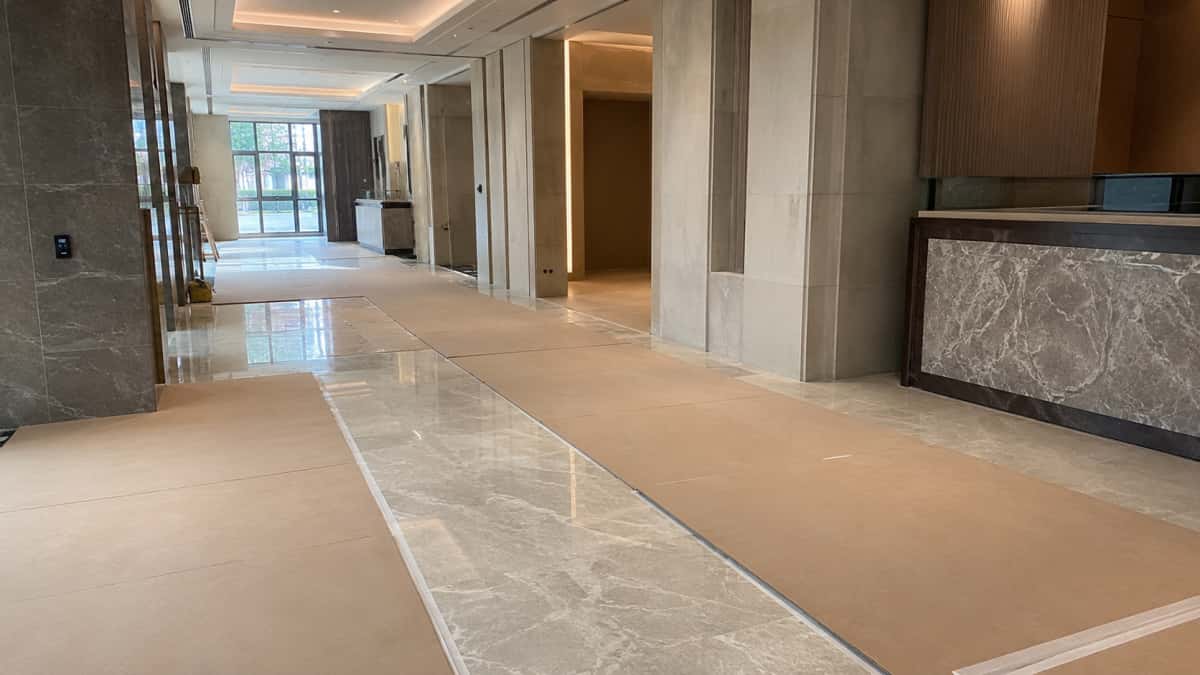
Protect Stone Immediately After Installation
Stone should not remain exposed for too long after installation, especially when other construction work is still ongoing.
After installation, the project team should check whether the surface needs temporary protection from:
dust
sand
foot traffic
paint
adhesive
tools
ladders
carts
furniture movement
other trades
cleaning chemicals
construction waste
Protection should be practical. It should not trap dirt against the stone, leave adhesive residue, hold moisture where it should not, or damage the finish when removed.
The wrong protection can also create problems.
A cheap tape may leave marks. A plastic film may trap moisture. A rough board may scratch a polished surface. A heavy object may create pressure marks or chips.
Protection must be chosen according to the stone type, finish, and site condition.
Natural Marble Needs Special Care
Natural marble is beautiful, but it is also more sensitive than many buyers expect.
For natural marble materials for architectural projects, buyers and contractors should be careful with acidic cleaners, cement residue, sand, metal tools, heavy traffic, and unprotected furniture movement.
Marble can be affected by acid-based cleaning products, aggressive chemicals, scratches, stains, and impact damage. Polished marble can show marks more easily under strong light.
Before handover, marble floors, walls, stairs, countertops, and decorative panels should be protected from other trades. If cleaning is required, use suitable neutral cleaning methods and follow the project or supplier guidance.
Do not assume that a strong cleaner is a better cleaner.
For marble, the wrong cleaner can create permanent visible damage.
Artificial Marble Should Be Protected From Scratches and Harsh Site Use
Artificial marble is widely used in commercial interiors, wall panels, vanity tops, counters, floors, and project cut-to-size applications.
For artificial marble slabs for commercial interiors, buyers should protect the installed surface from abrasive dust, dragging tools, sharp objects, heavy impacts, paint, glue, and improper cleaning.
Artificial marble can provide consistent visual effect and practical project use, but it is still a finished decorative surface. It should not be treated as a construction workbench.
Common risks include:
scratched polished surfaces
edge chips
adhesive stains
paint marks
dirty shoe traffic
wrong protection tape
impact at exposed corners
For counters and wall panels, protect edges and corners first. They are often more vulnerable than the flat surface.
Quartz Countertops Should Not Become Temporary Work Tables
Quartz stone is often selected for countertops, vanity tops, reception counters, and commercial surfaces.
For quartz stone surfaces for countertops and vanity tops, protection after installation should focus on edges, cutouts, polished surfaces, sink areas, backsplashes, and daily site activity.
Even when quartz is strong for regular use, it should not be used as a construction table before handover.
Avoid placing heavy tools, paint buckets, metal parts, sharp blades, adhesive containers, or construction debris directly on the surface.
Also protect:
sink cutout edges
faucet hole areas
mitered edges
backsplash joints
exposed front edges
corner areas
newly installed seams
A good countertop can be damaged by careless work after installation.
Terrazzo Floors Need Protection From Dust, Traffic, and Wrong Cleaning
Terrazzo is often used in hotels, retail spaces, public interiors, floors, stairs, and commercial areas.
For terrazzo stone for hotel and retail spaces, the installed surface should be protected from heavy site traffic, abrasive dust, dragging equipment, staining liquids, and unsuitable cleaning products.
Terrazzo is often installed in areas where many trades continue working after the floor is finished. That makes protection very important.
The project team should avoid:
dragging metal carts directly over the floor
leaving cement dust or sand on the surface
using strong chemicals without confirmation
allowing paint or adhesive to dry on the floor
moving furniture without pads
removing protection too early
A terrazzo floor may look durable, but the final appearance can still be affected by poor site protection.
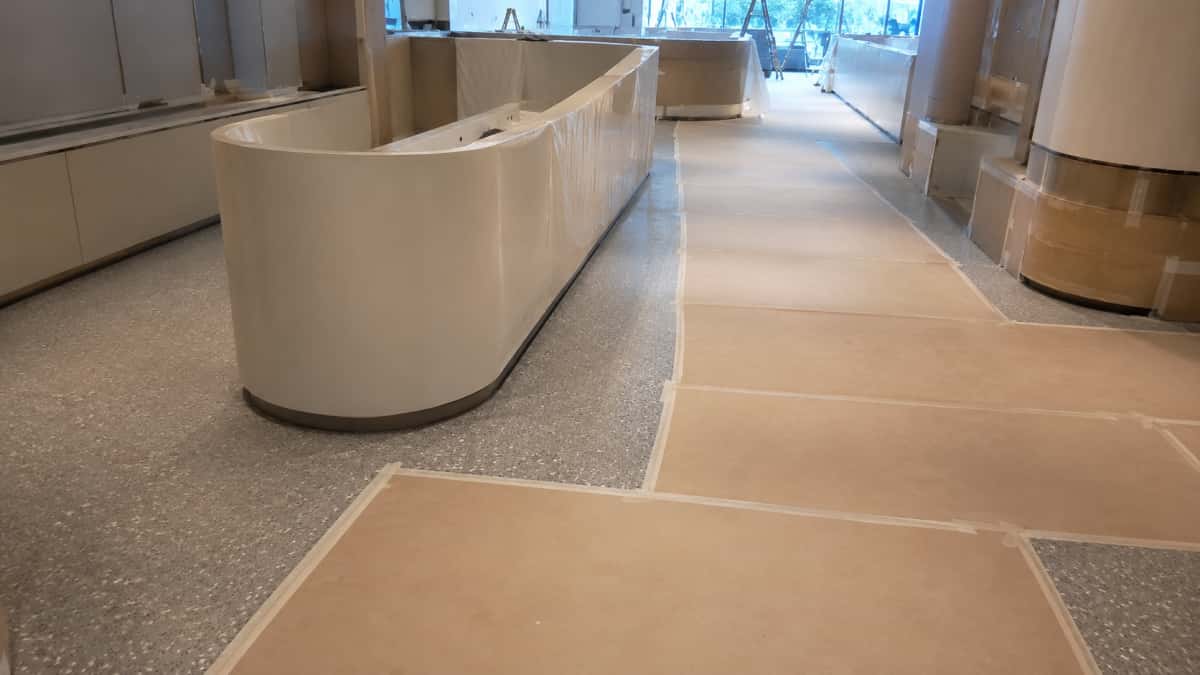
Edges, Corners, and Cutouts Need Extra Protection
Flat surfaces are easier to protect.
Edges and corners are where many problems happen.
This is especially true for:
stair treads
countertop front edges
vanity tops
wall panel corners
window sills
thresholds
backsplash pieces
sink cutouts
mitered corners
thin strips
custom-shaped pieces
A supplier with real stone manufacturing and fabrication capability can produce these parts according to drawings, but the site team must protect them after installation.
Use proper corner guards, soft separators, temporary covers, and clear site warnings where needed.
Many edge chips happen not during production, but during final construction activity.
Control Other Trades Around Finished Stone
Finished stone should not be treated as an open work area.
After installation, other trades may still be working:
painters
electricians
carpenters
glass installers
HVAC workers
cleaners
furniture teams
lighting installers
decorative contractors
Each trade can unintentionally damage stone.
The project manager should clearly mark finished stone areas and control access. If work must continue nearby, the stone should be covered and protected before tools, ladders, carts, or materials are moved into the area.
Good project control is not only about the stone supplier.
It is also about site discipline.
Avoid Wrong Cleaning Before Handover
Cleaning is one of the most underestimated risks.
Some site teams use strong cleaners to remove cement dust, adhesive marks, paint, or construction dirt quickly. But wrong chemicals can damage polished marble, affect surface finish, leave marks, or create dull patches.
Before cleaning, check:
stone type
surface finish
type of stain or residue
recommended cleaning method
whether acid-based cleaner is safe
whether abrasive pads are acceptable
whether the surface has been sealed if needed
whether testing on a small hidden area is possible
For many stone surfaces, neutral cleaning is safer as the first approach.
Do not use aggressive chemicals simply because the surface looks dirty.
Cleaning should solve a problem, not create a new one.
Do Not Remove Protection Too Early
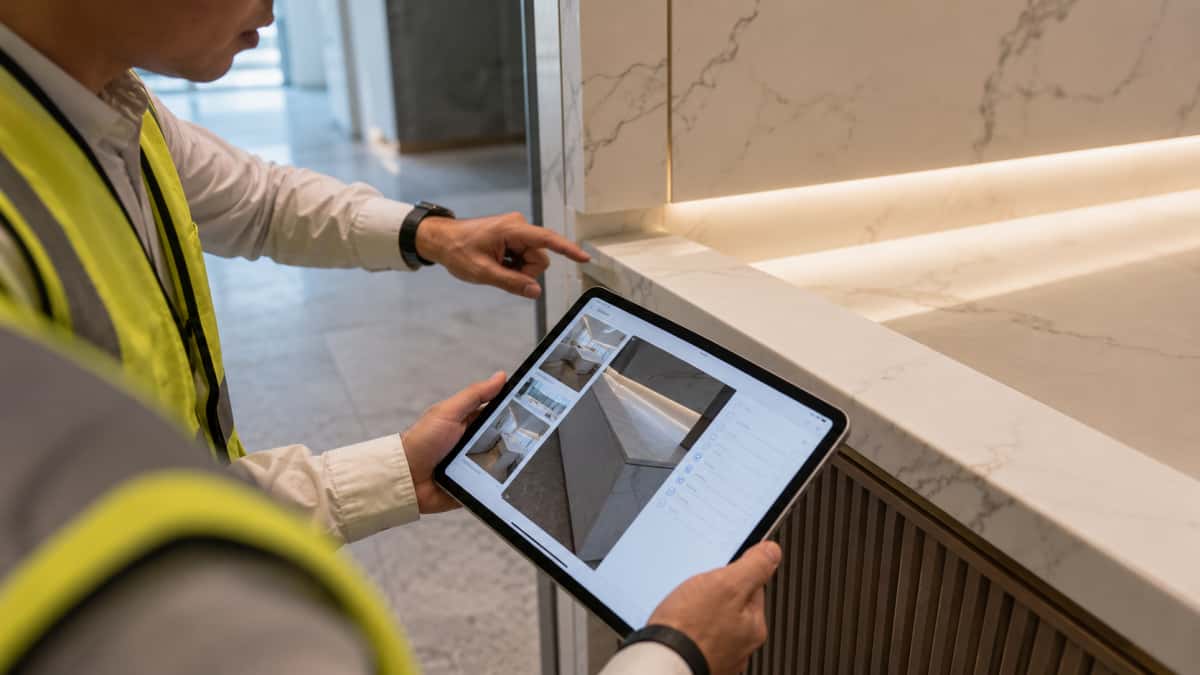
Protection should remain in place until the main risk has passed.
If protection is removed too early, the stone may be exposed to final painting, furniture moving, lighting installation, cleaning, or punch-list work.
But protection should also be checked regularly.
Dirty or damaged protection can scratch the stone underneath. Wet or trapped material can create marks. Loose protection can move and expose corners.
The project team should inspect protection during the finishing stage, not only install it once and forget it.
Good protection is active management.
Not just covering the stone.
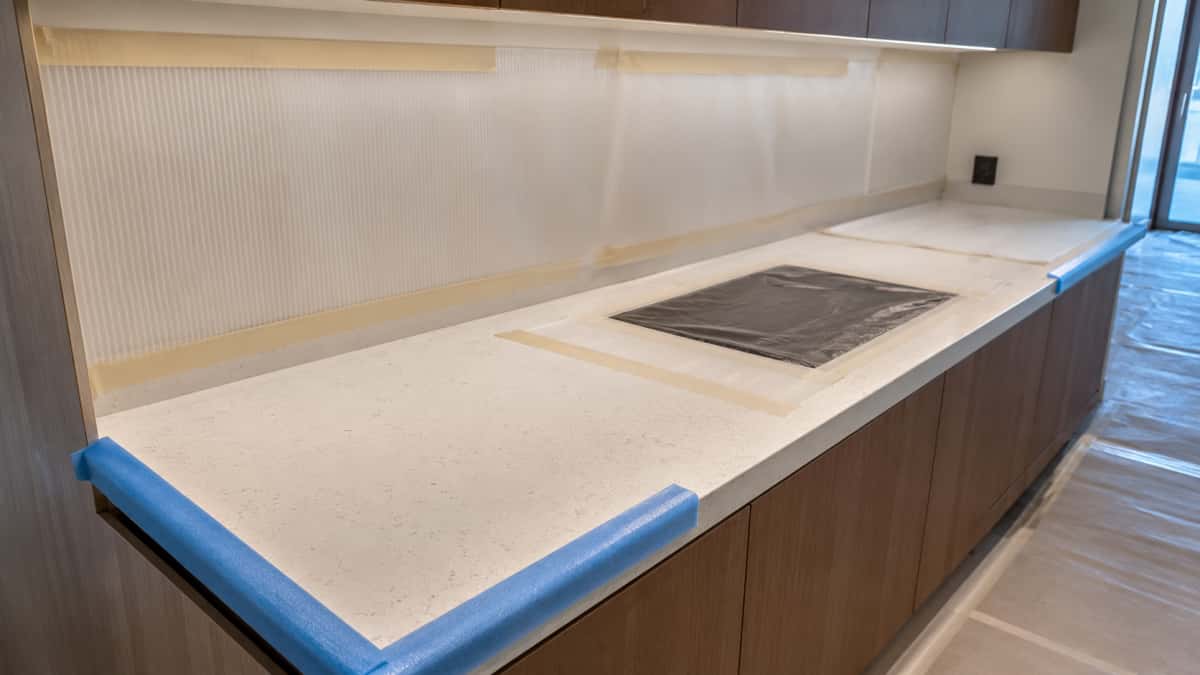
Keep Final Inspection Records
Before handover, buyers or contractors should record the condition of the stone surfaces.
Useful records include:
overall photos
close-up photos
room or area photos
countertop photos
floor photos
stair photos
wall panel photos
edge and corner photos
cleaning notes
remaining issue list
repair or replacement record if needed
For stone project supply from China, these records help separate factory supply issues, transport issues, site handling issues, installation issues, and later use issues.
This protects all sides.
It also helps the project team close handover more professionally.
A Practical Stone Protection Checklist Before Handover
Use this checklist after installation and before handover:
Stone surface covered where needed:
Edges and corners protected:
Countertops not used as workbenches:
Floors protected from sand and heavy traffic:
Labels removed only after sequence is confirmed:
Other trades informed about finished stone areas:
No acid or harsh cleaner used without confirmation:
Cleaning method tested before full cleaning:
Furniture moved with pads or protection:
Protection checked regularly:
No moisture trapped under protection:
Final photos taken before handover:
Damage or stains reported before handover:
Repair or touch-up records saved:
This checklist does not replace installer responsibility.
It helps the project team protect finished work before the client receives the space.
Here Comes Final Thought
Stone can be produced well and still be damaged before handover.
That is the reality of construction projects.
Buyers, contractors, installers, and suppliers should understand that stone protection after installation is part of project success. The material must be selected correctly, fabricated accurately, packed safely, installed properly, and protected carefully until the project is handed over.
A responsible supplier can support material selection, fabrication, packing, and project communication. But site protection must also be managed by the buyer, contractor, and installation team.
For project stone supply, material review, fabrication coordination, and practical project support, buyers can contact Aoli Stone for project stone support.



 IPv6 network supported