English
 Español
 Português
 عربي
عربي 한국어
한국어

Stone wall panels can completely change how an interior feels.
A lobby wall can become calmer and more refined. A hotel corridor can feel more organized. A reception area can look more premium. A bathroom wall can feel cleaner and more architectural. A villa feature wall can turn natural stone into the center of the space.
But stone wall panels also create a common project risk: people often focus on the material first and the layout too late.
They choose the marble, quartz, terrazzo, artificial marble, limestone, or other stone material. They approve the sample. They confirm the finish. Then fabrication begins.
Only later do they realize that the wall is not just a surface.
It is a composition.
That is why stone wall panels for commercial interiors need better planning before fabrication begins.
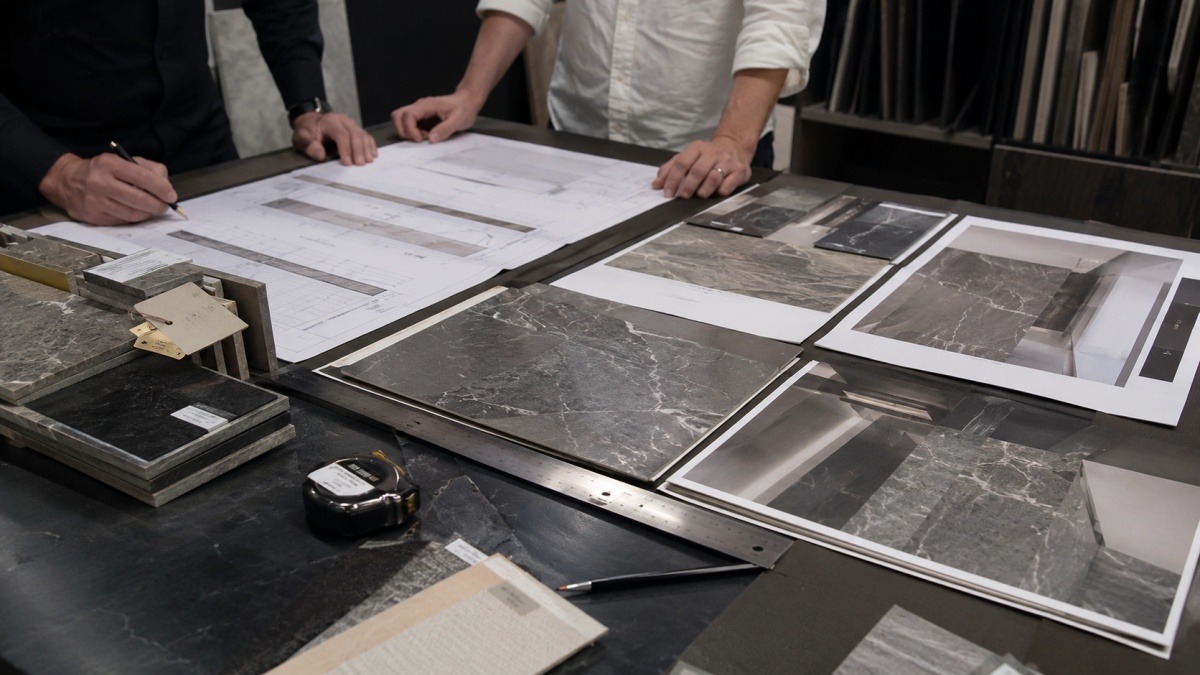
Wall Panels Are Not Just Large Stone Pieces
A wall panel is not simply a bigger tile.
It has a stronger visual role. When stone is installed on a wall, people read it vertically, from distance and close range, under changing light. Joints become more visible. Vein movement becomes more directional. Color variation becomes part of the whole elevation.
A panel may be the correct size and still look wrong. A joint may be technically acceptable and still interrupt the visual flow. A slab may be beautiful alone and still create a weak wall if it is placed poorly.
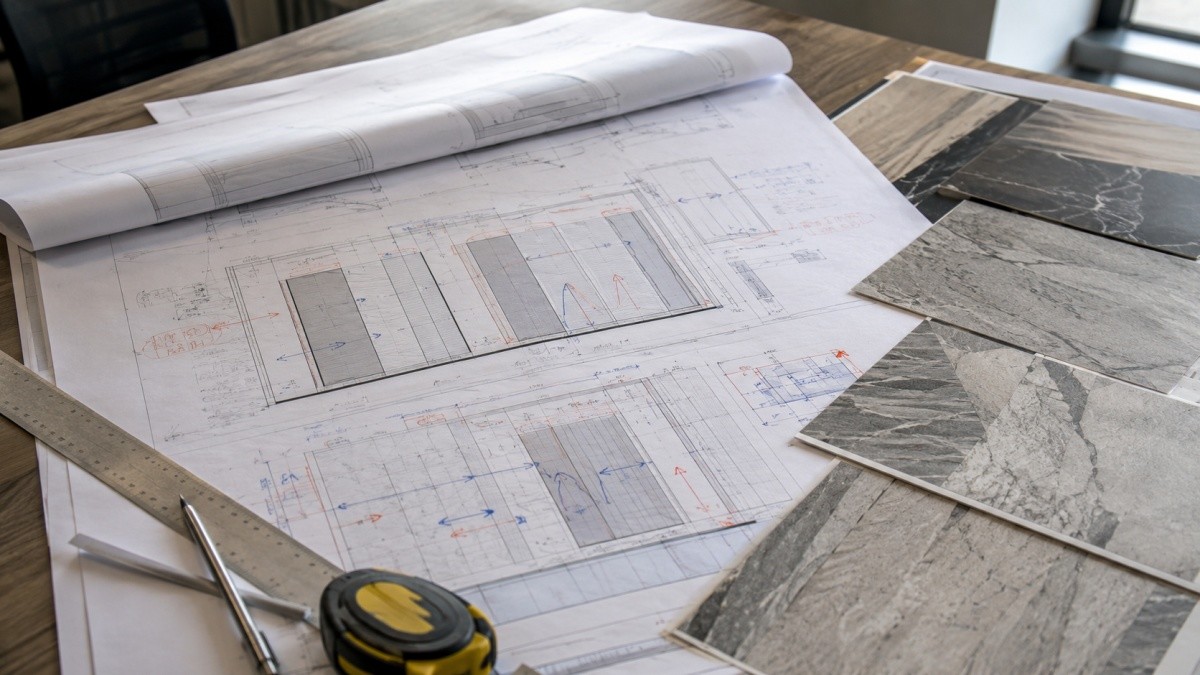
Layout Planning Should Begin With the Elevation
Many wall panel problems start because the project team looks only at slabs, not elevations.
A slab photo shows material character. An elevation drawing shows how the material will actually live in the space.
Before fabrication, the wall elevation should clarify main sightlines, joint positions, openings, corners, returns, panel sizes, vein direction, and visible priority areas.
Good layout planning helps turn stone into architecture, not just decoration.
Material Type Changes the Layout Logic
Different stone materials need different wall panel planning.
For natural marble wall cladding for architectural projects, layout planning is especially important because natural marble often has veining, movement, background tone variation, and slab-to-slab differences.
For artificial marble wall panels for commercial interiors, the material may offer more visual consistency, but layout still matters. Repeated panels, joint alignment, surface finish, and batch control should be planned carefully.
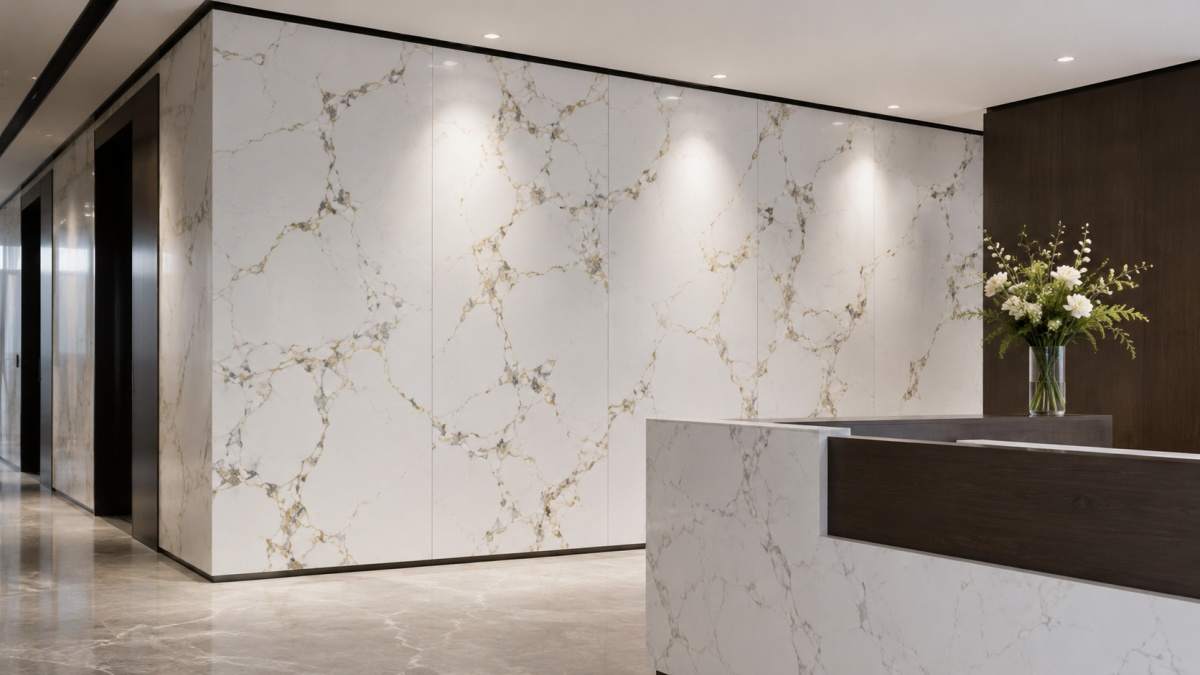
For quartz stone surfaces for interior wall applications, buyers should consider slab size, panel weight, edge finishing, surface reflection, and whether the material is being used for a feature wall, bathroom wall, reception area, or other interior application.
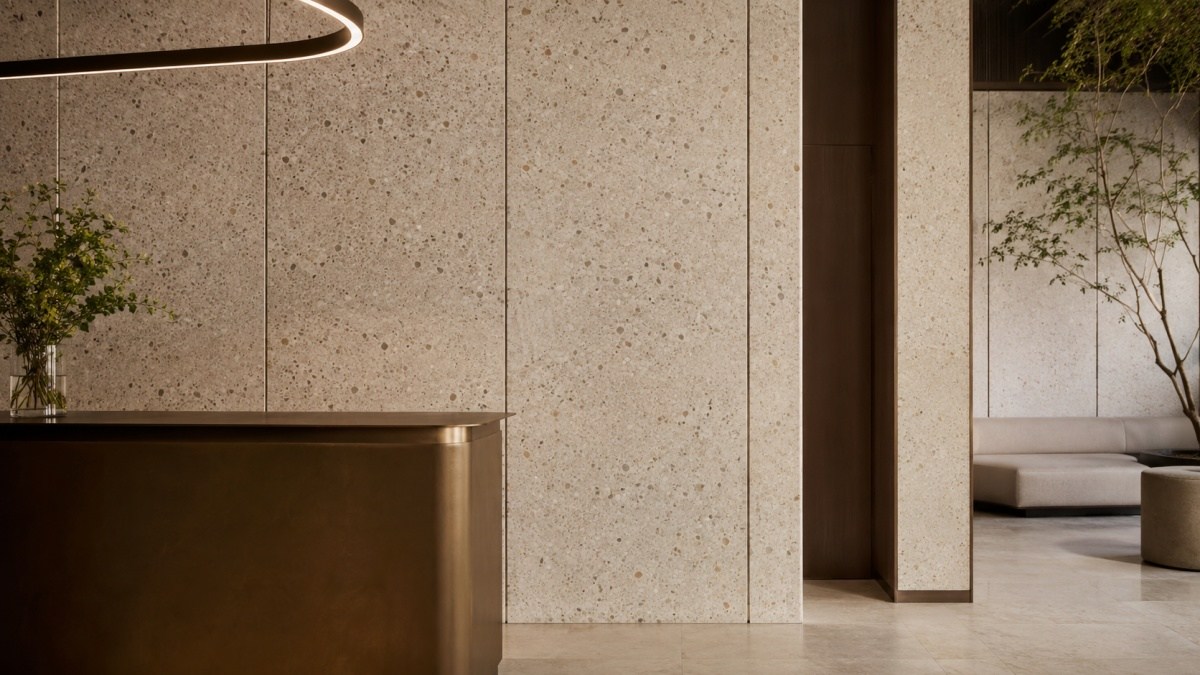
For terrazzo stone for hotel and retail spaces, aggregate size, color range, panel proportion, and joint placement can strongly affect the visual rhythm.
Joint Placement Can Make or Break the Wall
Joints are often treated as technical lines. In stone wall panels, they are visual lines too.
A joint in the wrong place can cut through a strong vein, break symmetry, interrupt a feature area, or draw attention to a corner that should feel quiet.
Good joint planning does not always mean hiding every joint. It means making joints feel intentional.
Vein Direction Should Be Decided Before Cutting
For veined stone, wall panels need clear direction control.
A vertical vein direction can make the wall feel taller. A horizontal flow can make the wall feel calmer and wider. A bookmatched layout can create a strong decorative center. A poorly rotated panel can make the wall feel broken.
The problem is that vein direction cannot be fully corrected after cutting.
Once panels are fabricated, polished, labeled, packed, and shipped, the project has already lost many options.
Openings, Corners, and Returns Need Special Attention
Most real walls include complications: elevator doors, room doors, mirror openings, niches, switches, outlets, columns, inside corners, outside corners, skirting, ceiling connections, reception counters, or millwork connections.
These areas should be planned before fabrication.
A large beautiful panel is not enough. The transitions must also be controlled.
Wall Panel Thickness and Installation Method Should Be Reviewed Early
Stone wall panels are physical materials with weight, thickness, fixing requirements, and installation conditions.
Before fabrication, the project should review panel thickness, support system, wall flatness, fixing method, maximum panel size, transportation limits, site access, and installer experience.
This is why stone manufacturing and fabrication capability matters for wall panel supply.
Dry Layout and Numbering Can Reduce Site Confusion
For visible wall applications, dry layout can be valuable.
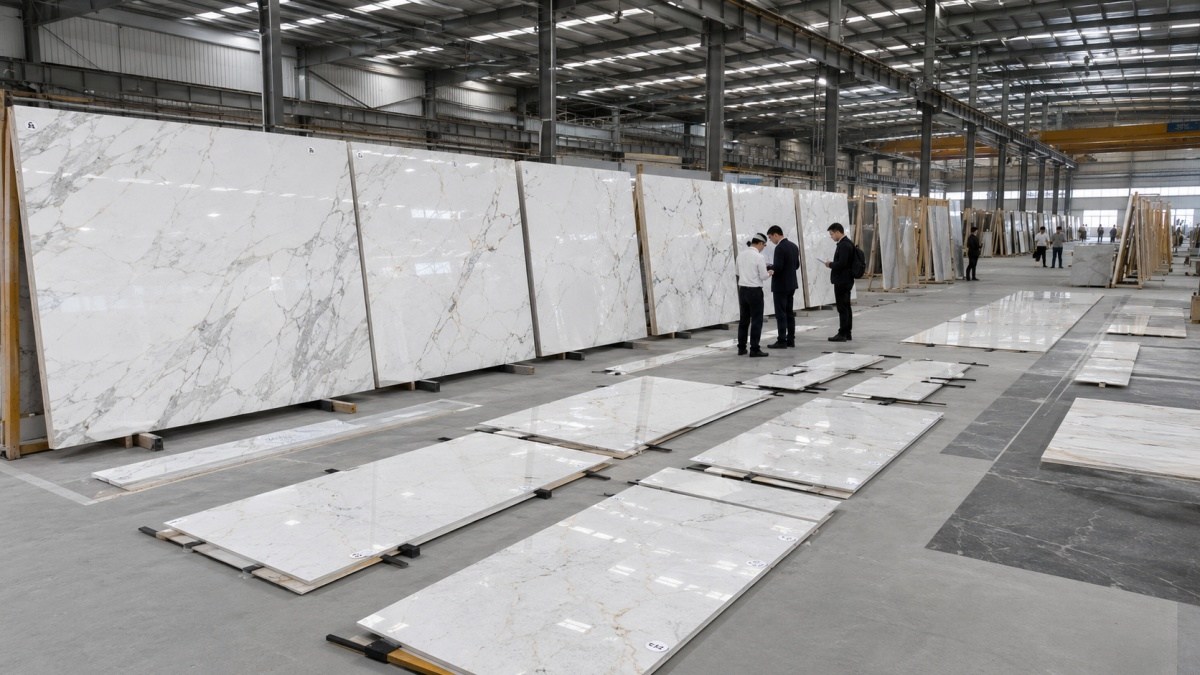
It allows the supplier and buyer to review panel order, visual flow, joint relationship, and piece numbering before packing.
Each panel should be connected to the drawing. The installer should know where it belongs. The packing list should match the wall elevation. Crate labels should support the installation sequence.
Packing Should Follow the Wall Layout
Packing is often discussed after fabrication, but for wall panels it should be connected to layout planning.
If panels are packed randomly, the site team may waste time sorting. If fragile edges are not protected, panels may be damaged before installation. If direction marks or piece numbers are unclear, the installer may place panels incorrectly.
This is especially important for international stone project supply from China, where the buyer depends on clear packing, documentation, and communication before the goods arrive.
Better Planning Reduces Rework and Disputes
Most wall panel problems are easier to prevent than to fix.
After installation, visual dissatisfaction becomes difficult. The panels may already be fixed. Adjacent trades may have finished. Replacement slabs may not match. Removing and reinstalling panels may damage walls, delay handover, and create disagreement.
Planning does not make every project perfect. But it removes many predictable problems before they become expensive.
All in All
Stone wall panels should not be treated as simple cut pieces.
They are part of the architecture of a space. Their final success depends on material selection, elevation planning, joint control, vein direction, corner details, fabrication accuracy, numbering, packing, and installation logic.
A beautiful material can open the door. A good layout plan protects the final result.
For layout, fabrication, and export support, buyers can contact Aoli Stone for wall panel project support.



 IPv6 network supported