English
 Español
 Português
 عربي
عربي 한국어
한국어

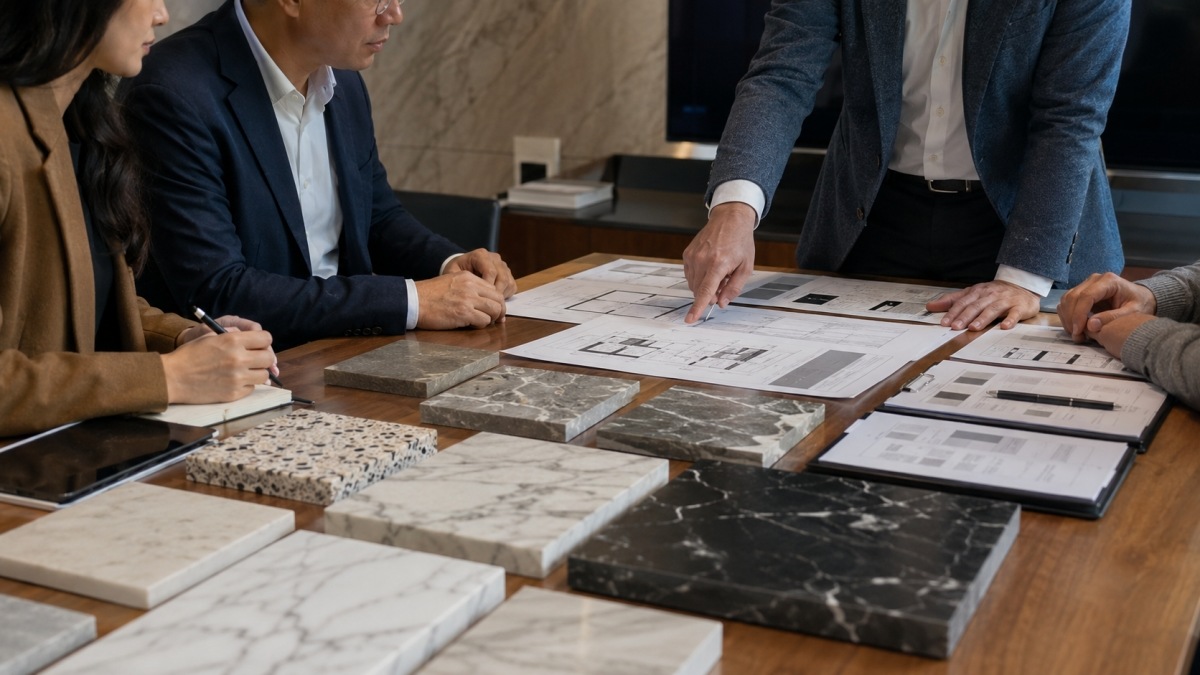
In international stone buying, documents matter.
A serious buyer may ask for test reports, certificates, compliance documents, product data, export documents, or supplier qualification information before confirming an order. That is normal. It is also reasonable.
When a buyer is working across countries, they cannot judge everything by a photo or a short message. Documents help reduce uncertainty. They help the buyer understand whether a material has been tested, whether a supplier can provide supporting records, and whether a product may fit certain market or project requirements.
That is why stone certificates and downloadable documents should be part of supplier evaluation.
But there is also a mistake buyers should avoid.
A certificate does not automatically mean every project detail is safe. A test report does not replace material review. A document does not replace correct application judgment. A compliance file does not guarantee that fabrication, packing, installation, or daily use will be problem-free.
Good documents are important. But they are only one part of project risk control.
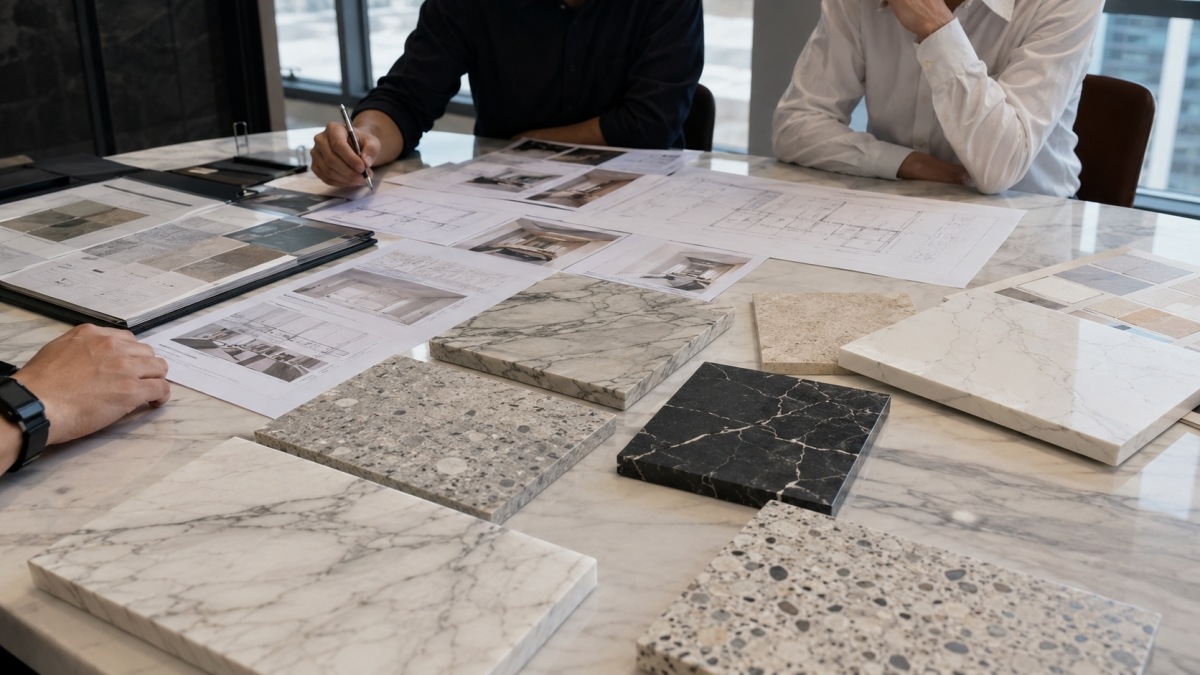
Documents Help Buyers Ask Better Questions
A test report is not just a file to collect.
It should help buyers ask more precise questions.
A report may show information about water absorption, density, flexural strength, abrasion resistance, slip resistance, fire classification, radioactivity, or other tested properties depending on the material and standard.
But the buyer still needs to ask whether this report applies to the material being ordered, whether the test standard is relevant to the market, whether the tested sample is similar to the actual product, and whether the project application matches the tested condition.
Documents are valuable when they lead to better project decisions.
Test Reports Should Be Connected to the Right Material
Stone buyers often work with several material categories at the same time: natural marble, artificial marble, quartz, terrazzo, limestone, sintered stone, or granite.
Each material has different behavior.
For artificial marble materials for commercial interiors, buyers may want to understand water absorption, surface performance, flexural strength, abrasion behavior, fire classification, and other available test information depending on the intended use.
For quartz stone slabs for countertops and vanity tops, the buyer may care more about countertop-related use, stain behavior, strength, surface consistency, heat exposure expectations, and daily cleaning conditions.
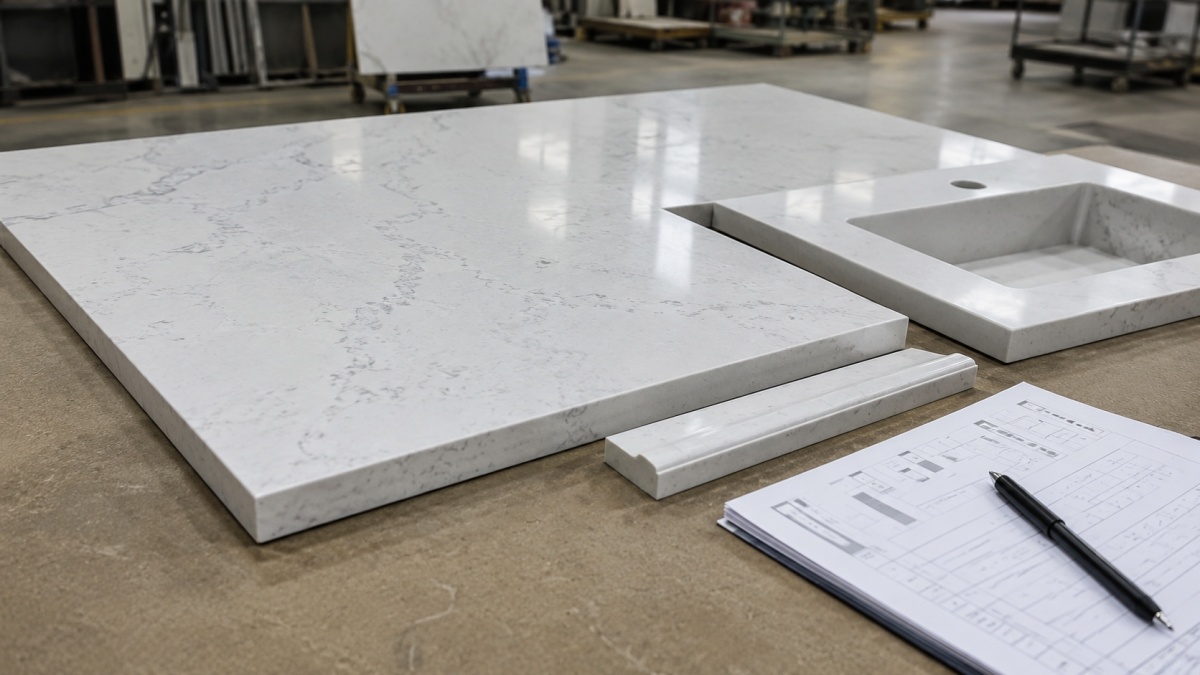
For terrazzo stone for hotel and retail spaces, the buyer may need to consider abrasion, slip, breaking strength, water absorption, surface finish, and whether the material is used on floors, walls, counters, or public areas.
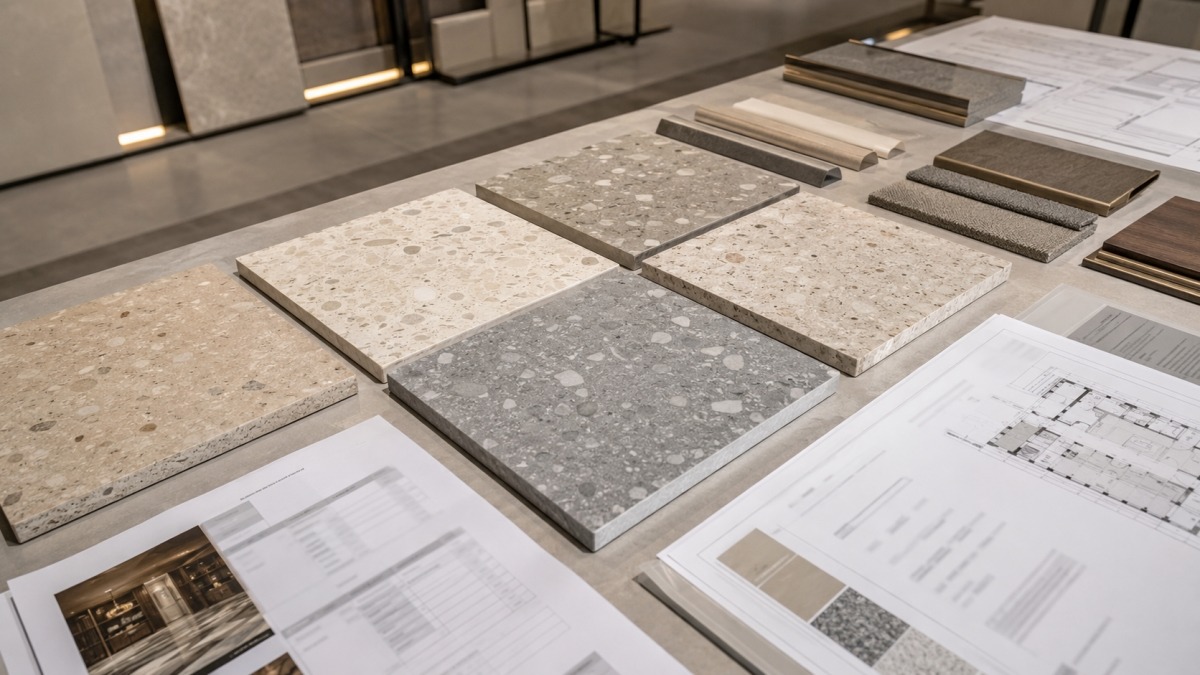
A document should match the material and the application.
Natural Stone Needs a Different Type of Review
Documents are useful, but natural stone also requires visual and project review.
For natural marble materials for architectural projects, buyers should not rely only on paperwork. Natural marble needs slab review, acceptable range confirmation, finish approval, and layout planning because tone, veining, movement, and natural variation affect the final result.
A document can support trust. It cannot decide whether a slab range is suitable for a feature wall.
Certificates Do Not Replace Sample Approval
Sample approval is still necessary.
A certificate may show that a product was tested under a certain condition, but the buyer still needs to confirm whether the actual sample fits the project.
Samples help check color, texture, finish, particle size, veining, gloss level, edge behavior, thickness feeling, and practical appearance under light.
The safest approach is to use documents and samples together.
Fabrication Still Determines Whether the Project Works
A material can have good documents and still create problems if fabrication is poorly managed.
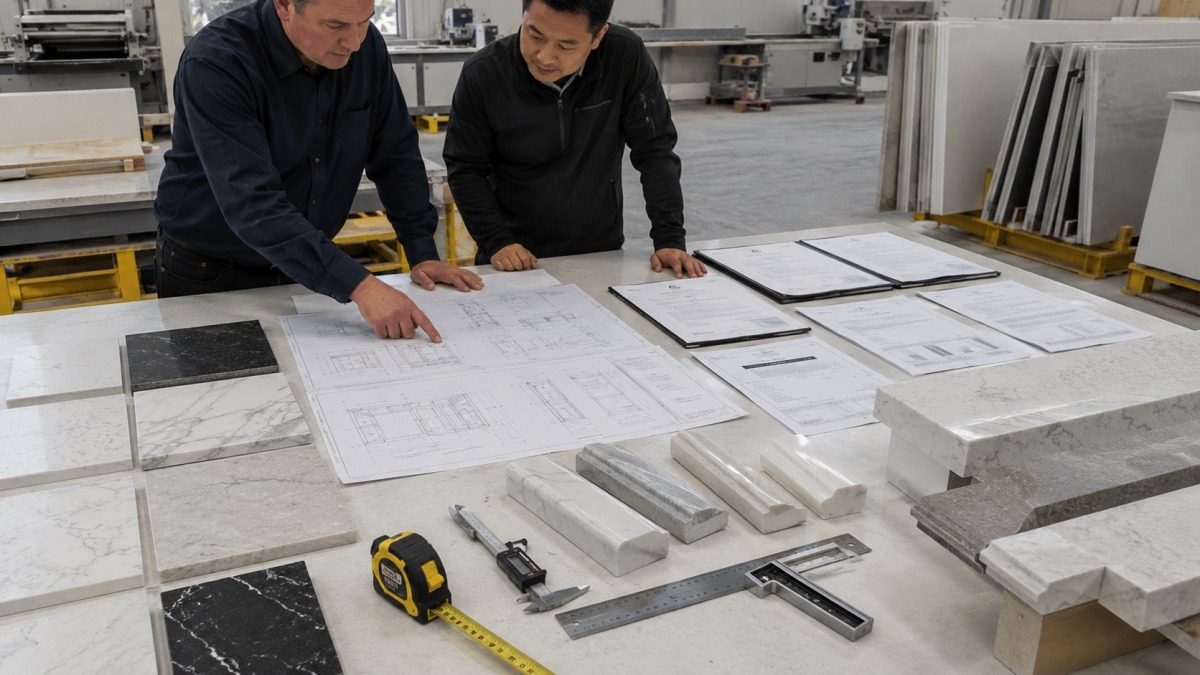
For cut-to-size orders, buyers should review drawings, dimensions, cutouts, edges, holes, thickness, finish consistency, piece numbers, tolerance requirements, and installation sequence.
This is where stone manufacturing and fabrication capability matters. A supplier must turn the approved material into accurate pieces that can be packed, shipped, and installed with less confusion.
A test report cannot correct a wrong sink cutout. A certificate cannot fix an inconsistent edge. A compliance document cannot organize a mixed crate.
Application Matters More Than Buyers Sometimes Expect
The same stone may be acceptable in one area and risky in another.
A wall panel does not face the same conditions as a floor. A vanity top does not face the same conditions as a lobby entrance. A stair tread does not behave like a decorative wall. A bathroom surface is different from a dry reception counter.
So buyers should not ask only: “Do you have a test report?”
They should also ask: “Is this material suitable for my application?”
A serious supplier should help buyers connect material, document, finish, thickness, fabrication, and application.
Packing and Shipment Records Also Build Trust
For international stone orders, test reports are not the only documents that matter.
Project buyers may also need packing photos, crate lists, piece labels, container loading photos, commercial invoice, packing list, bill of lading information, certificate of origin if required, and product or compliance documents if required by market.
For stone project supply from China, these records help the buyer control the order from factory to destination.
Good documentation is not only about passing a file. It is about making the order traceable.
Buyers Should Watch for Weak Document Practices
Not every document is equally useful.
Buyers should be careful when the material name is unclear, the report does not match the quoted product, the supplier cannot explain what the document means, the certificate is expired or unrelated, the test standard is irrelevant to the application, or the same document is used for too many different materials.
A professional buyer does not need to become a laboratory expert.
But they should make sure the document actually supports the order being discussed.
Good Suppliers Use Documents Carefully
A responsible supplier should not throw certificates at the buyer just to look professional.
They should help the buyer understand what the documents can and cannot prove.
A better supplier will explain which material the document applies to, which result may be relevant to the application, which point still needs sample or project review, which finish should be confirmed separately, and whether the application may require extra local checking.
Buyers do not only need documents. They need a supplier who knows how to use them honestly.
All in all
Stone test reports and certificates help buyers reduce risk.
They show that a supplier can provide supporting information. They help buyers ask better questions. They support compliance review, project communication, and internal decision-making.
But they do not replace project review.
A good stone order still requires material selection, sample approval, finish confirmation, drawing review, fabrication control, packing records, and clear communication.
Documents are part of trust. They are not the whole trust.
For document review, material selection, and project supply discussion, buyers can contact Aoli Stone for project document and material review support.



 IPv6 network supported