English
 Español
 Português
 عربي
عربي 한국어
한국어

Large commercial flooring projects are very different from small residential installations or decorative feature areas. Once the surface area becomes large enough, the material is no longer judged only by how attractive it looks in a sample. It is judged by whether it can remain visually coherent, practically manageable, and commercially realistic across the full project.
That is one reason artificial marble continues to be a strong option in many public interior flooring applications. It is not the answer to every design brief, and it should not be positioned as a replacement for all natural stone. But in the right project conditions, it solves a set of real problems that buyers, contractors, and project teams care about.
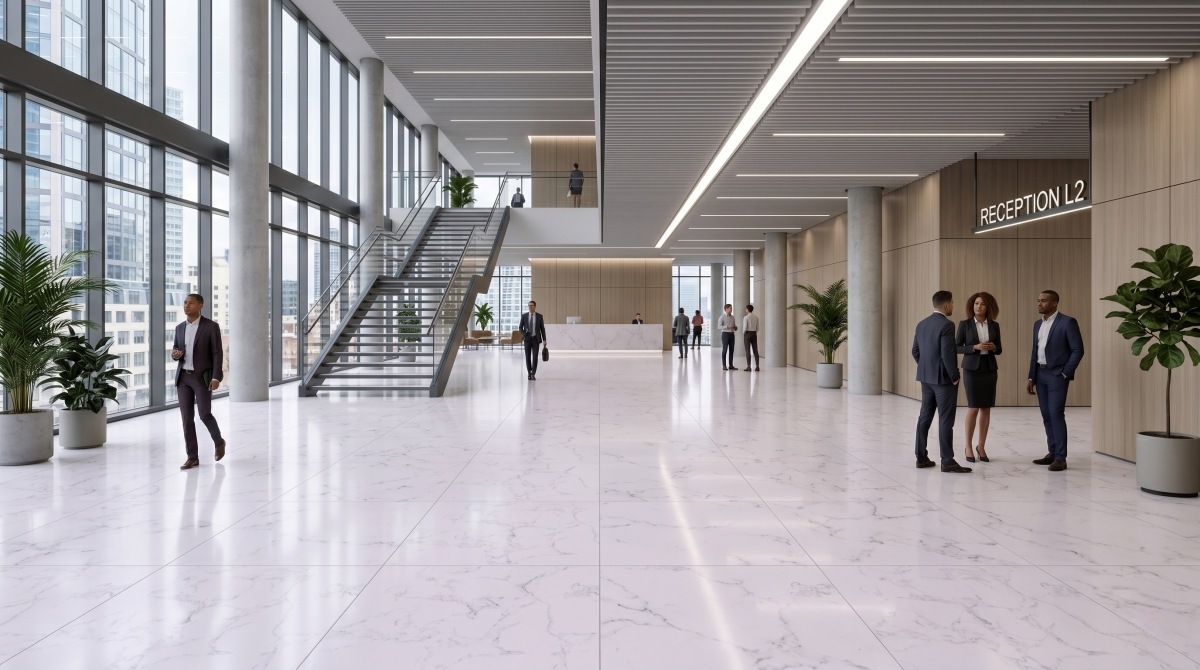
When a project team is reviewing flooring for a mall, office lobby, commercial hall, or other large public area, appearance is only one part of the decision.
The material also has to support:
· a stable visual field
· repeated supply
· practical installation planning
· realistic replacement logic
· manageable delivery coordination
· cleaner communication between supplier, contractor, and buyer
This is where many materials begin to perform differently at project scale than they do on a sample board. A pattern that feels rich and attractive in isolation may become visually inconsistent or harder to control when repeated over a large open area.
That is why commercial flooring decisions are rarely just design decisions. They are also project decisions.
One of the most practical reasons buyers look at artificial marble for commercial floors is visual control.
In large public spaces, too much uncontrolled variation can make the finished floor feel uneven, broken, or difficult to unify. Artificial marble often helps reduce that problem because it can provide a more stable and repeatable pattern range.
That does not mean it should look flat or lifeless. Good artificial marble should still read as a real architectural surface with depth, tone, and spatial value. But compared with many natural materials, it usually gives the project team a more predictable field to work with.
For buyers still comparing different artificial marble flooring options, this is often one of the clearest advantages. The floor can still look refined while remaining easier to control over a larger installation area.
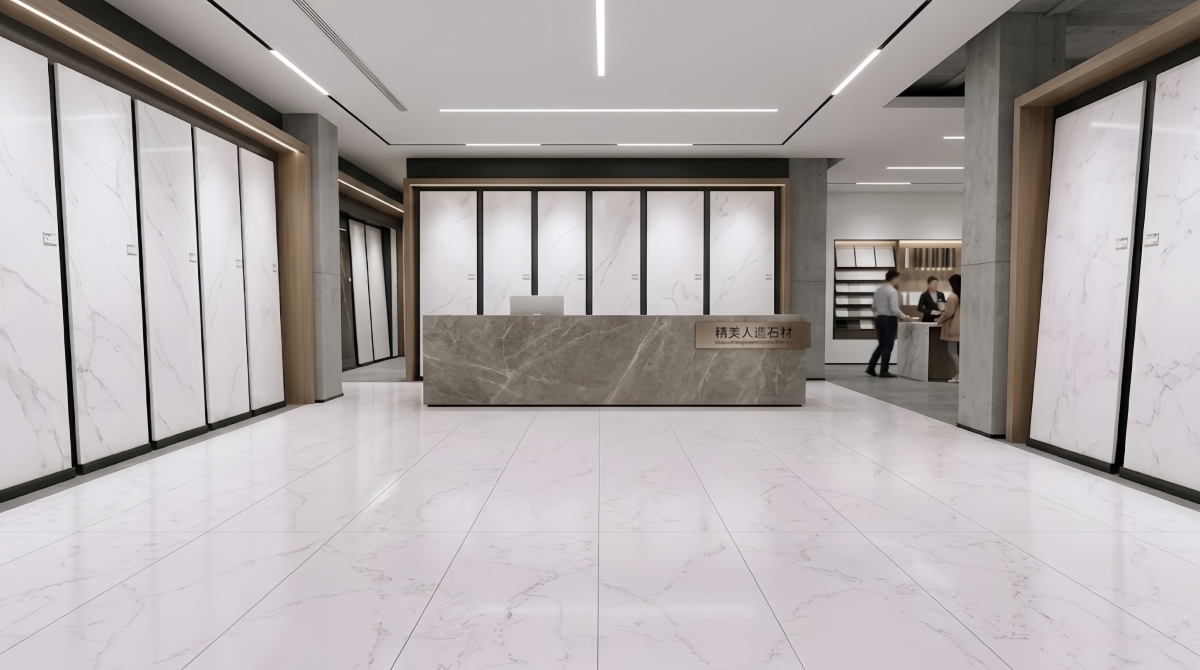
Repeatability sounds like a technical point, but in commercial interiors it has a strong visual effect.
A floor that is repeated across a large circulation zone, shopping area, or public entrance needs to maintain a calm relationship with the surrounding architecture. If the material changes too aggressively from piece to piece, the space can feel visually unstable even when the stone itself is individually attractive.
This is one reason artificial marble works well in:
· shopping malls
· public retail interiors
· office public zones
· large corridors
· commercial entrance halls
· mixed-use circulation areas
For teams reviewing real commercial stone flooring projects, this benefit becomes easier to understand. A material that repeats more cleanly across a large floor often supports the project better than one that is visually stronger but harder to manage at scale.
Small differences that may go unnoticed in one room often become highly visible in a large open field.
Once a project reaches hundreds or thousands of square meters, slight shifts in tone, pattern density, or finish can multiply quickly. That is why large-scale flooring consistency matters so much in large commercial work.
Artificial marble often helps in this context because it can support:
· cleaner tone control
· better batch stability
· more even visual rhythm
· easier material planning across larger zones
· more predictable overall appearance
This does not mean project teams should stop reviewing the material carefully. It means the material itself often gives them a stronger starting point for consistency.
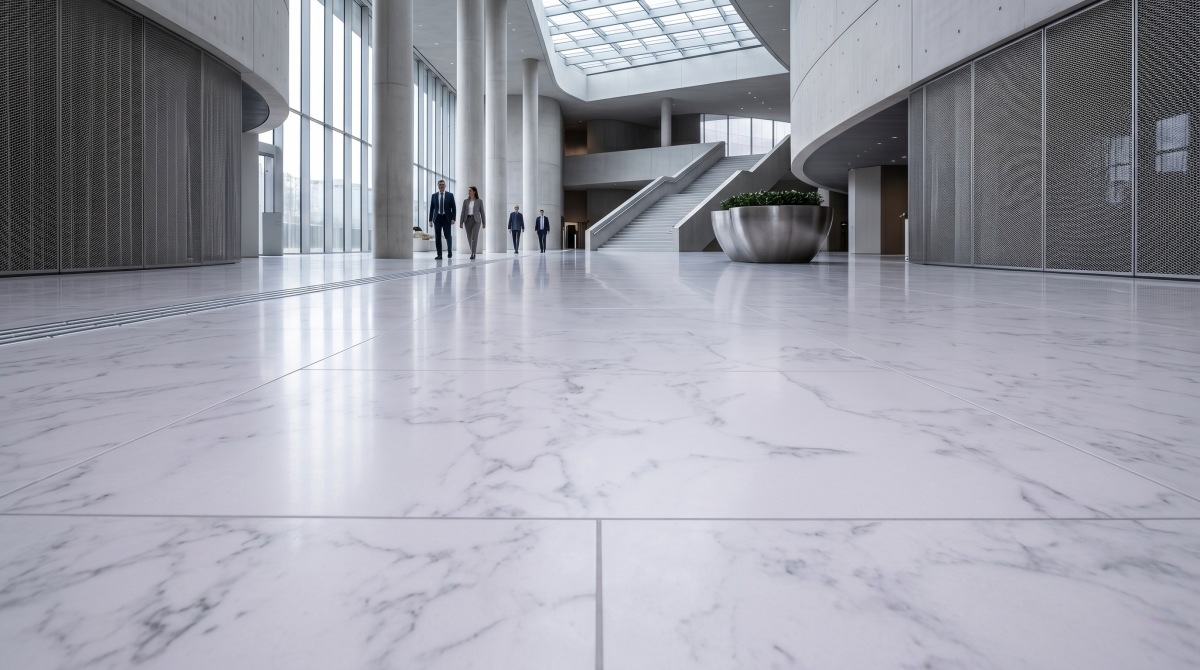
In many public flooring projects, buyers are not looking for the most dramatic material. They are looking for a material that still feels professional, architectural, and commercially credible when multiplied across the full space.
This is especially true in stone surface selection for malls, where the floor has to support retail atmosphere, circulation, and long-term appearance at the same time.
The same applies to broader public area flooring material planning. In these environments, the strongest material choice is often not the one that is most visually intense on its own. It is the one that remains convincing when repeated across the actual life and scale of the project.
Artificial marble often works well here because it can support that balance.
Large flooring projects do not succeed on material appearance alone. They also depend on coordination.
At project scale, the flooring program may involve:
· repeated modules
· phased production
· zone-based delivery
· packaging by area
· installation sequencing
· communication between multiple parties
Artificial marble often fits this environment well because the material itself is usually easier to coordinate visually. A more controlled appearance can reduce part of the uncertainty that often causes friction later.
For buyers who need stronger project flooring supply support, this is an important point. The supplier is not only expected to ship stone. The supplier is expected to help support a flooring program that remains workable from order to installation.
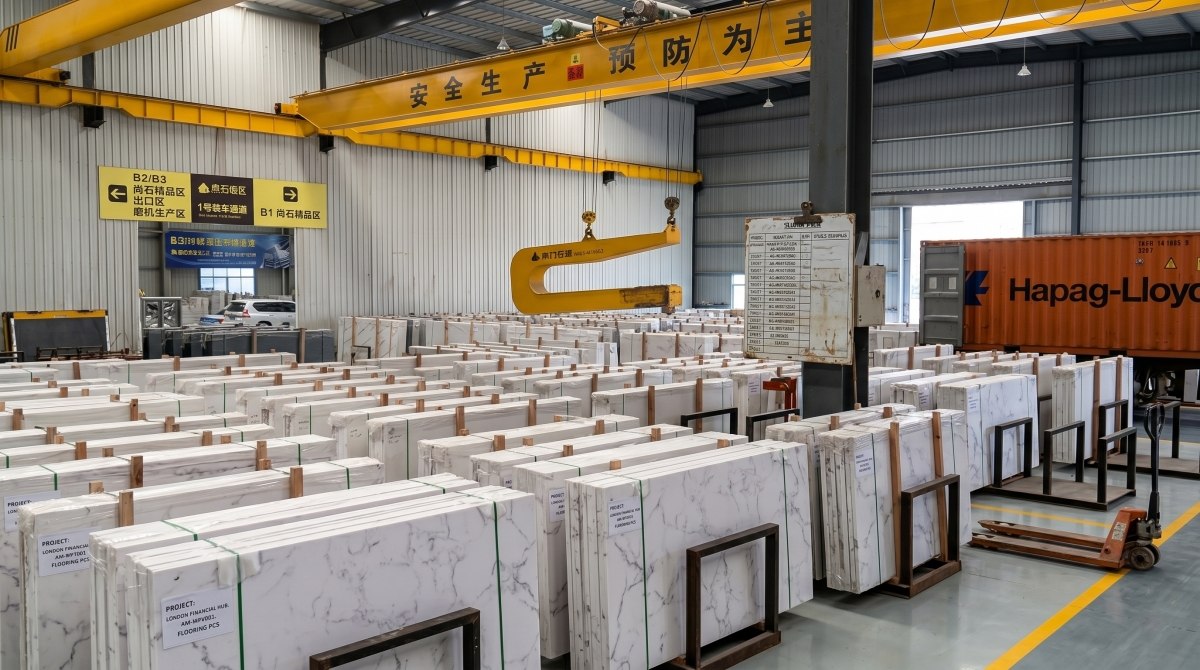
A good article should not oversell the material.
Artificial marble is a strong option in many large commercial flooring situations, but not in all of them. Some projects may still prefer natural stone because:
· the design intent depends on stronger natural individuality
· the area is smaller and more selectively curated
· the client wants visible geological variation
· uniqueness matters more than controlled repetition
That is why artificial marble vs natural marble flooring is a real decision point for many buyers.
The better choice depends on:
· project scale
· visual target
· maintenance expectations
· budget structure
· supply logic
· desired material character
Artificial marble is not powerful because it replaces everything else. It is powerful because it fits a very real commercial need.
Even when artificial marble is the right direction, the order still needs professional review.
Buyers should check:
· tone range
· finish appearance
· pattern strength
· module or slab logic
· edge and cut quality where relevant
· packing method
· project suitability
· coordination with adjacent finishes
Artificial marble is often more controlled than natural stone, but it is not a license to stop asking practical project questions.
A better result still depends on the relationship between the material, the application, and the execution logic.
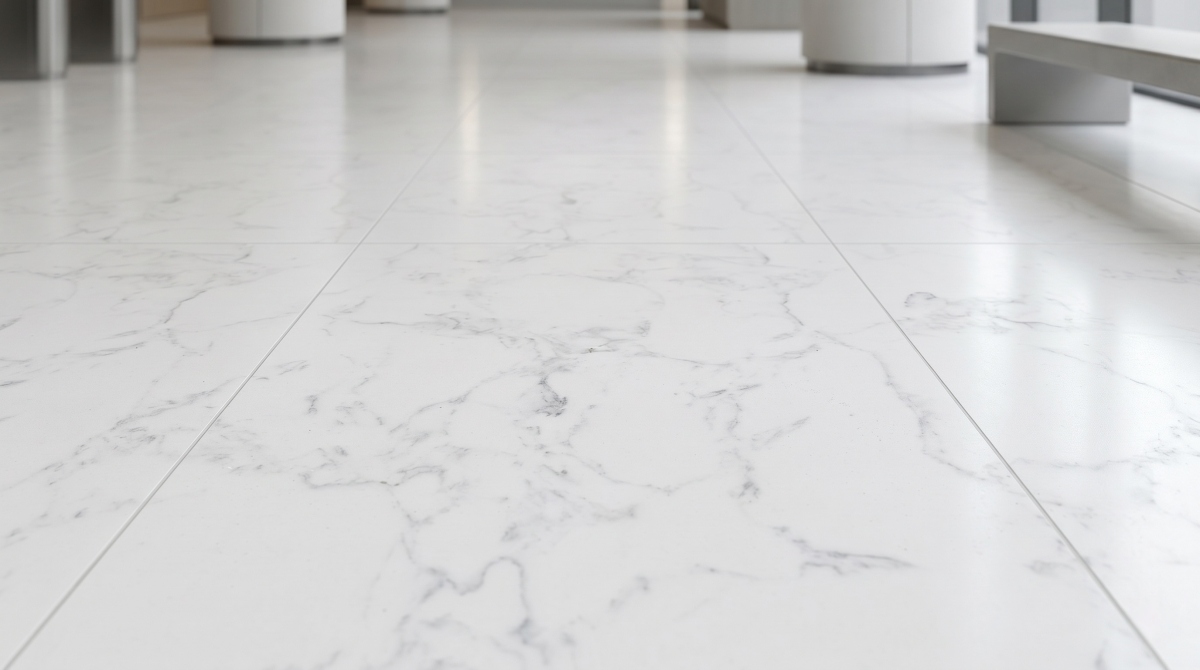
Artificial marble continues to matter in large commercial flooring because it aligns well with the real priorities of many project teams.
Architects may value it for its calmer and more manageable visual language.
Buyers may value it for supply stability and easier repetition across a large flooring program.
Contractors may value it because a more controlled surface often supports cleaner installation planning.
This combination is exactly why the material continues to appear in many public interior projects. It is not only a design material. It is also a coordination material.
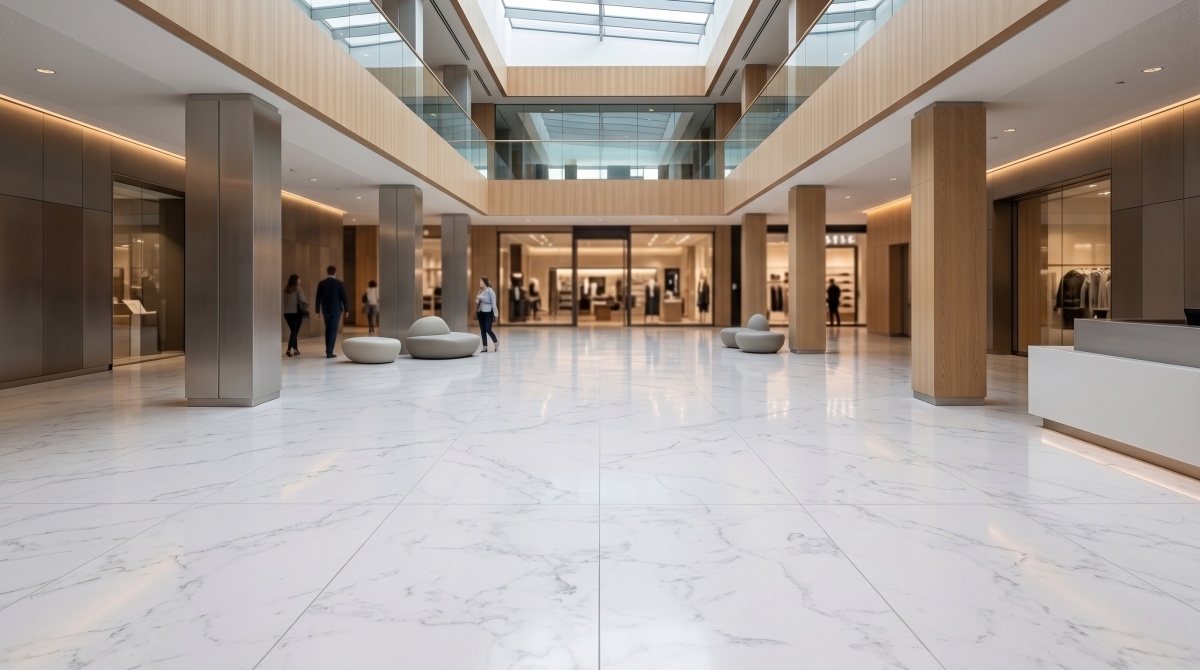
Artificial marble works well for many large commercial flooring projects because it offers a more controlled balance between appearance, repeatability, and project-scale coordination.
Its value is not that it replaces every other flooring material. Its value is that in many public commercial interiors, it helps the floor remain visually coherent, easier to plan, and more practical to manage across a large area.
For project teams reviewing flooring for malls, public halls, office lobbies, mixed-use developments, or other large interiors, artificial marble is often worth serious consideration—not as a compromise, but as a material with its own practical project logic.
If your team is reviewing flooring solutions for a large commercial project, feel free to contact our team to discuss the material direction more clearly.



 IPv6 network supported