English
 Español
 Português
 عربي
عربي 한국어
한국어

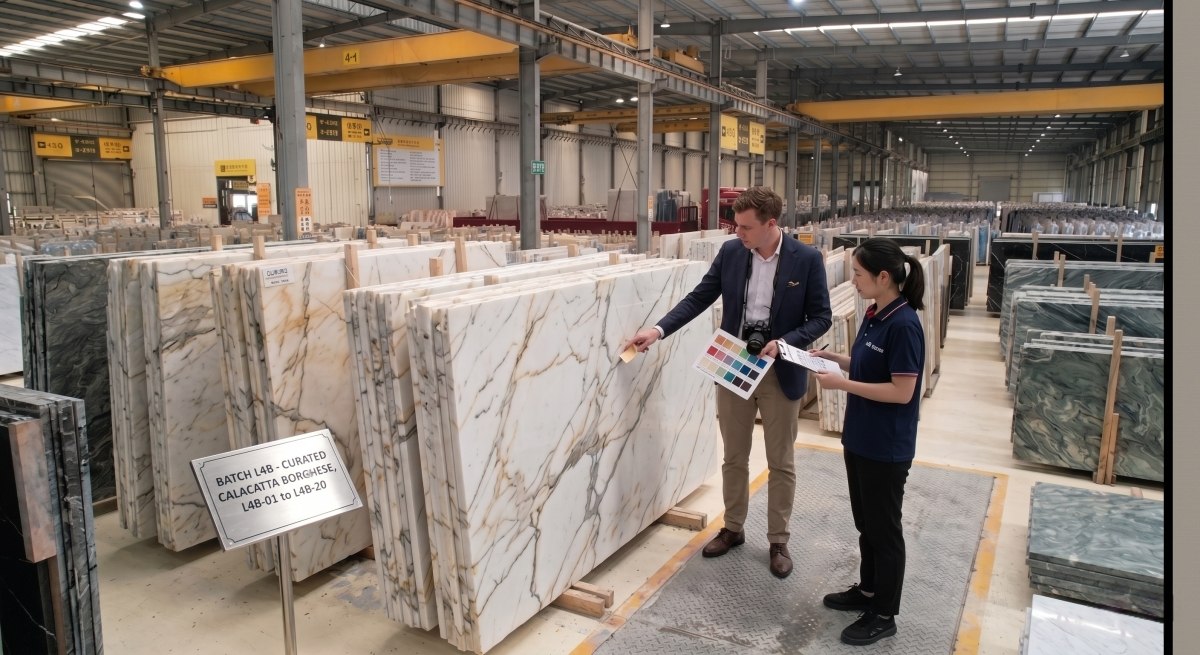
Ordering marble slabs from China can be a very efficient way to source natural stone for distribution, fabrication, or project use. The challenge is that marble is not a fully standardized product. Even when the material name is correct and the quotation looks clear, many problems still happen because the visual range, batch expectations, finishing details, or packing requirements were not confirmed early enough.
For international buyers, especially those working on commercial projects or container-based purchasing, the real goal is not simply to place an order. It is to place an order with fewer surprises.
This is where a more disciplined confirmation process becomes important.
Before anything else, buyers need to treat marble as a natural material, not as a fully repeatable industrial surface.
That does not mean marble is unreliable. It means the order process has to respect the nature of the material. Vein movement, background tone, mineral activity, and contrast can all vary from slab to slab, even within the same general selection. If a buyer expects perfect uniformity from a natural marble lot, disappointment is likely. If a supplier assumes the buyer understands the variation range without visual approval, disputes become much more likely.
A smoother order usually starts with one simple principle:
the more visual the material is, the more visual the confirmation process should be.
One of the most common mistakes in marble purchasing is relying too heavily on the stone name alone.
Names such as Calacatta, Tundra Grey, Crema Marfil, or White Marble may describe a material family, but they do not fully describe the exact slab appearance the buyer will receive. In real supply work, material names are only the starting point.
What matters more is the actual slab range:
For this reason, buyers should ask for actual slab photos or videos whenever possible, especially for:
A small sample can introduce the material, but it should not be the only reference for a full slab order.

For natural marble, batch control matters more than many buyers realize.
When slabs come from mixed lots without clear approval, the final result may feel less controlled even if every slab is technically the correct material. This becomes especially risky in spaces where visual continuity matters, such as:
Buyers should ask:
This is not over-checking. It is basic project protection.

Not every marble order problem is visual. Some are technical, and they often start with assumptions.
A buyer may request polished marble but receive a finish that looks flatter than expected. Or the quoted slab thickness may be clear, but the buyer did not confirm tolerances, edge conditions, or the usable size range required for cutting. In fabrication or resale, that can become a real issue.
Before placing the order, buyers should confirm:
These details are especially important for buyers working on cut-to-size programs rather than loose slab trading.
Some disagreements happen not because the material is wrong, but because the variation was never clearly discussed.
Natural marble can vary in:
That does not automatically mean the material is defective. But buyers and suppliers should still align on what the acceptable visual range is for the order.
A practical way to handle this is to confirm:
This part matters because “natural variation” and “unexpected inconsistency” are not always the same thing.
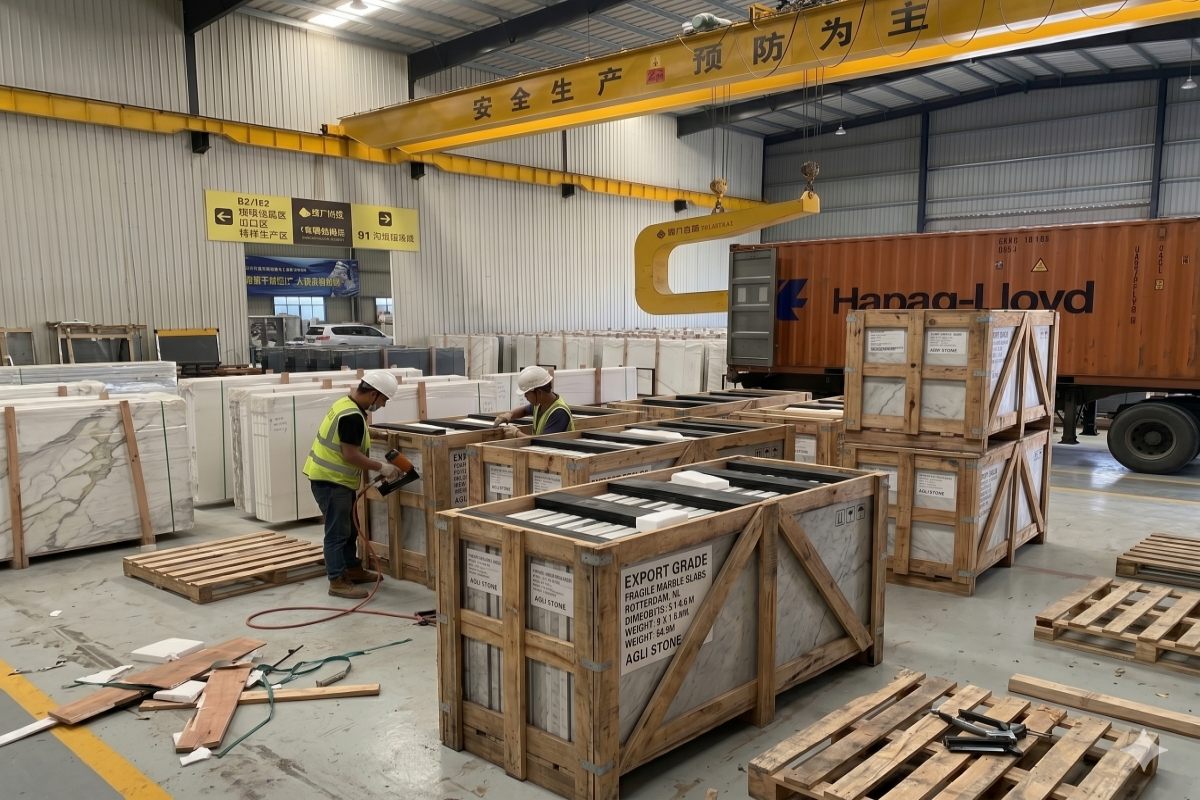
Packing is often treated as a shipping detail, but in international stone trade it is part of the product experience.
A marble order can be correct in material terms and still cause trouble if the packing is weak, unclear, or poorly organized for unloading and identification. For slab buyers, especially container shipments, the crate structure should never be an afterthought.
Before shipment, buyers should confirm:
For project supply, buyers may also need:
Better packing does not only protect the slabs. It protects time on site.
A surprisingly large number of disputes can be reduced if final confirmation happens before shipment instead of after arrival.
At the pre-shipment stage, buyers should ideally review:
This does not mean every order requires a highly complex inspection system. But some level of pre-shipment visibility is usually much better than relying only on the proforma invoice and trusting that everything matches the discussion.
If the order is visually sensitive, the value of final confirmation becomes even higher.
A reliable marble supplier is not only a company that can quote quickly. It should also help buyers clarify what needs to be controlled before the order becomes difficult to change.
That usually includes:
In other words, good supply is not only about selling stone. It is about reducing avoidable uncertainty.

The most common problems in natural marble supply rarely begin with the container. They begin much earlier, when key things were never clearly confirmed: the slab range, the lot consistency, the finish, the usable size, the packing, or the final approval before shipment.
For international buyers, a better order usually starts with better confirmation.
If your project or purchase requires clearer slab selection, more controlled batch review, or better coordination before shipment, it helps to work with a supplier that understands both the material and the order process behind it.



 IPv6 network supported