English
 Español
 Português
 عربي
عربي 한국어
한국어

In luxury hospitality projects, the decision between natural marble and engineered stone is rarely as straightforward as it appears in early design concepts.
What begins as a purely aesthetic discussion often becomes a complex negotiation between design intent, procurement risk, long-term maintenance responsibility, and brand positioning. By the time a hotel project reaches final material approval, the question is no longer “Which stone looks better?” but “Which stone will still perform—and justify itself—five or ten years after opening?”
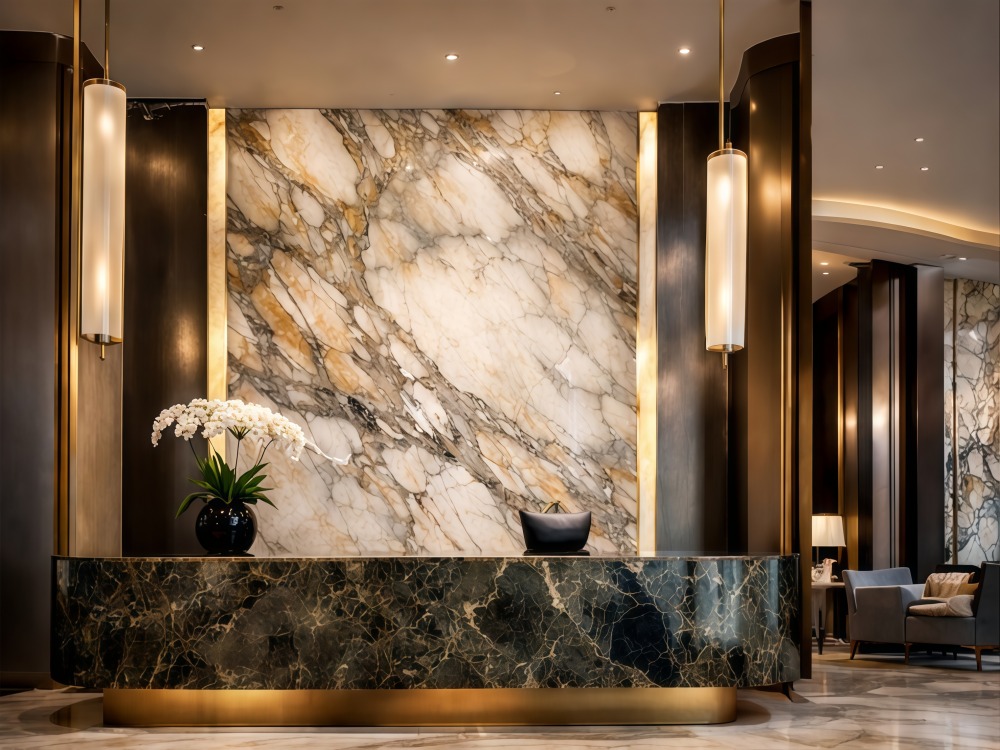
This is where many initial material preferences quietly change.
At concept stage, natural marble dominates mood boards. Its visual depth, irregular veining, and historical association with luxury make it an intuitive choice for designers aiming to signal prestige.
However, in projects above the four-star level, marble is rarely approved for aesthetics alone.
In practice, hotel developers and operators evaluate stone through a broader lens:
How predictable is the material across large surface areas?
How difficult is it to replace damaged sections years later?
Who carries the maintenance burden after handover?
Will visual variation strengthen the brand—or undermine consistency?
Once these questions surface, the conversation shifts.
One reason stone selection becomes contentious is that each stakeholder evaluates materials through a different risk framework.
Architects prioritize:
Visual continuity across public spaces
Natural variation as a design feature
Material authenticity
Procurement teams focus on:
Batch consistency
Lead time reliability
Replacement availability years after installation
Owners and operators ultimately care about:
Lifecycle cost
Maintenance frequency
Brand perception over time, not just opening day
Natural marble and engineered stone perform very differently across these dimensions.
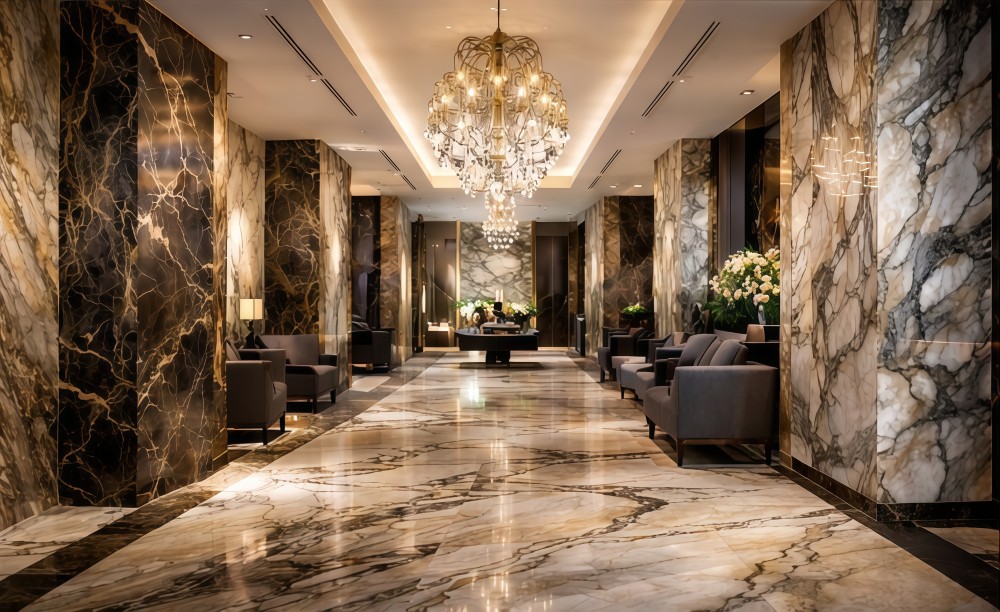
Natural marble remains unmatched in certain contexts:
Signature areas such as feature walls, reception desks, or statement staircases
Boutique or low-traffic luxury environments
Projects where natural variation is intentionally celebrated
In these applications, the uniqueness of marble adds value rather than risk.
However, problems arise when marble is specified across large, highly visible, high-traffic surfaces—particularly in international hotel projects where future replacement stone must match earlier installations.
One of the most underestimated challenges with natural stone is long-term consistency.
Even within the same quarry, blocks extracted years apart rarely match perfectly. For hotels operating at scale, this becomes a practical concern:
A damaged floor section cannot always be replaced invisibly.
Renovation phases may introduce visible inconsistencies.
Maintenance decisions made years later affect brand perception.
Engineered stone addresses this issue by design.
Its controlled manufacturing process allows for:
Repeatable patterns
Predictable color tone
Long-term availability for future refurbishment
This predictability is one reason engineered stone increasingly appears in corridors, guestrooms, and expansive lobby flooring—areas where visual continuity outweighs material romance.
A common assumption is that engineered stone is chosen to reduce cost. In reality, many luxury hotels select it to reduce uncertainty.
When properly specified, engineered stone offers:
Stable performance in high-traffic areas
Lower maintenance sensitivity
Easier long-term planning for renovations
This does not diminish the role of natural stone—it reframes it.
The most successful hospitality projects today do not choose between natural and engineered stone. They assign each material to the environment where it performs best.
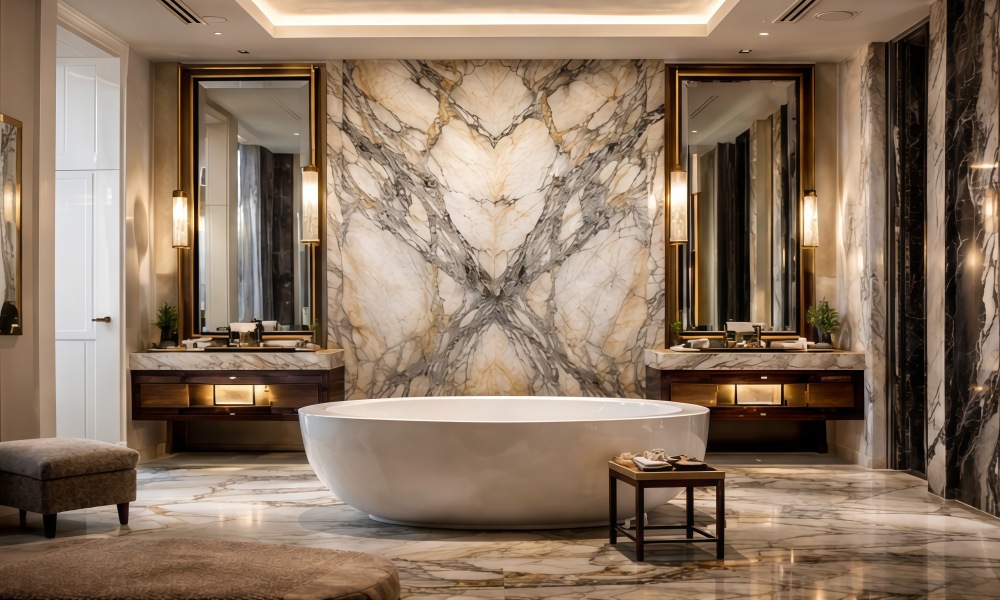
In practice, luxury hotels tend to follow a hybrid logic:
Natural marble for focal areas where uniqueness enhances experience
Engineered stone for expansive surfaces where consistency and durability matter more
Early supplier involvement to anticipate sourcing and maintenance implications
Projects that apply this logic early avoid late-stage redesigns, budget tension, and post-opening regret.
Material decisions rarely fail because of stone quality alone. They fail because trade-offs were not understood early enough.
Suppliers with experience across both natural and engineered stone categories tend to identify these issues before they become problems—often during specification rather than procurement.
At that stage, the value of expertise is not measured in square meters supplied, but in decisions avoided.
In luxury hospitality, stone is not just a surface. It is a long-term commitment that affects operations, brand consistency, and guest perception for years.
Understanding how hotels actually decide—rather than how they wish to decide—makes all the difference.



 IPv6 network supported