English
 Español
 Português
 عربي
عربي 한국어
한국어

Large commercial flooring projects place very different demands on a material than a one-off residential feature wall or a small private interior. In public areas, scale changes everything. What looks attractive in a sample board may become difficult to control across hundreds or thousands of square meters if the material is too visually unstable, too inconsistent from batch to batch, or too difficult to coordinate at project scale.
That is one reason artificial marble continues to make sense in many commercial flooring applications. It is not the right answer for every project, and it should not be treated as a universal replacement for natural stone. But in the right context, it offers something many large-scale interiors need: a more controlled balance between appearance, repeatability, and delivery logic.
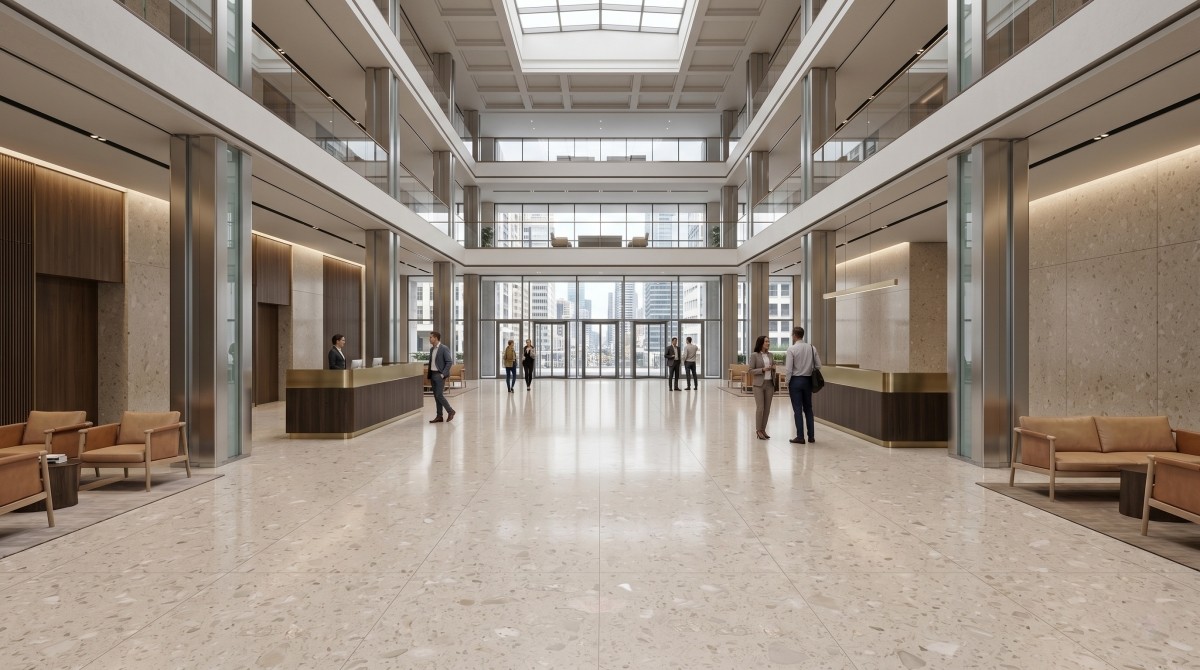
When buyers review flooring materials for shopping centers, office public areas, hotel common zones, mixed-use developments, or transport-related interiors, they are usually not looking at aesthetics alone. They are also evaluating:
· visual consistency
· quantity stability
· replacement logic
· supply coordination
· finish uniformity
· installation rhythm
· long-term project management
This is where artificial marble often becomes attractive.
In large public flooring areas, the question is rarely “Is the material beautiful?” by itself. A more useful question is whether the material will remain coherent when repeated over a large area and supplied across a realistic project schedule.
One of the biggest reasons project teams evaluate artificial marble for commercial floors is visual control.
Natural stone brings unique depth and geological character, which can be extremely valuable in the right design context. But in very large public flooring programs, too much uncontrolled visual movement can make the final field feel uneven or harder to manage. Artificial marble helps address that by offering a more repeatable visual language.
That does not mean it should look fake or overly rigid. Good artificial marble should still feel architectural and material-driven. But compared with many natural marble selections, it often allows the project team to work with a calmer, more predictable range.
For buyers comparing different artificial marble flooring options, this is often one of the first practical advantages they notice. The floor can retain a refined stone appearance while staying more stable across a larger installation area.
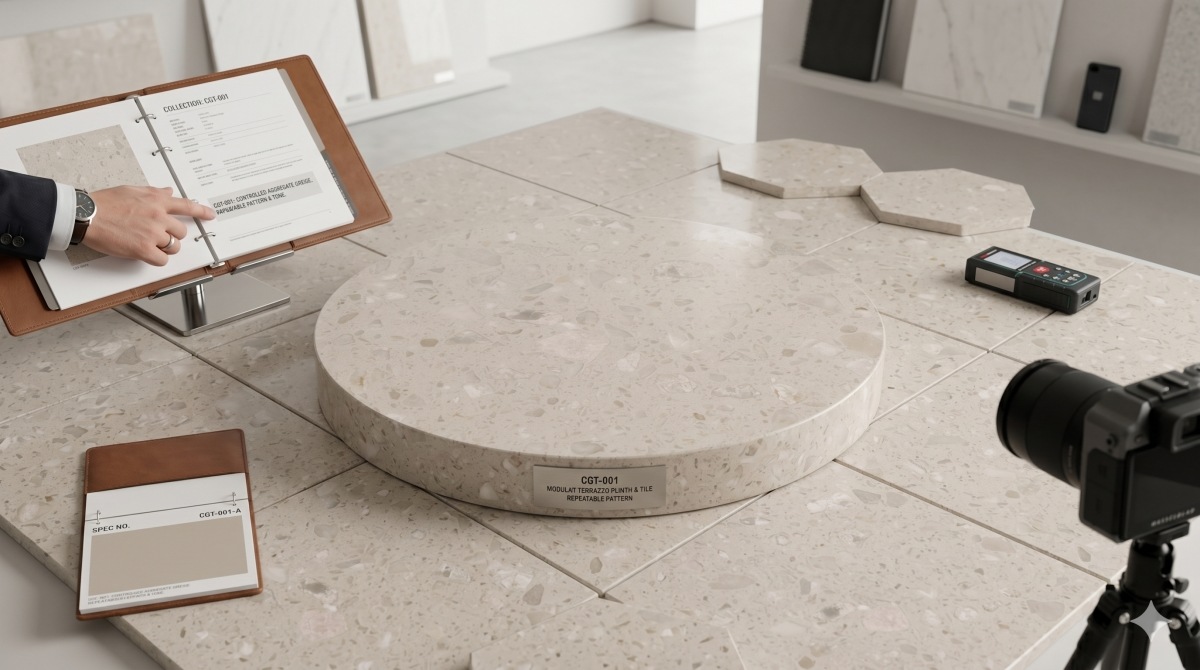
Repeatability is not a small technical point. In large flooring programs, it affects how the entire space is perceived.
If the material varies too unpredictably, the floor may begin to feel visually fragmented. That may be acceptable or even desirable in some projects, but in many commercial interiors the goal is different. Buyers may want the floor to support circulation, atmosphere, and brand tone without constantly drawing attention to its own inconsistency.
Artificial marble often works well here because it supports a more stable visual rhythm. This can be useful in:
· shopping malls
· office lobbies
· public corridors
· transport interiors
· large retail areas
· large-format circulation zones
For teams reviewing real commercial stone flooring projects, this advantage becomes even clearer at full scale. A material that looks controlled in repeated modules is often easier to integrate into the overall interior language.
A material decision that feels manageable at 80 square meters may become far more demanding at 800 or 3,000 square meters.
In large-area flooring, small visual differences begin to multiply. Slight changes in tone, pattern density, or finish can become much more noticeable once the surface spreads across major open zones. This is why buyers and contractors often pay close attention to what might be called large-scale flooring consistency.
Artificial marble performs well in this context because it often allows for:
· more stable lot planning
· cleaner visual continuity
· more predictable color families
· easier coordination across repeated areas
· more controlled finish appearance
This does not automatically make it superior in every design situation. But for many project buyers, it makes it easier to deliver a floor that looks intentional rather than uneven.
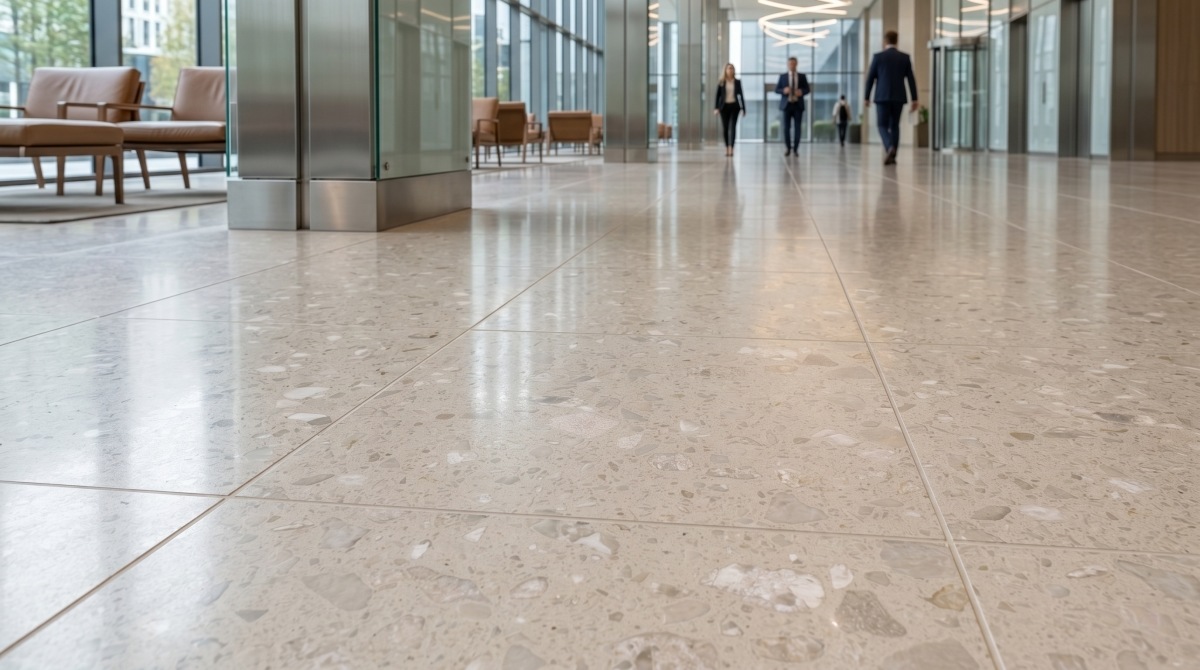
Public flooring is rarely selected for aesthetics alone. It also has to function within real project conditions.
That is why artificial marble is often evaluated not just as a decorative choice, but as a project management choice. Buyers choosing a stone surface selection for malls are often balancing several goals at once:
· strong visual presentation
· more controlled supply
· easier planning across large volumes
· more predictable installation results
· realistic maintenance expectations
The same applies to broader public area flooring material planning. In many public interiors, the best material is not the one that is most dramatic in isolation. It is the one that still works when multiplied across the actual life of the project.
Large projects create pressure not only on the material itself, but also on the coordination behind it.
Flooring supply at commercial scale may involve:
· repeated modules
· phased delivery
· packaging by zone
· floor pattern continuity
· batch control
· fabrication scheduling
· communication between supplier, contractor, and buyer
Artificial marble often fits this environment well because its more controlled appearance helps simplify part of the coordination process. That does not remove the need for proper planning, but it can reduce unnecessary visual uncertainty.
For buyers who need stronger project flooring supply support, this matters. They are not only buying stone. They are buying a flooring solution that must remain workable at scale.
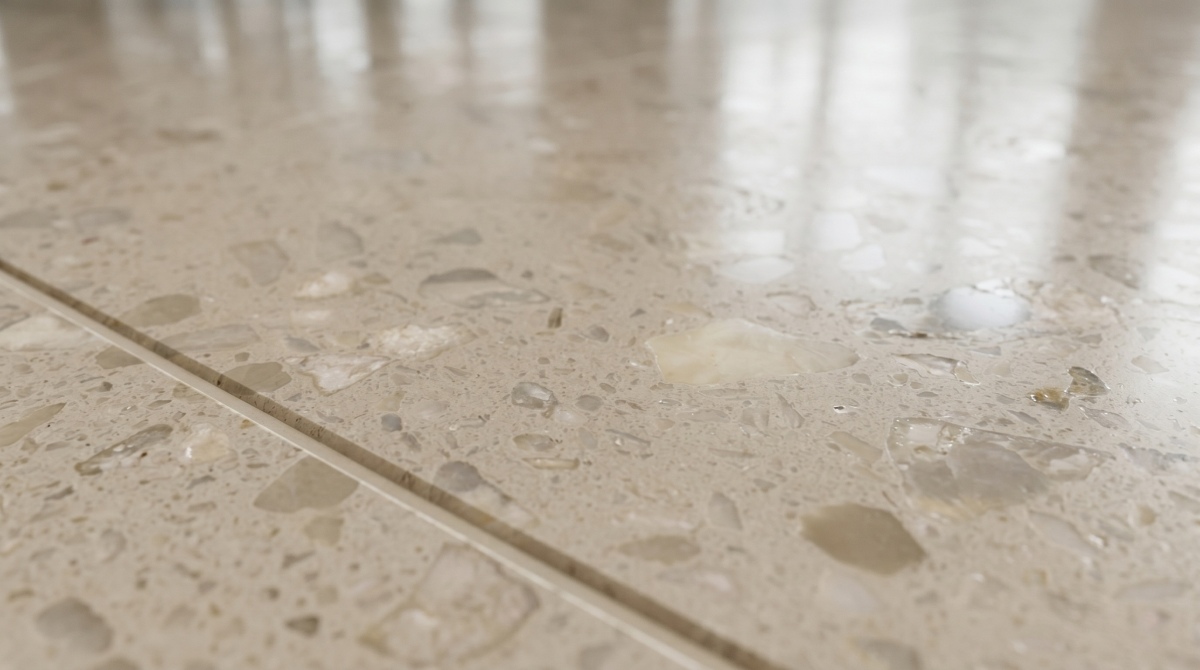
A useful blog should say where a material works well, but it should also say where caution is needed.
Artificial marble should not be treated as the automatic answer to every commercial flooring brief. Some projects may still prefer natural stone because:
· the design intent depends on natural variation
· the client wants unique geological character
· the flooring area is smaller and more selectively curated
· visual individuality matters more than controlled repetition
That is why artificial marble vs natural marble flooring remains an important discussion. The better material depends on project goals, scale, atmosphere, budget logic, and expected visual effect.
The point is not to claim that artificial marble is universally better. The point is that in large commercial flooring programs, it often solves a set of problems that project teams genuinely care about.
Even when artificial marble is the right direction, buyers should still review the material carefully.
Important points include:
· tone range
· finish appearance
· slab or tile format logic
· edge quality if relevant
· packaging method
· quantity planning
· suitability for the intended visual style
· coordination with adjacent wall and counter materials
Artificial marble may be more controlled, but it still needs professional review. A project should not assume that all engineered stone flooring products behave equally or support the same design result.
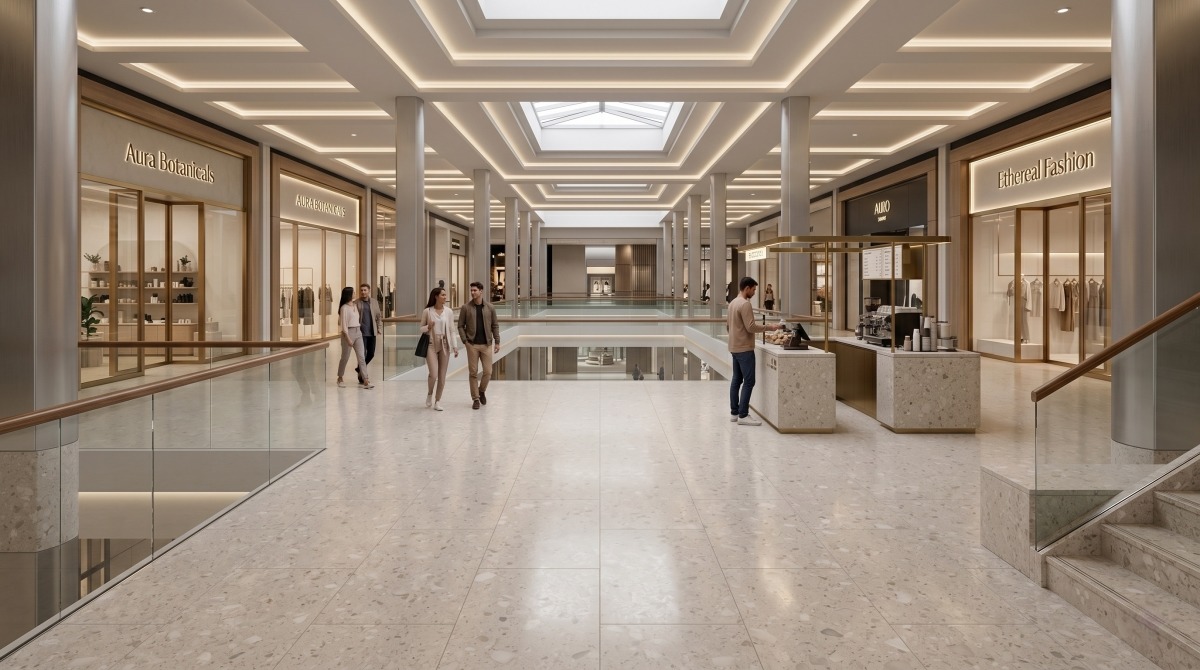
Different stakeholders often approach flooring with different priorities.
Architects may care more about atmosphere, pattern discipline, and how the floor supports the design language.
Buyers may care more about supply stability, consistency, quantity management, and long-term coordination.
Contractors may focus on installation rhythm, repetition, packaging logic, and how manageable the flooring program is on site.
Artificial marble often becomes attractive because it sits at the intersection of those needs. It can still offer a clean stone-based visual effect, while giving the project team a more organized material framework.
That is why it continues to appear in many large commercial interiors even when natural materials remain highly valued elsewhere.
Artificial marble works well for many large commercial flooring projects because it offers something that large-scale interiors often require: a more controlled balance between stone appearance, repeatability, and delivery coordination.
Its value is not that it replaces every other material. Its value is that it can make practical sense where flooring needs to remain visually coherent across a large area, easier to coordinate across supply stages, and more stable in repeated commercial use.
For project teams evaluating flooring for malls, office public zones, mixed-use developments, retail environments, or other large interiors, artificial marble is often worth considering seriously—not as a compromise, but as a material with its own project logic.
If your team is comparing engineered stone flooring solutions for a commercial project, feel free to contact our team to discuss the material direction, quantity, and application more clearly.



 IPv6 network supported