English
 Español
 Português
 عربي
عربي 한국어
한국어

Quality control is one of the most common promises in the stone industry.
Almost every supplier says they have it. Almost every factory says they inspect before shipment. Almost every quotation mentions quality in some way.
But for project buyers, the real question is not whether a supplier says “quality control.”
The real question is: what does quality control actually control?
Good stone quality control should begin much earlier and continue through the full supply process: material selection, sample approval, slab review, cutting, finishing, edge work, dimensional checking, labeling, packing, documentation, and export readiness.
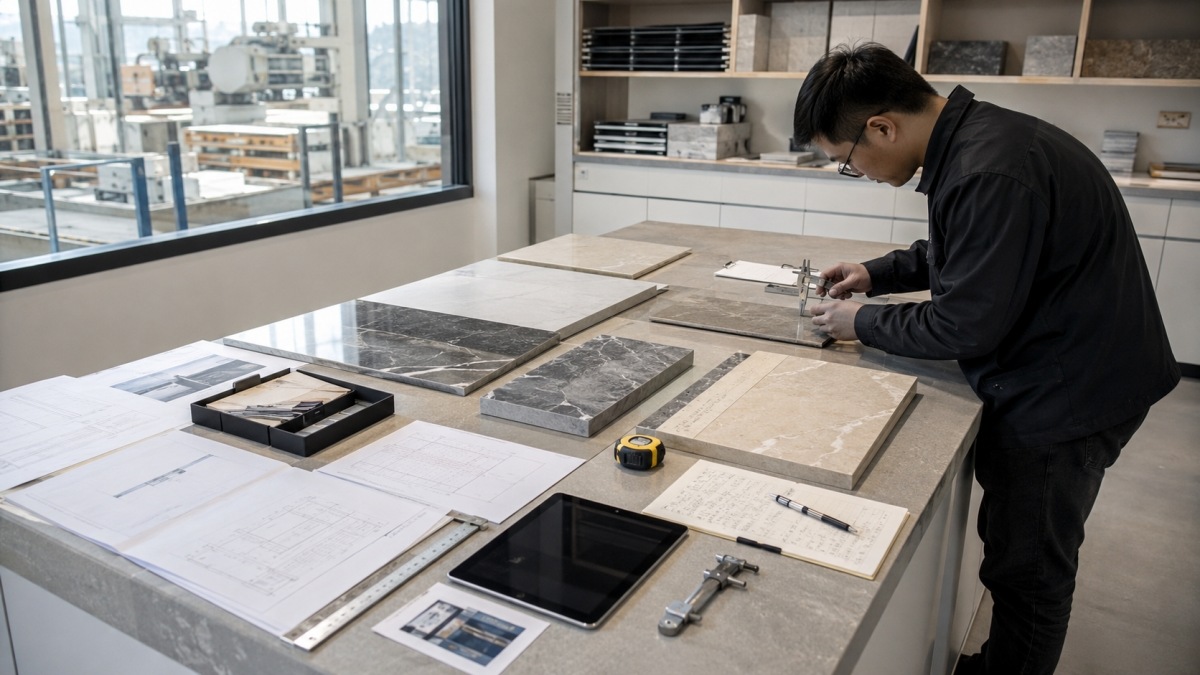
Quality Control Starts Before Production
Many buyers think quality control happens after production. That is too late.
By the time stone pieces are fully cut, polished, packed, or loaded, many important decisions have already been made. If the wrong slabs were selected, if the finish was misunderstood, if the drawing had unclear details, or if the material range was never discussed, final inspection can only catch part of the problem.
Good QC should start with questions like: Is the approved sample realistic for the order? Is the material range clearly understood? Are slab photos or slab selections needed? Is the finish suitable for the application? Are drawings clear enough for fabrication?
For buyers evaluating stone manufacturing and fabrication capability, QC should be seen as a full-process control system, not only a final inspection step.
Material QC Is Different for Each Stone Category
A serious supplier should not treat every material with the same QC logic.
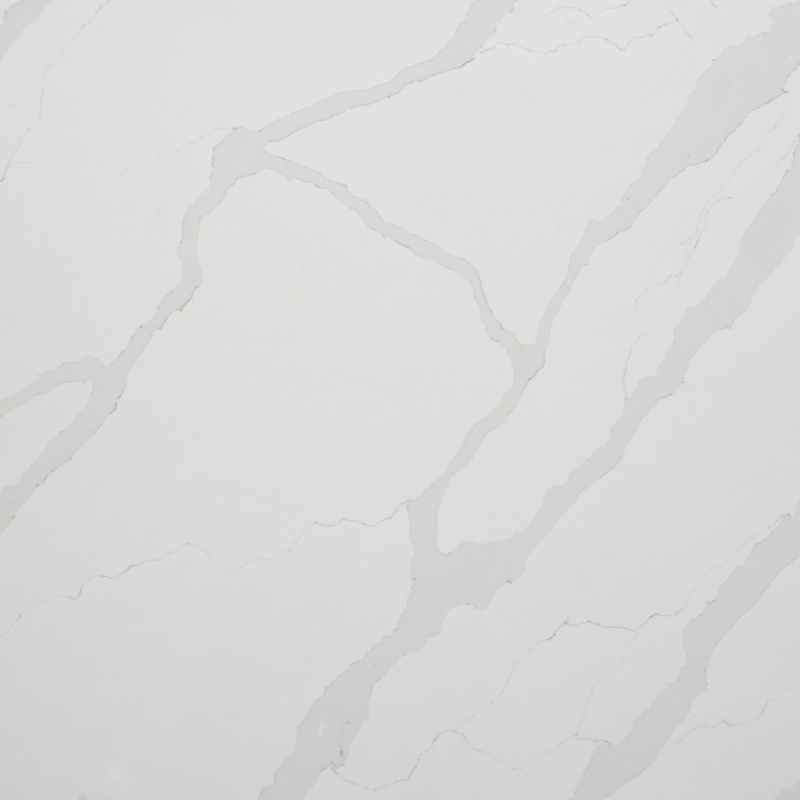
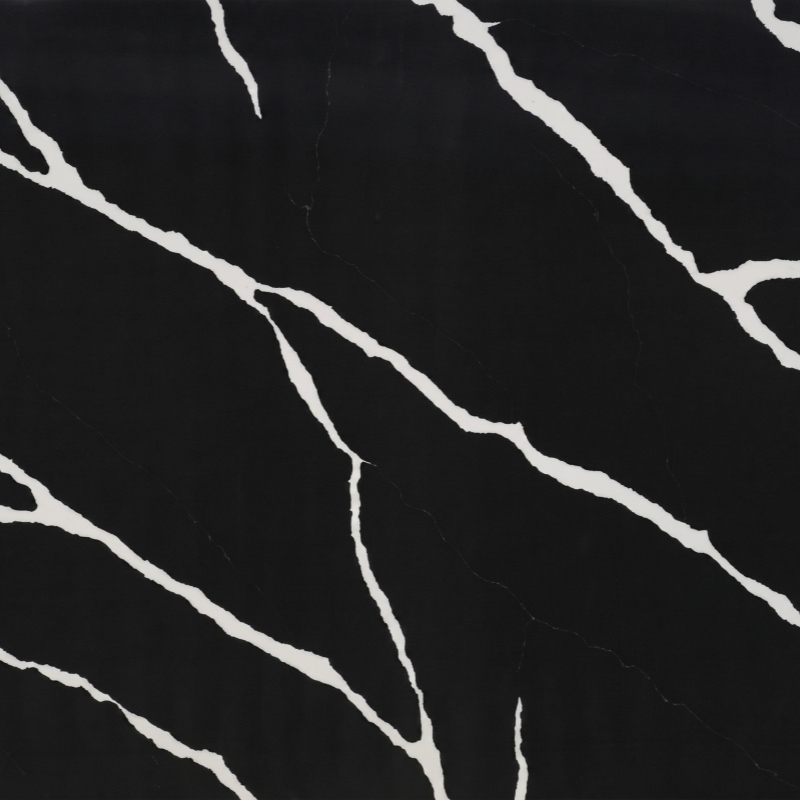
Natural marble, artificial marble, quartz stone, terrazzo, limestone, and sintered stone do not behave the same way. Their risks are different. Their buyer expectations are different. Their inspection points should also be different.
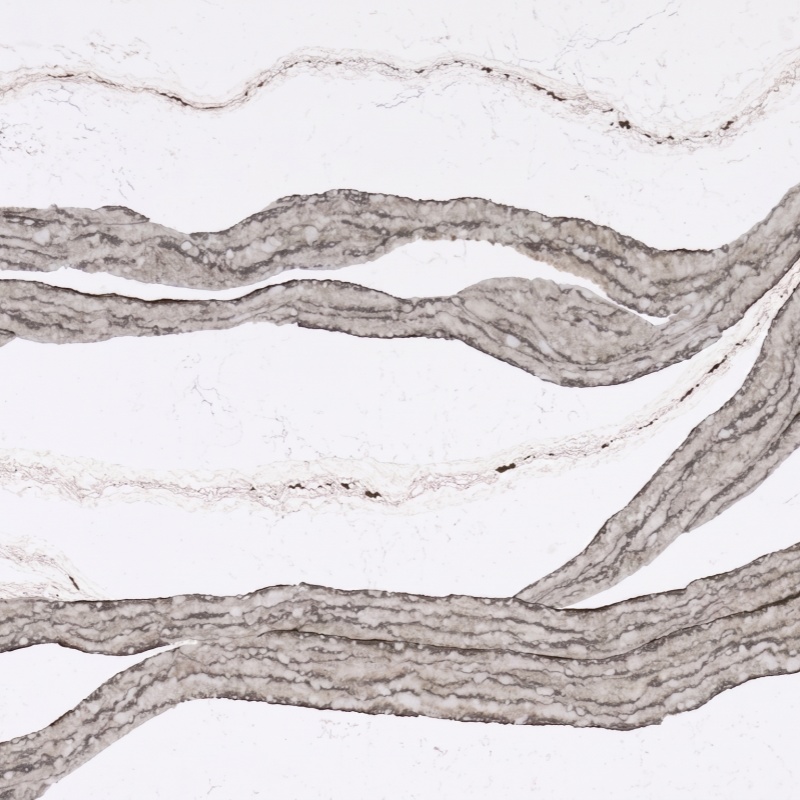
For natural marble, QC should consider natural variation, background tone, vein direction, cracks, resin treatment, slab selection, and whether visible areas match the approved project expectation.
For artificial marble, QC should focus more on batch consistency, surface uniformity, polish quality, edge behavior, dimensional accuracy, and whether repeated pieces remain close to the approved standard.
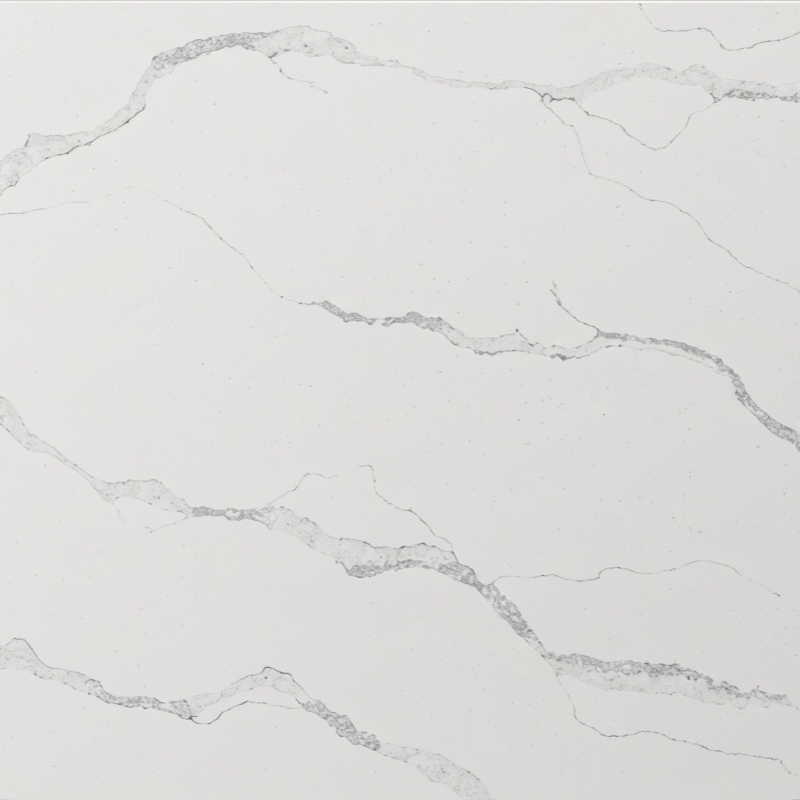
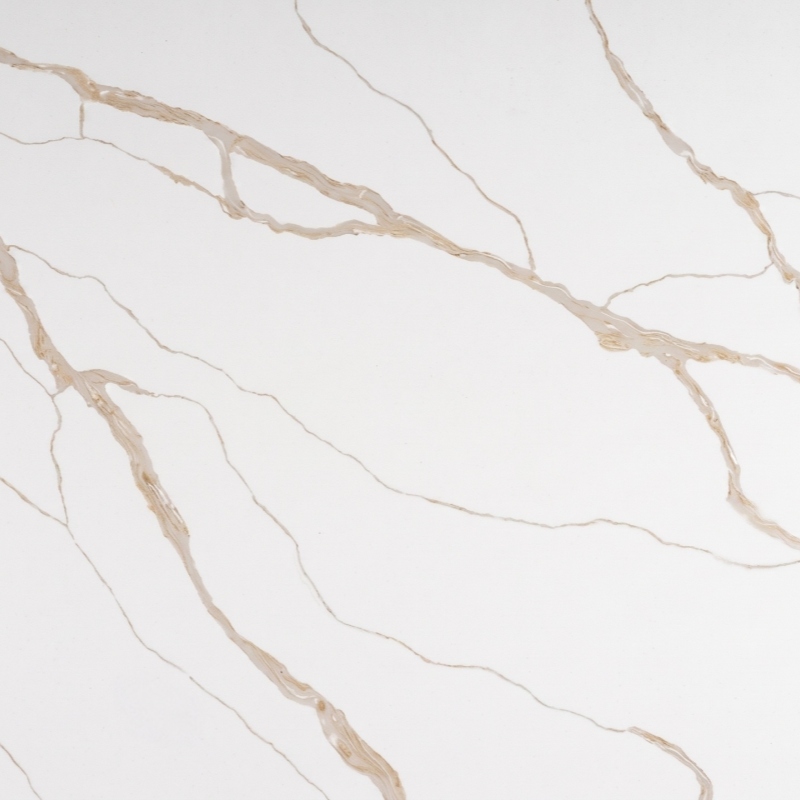
For quartz stone, inspection should include surface finish, color consistency, slab flatness, cutout quality, edge polishing, thickness, and suitability for countertops, vanity tops, islands, and other fabricated surfaces.
For terrazzo stone, QC should review aggregate distribution, surface finish, chip exposure, color range, thickness, edge condition, and whether pieces from the same project maintain a controlled visual range.
Visual Inspection Is Necessary, But Not Enough
Stone is a visual material, so visual inspection matters.
The supplier should check color, surface defects, cracks, chips, stains, finish consistency, veining direction, visible patching, polishing quality, and whether the material fits the approved range.
But visual inspection alone is not enough for project supply.
A piece can look good and still be wrong. It may have the wrong size. The sink cutout may be slightly off. The edge profile may not match the approved drawing. The thickness may not be consistent. The label may not match the packing list.

Dimensional QC Protects Installation
For project buyers, dimensional accuracy is often more important than it first appears.
Stone pieces connect with walls, floors, cabinets, metal frames, glass, sinks, elevators, stair structures, and other trades. A small dimensional issue can affect installation.
Dimensional QC should check length, width, thickness, diagonal accuracy, hole position, edge detail, cutout size, and finished surface direction where needed.
Finish QC Affects How Buyers Experience the Material
Finish quality is easy to underestimate.
A polished surface should not only look shiny. It should look even. A honed surface should not look patchy. A textured finish should feel intentional, not unfinished.
Finish QC should review gloss or matte consistency, sanding marks, uneven polishing, dull edges, surface scratches, light reflection, tactile feel, and finish consistency across repeated pieces.
QC Should Include Edge, Cutout, and Weak Point Review
Many stone failures happen around details.
The main surface may pass inspection, while risk hides in sink cutouts, faucet holes, inside corners, narrow strips, thin returns, long unsupported pieces, polished edges, stair noses, drilled fixing holes, and fragile corners.
Good QC focuses on where problems are most likely to occur, not only where inspection is easiest.
Packing QC Is Part of Product QC
Packing is often treated as separate from quality control. For stone projects, that is a mistake.
A piece can pass production inspection but still be damaged or confused because of poor packing. Packing QC should check protection, labeling, crate structure, packing list accuracy, and loading logic.

Documentation Makes QC Verifiable
Good QC should leave records.
For international buyers, documentation matters because the buyer cannot always be at the factory. Useful QC documentation may include sample approval photos, slab approval photos, production photos, dimensional inspection photos, finish and edge detail photos, packing photos, crate lists, packing lists, and test reports or certificates when relevant.
For buyers who need stone certificates and downloadable documents, documentation helps make supplier evaluation more transparent.
Final Inspection Should Confirm the Process, Not Replace It
Final inspection is still important.
Before shipment, the supplier should check whether the order matches the buyer’s requirements, whether the goods are packed properly, whether labels and documents are ready, and whether the shipment can move forward.
But final inspection should not be the only quality control stage.
The best final inspection is not a rescue operation. It is a confirmation that the earlier controls were done properly.
All in All
Good stone quality control is not a slogan.
It is a working system that begins before production and continues through material selection, fabrication, inspection, packing, documentation, and delivery.
For project buyers, this is the difference between simply receiving stone and receiving an order that has been managed with care.
A supplier who understands QC only as final inspection may catch visible problems. A supplier who understands QC as project control can help prevent problems earlier.
That is the standard serious buyers should look for.



 IPv6 network supported