English
 Español
 Português
 عربي
عربي 한국어
한국어

Terrazzo color variation is one of the most important details buyers should understand before approving samples, confirming production, or reviewing finished slabs. Because terrazzo is made from a matrix material combined with chips, aggregates, marble fragments, glass pieces, or other decorative elements, the final appearance may vary between samples, full slabs, batches, and installed areas. For project buyers, the goal is not to avoid all variation, but to define what level of variation is acceptable before production begins.
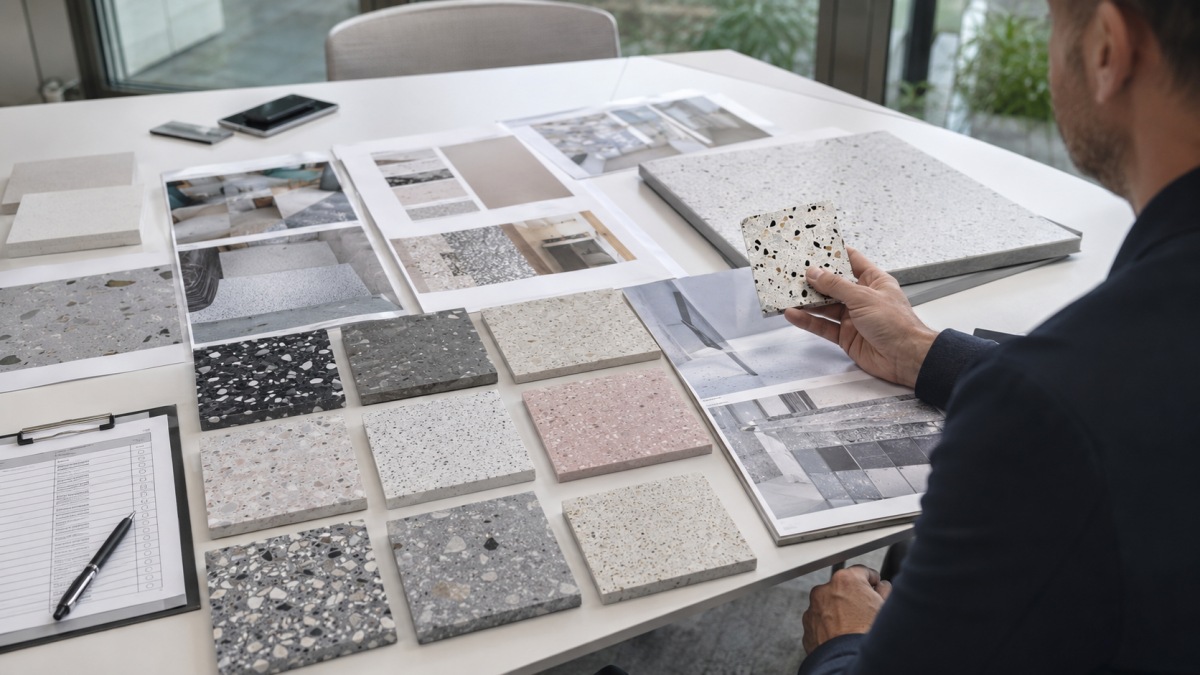
Color variation should not be treated as a vague excuse after production. It should be discussed as a visible project factor before sample approval, mass production, packing, and installation.
In many terrazzo projects, disputes do not happen because the material is unusable. They happen because the buyer, designer, supplier, contractor, and installer did not define the acceptable color range early enough.
Why Terrazzo Color Variation Happens
Terrazzo is not a flat printed surface. Its visual character comes from a combination of background matrix color, chip color, chip size, chip density, aggregate distribution, surface finish, polishing level, and production batch.
Variation may appear in several ways:
· Slight matrix color difference
· Different chip density
· More or fewer visible aggregates
· Larger chips appearing in some areas
· Different movement across full slabs
· Small tone changes between batches
· Different appearance under lighting
· Surface finish changing the perceived color
· Installed area looking different from a small sample
This does not automatically mean the terrazzo is defective. But it does mean buyers should review and approve terrazzo with realistic expectations.
A small terrazzo sample can show design direction, but it cannot fully represent every square meter of a full project.
What Types of Color Variation Buyers Should Check
Terrazzo variation is not only about light and dark color difference. Buyers should check several visible factors.
Matrix Color Variation
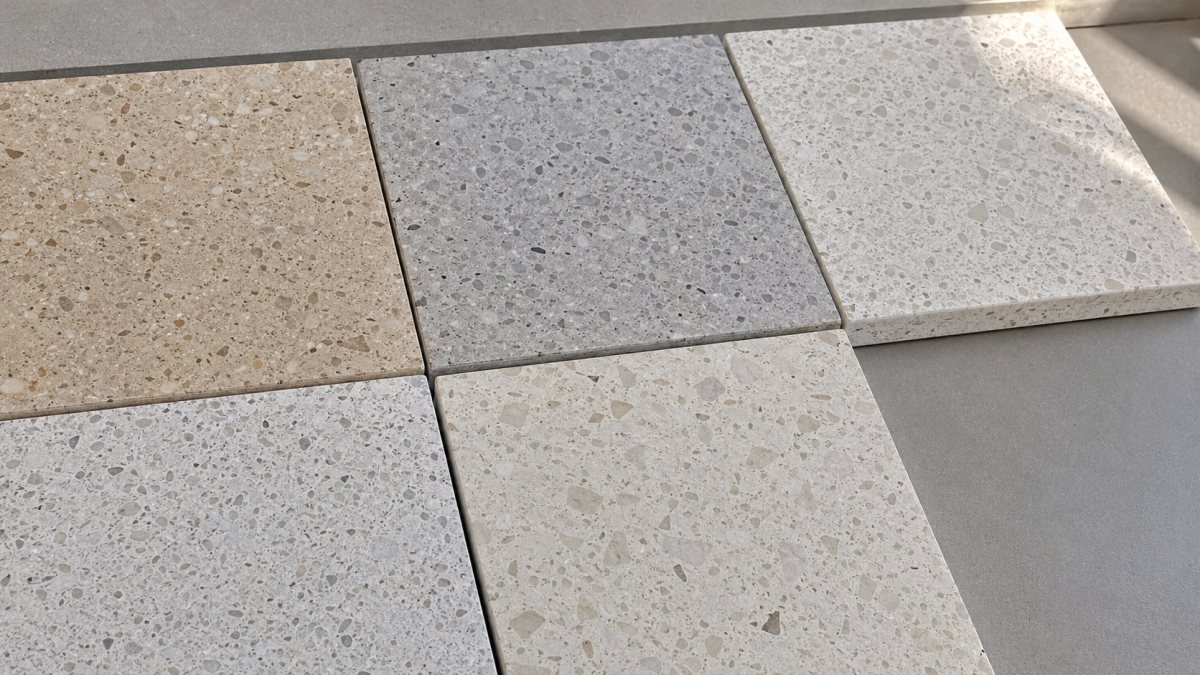
The matrix is the background color of the terrazzo. It may be white, beige, grey, black, green, red, cream, or custom. Even small changes in matrix color can affect the whole project feeling.
Buyers should ask:
· Is the background tone warm, cool, or neutral?
· Does it match the project design direction?
· Is the approved sample a strict color standard or a general reference?
· Is slight tone movement acceptable?
· Will the color look different under natural and artificial lighting?
A light matrix may look clean in a sample but may appear brighter or colder in a large lobby. A darker matrix may look dramatic in a showroom but may show dust, reflection, or scratches differently in use.
Chip Color Variation
Terrazzo chips may include marble pieces, glass pieces, stone aggregates, recycled materials, shells, or other decorative particles depending on the design. Chip color affects the overall mood of the material.
Buyers should check:
· Are the chip colors consistent with the approved design?
· Are any chips too strong or too weak visually?
· Does the chip color coordinate with the matrix color?
· Are there unexpected color spots?
· Does the chip color match surrounding project materials?
Chip color should be reviewed together with the matrix, not separately. A chip that looks subtle in a sample may become visually strong when repeated across a large area.
Chip Size and Chip Density Variation
Chip size and density can change the visual rhythm of terrazzo.
Small chips usually create a calmer and more uniform effect. Larger chips create stronger movement and more decorative character. Mixed chips can feel more natural, but they may also create more visible variation.
Buyers should confirm:
· Are the chips small, medium, large, or mixed?
· Is the chip density acceptable?
· Are some areas too sparse?
· Are some areas too crowded?
· Are large chips distributed naturally?
· Does the full slab still match the design intent?
Chip density is one of the most common causes of misunderstanding. A buyer may approve a small sample with balanced chips, then feel surprised when a full slab has areas that look more active or quieter.
This is why large-chip terrazzo should often be reviewed with full slab photos before final approval.
Full Slab Variation
A full slab gives a much better view of terrazzo behavior than a small sample.
A full slab may show:
· Overall chip distribution
· Larger-scale color rhythm
· Areas with more or fewer chips
· Slab-to-slab consistency
· Edge areas and central areas
· Visual movement under real factory lighting
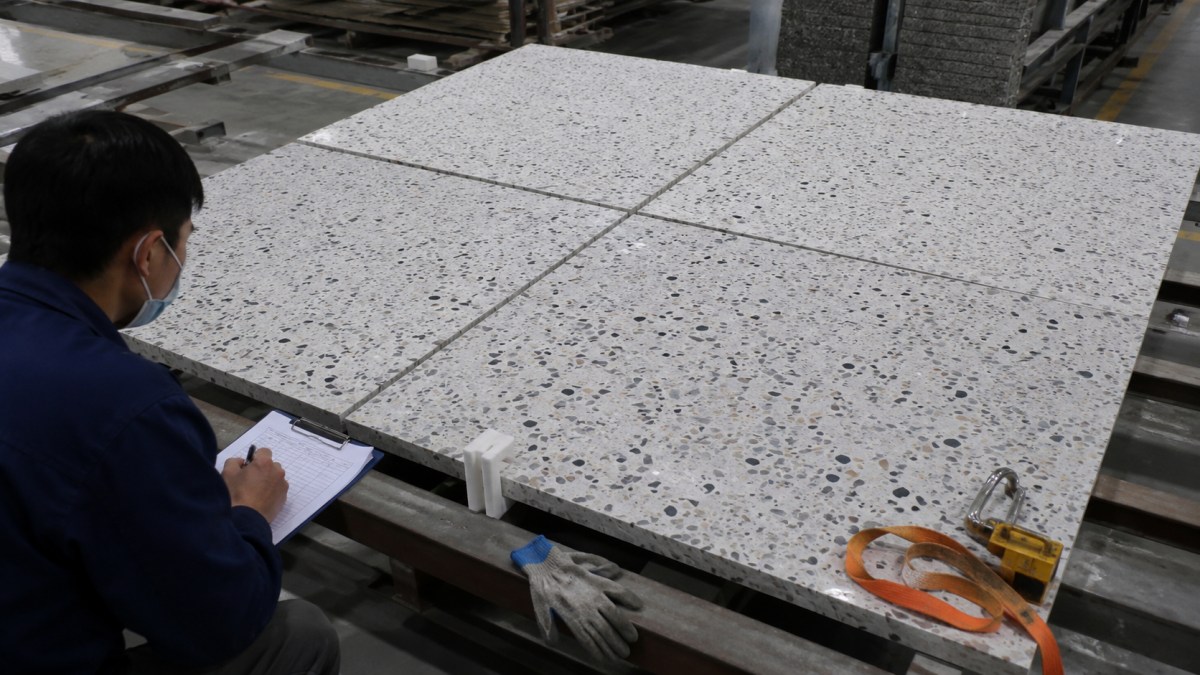
For large commercial spaces, full slab photos are often more useful than relying only on small samples. They help buyers understand whether the approved design still works at project scale.
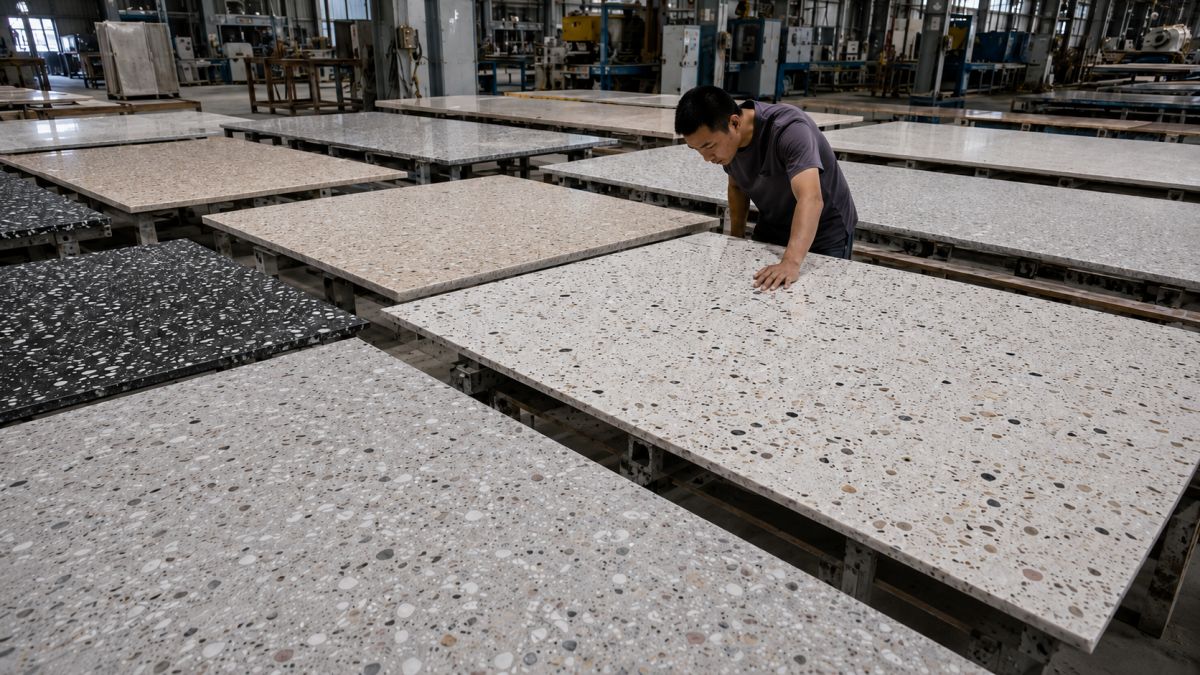
However, full slab photos also have limits. Camera settings, lighting, angle, screen display, and image compression may affect how color appears. For high-value projects, physical samples, full slab photos, and written approval standards should work together.
Batch-to-Batch Variation
Batch variation can happen when material is produced at different times. Even when the formula is the same, small changes in raw materials, mixing, curing, polishing, and production conditions may affect appearance.
Buyers should ask:
· Will the project be produced in one batch?
· If additional material is ordered later, will it match the first batch?
· Is spare material needed?
· Is the project sensitive to color variation?
· Should all visible areas be supplied from the same production batch?
· Are replacement pieces required for future maintenance?
For important projects, ordering sufficient quantity and spare pieces from the same batch is often safer than trying to reorder later.
Lighting and Finish Can Change Perceived Color
A terrazzo sample may look different under daylight, warm interior light, cool LED light, or strong commercial lighting. Finish also affects color perception.
A polished finish may make color and chips look deeper and more reflective. A honed or matte finish may make the tone look softer and less reflective. Textured finishes may reduce reflection but can change how color and chips appear.
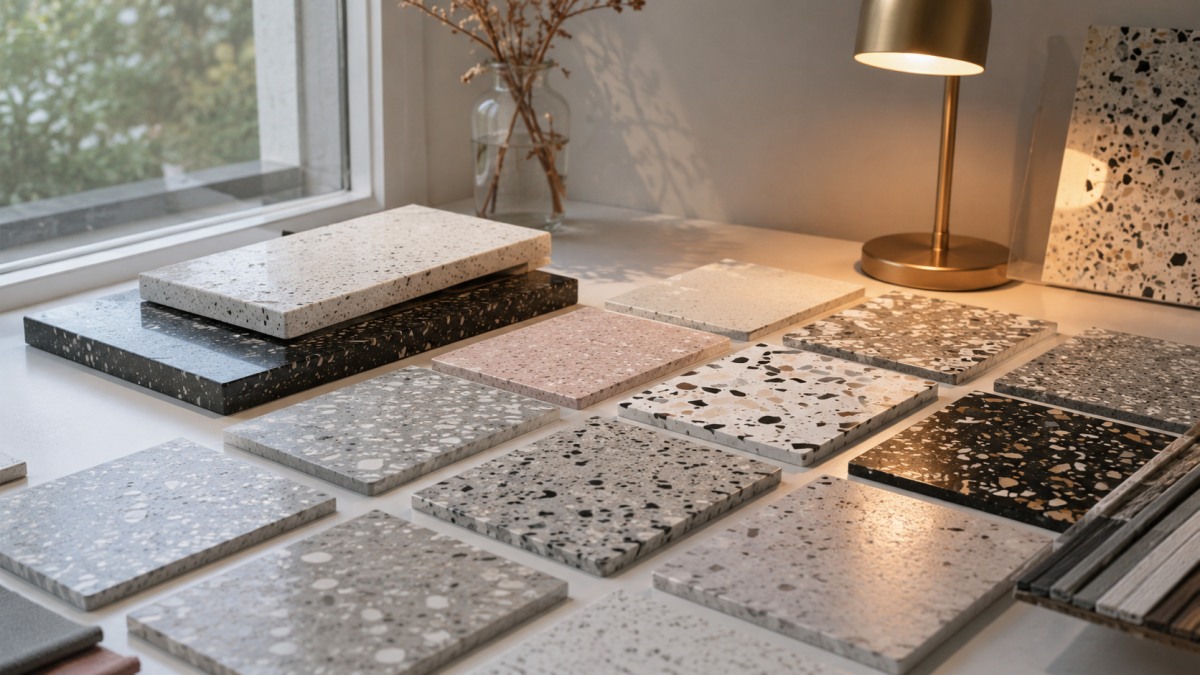
Buyers should review samples under conditions close to the real project environment.
Important questions include:
· Will the terrazzo be used indoors or outdoors?
· Will the lighting be warm, cool, direct, or indirect?
· Will the surface be polished, honed, matte, or textured?
· Will the area be high-traffic, wet, dry, vertical, or horizontal?
· Will the color be seen next to metal, wood, marble, paint, glass, or fabric?
A color approved under showroom lighting may not look the same after installation. This should be expected and discussed before production.
Sample Approval Should Define Acceptable Variation
Many buyers approve terrazzo samples too quickly. They look at a small sample, say “approved,” and move forward. This creates risk.
Sample approval should clarify:
· Approved sample reference
· Matrix color direction
· Chip color and chip size
· Surface finish
· Thickness reference
· Application area
· Acceptable color range
· Acceptable chip distribution range
· Whether full slab photos are required
· Whether dry lay photos are required
· Whether future replacement pieces are needed
The key question is not only “Is this sample approved?”
The better question is: “What exactly does this sample approve?”
If the sample only approves color direction, say so. If it approves production standard, say so. If the buyer still needs full slab review before shipment, that should also be written.
When Buyers Should Request Full Slab Photos
Full slab photos are especially useful when:
· The terrazzo uses large chips.
· The project has a large visible floor area.
· The design requires a very calm or very controlled appearance.
· The material is custom-colored.
· Multiple slabs will be installed side by side.
· The project is a hotel lobby, retail space, commercial corridor, or public area.
· The owner or designer is sensitive to variation.
· The project has limited time for replacement after delivery.
Full slab photos do not remove all risk, but they make the approval process more realistic.
Color Variation in Cut-to-Size and Dry Lay Projects
For cut-to-size terrazzo projects, color variation should be reviewed together with layout.
This is especially important for:
· Wall panels
· Stair treads and risers
· Large floor patterns
· Reception counters
· Elevator surrounds
· Vanity tops
· Custom-shaped pieces
Dry lay photos can help buyers check whether pieces work together visually before packing. They can also help confirm numbering, direction, layout sequence, and whether any obvious color imbalance appears.
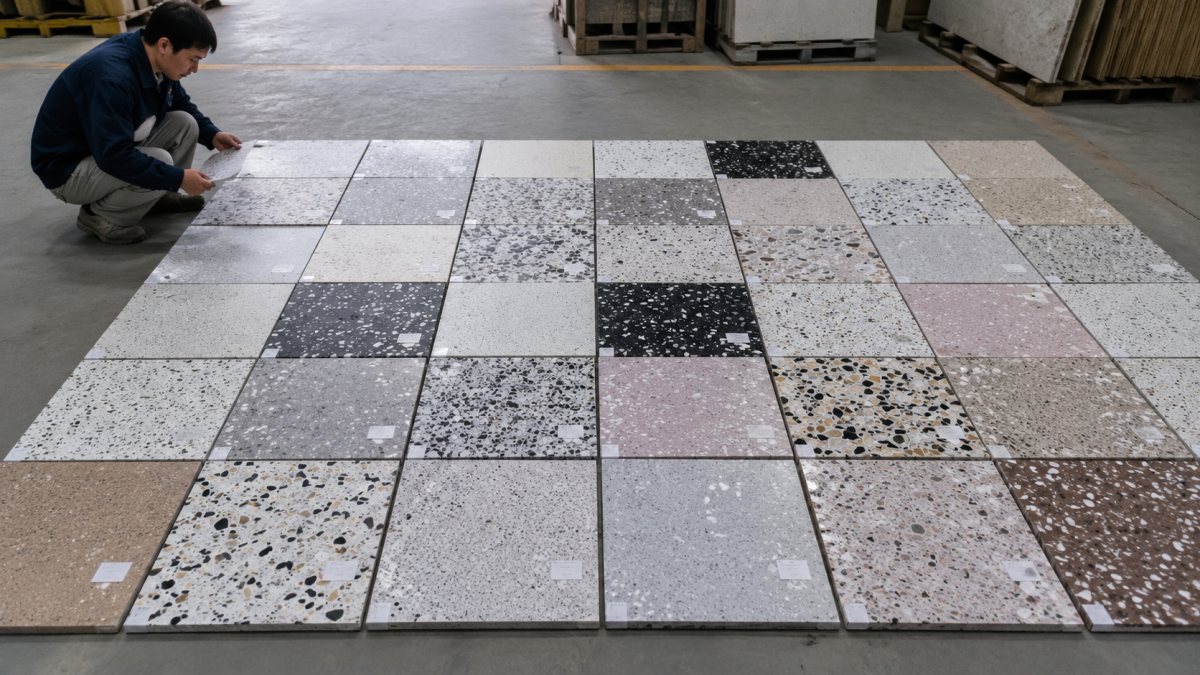
Dry lay does not make terrazzo perfectly identical, but it helps reduce avoidable layout problems.
How to Communicate Color Variation With Designers and Owners
Project buyers often need to explain material variation to designers, owners, contractors, and installers. This should happen before production, not after shipment.
A clear communication process may include:
· Showing the approved sample
· Sharing full slab photos if available
· Explaining that terrazzo contains visible aggregates
· Defining acceptable color and chip variation
· Confirming which areas are most visually sensitive
· Clarifying whether pieces should be grouped by tone
· Keeping spare material from the same batch
· Recording approval in writing
Color variation should be managed as a project communication issue, not only a factory issue.
Terrazzo Color Variation Checklist for Buyers
Use this checklist before approving samples, production, or shipment.
|
Review Item |
Buyer Should Confirm |
|
Matrix color |
Is the background color direction approved? |
|
Chip color |
Are the chip colors acceptable for the project design? |
|
Chip size |
Are the chips small, medium, large, or mixed as expected? |
|
Chip density |
Is the distribution acceptable across the sample or slab? |
|
Full slab review |
Are full slab photos needed before shipment? |
|
Batch control |
Will visible areas be supplied from the same batch? |
|
Finish |
Does polished, honed, matte, or textured finish affect the perceived color? |
|
Lighting |
Has the material been reviewed under project-like lighting? |
|
Application |
Is the color variation acceptable for floor, wall, countertop, stair, or other use? |
|
Spare material |
Is extra material needed for future replacement? |
|
Dry lay |
Is dry lay review needed for cut-to-size or panel projects? |
|
Written approval |
Is the acceptable variation range recorded in writing? |
Red Flags in Terrazzo Color Variation Review
Buyers should slow down and recheck the order if any of these signs appear:
· The buyer approves only one small sample for a large project.
· No one defines acceptable color variation.
· The project requires large chips, but no full slab photos are reviewed.
· The sample is reviewed under lighting very different from the final site.
· The finish is changed after sample approval.
· Multiple production batches are used for the same visible area.
· No spare material is ordered for a design-sensitive project.
· Dry lay photos are not requested for cut-to-size visible areas.
· The designer expects every slab to look identical.
· Color variation is discussed only after shipment.
The best time to discuss terrazzo color variation is before approval, not after installation.
FAQ
Is terrazzo color variation normal?
Some level of color and chip variation can be normal because terrazzo is made from matrix material and visible aggregates. The important issue is whether the variation falls within the approved project range and whether buyers understood the material behavior before production.
Can a terrazzo sample represent the full project?
A sample can show design direction, matrix color, chip style, and finish, but it cannot fully represent full slab distribution, batch variation, large-area appearance, or installed effect. Large or design-sensitive projects may need full slab photos or mockup review.
Why do terrazzo slabs look different from small samples?
Full slabs show larger areas of chip distribution, matrix tone, and visual rhythm. A small sample may not include all possible chip density or color movement. Lighting, finish, and viewing distance can also change how the material appears.
Should buyers request full slab photos before shipment?
For large projects, custom terrazzo, large-chip terrazzo, hotel lobbies, commercial floors, wall panels, or design-sensitive areas, full slab photos are often useful. They help buyers review large-scale appearance before packing and shipment.
How can buyers reduce color variation risk?
Buyers can reduce risk by approving clear samples, defining acceptable variation, reviewing full slab photos, ordering enough material from the same batch, requesting dry lay photos when needed, and confirming all approval details in writing.
Can terrazzo color variation be completely avoided?
No. Terrazzo is not a printed surface, and visible aggregates create natural visual movement. The realistic goal is to manage variation, define acceptable range, and avoid unexpected differences through proper approval and communication.
Should extra terrazzo material be ordered?
For visible project areas, future replacement, or design-sensitive spaces, extra material from the same batch is often recommended. Reordering later may result in color or chip distribution differences.
Before approving terrazzo for production or shipment, prepare the approved sample reference, application area, expected finish, chip size preference, full slab review requirement, quantity, batch needs, and acceptable color variation range. These details help project teams make a more realistic approval decision before material moves into production or packing.



 IPv6 network supported