English
 Español
 Português
 عربي
عربي 한국어
한국어

Custom Terrazzo and Marble Mosaic Tabletop for a Contemporary Interior Design Project
In custom stone furniture, the most successful pieces are often not the loudest ones. They are the surfaces that make people stop for a second, look closer, and notice how the material has been handled.
This custom terrazzo and marble mosaic tabletop is one of those pieces. It combines grey white natural marble with light terrazzo inlay lines, creating a polished stone surface that feels architectural, decorative, and functional at the same time.
Instead of using a single stone slab, the tabletop is designed as a controlled mosaic composition. The marble provides the soft grey veining and natural depth, while the terrazzo strips form irregular geometric lines across the surface. The result is not a simple pattern printed on stone. It is a physical stone composition made through cutting, fitting, polishing, and edge finishing.
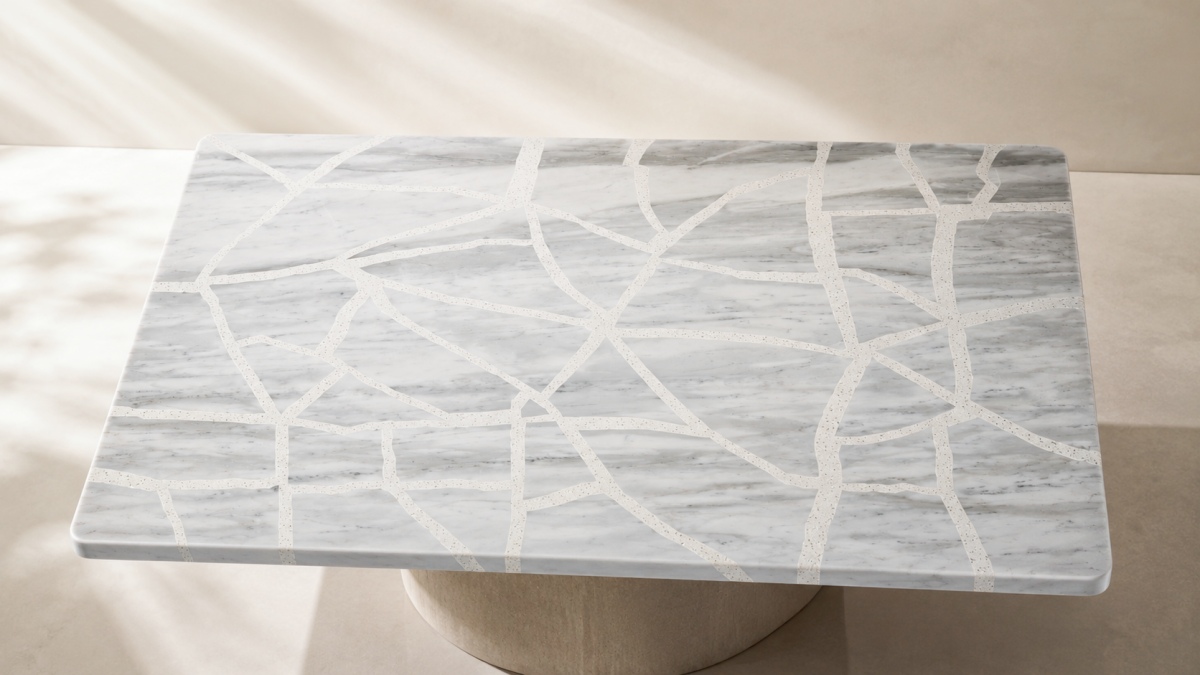
For designers and project buyers, this type of custom tabletop offers a different way to use stone. It does not rely only on the natural beauty of marble. It also introduces design control through terrazzo inlay, line direction, surface rhythm, and proportion. This makes the piece suitable for hotel lounges, reception tables, restaurant interiors, boutique commercial spaces, and high-end residential furniture.
Aoli Stone’s work on this type of project reflects a practical part of custom stone fabrication: the ability to combine different stone materials into one finished surface while keeping the visual balance, surface flatness, edge detail, and polished finish under control.
A Material Combination with Two Different Visual Languages
The main surface uses a grey white marble with soft linear veining. The background is not pure white. It has a cool grey tone, cloudy movement, and fine natural lines. This gives the tabletop a calm and refined base.
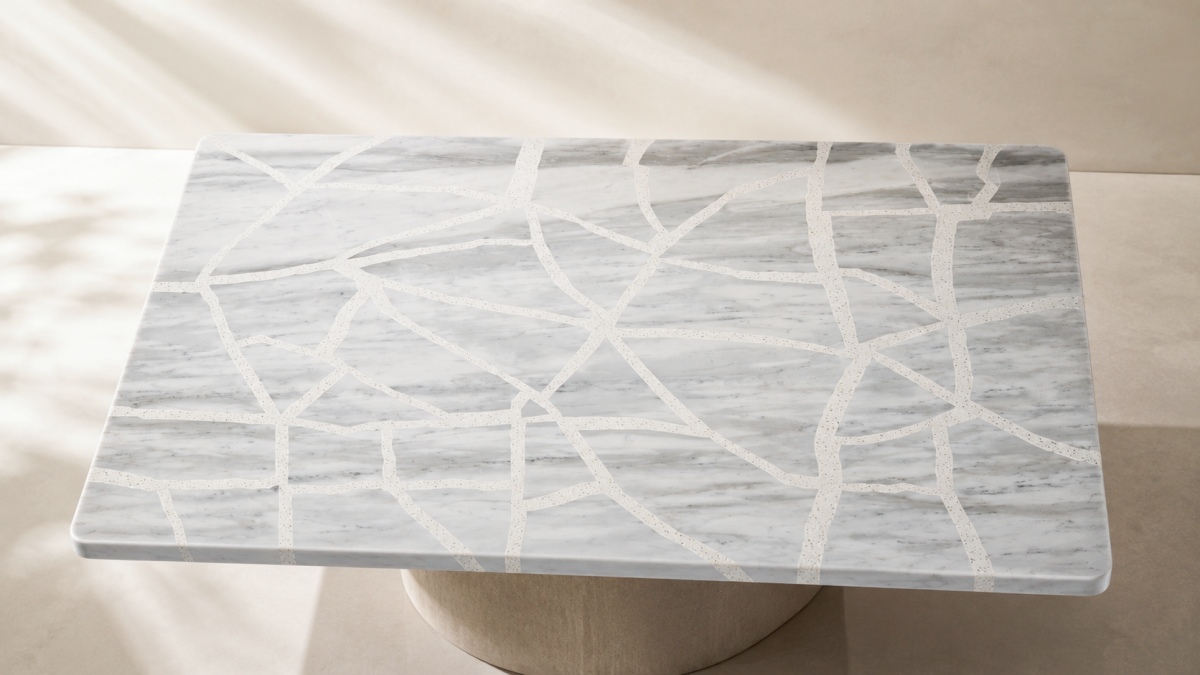
The inlay lines are made with a light terrazzo material. At close range, small aggregate particles can be seen inside the terrazzo. This creates a subtle contrast with the smoother marble surface. The terrazzo lines are not perfectly mechanical. Their irregular width and organic direction make the tabletop feel more handcrafted and more architectural.
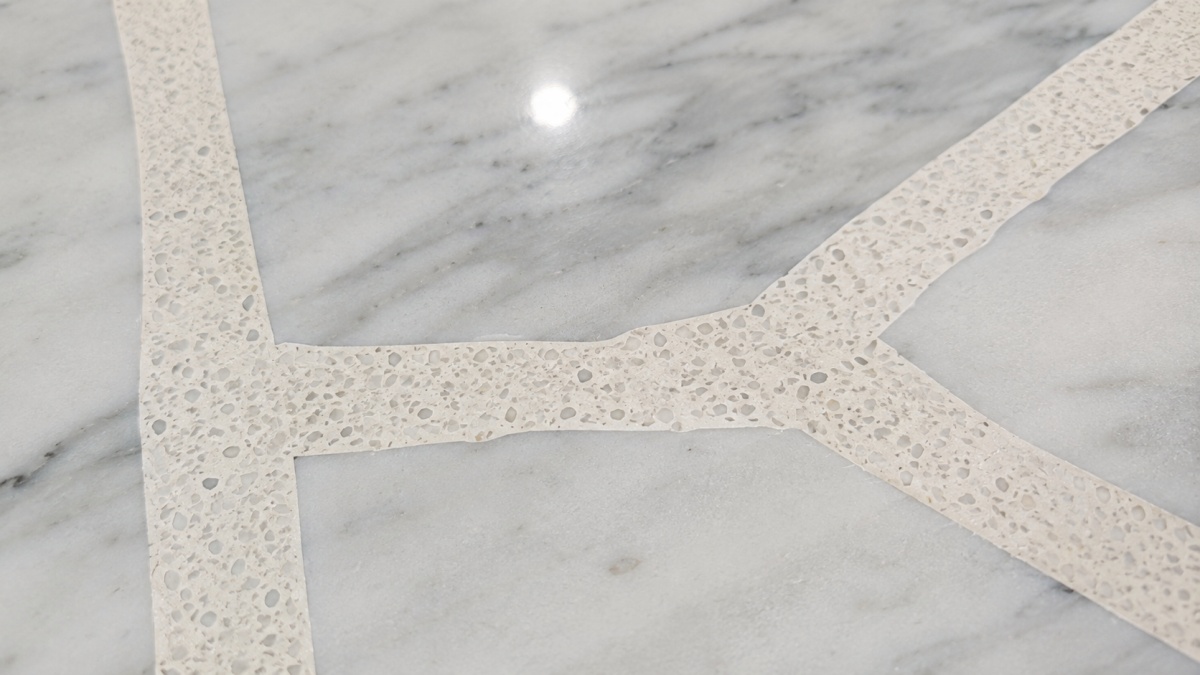
This contrast is important. If the inlay were metal, the design would become more decorative and more dramatic. If the surface were only marble, the piece would feel more conventional. By using terrazzo with marble, the tabletop keeps a soft material language while still creating a strong graphic structure.
For interior designers, this gives the surface flexibility. It can work with warm wood, bronze details, neutral fabrics, light walls, and modern furniture. It can also act as a quiet feature piece in spaces where the design needs texture but not visual noise.
Why This Type of Custom Tabletop Requires Careful Fabrication
A tabletop like this is not only about choosing two attractive materials. The real challenge is how the materials meet each other.
Marble and terrazzo have different visual behavior. Marble has natural veins and translucent depth. Terrazzo has particles, aggregates, and a more composite appearance. When the two are used together, the fabrication team has to control the joint lines, surface level, polishing consistency, and edge treatment.
The uploaded photos show several important fabrication points:
The top surface is polished and reflective, which means the joint areas must be processed carefully. On a polished surface, unevenness or poor transitions are easy to notice.
The terrazzo inlay lines are visible across the full tabletop, so the line layout must be considered before cutting and assembly. If the line rhythm is too random, the surface can look messy. If it is too mechanical, it loses the natural design effect.
The edges are rounded, giving the tabletop a softer furniture-grade finish. This matters because a tabletop is touched and viewed closely. The edge cannot feel like a rough construction panel.
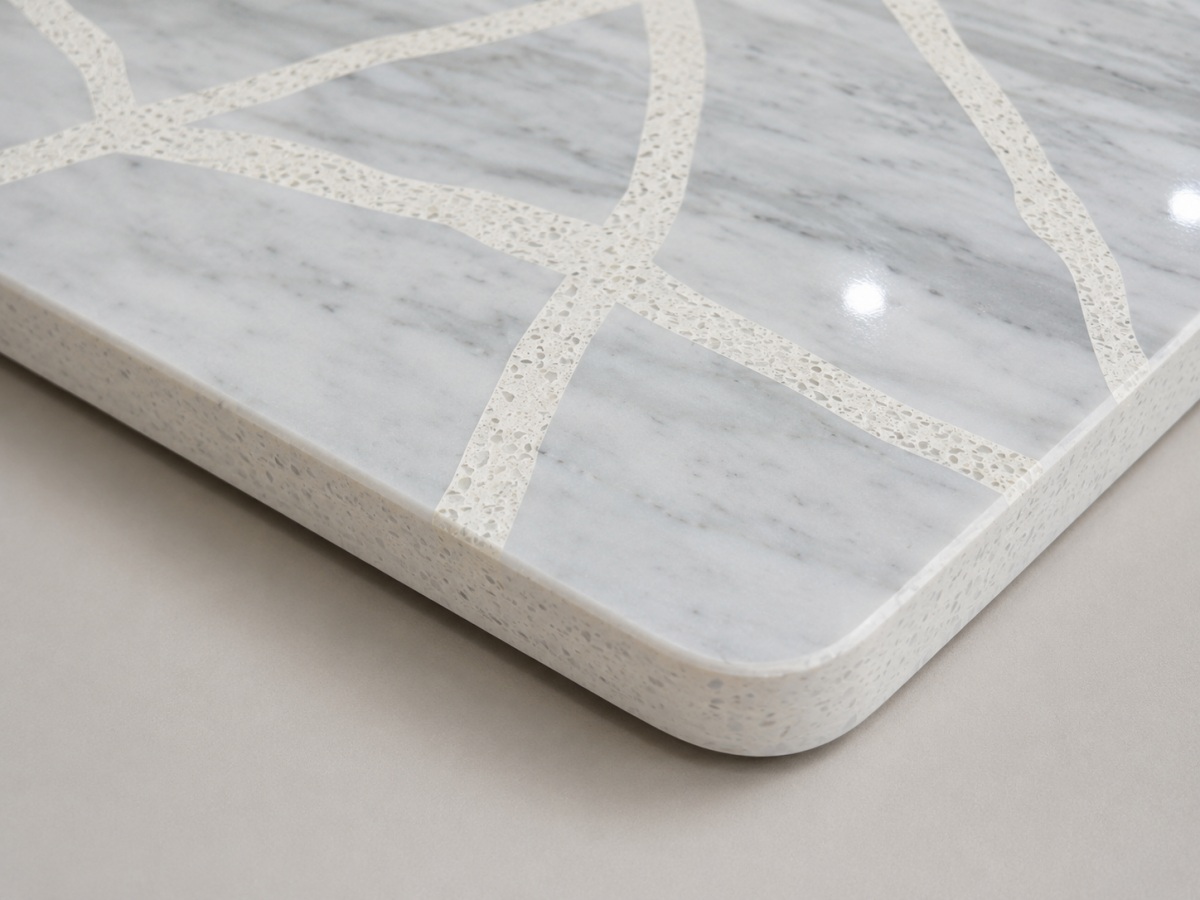
These details are where custom stone fabrication becomes different from standard slab supply. A project buyer is not only buying material. They are buying layout control, processing accuracy, finish consistency, and the ability to turn a design idea into a usable surface.
Design Value for Interior and Furniture Projects
This terrazzo and marble mosaic tabletop is especially suitable for projects where a single furniture piece needs to carry part of the design identity.
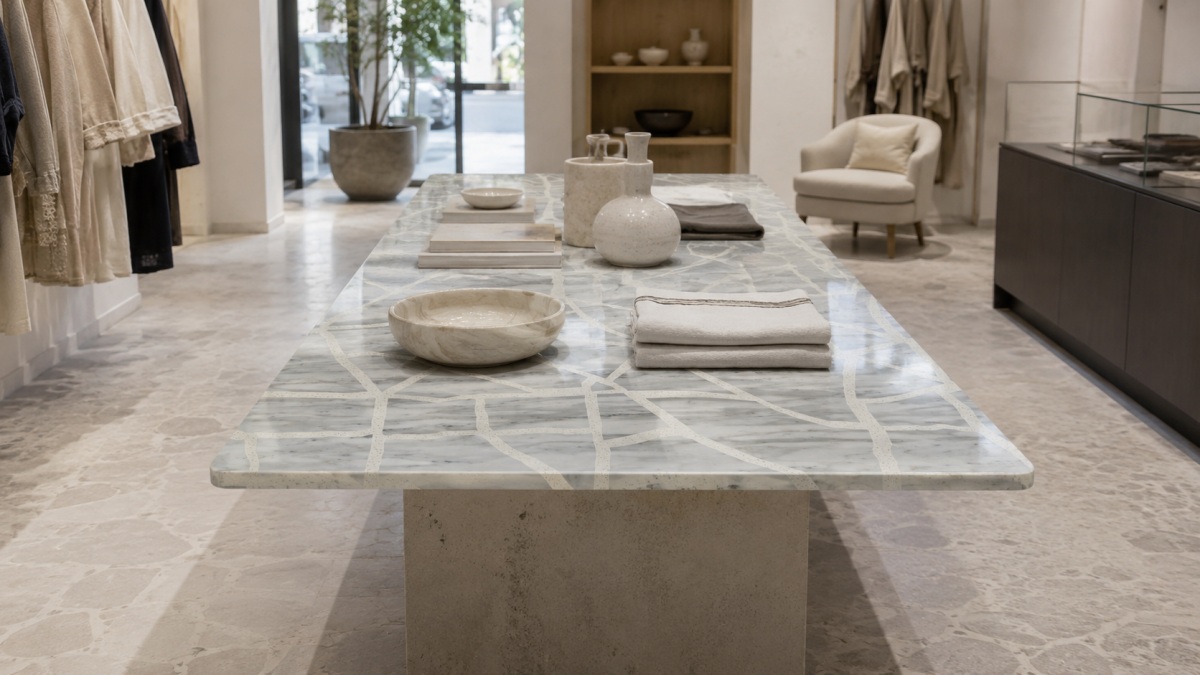
In a hotel lounge, it could work as a central coffee table or side table surface. In a restaurant, it could become a custom dining or display tabletop. In a retail or gallery-like interior, it could be used as a feature counter surface. In a private residence, it could work as a refined furniture piece that connects stone, fabric, wood, and metal elements.
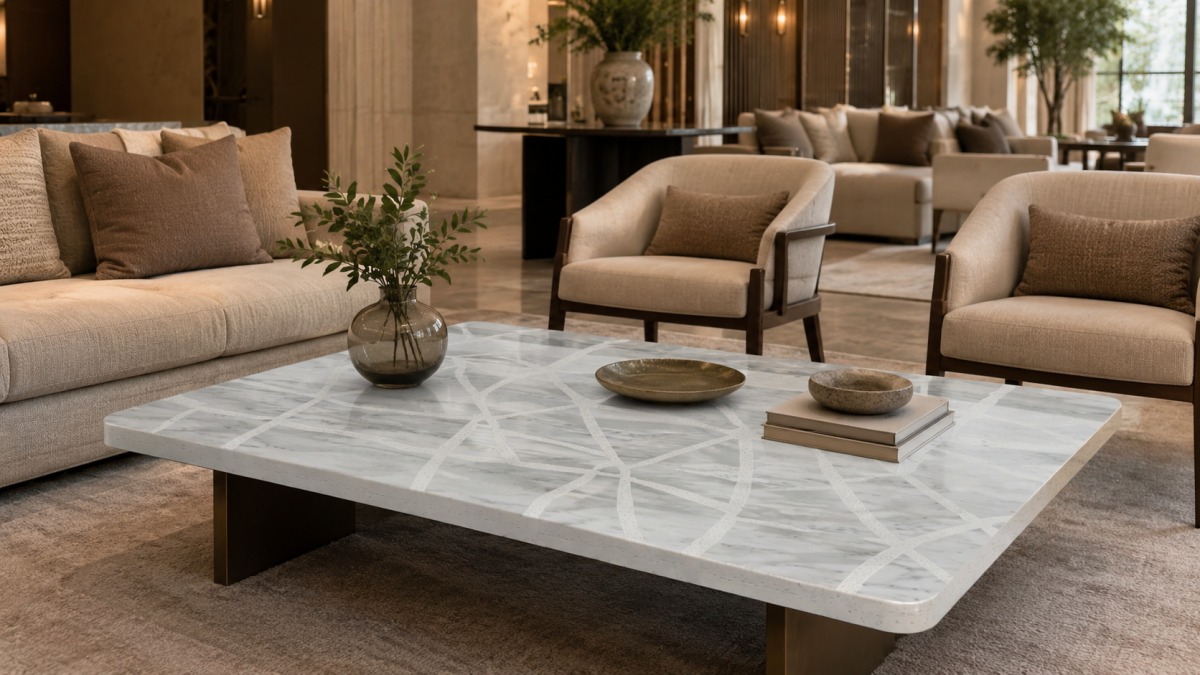
The design has enough visual interest to be memorable, but it is not so strong that it overwhelms the space. The grey white marble keeps the surface calm. The light terrazzo inlay gives the tabletop structure and movement. The polished finish adds depth and a clean reflective quality.
For project teams, this is a practical advantage. A custom stone tabletop can become a small but high-impact element in an interior scheme. It does not require the budget or installation scale of a full stone wall or floor, but it still communicates material quality and design intention.
What Buyers Should Confirm Before Ordering Similar Custom Stone Tabletops
For similar terrazzo and marble tabletop projects, several details should be confirmed before production.
First, the design drawing should define the approximate line layout, material ratio, edge shape, thickness, and final use. Irregular design does not mean uncontrolled design. A good irregular pattern still needs proportion and direction.
Second, the buyer should confirm whether the tabletop will be used in a hospitality space, residential space, restaurant, office, or display area. Different use conditions may influence the recommended finish, edge profile, protection method, and packing method.
Third, the final surface effect should be reviewed through material samples or close-up photos. Marble veining and terrazzo particles can look different under different light. For custom furniture pieces, close-range viewing matters.
Fourth, packing should be considered early. A polished custom tabletop with finished edges should be protected carefully during export or delivery. Foam protection, corner protection, and stable wooden crating are important for reducing damage risk.
These steps are not complicated, but they help prevent common problems: mismatched expectations, unclear pattern layout, edge damage, surface scratches, and installation-site uncertainty.
Aoli Stone’s Role in Custom Stone Fabrication
Aoli Stone supplies natural stone, artificial stone, terrazzo, quartz, limestone, and other project materials for international buyers. For custom tabletop and furniture surface projects, the value is not only in material selection. It is also in turning drawings, samples, and design references into finished stone pieces that are practical for real interiors.
This terrazzo and marble mosaic tabletop shows one specific direction: using mixed stone materials to create a custom decorative surface with architectural character.
For buyers working on hotel, restaurant, retail, villa, or commercial interiors, this type of custom stone fabrication can provide a more personal design result than standard slabs. It also allows designers to control the visual rhythm of a space through smaller but highly visible stone elements.
To explore more stone materials and custom fabrication possibilities, readers can visit Aoli Stone’s product categories, project references, and manufacturing capability pages.



 IPv6 network supported