English
 Español
 Português
 عربي
عربي 한국어
한국어

Terrazzo and Marble Composite Tile Project | Design-Led Surfaces by Aoli Stone
Explore a design-led terrazzo and marble composite tile project by Aoli Stone, featuring a white terrazzo base with embedded marble inserts for walls, tables, vanities, and statement commercial interiors.
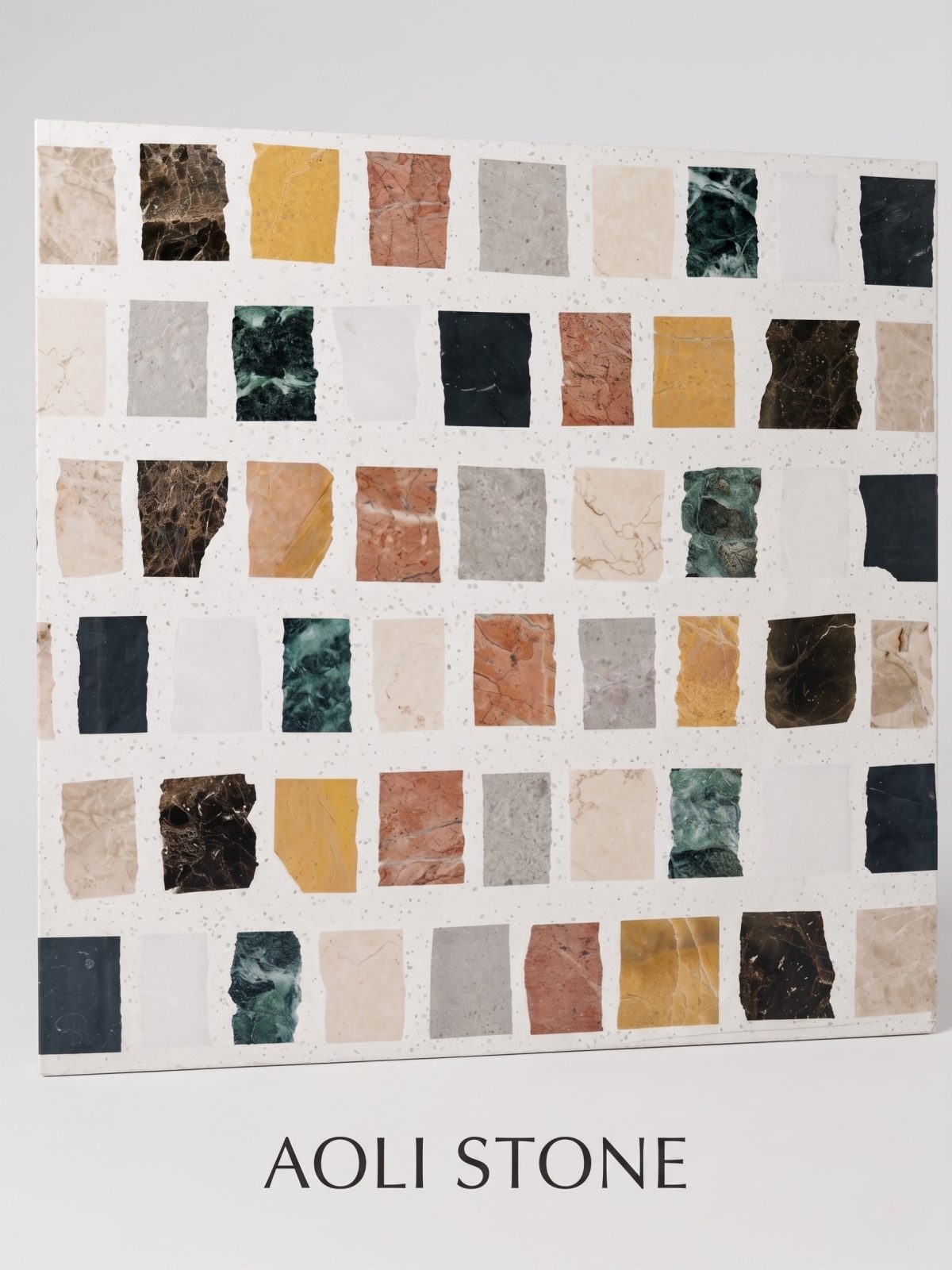
A Design-Led Terrazzo and Marble Composite Tile Project
Some materials are chosen for performance.
Some are chosen for decoration.
And some are chosen because they can quietly change the whole character of a space.
This terrazzo and marble composite tile by Aoli Stone belongs to the third category.
At first glance, the material looks simple: a white terrazzo base with small embedded marble blocks arranged in a calm, grid-like rhythm. But once it is applied in space — on feature walls, vanity fronts, tabletops, reception counters, or even larger hospitality surfaces — it begins to do something more interesting. It gives the project a sense of order, craft, and visual intelligence.
This is not a loud material.
It is a material with presence.
One reason this product stands out is that it does not rely on dramatic veining or oversized fragments to attract attention.
The design is more controlled than that.
The white terrazzo background acts like a calm architectural canvas. Inside it, the embedded marble squares introduce color, texture, and irregularity in a way that feels deliberate rather than random. Cream, beige, grey, dark brown, green, black, and warm rust tones all appear, but none of them dominate. The composition feels curated.
That balance is what gives the product its design value.
It feels suitable for:
In other words, this is not just a terrazzo tile.
It behaves more like a designed surface system.
Why the White Terrazzo Background Matters
If the base were darker, the whole pattern would feel heavier.
If the base were louder, the marble inserts would lose clarity.
The white terrazzo background is what makes the composition work.
It gives the surface:
This allows the embedded marble pieces to read almost like small material accents suspended in a quieter field.
That is why the product feels sophisticated rather than busy.
For designers, this matters a lot. In many interiors, the challenge is not adding more pattern. The challenge is adding enough character without disturbing the rest of the space. This tile solves that problem well.
The marble inserts are small, but their effect is not.
Because they are embedded rhythmically across the surface, they create a subtle visual conversation between repetition and variation. Each piece contributes texture and color, but the overall result remains controlled.
This gives the material a few unusual strengths:
From a distance, the surface feels orderly and graphic.
Up close, it becomes richer, more tactile, and more crafted.
It can succeed on a tabletop, but also on a feature wall or long hospitality counter.
Wood, bronze, soft plaster, linen, warm lighting, brushed metal, and natural stone all work well beside it.
That is one of the reasons this product has real project value.
It is decorative, but it is also cooperative.
The strongest projects are often built around one or two memorable material moments.
This terrazzo and marble composite surface is especially effective when used in those moments:
The application images make this clear.
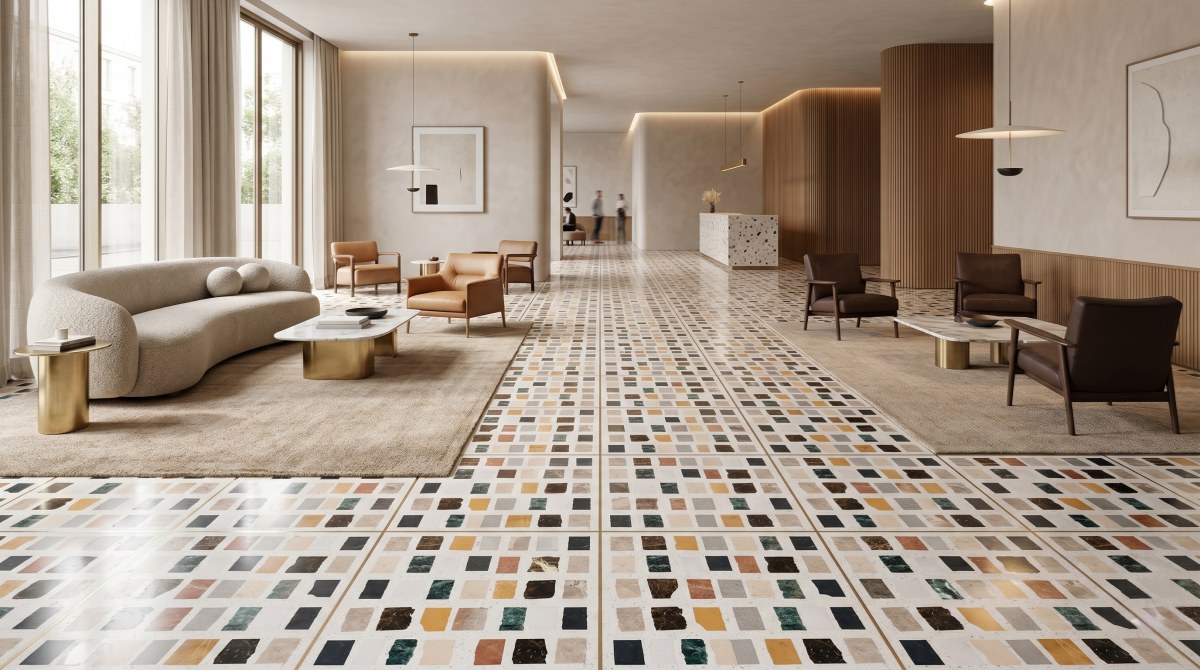
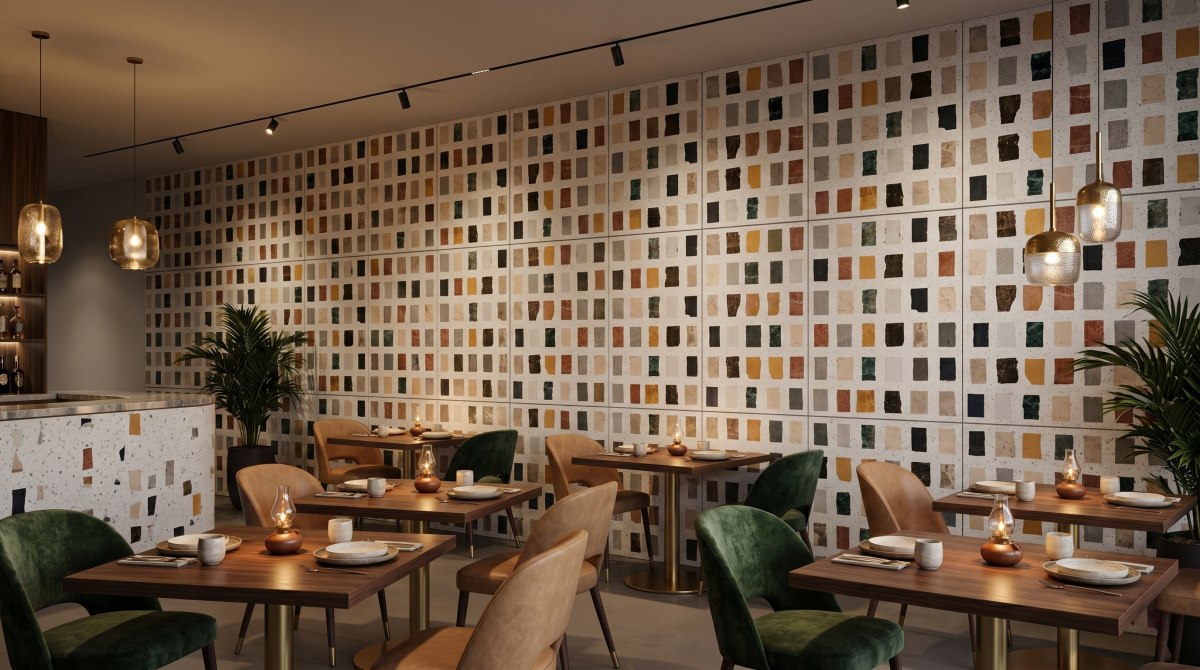
Whether used on a vanity, a small table, a large wall, or a broader public interior, the material remains recognizable. It does not disappear into the background, but it does not overpower the room either.
That is rare.
Most surface materials are passive.
You see them once, and you understand them immediately.
This one is different.
People tend to look twice.
First, they see the whole composition.
Then they start noticing the individual stone pieces.
That makes the surface more interactive in a subtle, architectural way.
It invites questions:
This kind of visual curiosity is valuable in real interiors.
It helps a project feel considered and memorable.
From both a design and project perspective, this material is especially suitable for spaces that want a stronger identity without becoming too formal.
Restaurants, cafés, lounge areas, boutique hotels, and small reception spaces can all benefit from a surface like this. It adds personality while staying elegant.
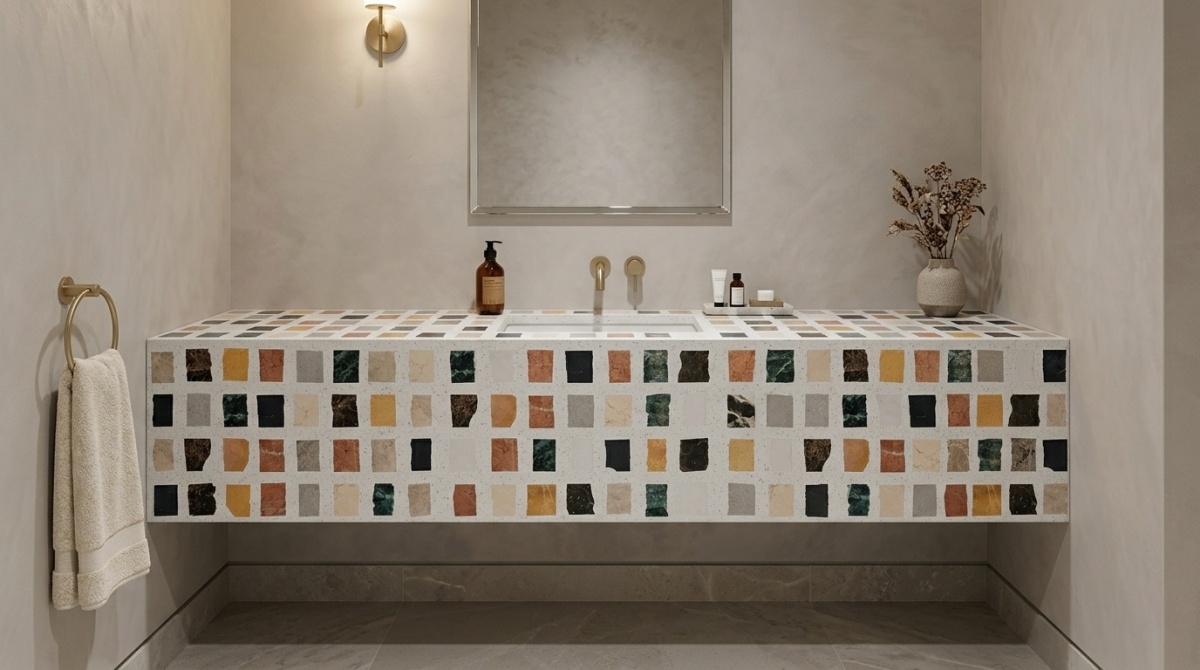
On vanity fronts or counter surrounds, the product creates a crafted, almost collectible look.
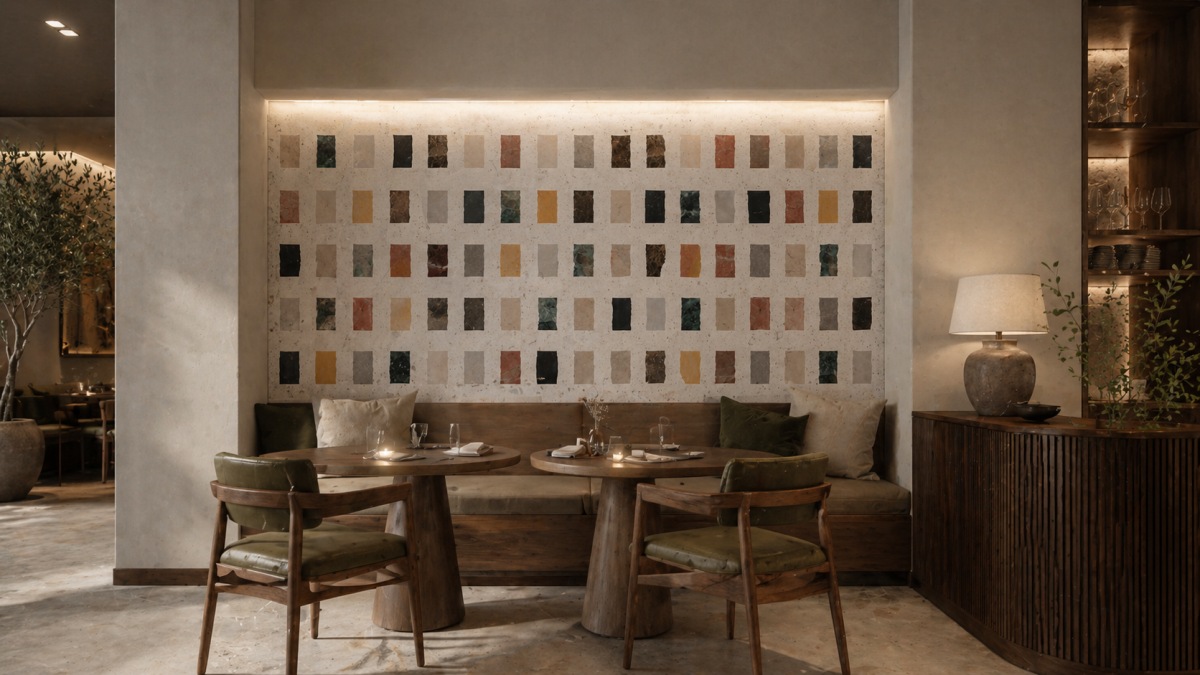
Used on a wall, it can create a calm decorative field with more rhythm than plain stone or standard terrazzo.
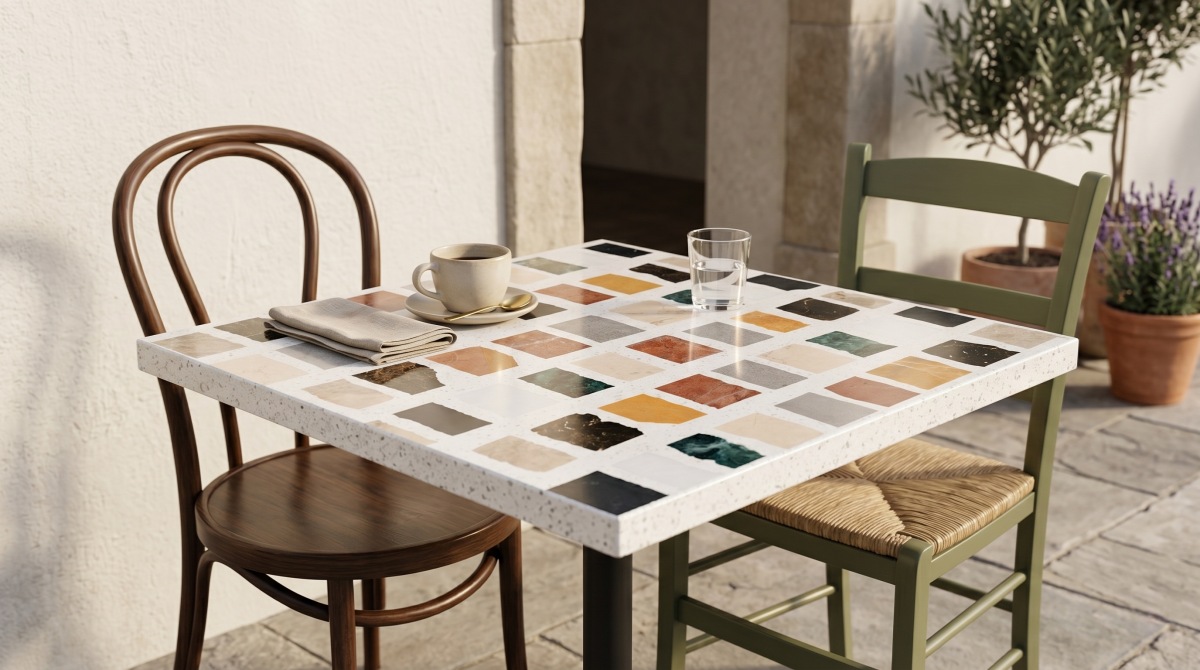
This is one of its strongest directions. The pattern feels naturally suited to smaller furniture-scale applications.
Retail, salon, concept store, and gallery-adjacent interiors can use it to create a more individual and design-conscious atmosphere.
Why This Project Matters for Buyers
For buyers, this project is useful because it opens a wider conversation.
It is not only about choosing one terrazzo color.
It is about asking:
That is exactly where this product becomes interesting.
It sits between:
For serious buyers, that combination is often far more useful than a standard “pretty material.”
This project suggests that Aoli Stone is not only working with stone as a raw material category, but also as a design language.
That matters.
A supplier becomes more valuable when it can help clients move from:
and from:
This terrazzo and marble composite design is a good example of that shift. It shows a willingness to work beyond standard slabs and standard terrazzo looks, toward materials that feel more curated, more project-specific, and more visually intelligent.
If a surface can be:
then why should it be limited to only one use?
This is the kind of product that naturally invites experimentation.
Used on a café table, it feels warm and contemporary.
Used on a vanity, it feels artistic and custom.
Used on a feature wall, it becomes graphic and architectural.
Used in a larger hospitality space, it adds rhythm and identity.
That flexibility is one of its strongest selling points — even if it never needs to say so loudly.
It is a terrazzo and marble composite design tile, using a white terrazzo base with embedded small marble inserts.
It can work in both directions. It is especially effective on feature walls, vanity fronts, counters, and table tops where design character matters.
Because the composition is more curated. The white terrazzo background keeps the surface calm, while the embedded marble pieces add layered color, texture, and crafted visual interest.
Yes. It is particularly suitable for hospitality, retail, cafés, restaurants, reception areas, and other interiors that benefit from a more designed and memorable surface.
Looking for a terrazzo surface that feels more designed, more interactive, and more memorable in real space?
Talk to Aoli Stone about terrazzo and marble composite applications for feature walls, vanities, counters, furniture tops, and design-led hospitality interiors.



 IPv6 network supported