English
 Español
 Português
 عربي
عربي 한국어
한국어

A terrazzo price difference is rarely caused by one simple factor. Two suppliers may both quote “terrazzo tiles” or “terrazzo slabs,” but the binder type, aggregate selection, chip size, density, thickness, finish, cutting scope, packing method, and sample approval process may be completely different. Before choosing the lower terrazzo supplier quotation, buyers should first ask a more useful question: are we comparing the same specification, or only comparing the same product name?
Price cannot be fairly compared until the buyer can compare the specification behind it.
For importers, contractors, designers, and commercial project buyers, terrazzo is especially easy to misunderstand because its visual identity comes from many small details. A different base color, larger aggregate, denser body, thicker tile, better finishing control, or stronger export packing may not look dramatic on a quotation sheet, but these details can change cost, installation risk, and final project acceptance.
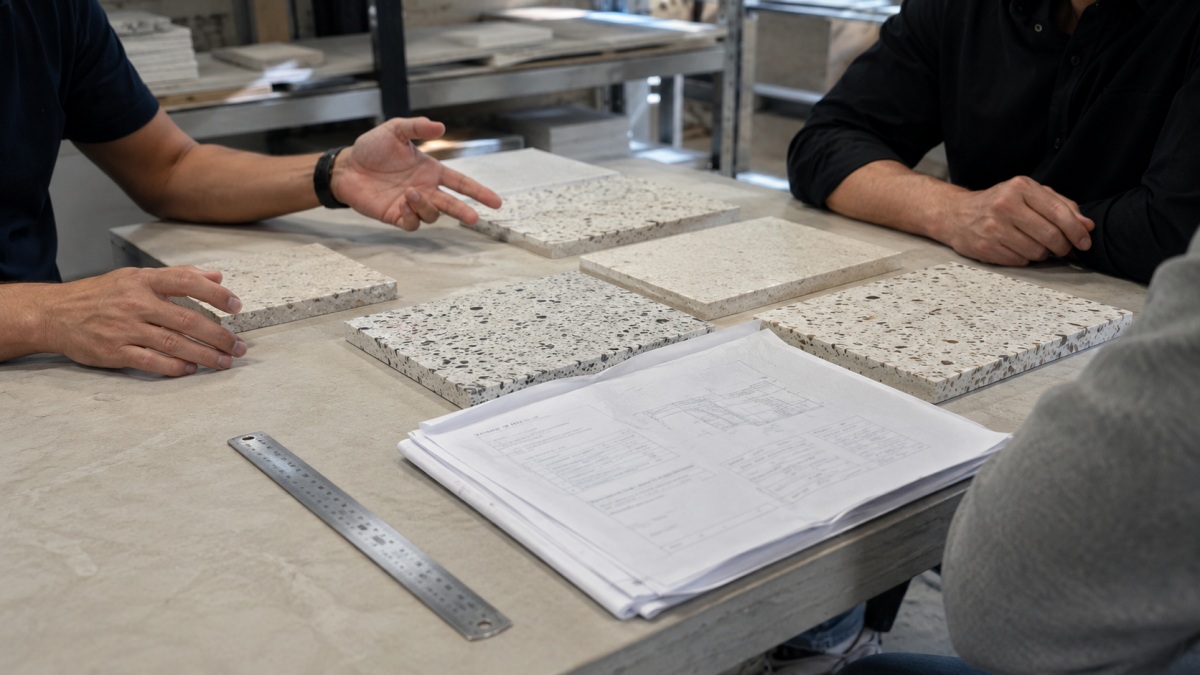
Terrazzo is not a single fixed material. It is an engineered surface made from a binder and visible aggregates, then processed into slabs, tiles, or cut-to-size pieces for floors, walls, counters, stairs, reception areas, retail interiors, hotels, restaurants, and public spaces.
That means the word “terrazzo” on a quotation is only the beginning. A buyer still needs to know what kind of terrazzo is being quoted.
A low price may come from efficient production. It may also come from a thinner body, simpler chip mix, lower polishing requirement, less cutting work, lighter packing, or unclear approval standard. The problem is not that a lower price is always wrong. The problem is that many quotations do not explain what has been included and what has been removed.
For buyers reviewing terrazzo slabs, tiles, and cut-to-size pieces, the safest approach is to compare the actual specification line by line.
One of the first price drivers is the binder type. Cement-based terrazzo and resin-based terrazzo may look similar in a small photo, but they can follow different production logic, curing requirements, thickness ranges, color control expectations, and application discussions.
A buyer should not compare cement terrazzo vs resin terrazzo price without confirming:
· Which binder is being used?
· Is the product intended for floor, wall, countertop, stair, or decorative panel use?
· What thickness is being quoted?
· What finish is required?
· Is the project indoors, semi-outdoors, or exposed to special conditions?
· Does the supplier understand the installation and maintenance expectations?
This does not mean one binder is always better than the other. It means the binder must match the project use. When binder type is not clearly stated, the quotation is incomplete.
The cheapest terrazzo quotation is not always dangerous. It becomes dangerous when nobody knows what has been removed from the specification.
Aggregate is not just decoration. It is one of the strongest reasons terrazzo prices differ between suppliers.
Different projects may use marble chips, stone chips, glass chips, shell-like particles, recycled aggregates, or mixed decorative aggregates. The cost changes depending on material type, sourcing, grading, color control, waste, and production difficulty.
A simple small-chip grey terrazzo tile is not the same as a carefully balanced large-chip terrazzo slab with controlled color tone and visible aggregate distribution. If a project requires a special aggregate color, a rare chip combination, or a more balanced layout across a large area, the supplier may need more material selection and production control.
Buyers should ask:
· What aggregate type is included in the quotation?
· Is the aggregate natural stone, glass, recycled material, or mixed material?
· Is the chip color standard or custom?
· Is the chip distribution random, controlled, dense, or sparse?
· Will the approved sample be used as the production reference?
A quotation that only says “terrazzo” does not answer these questions.
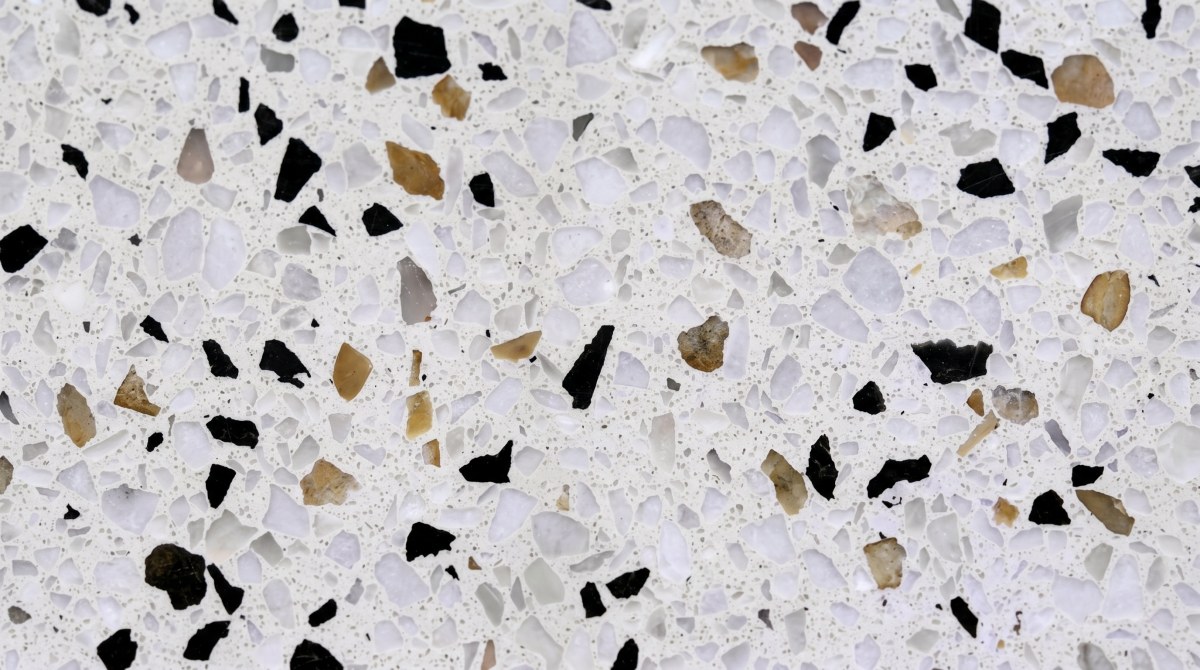
Chip size is one of the most visible terrazzo cost factors, but it is often not written clearly enough in quotations.
Small chips are usually easier to distribute evenly. Large chips can create a stronger design character, but they may require more careful material selection, mixing, surface processing, and visual control. Large-chip terrazzo may also create more discussion around cutting edges, exposed aggregate, surface uniformity, and sample approval.
A terrazzo chip size cost difference is not only about the raw aggregate. It can also involve:
· sorting and grading chips
· controlling visual balance
· avoiding over-concentration in one area
· reducing unacceptable surface gaps
· handling edge exposure after cutting
· matching approved sample expectations
This is why two terrazzo samples with the same base color can still have very different prices.
Terrazzo buyers often focus on color first, then finish, then price. Density is less visible, but it matters.
A denser terrazzo body usually requires better material ratio control, production consistency, curing or forming control, and inspection. Poor body quality may not be obvious in a small photo, but it can affect cutting, edge quality, polishing result, packaging risk, and installation confidence.
Buyers do not need to become factory engineers, but they should ask practical questions:
· Is the tile or slab body compact and stable enough for the intended use?
· Are there visible voids, weak edges, or inconsistent areas?
· How does the supplier inspect the surface and body before packing?
· Can production photos or inspection photos be provided before shipment?
For project orders, this is where stone fabrication capability becomes part of the real price conversation. The buyer is not only buying a material surface; the buyer is also buying production control.
A supplier who asks difficult questions before quoting may be protecting the project, not delaying it.
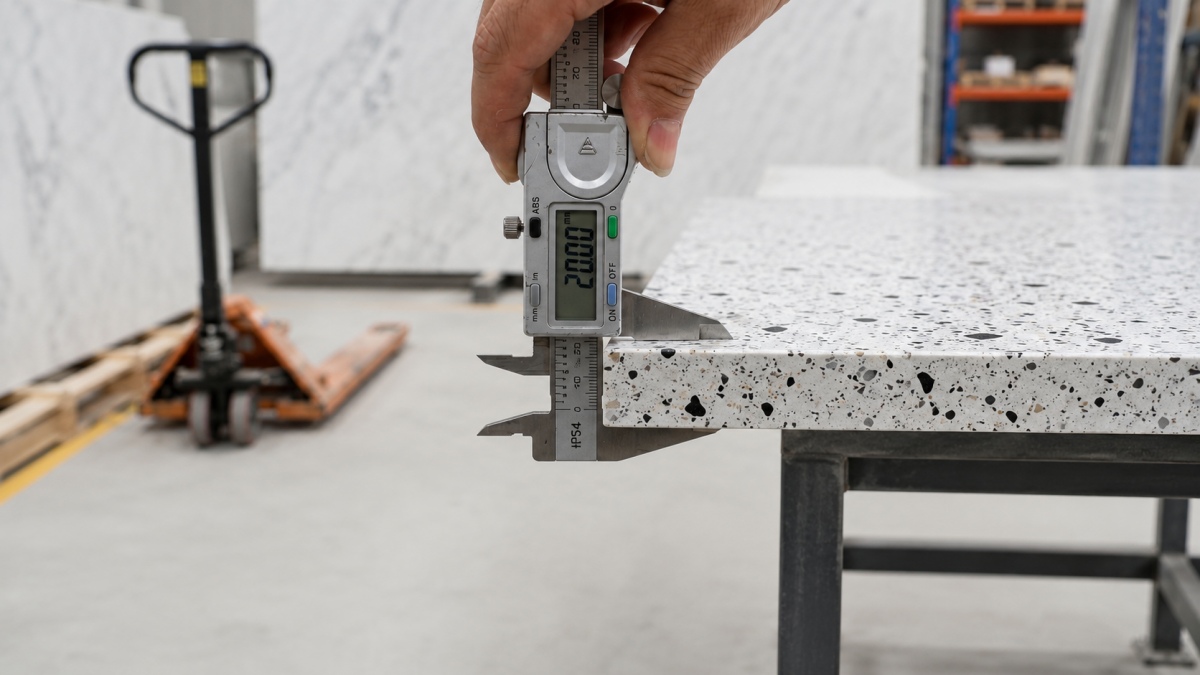
Thickness is one of the most direct reasons for terrazzo price difference.
A 12 mm tile, 16 mm tile, 18 mm tile, 20 mm tile, or thicker cut-to-size piece may serve different project needs. Thickness affects raw material use, production weight, cutting behavior, packing quantity, shipping weight, and installation method.
A buyer should never compare terrazzo tile thickness and finish as if they were small details. They can change the full project cost.
Before comparing prices, confirm:
· What exact thickness is quoted?
· Is the thickness nominal or controlled within a tolerance?
· Is the thickness suitable for floor, wall, stair, counter, or custom use?
· Does the thickness affect packing quantity and freight?
· Does the installer agree with this thickness for the substrate and fixing method?
If the first quotation is for a thinner tile and the second quotation is for a thicker tile, the unit prices should not be compared as equal offers.
Terrazzo finish is not only a visual choice. It affects production labor, inspection standard, slip discussion, maintenance expectation, and acceptance criteria.
Common project discussions may include honed, polished, matte, brushed, or anti-slip surfaces, depending on application and project requirement. A commercial floor may need a different finish conversation from a wall panel, counter surface, or decorative feature.
A higher finish requirement may involve more grinding, polishing, surface correction, or rejection control. A lower-cost quotation may be based on a simpler finish or a looser acceptance standard.
Buyers should confirm:
· What finish is included?
· Is the surface matte, honed, polished, brushed, or anti-slip?
· Is the finish suitable for the application area?
· What level of pinholes, small pores, or surface variation is acceptable?
· Will the approved sample define the finish standard?
The question is not only “Is the terrazzo polished?” The better question is: “What exact surface standard will production follow?”
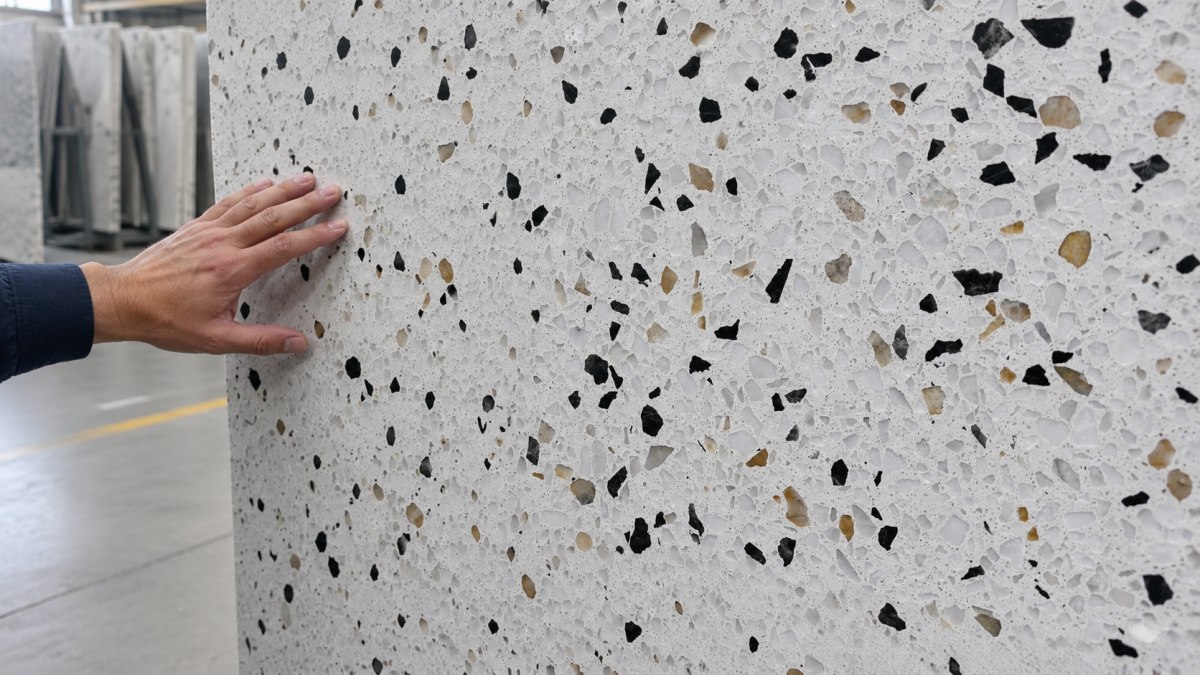
Many terrazzo quotations look cheaper because they only include standard tiles or basic slab supply. But project orders often require more than that.
Cut-to-size terrazzo may involve:
· exact floor tile sizes
· wall panel sizing
· stair tread and riser pieces
· counter pieces
· reception desk panels
· skirting
· edge finishing
· grooves or special cuts
· hole drilling
· shop drawing coordination
· dry layout or area labeling
These details affect labor, waste, packing method, and inspection time. If one supplier includes cutting and edge work while another only quotes raw slab or standard tile, the prices are not comparable.
For commercial interiors and terrazzo stone projects , buyers should clarify whether the quotation is for material only or for project-based processing.
A low unit price can become expensive when cutting, finishing, labeling, packing, and replacement risk appear later.
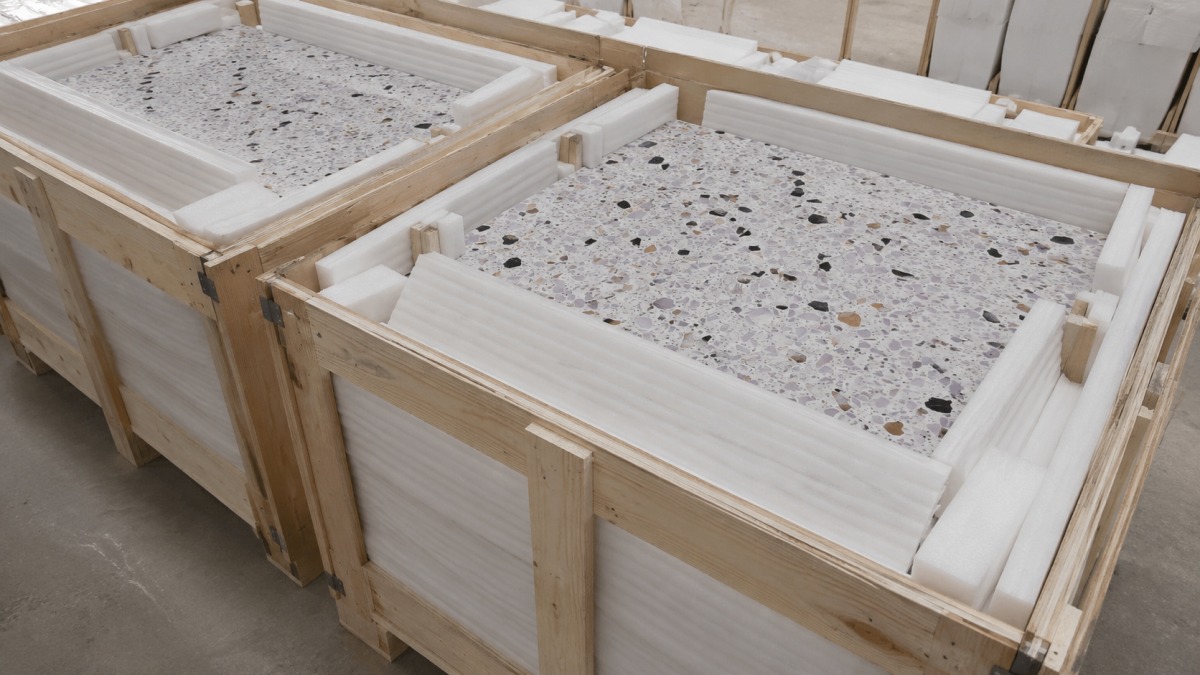
Packing is sometimes treated as a logistics detail, but for terrazzo export orders it is part of the real product cost.
Good packing may require wooden crates or pallets, foam protection, separators, corner protection, area labels, dry storage conditions, and careful loading. Heavy terrazzo slabs, large tiles, or cut-to-size pieces need suitable packing to reduce breakage, edge damage, surface scratching, and confusion at site.
A cheaper quotation may exclude stronger packing, use simpler protection, or fail to separate materials clearly by area. That may reduce the first invoice, but increase the project risk.
Before accepting a terrazzo supplier quotation, ask:
· What packing method is included?
· Are tiles or pieces separated with protective material?
· Are cut-to-size pieces labeled by area or drawing number?
· Are crates suitable for export handling?
· Will packing photos be provided before shipment?
· Is the packing method suitable for the product size and thickness?
For project stone supplier coordination, packing should be discussed before production is completed, not after the material is already finished.
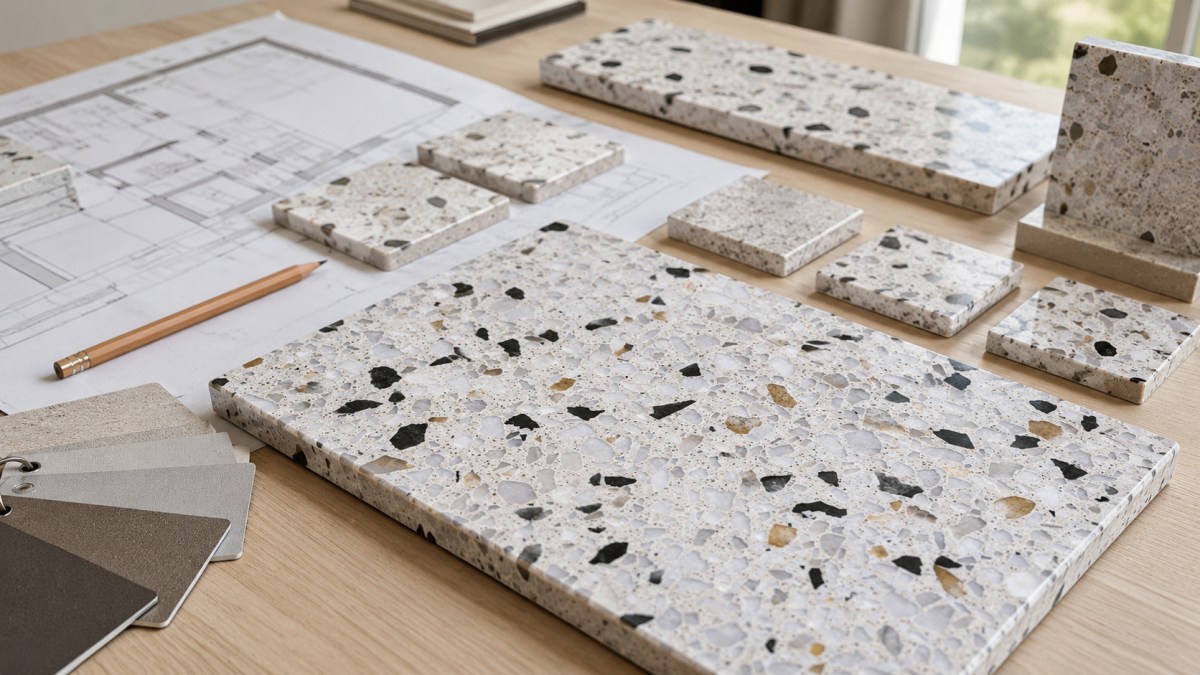
Terrazzo sample approval before production is not a small decorative step. It is the reference point for color, aggregate size, chip distribution, surface finish, and buyer expectation.
Without clear sample approval, both sides may believe they are right. The buyer may expect the production to match the sample closely. The supplier may treat the sample as a general color direction. This gap can create disputes after mass production.
A serious terrazzo approval process should clarify:
· Is the sample only for color direction or final approval?
· What chip size is approved?
· What aggregate density is acceptable?
· What base color range is acceptable?
· What finish level is approved?
· Are small pores or natural aggregate differences acceptable?
· Will bulk production photos be compared with the approved sample?
· Who has authority to approve before shipment?
The approved sample should not be treated as a souvenir. It should be treated as a project control document.
Before choosing a terrazzo supplier, buyers should compare these points side by side:
1. Binder type
Is it cement-based, resin-based, or another specified system?
2. Aggregate type
What chips or aggregates are included?
3. Chip size
Is the quotation based on small, medium, large, or custom aggregate?
4. Aggregate distribution
Is the visual effect sparse, balanced, dense, random, or controlled?
5. Base color
Is it standard, custom, or batch-sensitive?
6. Thickness
What exact thickness is quoted?
7. Finish
Is it honed, polished, matte, brushed, or anti-slip?
8. Application area
Is it for flooring, wall panels, counters, stairs, public interiors, or decorative use?
9. Cutting scope
Is the price for standard sizes, slabs, tiles, or cut-to-size production?
10. Edge and detail work
Are edges, grooves, holes, stair details, or special shapes included?
11. Packing
Is export packing included, and is it suitable for the size and weight?
12. Sample approval
What sample will define production acceptance?
13. Inspection photos
Will the supplier provide production, finish, packing, or loading photos?
14. Replacement and risk discussion
What happens if the production does not match the agreed standard?
This checklist does not make the quotation more complicated. It makes the price more honest.
A higher terrazzo price may be reasonable when it includes better specification control, clearer aggregate selection, stronger body quality, thicker material, more demanding finish, project cutting, safer packing, or a stricter sample approval process.
But a higher price is not automatically better either. A professional buyer should ask every supplier to explain the cost structure. The goal is not to choose the highest price. The goal is to choose the clearest and most suitable offer for the project.
A useful quotation should tell the buyer what is included, what is excluded, what is assumed, and what must be confirmed before production.
A lower terrazzo price may be acceptable when the project requirement is simple, the color is standard, the chip size is common, the thickness is suitable, the finish is basic, the order is standard size, and the packing method is still safe.
In other words, lower price is not the enemy. Unclear price is the enemy.
For standard commercial use, a practical terrazzo option may be perfectly reasonable if the buyer understands the material, confirms the specification, approves the sample, and accepts the finish standard.
The warning is simple: do not ask a basic terrazzo quotation to perform like a custom project specification.
Terrazzo prices differ because suppliers may quote different binder types, aggregate materials, chip sizes, density levels, thicknesses, finishes, cutting scopes, packing methods, and approval standards. The product name may look similar, but the real specification may be different.
Not always. Cement terrazzo vs resin terrazzo price depends on project requirement, thickness, aggregate, finish, production method, order quantity, and application. Buyers should compare the complete specification instead of assuming one system is always cheaper.
Yes. Chip size can affect aggregate selection, production control, surface finishing, cutting behavior, and visual acceptance. Larger or more controlled aggregate designs may require more careful production and inspection.
Yes. Terrazzo sample approval before production helps define base color, aggregate size, chip distribution, finish level, and acceptable variation. Without a clear sample standard, price disputes and production misunderstandings are more likely.
Yes. Export packing affects breakage risk, edge protection, shipment safety, and site organization. A quotation with weak packing may look cheaper at first but create higher risk later.
Send the intended application, size, thickness, finish, binder preference if known, chip size, color reference, quantity, packing requirement, drawings if available, and sample approval expectation. A clearer RFQ usually leads to a more useful quotation.
Terrazzo price comparison should never stop at the unit price. A serious buyer should compare the binder, aggregate, chip size, density, thickness, finish, cutting scope, packing method, and sample approval process behind the number.
If you are preparing a terrazzo RFQ for a commercial interior, hospitality project, retail space, public area, or cut-to-size order, Aoli Stone can help review the specification and provide a quotation based on clear project requirements. Contact Aoli Stone to discuss terrazzo slabs, tiles, samples, finishing, cutting, packing, and export coordination before production starts.



 IPv6 network supported