English
 Español
 Português
 عربي
عربي 한국어
한국어

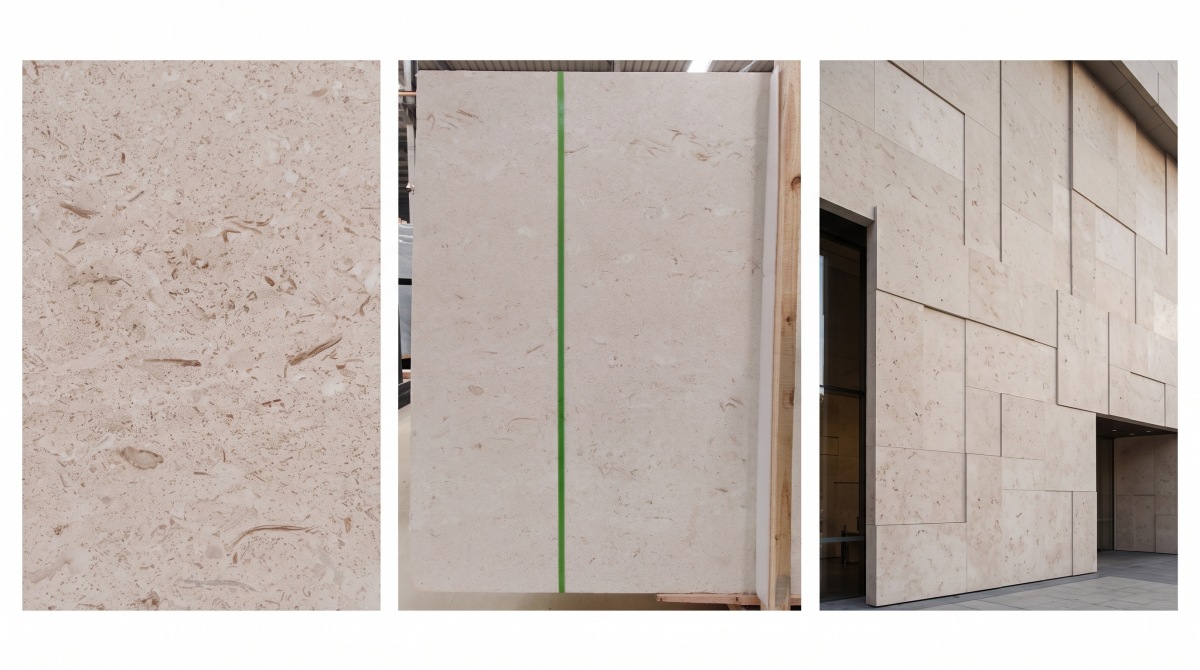
A natural-stone photograph can be accurate and still be incomplete.
A close-up of Moonlight Beige Limestone can clearly show shell fragments, fine grains, small pores and the selected surface finish. What it cannot show is how often those features repeat across a full panel, whether the background remains calm across several square metres or how the stone reads once joints, shadow and viewing distance enter the picture.
For large-area limestone selection, Aoli Stone recommends a simple three-distance review: approximately 20 centimetres, 1 metre and 5 metres or more.
Each distance answers a different buyer question.
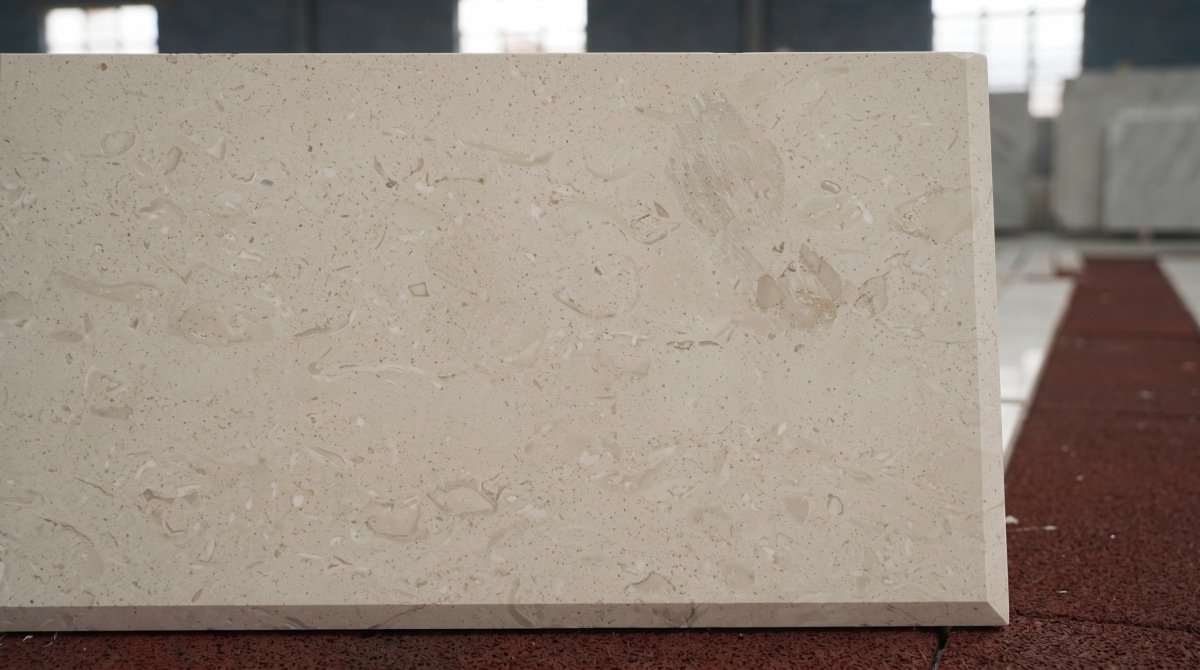
The closest view is the inspection view. It should show the material honestly rather than turning it into an abstract texture.
At this distance, review:
· Shell-like fossils and fossil fragments
· Fine sedimentary grains
· Natural pores and open features
· Mineral speckles
· Local tone changes
· Surface sheen and tool marks
· Filled or repaired areas if present
This view helps the architect or buyer understand the stone’s natural character. It can also reveal whether a finish sample is representative.
However, a 20-centimetre image exaggerates the visual importance of individual fossils and pores. A feature that looks prominent in macro photography may almost disappear when the stone is installed across a large wall.
Do not use a close-up alone to judge whether the material will feel busy.
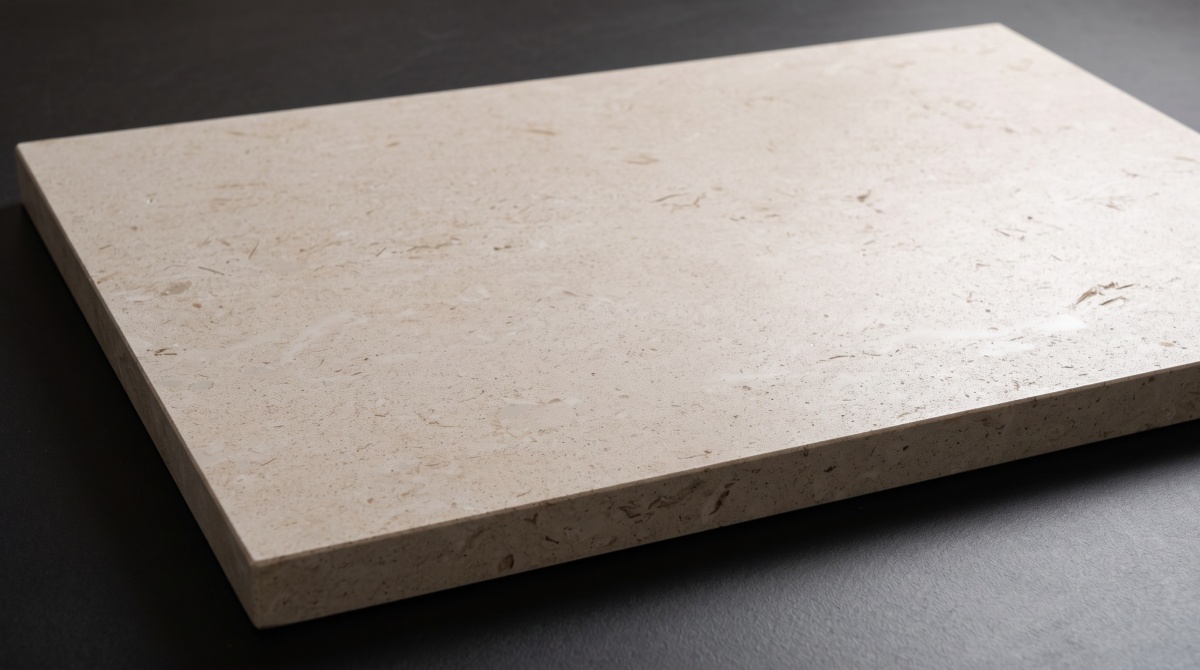
The middle distance is useful for reviewing a sample board, cut-to-size panel or a meaningful section of a slab.
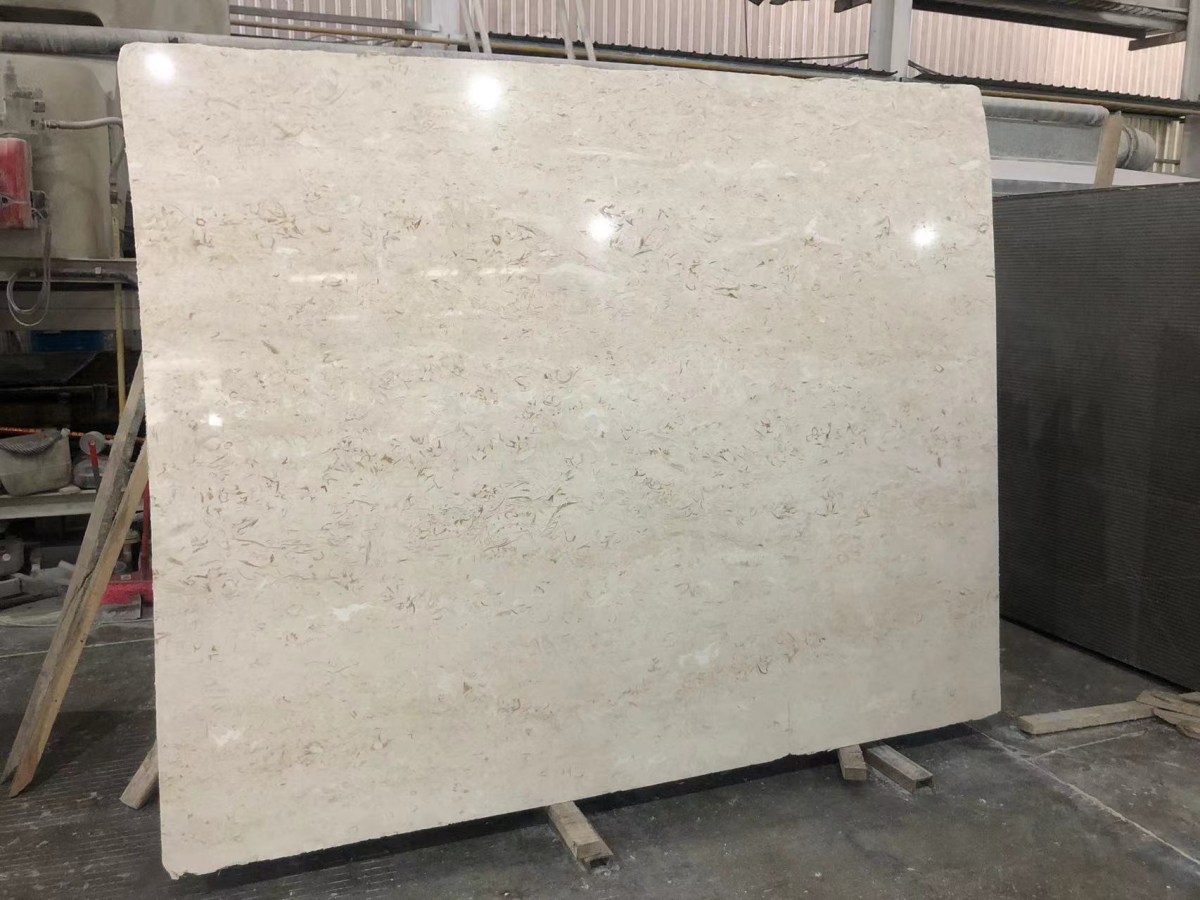
At this distance, individual fossils begin to form an overall distribution. The buyer can assess whether the background feels clean, whether fossil concentration is balanced and whether local pores create an acceptable natural rhythm.
For Moonlight Beige Limestone, this is often where the relationship between the quiet cream-beige background and the fossil detail becomes clearest.
The 1-metre view should answer:
· Is one area noticeably darker or more fossil-rich?
· Does the panel have a directional movement?
· Is the finish consistent across the visible face?
· Are natural features concentrated near an edge or corner?
· Would adjacent pieces need tone grouping?
This view is especially important for window surrounds, profiles, balustrade parts and other components that are normally seen at human distance.
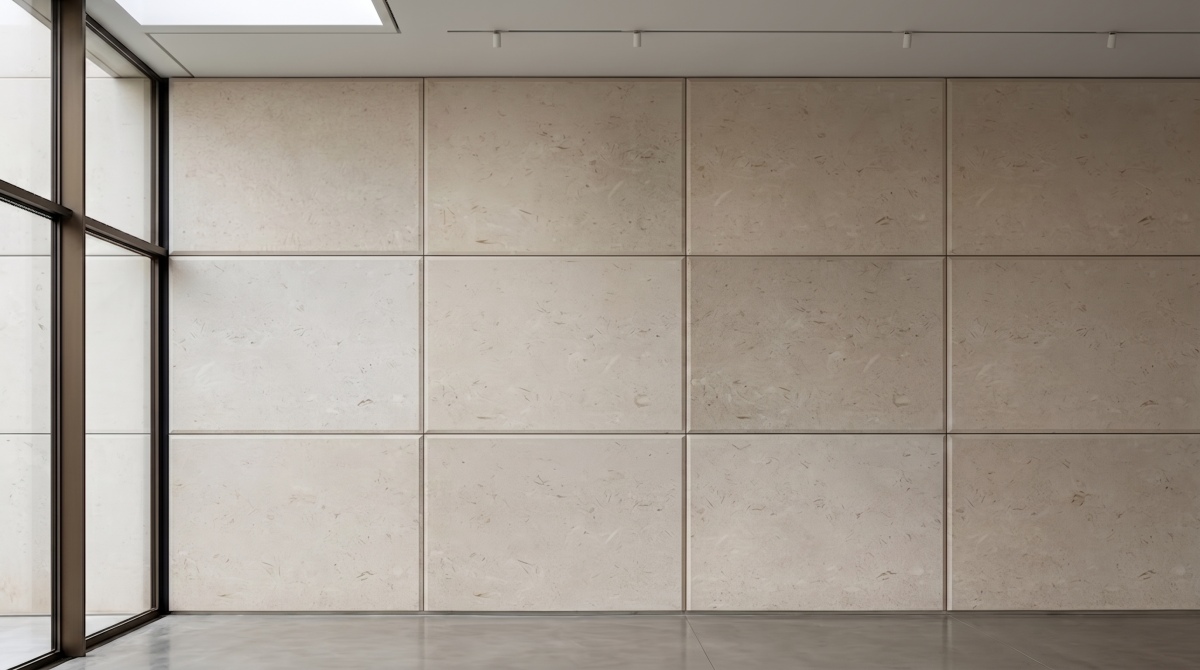
The far view is the design view. It shows whether the stone supports the intended elevation or interior composition.
At architectural distance, the viewer sees the background tone, panel rhythm, joints, projections and shadows before noticing individual fossils. A material that appeared active in close-up may read as calm. A small tone difference that seemed insignificant on a sample can become visible when repeated across a large continuous area.
Review:
· Overall warmth and lightness
· Area-to-area tone shifts
· Joint rhythm and panel scale
· Relationship with windows, metal, plaster, timber and landscaping
· Shadow created by profiles, bands and returns
· Whether the stone remains quiet or becomes visually patchy
This is why an installed project image is useful, provided it is identified honestly as real evidence and the lighting conditions are understood.
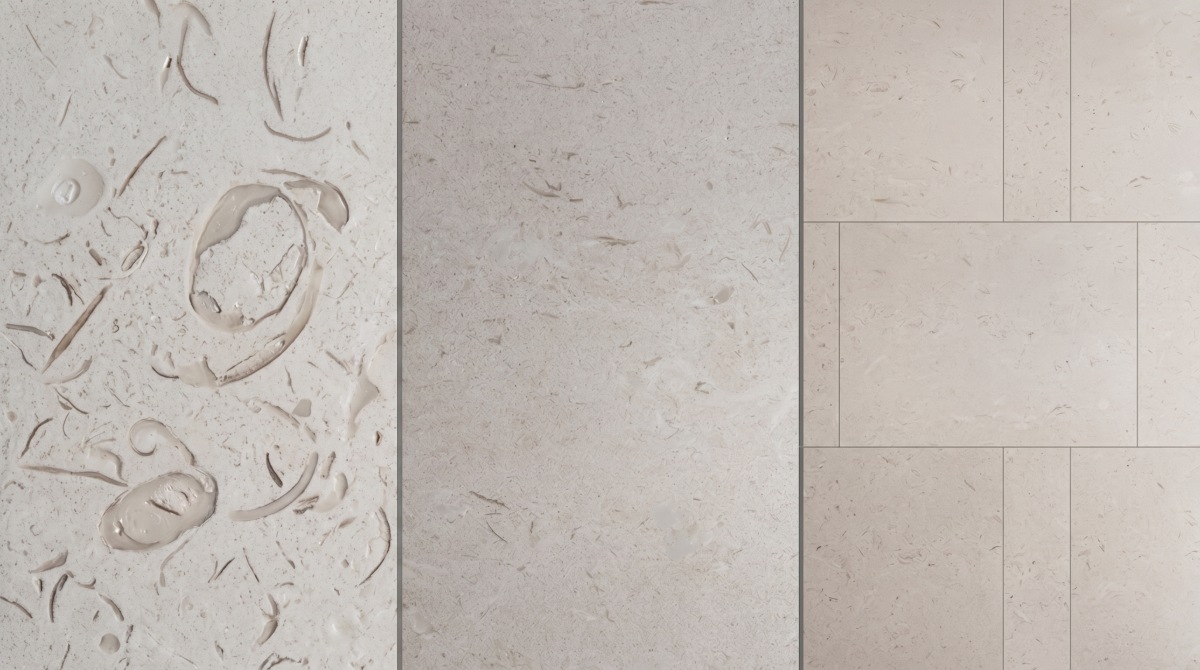
Stone marketing often places a macro texture beside a building rendering without explaining the change in scale. The buyer may assume that a fossil visible at 20 centimetres will remain equally dominant at 20 metres, or that a clean-looking facade means the material has no pores or variation.
Both assumptions are unreliable.
The apparent size and importance of the texture change with camera distance, lens choice, crop and final display size. A useful evidence set should therefore state what is being shown: close surface, full panel, dry layout or installed application.
Images should not enlarge fossils for decorative effect, remove natural pores to create artificial uniformity or reuse a small texture tile across a large surface. Those treatments may create attractive visuals but they do not help a buyer approve real material.
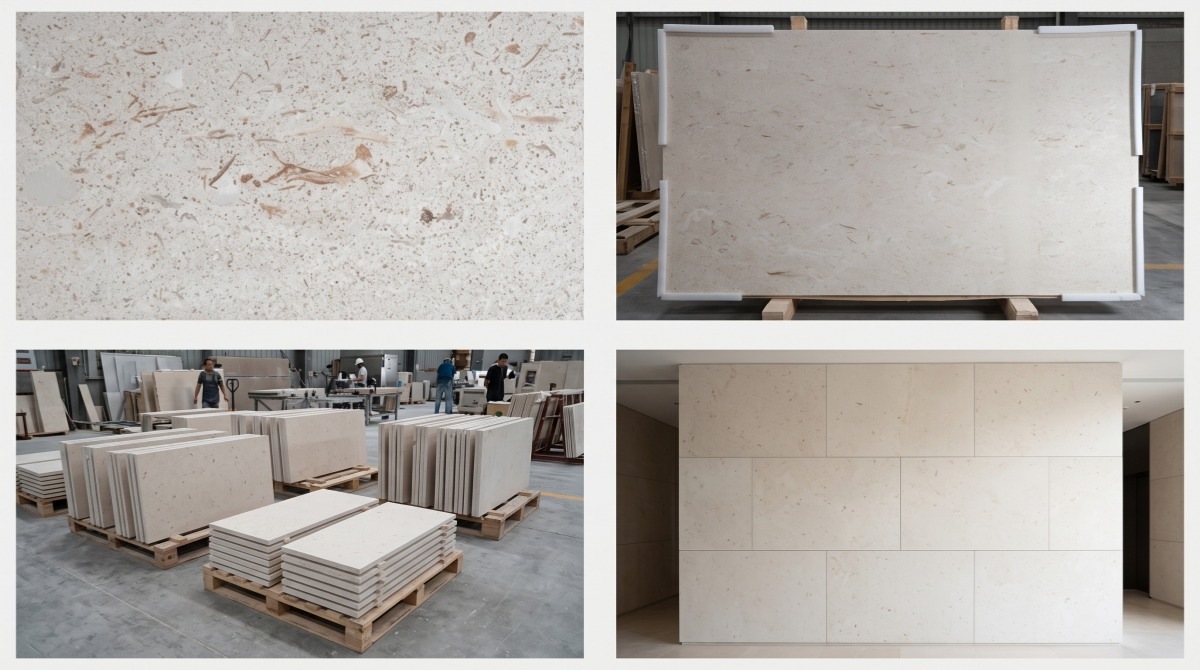
When requesting current Moonlight Beige Limestone photos, ask for:
1. One close-up under controlled natural or neutral light.
2. One complete slab, panel or representative full-format view.
3. One group view showing several pieces from the proposed range.
4. If available, one real application showing the material at architectural scale.
The photographs should be recent and should represent the material proposed for the order. Color can still shift between cameras and screens, so physical samples remain important, but the three-view method reduces the risk of judging the stone from one selective image.
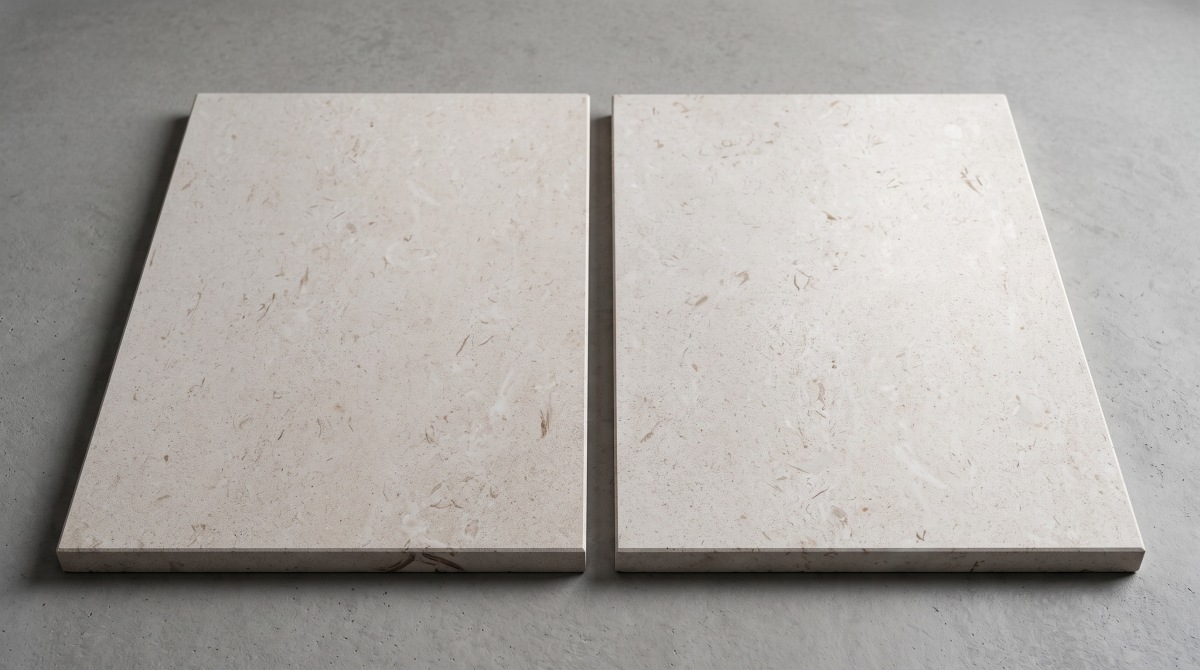
A honed surface may look soft and low-sheen from a distance while showing pores and fine surface character up close. A textured finish may appear lighter and may reduce the visibility of some fossils. A smoother finish may deepen the apparent color.
Review each proposed finish at the same three distances. Do not compare one finish in macro photography with another only in a wide application shot.
The three-distance review does not replace a sample, range approval or technical evaluation. It improves the quality of the first decision: whether the current material direction is worth developing for the project.
For large walls, facades or repeated components, it also creates a clearer shared reference between the architect, buyer, supplier and installer.
To request a Moonlight Beige Limestone three-view evidence set, send the intended application, approximate quantity and preferred finish.



 IPv6 network supported