English
 Español
 Português
 عربي
عربي 한국어
한국어

Turkish Lightning Grey Marble Project for Stairs, Walls, Floors, and Interior Spaces
In many residential and commercial interiors, the real challenge is not choosing one beautiful stone. The real challenge is choosing a material that can work well across different applications without making the space feel heavy, repetitive, or visually disjointed.
This project is a good example of that balance.
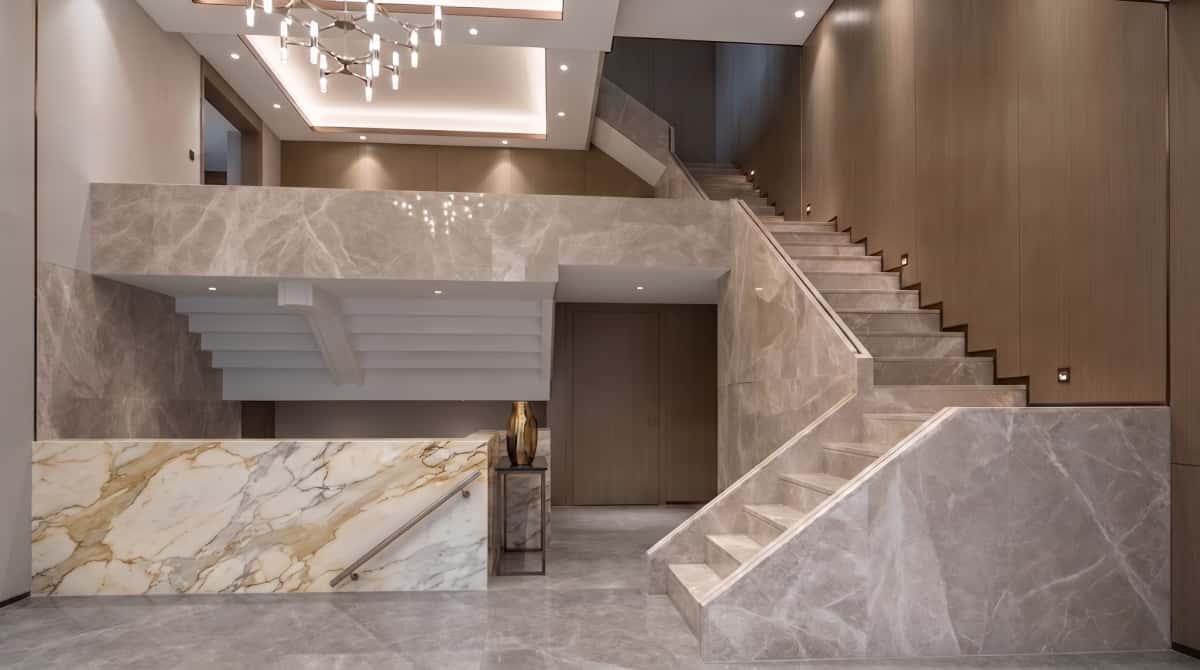
Here, Turkish beige-grey marble was used in several key areas of the interior, including the staircase, wall cladding, large-format flooring, decorative floor borders, and bathroom surfaces. Instead of making each area feel separate, the marble helps tie them together into one consistent material language.
What makes this especially effective is the character of the stone itself. The base tone is soft and warm, sitting between beige and grey. Across the surface, light lightning-like veining creates movement without becoming too dramatic. That gives the project a calm but still premium feeling.
Not every marble is suitable for multi-area use. Some stones look attractive on a sample or slab, but once they are used on stairs, floors, and walls together, the result can become visually too busy or inconsistent.
This Turkish beige-grey marble works well because it offers three practical advantages.
First, the tone is stable and versatile. It is light enough to keep interiors open and bright, but it still has enough depth to avoid looking flat.
Second, the veining is expressive but controlled. It adds natural movement to the surface, yet it does not overpower furniture, lighting, or architectural lines.
Third, it adapts well to different formats. On stairs, it looks structured and clean. On large wall panels, it feels continuous and architectural. On floors, it helps create a polished and coherent base for the whole interior.
For project buyers, this is important. It means one material can support a broader design strategy instead of being limited to one decorative area.
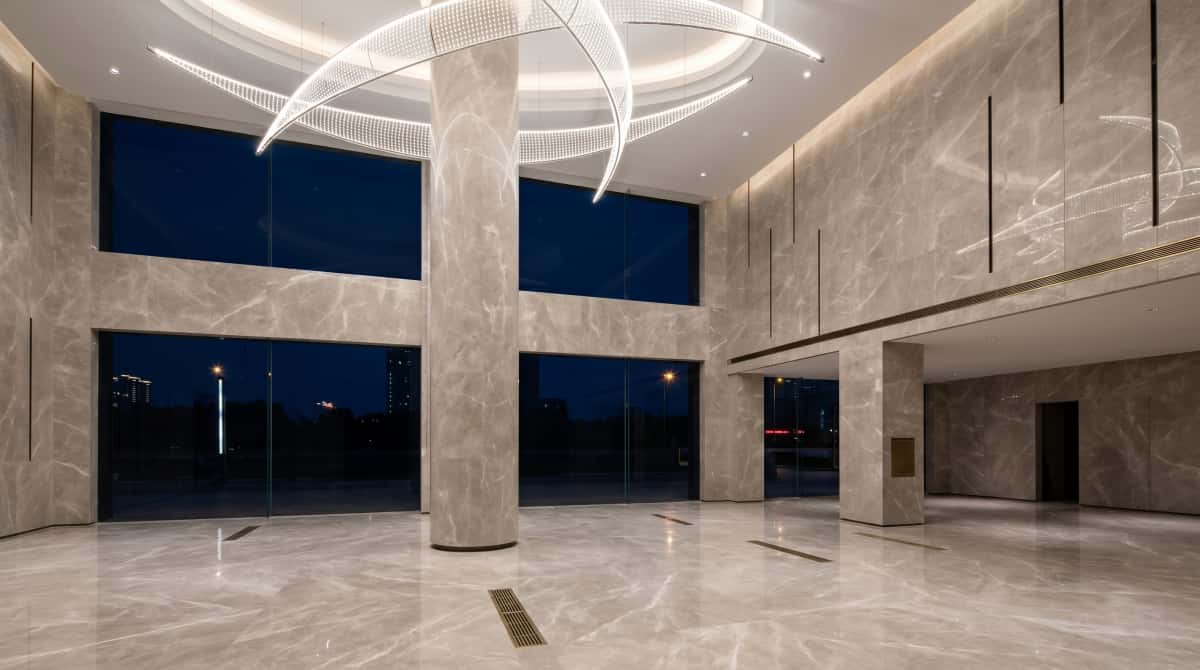
The staircase is one of the strongest parts of this project.
From the images, the marble is not only used on the treads and risers, but also on the side cladding and adjacent protective wall surfaces. This is a smart use of material continuity. It allows the stair area to feel integrated rather than pieced together from separate finishes.
For buyers and designers, this kind of installation matters because stairs are visually sensitive zones. If the stone selection is too dark, the stair volume can feel heavy. If the pattern is too chaotic, the geometry becomes unclear. In this case, the marble keeps the lines of the staircase readable while still giving the area a refined natural texture.
The result is clean, modern, and practical for upscale residential interiors, villas, and private club-style spaces.
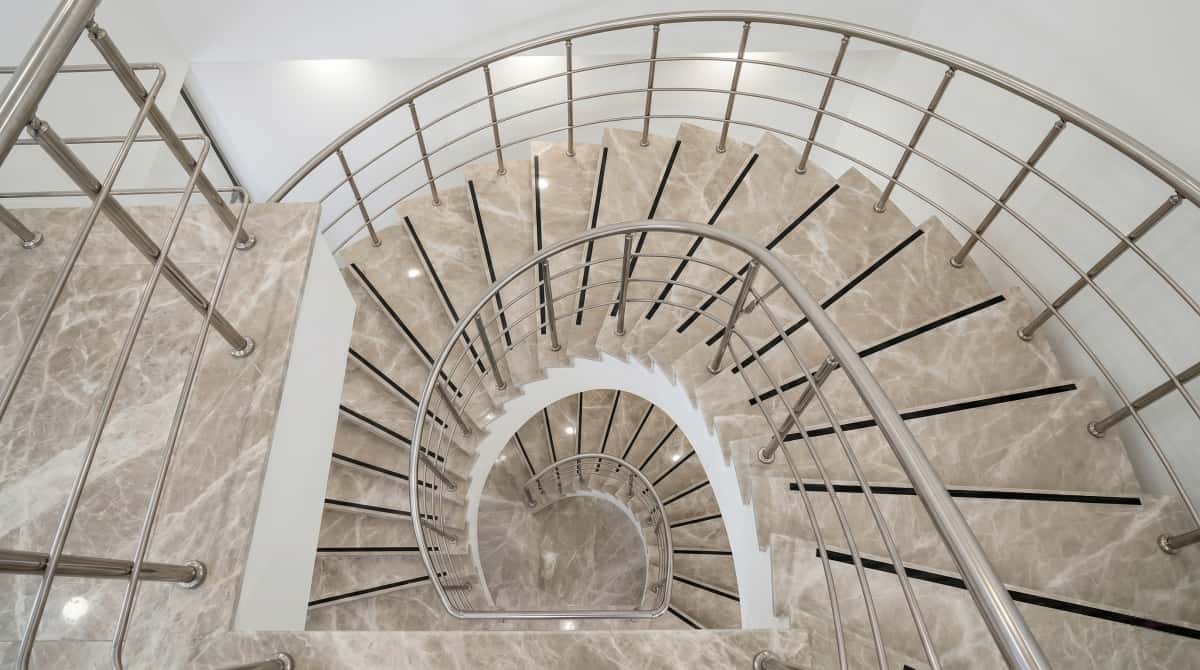
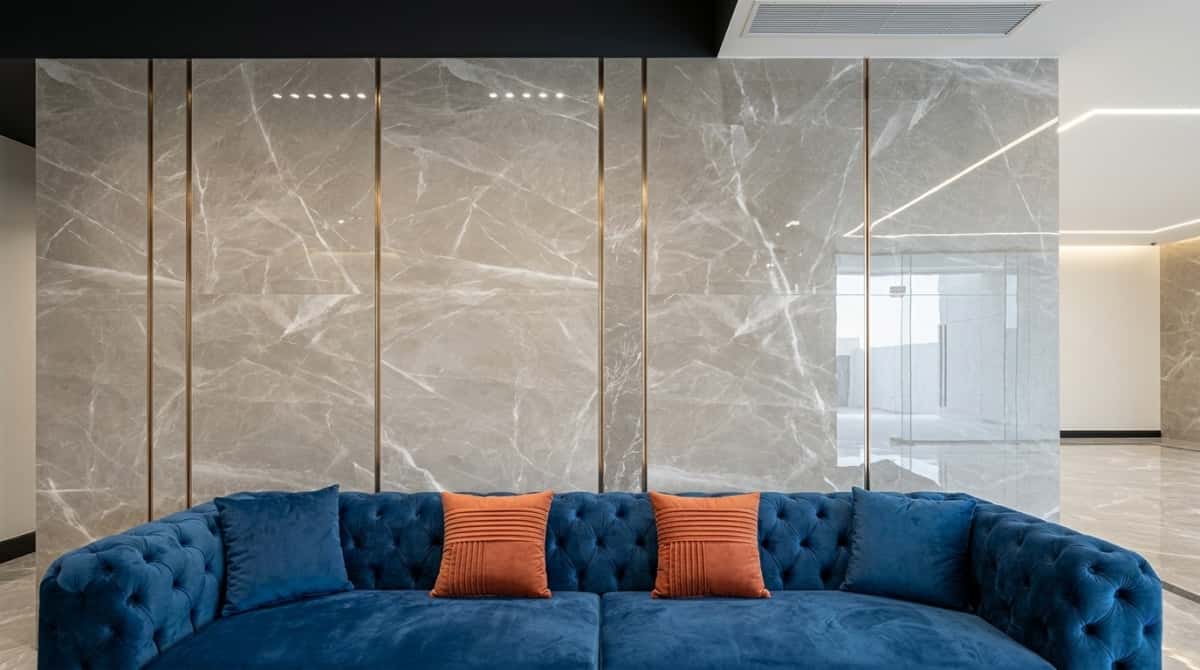
The wall applications show another strength of this marble.
On vertical surfaces, the stone reads differently from the floor. The natural veining becomes more graphic, and the light reflection from the polished surface helps the wall feel deeper and more elegant. At the same time, because the color stays within a soft beige-grey range, the wall remains calm enough to work as an architectural background.
This makes the stone suitable for:
In the project images, the wall treatment feels understated. That is a positive sign. Good project stone use does not always need to be loud. In many premium interiors, restraint is exactly what creates long-term visual value.
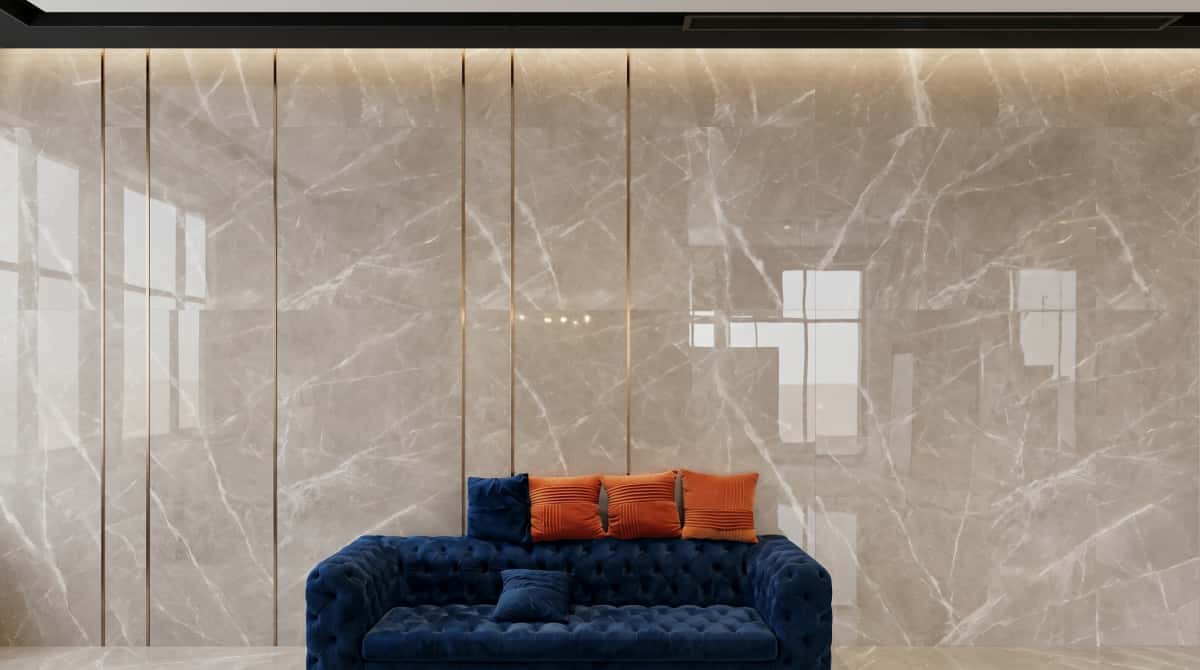
The flooring images are especially useful for project buyers because they show how the stone behaves when used over a larger area.
This is often where many marble decisions succeed or fail.
A floor needs more than beauty. It needs visual stability. It needs enough movement to avoid dullness, but not so much movement that the floor dominates the whole room. In this project, the Turkish beige-grey marble performs well in that role.
The polished surface gives the space brightness and reflection, while the natural veining creates a soft directional movement across the floor. The added border detail in darker stone helps define circulation and elevate the sense of custom project work.
For project-oriented interiors, this is a useful lesson: a well-chosen marble floor does not only finish the space. It also helps organize the space.
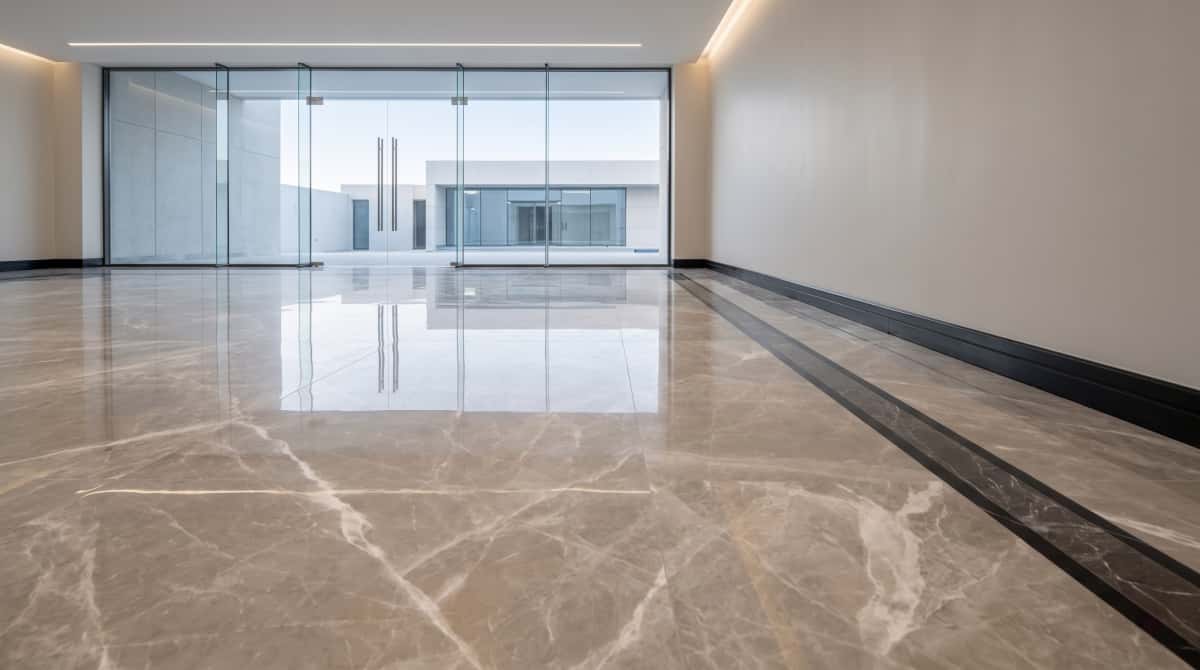
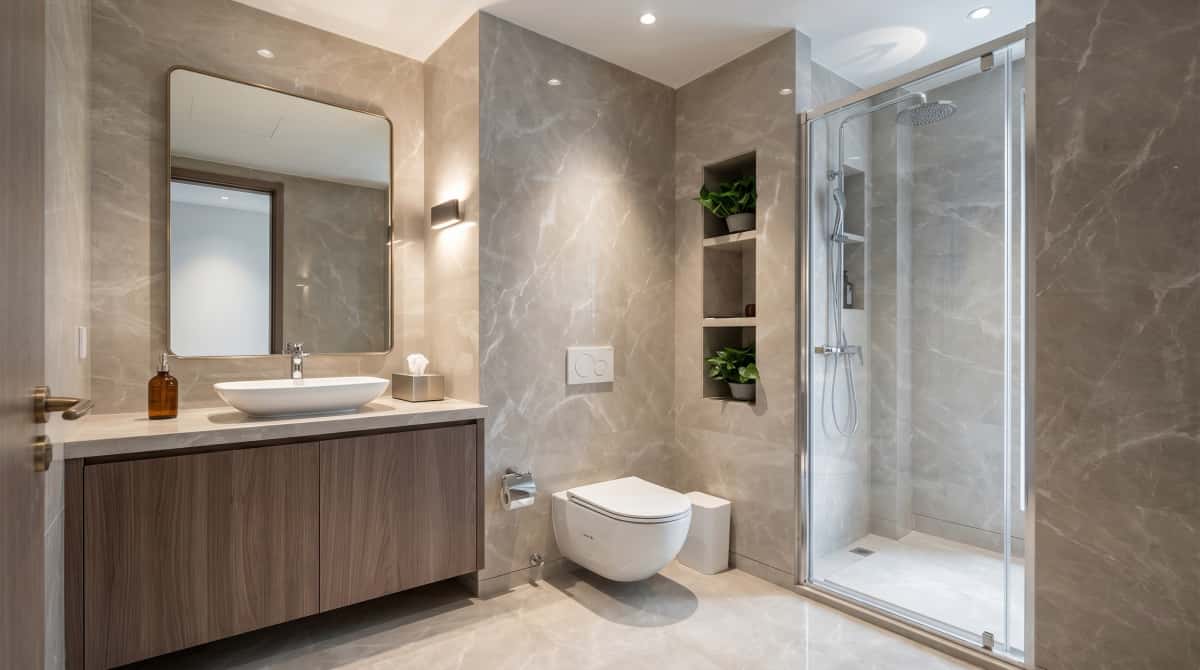
The bathroom image shows that this marble can also transition into smaller and more intimate areas without losing consistency.
This is important in full-house or full-project stone planning. Buyers often want one main stone language, but they also worry that using the same material everywhere may become monotonous. In practice, the solution is not always to change material. Often, the better solution is to vary the application scale and surrounding elements.
In the bathroom, the same marble appears more compact and more enveloping. With the warm lighting and cabinetry, the result feels softer and more private. This shows how the same material can deliver different emotional effects depending on context.
That kind of flexibility is one reason natural marble remains so valuable in premium interior projects.
There are several useful takeaways from this project.
1. One marble can support multiple interior zones well.
When the stone has a balanced tone and controlled veining, it can be used on stairs, walls, and floors without creating visual conflict.
2. Consistency creates value.
Using one core marble across the project helps the interior feel more complete, more professional, and more intentional.
3. Stone selection should be judged in application, not only on slab appearance.
A marble that looks good on a slab rack may not always work on large walls or stairs. Real project examples help buyers make better decisions.
4. Neutral marble has strong long-term appeal.
Soft beige-grey marble is easier to pair with metal, wood, upholstery, and lighting schemes than highly saturated or strongly colored stones.
For projects like this, material supply is only one part of the work. What matters just as much is how the stone is selected, processed, matched, and delivered for real installation.
Aoli Stone supports project-oriented stone supply with attention to material selection, fabrication, finishing, and application coordination. For buyers working on villas, apartments, hospitality spaces, or commercial interiors, this kind of support helps reduce uncertainty during the project process.
This marble project shows a practical direction that many buyers are looking for today: not excessive luxury, but a clean, premium, and coordinated natural stone solution that works in real space.
If you are sourcing marble for stairs, flooring, wall cladding, or bathroom interiors, this project is a useful reference for how one well-chosen Turkish marble can create a unified result.
Looking for marble for a similar project?
If you are planning a villa, private residence, apartment lobby, or interior commercial space, Aoli Stone can support your marble selection and project supply needs. You are welcome to contact us to discuss material options, application ideas, and project requirements.



 IPv6 network supported