English
 Español
 Português
 عربي
عربي 한국어
한국어

How Are Mixed-Size Project Orders Packed and Labeled
Mixed-size stone project orders usually need more careful packing and labeling than standard stock orders. When one shipment includes many different dimensions, locations, or piece types, order organization becomes an important part of project support rather than a simple warehouse step.
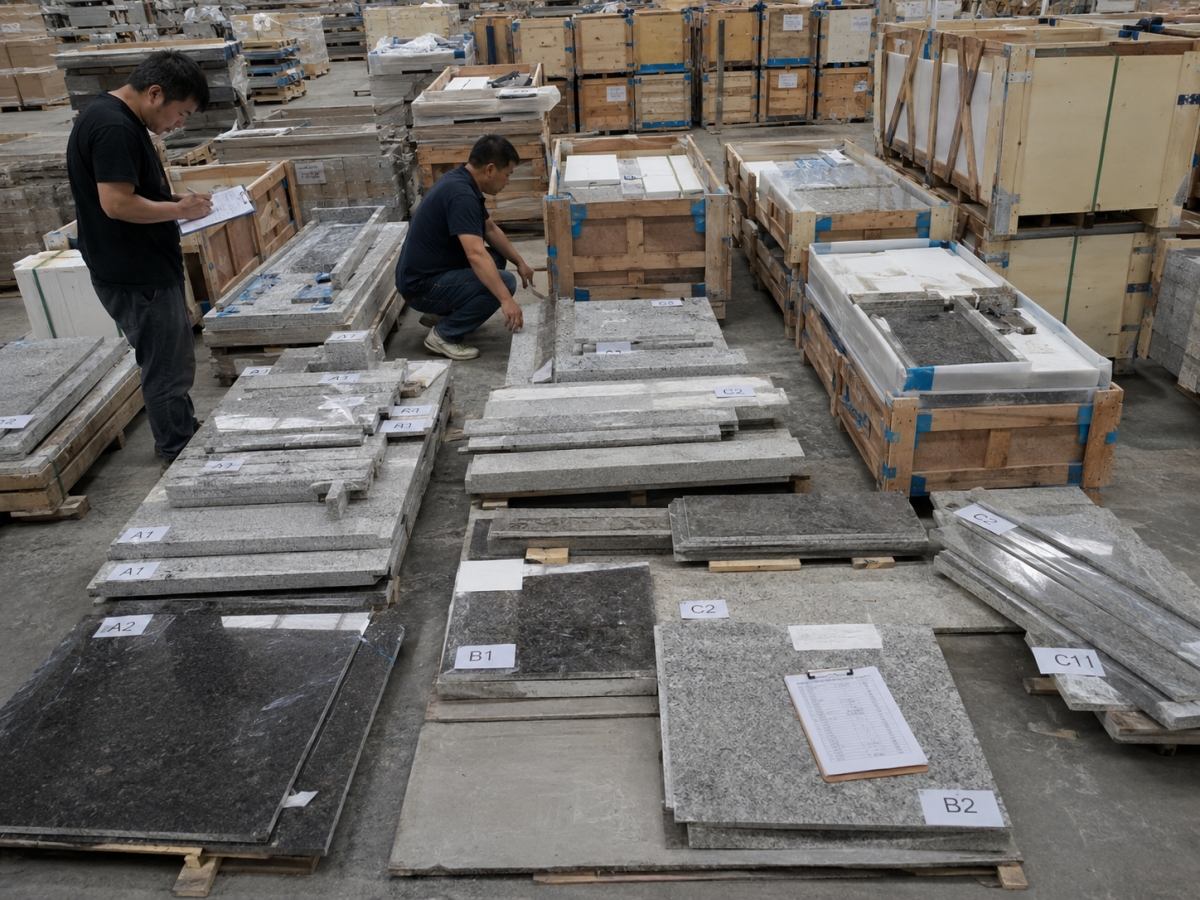
This matters because installation teams do not receive the material as a generic product. They receive it as part of a sequence. If the pieces are not packed and labeled in a clear and usable way, confusion can happen at unloading, sorting, or installation.
In practical terms, project packing often needs to reflect the structure of the order. That may include piece numbers, area references, room references, drawing references, or other project-related codes depending on how the job is organized. The goal is to make it easier for the buyer, contractor, or site team to identify what each group of pieces is for.
For some projects, packing logic may also need to consider size, fragility, edge protection, finish sensitivity, or installation order. This is especially important when the shipment includes finished visible pieces rather than only rough stock material.
Clear labeling is not only about attaching tags. It also depends on whether the production side and the packing side are following the same project logic. A well-organized mixed-size order should make sense both in the factory and at the site.
Aoli Stone approaches mixed-size project orders with the understanding that packing and labeling are part of delivery quality. For buyers, it is always better to clarify piece coding and packing expectations early, especially when the job is installation-sensitive or logistically complex.
If your order includes many different sizes or areas, tell us your labeling and packing logic early so it can be organized more clearly.



 IPv6 network supported