English
 Español
 Português
 عربي
عربي 한국어
한국어

Moonlight Beige Limestone is a light beige natural limestone selected for projects that need warmth, subtle fossil detail and a quieter appearance than strongly veined marble. It can be considered for interior walls, flooring, architectural features and selected exterior applications, but approval should be based on the actual material range, finish, project environment and installation system—not color alone.
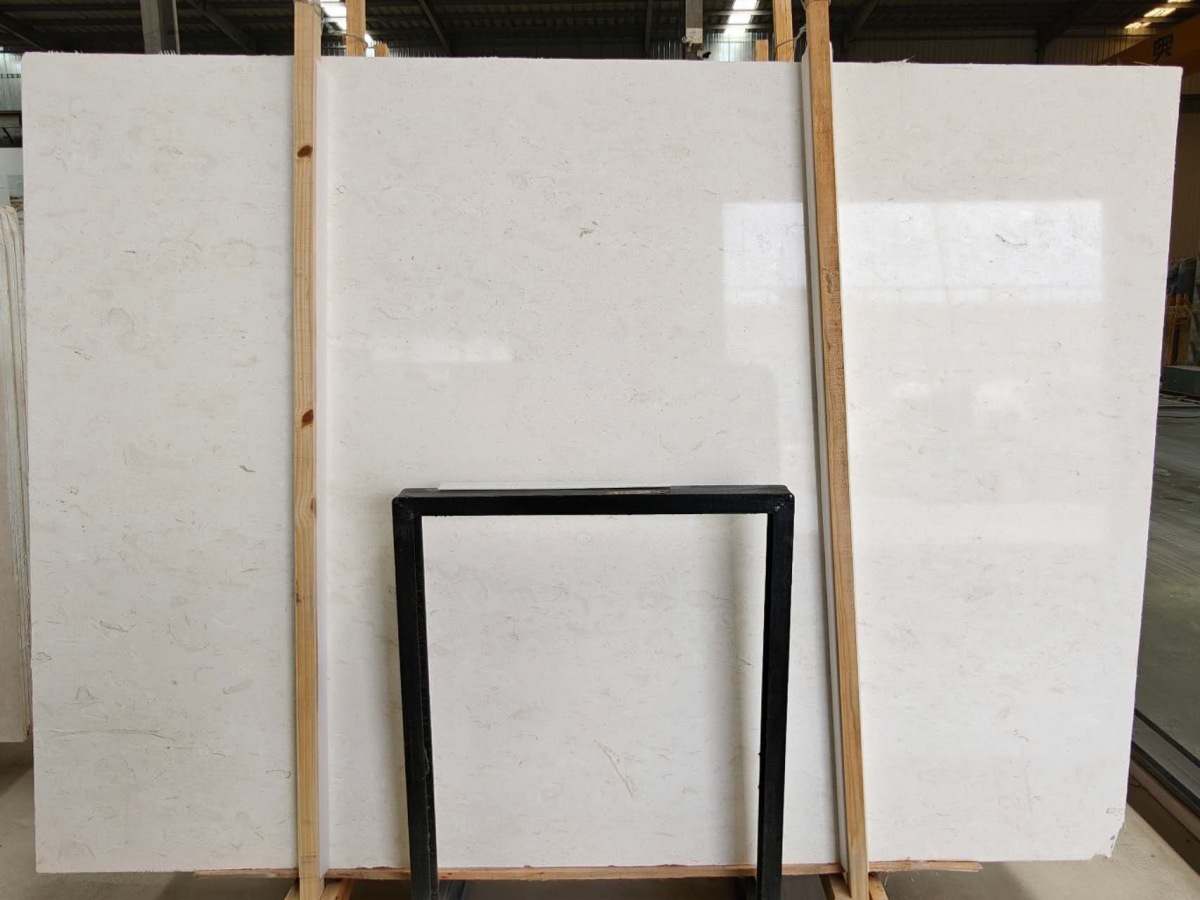
This guide explains what buyers should inspect before specifying Moon Beige Limestone, how available material ranges may differ, which finishes to compare and how to reduce variation and fabrication risks before production.
Aoli Stone currently lists this material as Moonlight Beige Fossil Limestone. Moon Beige Limestone is used in this guide as the primary international market name.
Moon Beige Limestone has a warm light-beige to cream-beige background. Its surface may show shell-like fossil fragments, fine sedimentary grains, small natural pores, mineral speckles and gentle tonal movement.
The material does not rely on strong veins or high contrast. From a distance, it reads as a calm neutral surface. At closer range, the fossils and sedimentary details make the stone recognizably natural.
This combination makes it relevant to projects where the stone should support the architecture rather than dominate it. Typical accompanying materials include timber, bronze-toned metal, plaster, glass and other warm neutral finishes.
However, it should not be expected to look as uniform as an engineered surface. Fossil concentration, pore visibility and background tone can vary between blocks and slabs. That variation must be included in the approval process.
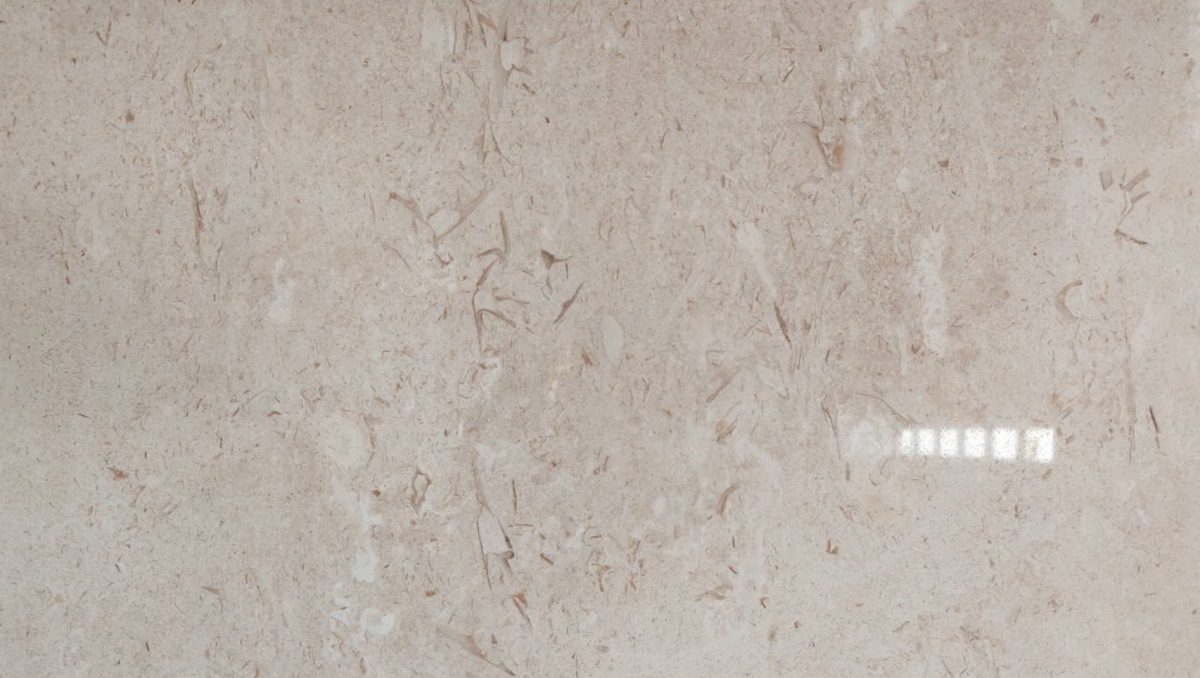
A warm cream fossil limestone can create visual depth without the directional movement of heavily veined marble. This is useful in spaces where designers want a continuous, restrained material background.
The practical design advantages are:
A light neutral tone that can work across large wall and floor areas.
Fossil detail that remains visible at close viewing distance.
Less directional pattern than many veined marbles.
Compatibility with both contemporary and more traditional architectural language.
The possibility of coordinating flat panels with profiles, returns, skirting, steps or shaped components.
These are visual and fabrication considerations, not universal performance guarantees. Slip resistance, water exposure, exterior durability, sealing and maintenance must be evaluated for the specific finish and application.
Aoli Stone currently groups the available Moon Beige Limestone supply into three source ranges: DN, CTM and Old Quarry. These names describe current selection directions; they should not be treated as fixed technical grades.
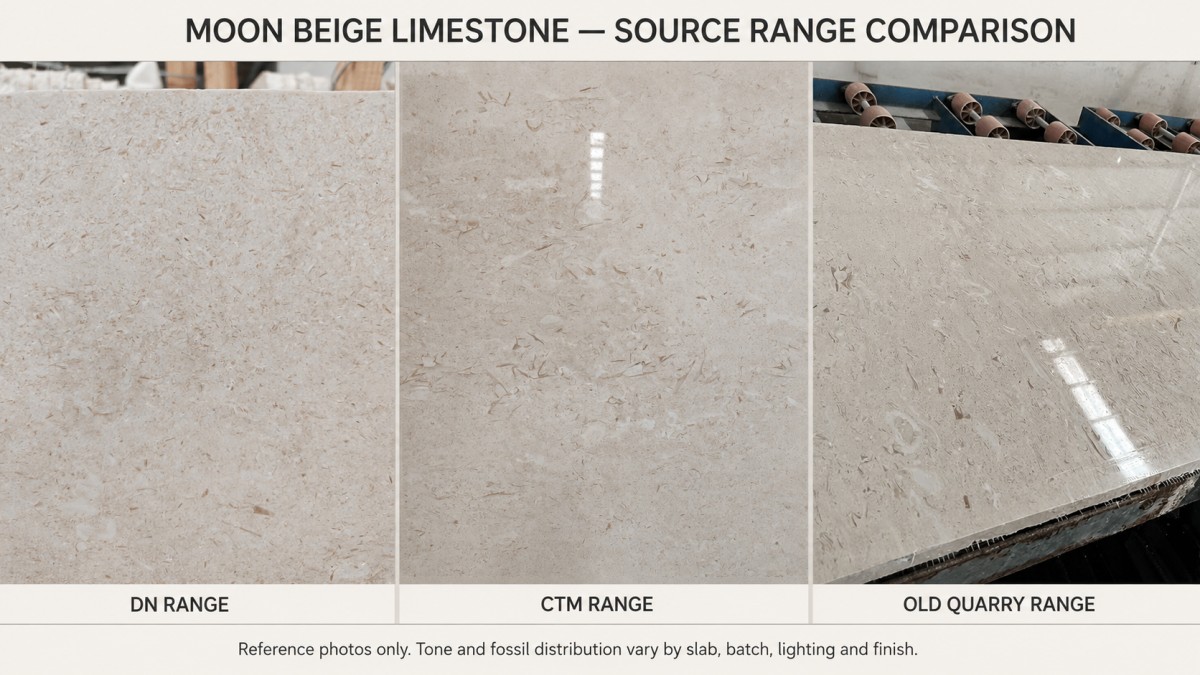
Actual slabs, available quantities and acceptable variation must be confirmed for every order.
| Material range | General visual direction | When buyers may consider it | What must be verified |
|---|---|---|---|
| DN range | Lighter, cleaner background; generally finer fossil distribution; fewer visible open pores in the current reference material | Bright interiors, low-light spaces and projects requiring a cleaner visual field | Current slab photos, actual pore range, quantity and batch consistency |
| CTM range | Balanced beige tone with natural fossil distribution | Projects balancing visual appearance, quantity and budget | Current availability, approved tone range and fossil distribution |
| Old Quarry range | Warmer beige character with more noticeable fossil detail | Traditional, residential or hospitality designs seeking a richer natural-stone appearance | Current blocks, color range, fossil concentration and replacement availability |
The correct range is not automatically the lightest or most expensive one. It is the range that matches the design intent, required quantity, acceptable variation and current available material.
For large orders, buyers should compare representative slabs from the proposed production range instead of approving the material from a single carefully selected photograph.
Moonlight Beige Limestone can be considered for reception walls, lobby areas, corridors, residential feature walls and other interior cladding where a warm natural background is required.
Before approval, confirm:
Panel size and thickness.
Joint width and joint layout.
Edge and corner details.
Fixing or installation method.
Acceptable tone and fossil variation.
Whether a dry layout is required.
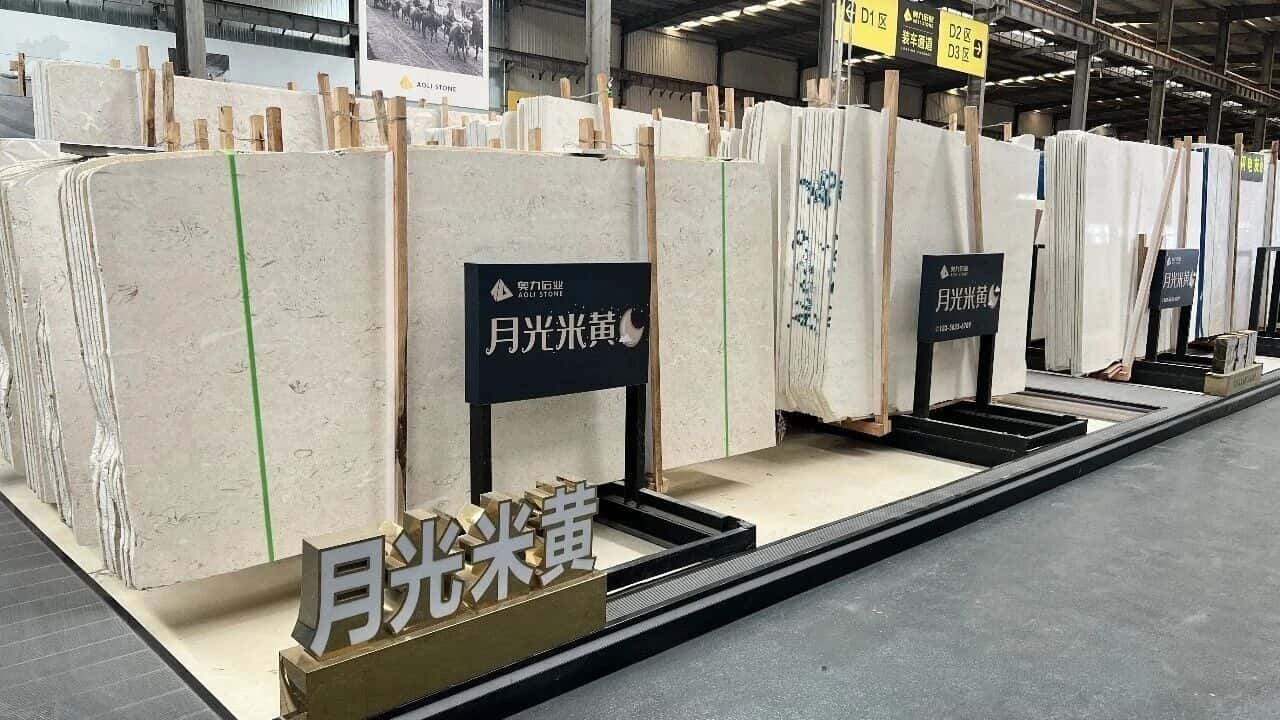
The material can be considered for interior flooring when the selected finish, thickness, sealing system, expected traffic and maintenance plan are appropriate.
A honed finish may preserve the calm visual character, but it should not automatically be assumed to meet the slip-resistance requirements of every project. Public areas, entrances and high-traffic locations require project-specific review.
Moonlight Beige Limestone may work in hotel lobbies, galleries, office receptions, boutique retail spaces and other interiors where the design requires limestone for neutral interiors rather than a dramatic feature stone.
Commercial use should be assessed according to traffic, cleaning practices, exposure to staining, replacement planning and the responsibilities of the installer and maintenance team.
The stone can be evaluated for selected facade, courtyard-wall, entrance and landscape-wall applications. Exterior approval must consider:
Local climate and freeze-thaw exposure.
Rain, drainage and water movement.
Panel dimensions and thickness.
Anchoring or fixing system.
Surface finish.
Sealing and maintenance plan.
Applicable local standards and project specifications.
Exterior limestone should never be approved only because an application image looks attractive. Stone-specific data, finish samples and the complete wall system should be reviewed by the responsible architect, engineer and installer.
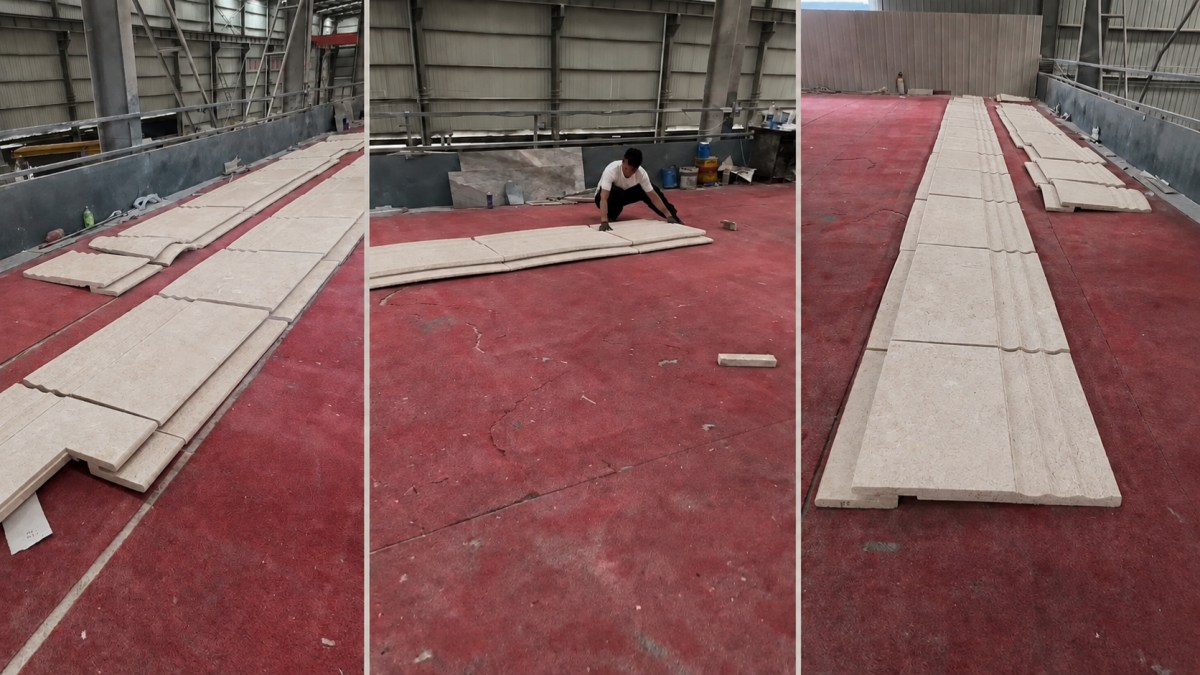
Where drawings and material conditions allow, Moonlight Beige Limestone can be fabricated into profiles, returns, window or door surrounds, skirting, steps and selected curved or shaped components.
For shaped work, the buyer should provide sectional drawings, radii, tolerances, joint locations and installation relationships. A visually correct stone can still fail the project if the fabrication details are incomplete.
The finish changes both appearance and application behavior. A finish name alone is not enough; the buyer should approve a physical sample made from the proposed material.
| Finish | Visual effect | Possible application direction | Approval focus |
|---|---|---|---|
| Honed | Smooth, low-sheen and calm | Interior walls and selected interior floors | Sheen level, visible pores, sealing and slip requirements |
| Brushed | More tactile and softly textured | Courtyards, walls and transitional areas | Texture consistency, cleanability and edge treatment |
| Sandblasted | More open and visibly textured | Selected entrances, steps or exterior surfaces | Slip test, surface loss, cleaning and visual change |
| Bush-hammered | Stronger mechanical texture | Landscape and selected exterior areas | Texture depth, edge protection and project requirements |
| Tumbled | Softer edges and aged character | Traditional interiors and courtyard designs | Dimensional tolerance, joint width and edge variation |
| Natural split | Rougher architectural surface | Landscape walls and textured features | Thickness variation, fixing and corner construction |
Finish suitability should be confirmed against the real project environment. Textured finishes may change the apparent color and fossil visibility, while honed surfaces may make subtle pores or repairs more noticeable.
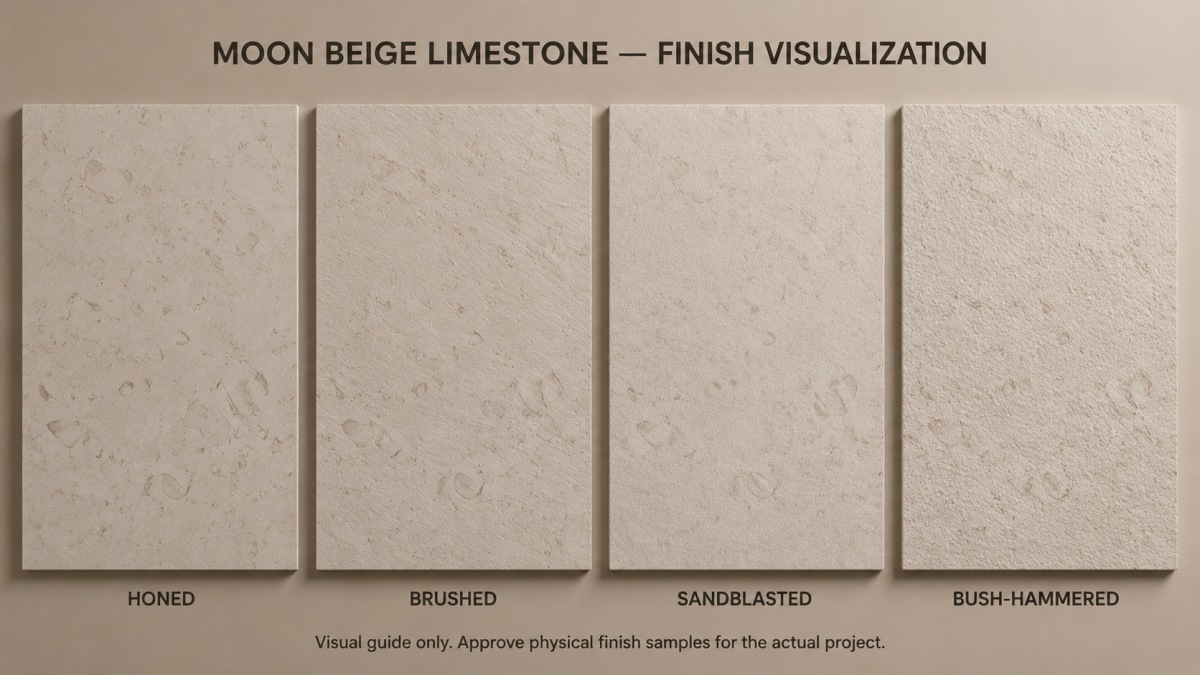
A small sample can confirm the general color and surface direction, but it cannot represent the full range of a natural limestone order.
A controlled approval process should include the following steps.
Do not approve only one ideal slab. Establish the lightest, darkest, cleanest and most fossil-rich appearance that the project can accept.
If some areas require a cleaner background and others can accept stronger fossil movement, identify those areas before cutting.
Ask for recent photographs of the actual material proposed for the order. Photographs should show complete slabs or representative block faces under controlled lighting, not only close-up beauty shots.
The purpose is to assess:
Overall background tone.
Fossil density.
Pore visibility.
Directional movement.
Slab-to-slab variation.
Usable area and natural features.
The finish sample should come from material that represents the intended production range. Review the sample in both natural and project-relevant artificial light.
If several finishes are being considered, compare them on similar material rather than on unrelated pieces.
Before cutting, confirm:
Final dimensions.
Thickness.
Quantity and replacement allowance.
Edge profile.
Visible and concealed edges.
Corner construction.
Cutouts, radii and returns.
Joint relationships.
Installation sequence.
For profiled or curved work, sectional drawings and full-size templates may be necessary.
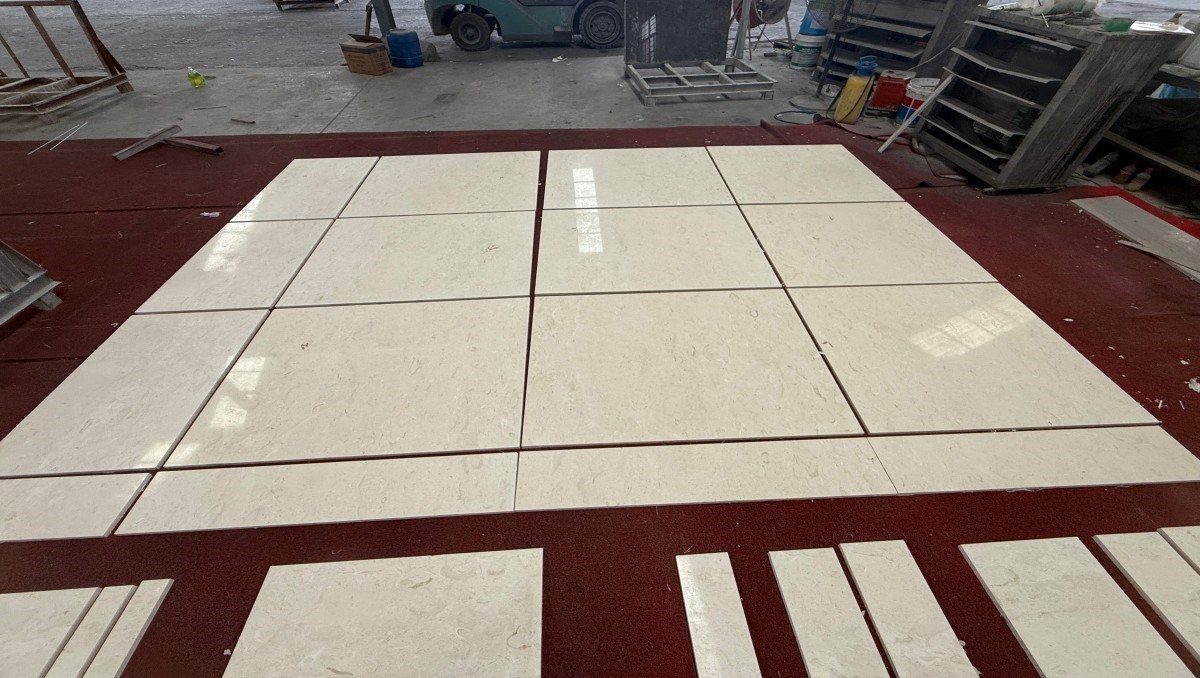
Dry layout can help with natural limestone variation control on large walls, floors, stairs or coordinated cut-to-size packages.
A useful dry layout should allow the project team to review tone grouping, fossil distribution, panel sequence, joints and transitions. It should not be presented as proof of installed performance.
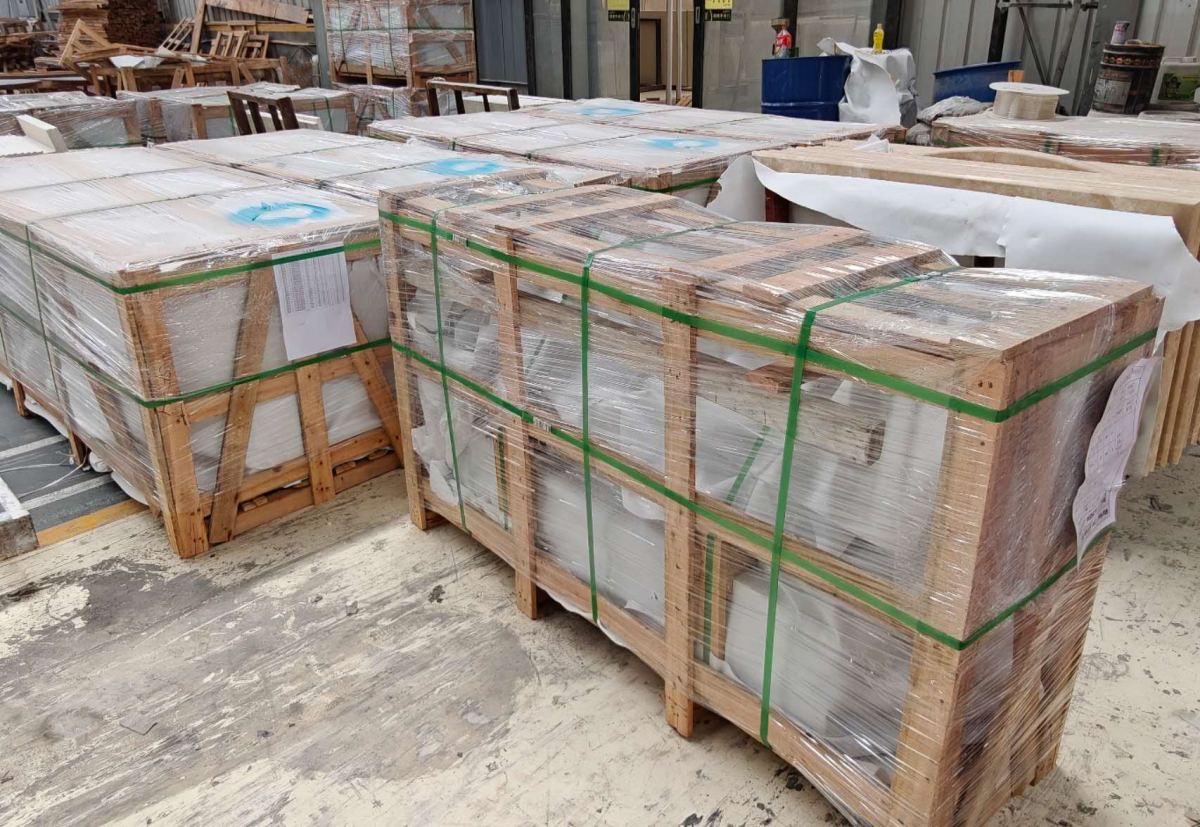
When the installation depends on a defined sequence, piece numbers and packing lists should correspond with the approved drawings or layout.
Crate order should support installation access where practical. Labels, drawings and project information must be checked before shipment, while confidential information should not be exposed in public marketing photographs.
Moonlight Beige Limestone generally offers a quieter, less directional visual field. It may be more suitable when the architecture requires a continuous neutral background instead of prominent vein movement.
This is a visual comparison only. Performance, maintenance and fabrication decisions must be based on the actual stones and finishes being compared.
Natural limestone contains genuine variation, fossils, pores and mineral movement. Engineered materials may provide a more controlled repeatable appearance, while limestone provides greater natural individuality.
A buyer who requires near-identical pieces should define the tolerance clearly before choosing natural limestone.
Moonlight Beige Limestone has a more identifiable fossil character than a visually plain beige stone. This can provide close-range detail without creating a highly directional pattern.
The decision should be based on full-format material evidence, because fossil visibility may vary between available blocks.
Providing complete information at the beginning produces a more useful quotation and reduces repeated clarification.
Send the following:
Application area: wall, floor, facade, stairs, courtyard or shaped component.
Indoor or outdoor location.
Project country and destination port.
Required finish.
Thickness and dimensions.
Quantity or BOQ.
Drawings, elevations or size schedules.
Edge and profile details.
Required color and fossil range.
Sample, slab-photo or dry-layout approval requirements.
Packing sequence or labeling requirements.
Required delivery date.
If the finish or thickness has not been decided, explain the application and site conditions instead of requesting a generic “best option.”
RFQ
No. It is a natural fossil limestone. Background tone, shell fragments, mineral speckles and natural pores can vary. Representative material and an acceptable range should be approved before production.
A small sample is useful for initial color and finish review, but it cannot represent a large order. Slab photographs, range samples or dry layout may be needed depending on the project scale.
It can be evaluated for selected outdoor applications, but suitability depends on climate, water exposure, finish, thickness, fixing, sealing and applicable project standards. Exterior use requires project-specific review.
There is no universal best finish. Honed surfaces can preserve a calm interior appearance, while textured finishes may be considered for entrances, steps or exterior areas. The final decision should be based on physical samples and project requirements.
Aoli Stone supports slabs, tiles and cut-to-size fabrication according to confirmed drawings and specifications. Shaped components, edge details, dry layout, numbering and export packing should be reviewed according to the order.
Request representative material photographs, a finish sample, confirmed specifications, an agreed variation range, production and packing requirements, and a final delivery schedule.
Aoli Stone can help project buyers compare the current Moon Beige Limestone range, prepare finish samples, review cut-to-size drawings and coordinate material approval before production.
To receive a useful review or quotation, send:
Application and project location.
Finish and thickness.
Dimensions or BOQ.
Required quantity.
Drawings or reference details.
Destination port.
Sample or slab-photo requirements.
Review the wider Aoli Stone limestone range, learn about our stone fabrication and inspection support, or contact Aoli Stone with your project information.



 IPv6 network supported