English
 Español
 Português
 عربي
عربي 한국어
한국어

A clear inquiry can save time before a stone order starts.
Many international stone projects do not become complicated because the buyer is careless or the supplier is unwilling to respond. They become complicated because the first inquiry is too unclear. A buyer may send one product photo and ask, “Please quote this.” A contractor may send a rough area and ask for the best price. A distributor may ask for slabs but not mention thickness, finish, destination, or quantity. A project buyer may have drawings, but the supplier receives only partial information.
This is why a better stone RFQ matters.
For international stone buyers, a clear RFQ does not mean writing a long technical document for every order. It means giving the supplier enough information to understand the material, application, size, quantity, finish, drawings, packing, destination, and document requirements before preparing a quotation.
A good RFQ helps both sides. The buyer receives a more accurate stone supplier quotation. The supplier avoids guessing. The project discussion becomes faster, clearer, and more useful.
This guide explains how importers, contractors, distributors, architects, developers, and procurement teams can prepare better stone RFQs before requesting prices from a supplier.
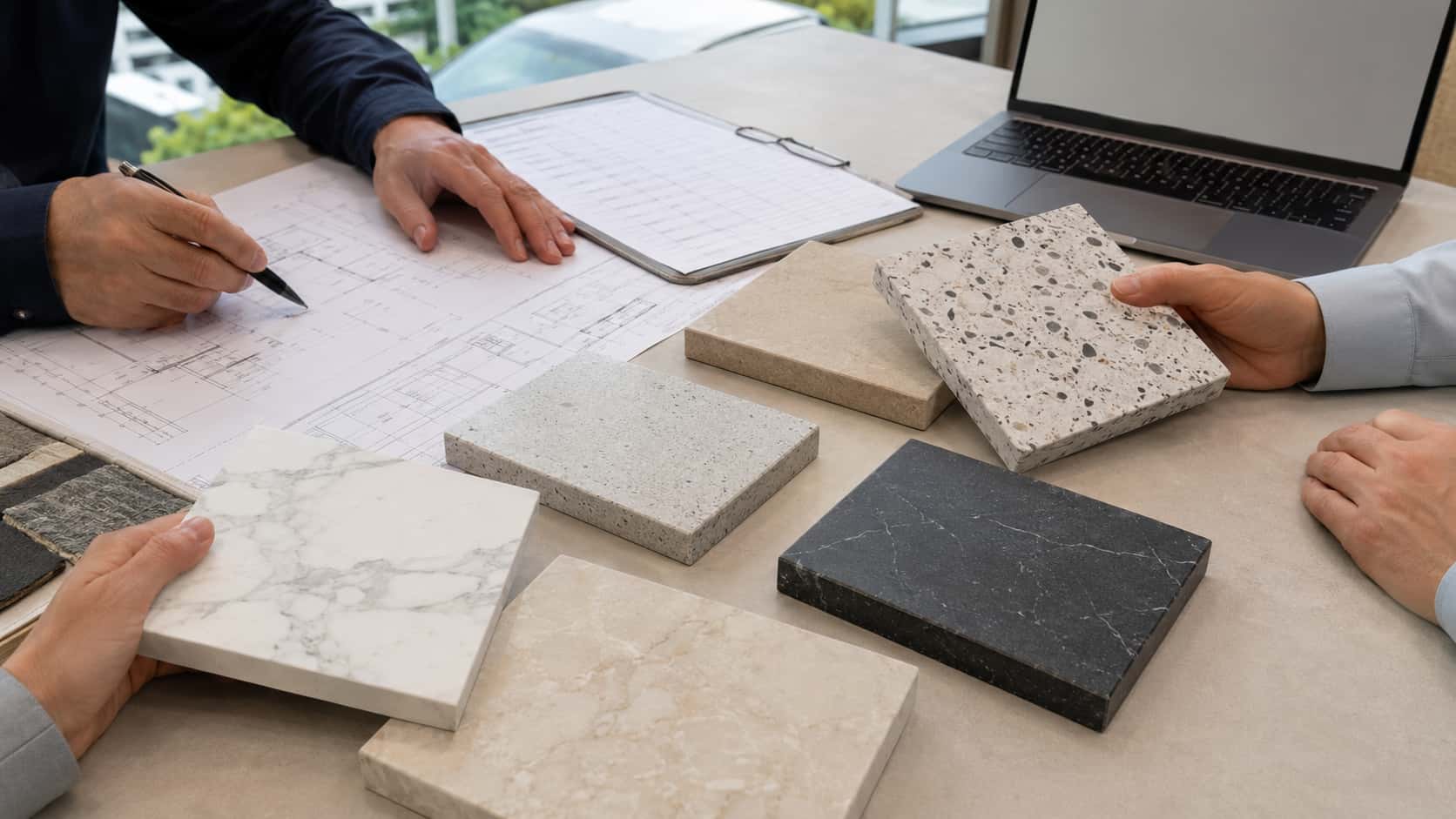
1. Understand What a Stone RFQ Should Really Do
A stone RFQ is not only a price request.
It should help the supplier understand what the buyer wants to buy, where the stone will be used, how it should be produced or prepared, and what conditions may affect the quotation.
A weak RFQ usually sounds like this:
“Please quote white marble.”
“Need artificial marble, send price.”
“Quote quartz slab.”
“Need terrazzo tiles for project.”
These messages may start a conversation, but they rarely allow the supplier to prepare an accurate quotation.
A stronger RFQ should answer several practical questions:
What material category is needed?
What application is the stone for?
What size, thickness, and quantity are required?
Is there a drawing or size list?
What surface finish is required?
Are there edge details, cutouts, holes, or special shapes?
What is the destination country or port?
What packing method may be needed?
Are certificates or documents required?
Is this a sample order, stock order, distribution order, or project order?
The more clearly these points are prepared, the more useful the stone supplier quotation can be.
A supplier cannot quote responsibly if too many important details are missing.
2. Start with Material Type and Project Application
The first part of a stone quotation request should identify the material and application.
Material type matters because natural marble, artificial marble, quartz stone, terrazzo stone, limestone, granite, and sintered stone are not quoted or discussed in exactly the same way. Application matters because the same material may require different preparation when used for flooring, wall panels, countertops, stairs, elevator surrounds, bathroom walls, commercial counters, or exterior cladding.
A clear RFQ should include:
Material name or reference photo
Material category, if known
Application area
Indoor or outdoor use
Project type
Expected visual effect
Whether the buyer needs slabs, tiles, or cut-to-size pieces
Buyers reviewing Aoli Stone product categories can first confirm whether their inquiry belongs to natural marble, artificial marble, quartz stone, terrazzo stone, limestone, sintered stone, or another product group before sending the RFQ.
For example, “white stone for hotel lobby floor” is not enough. A better message is:
“We are looking for artificial marble or natural marble options for a hotel lobby floor. The material should have a light background, polished finish, and stable visual effect for a large commercial area. Please advise suitable options and quotation basis.”
This gives the supplier a clearer starting point.

3. Different Materials Need Different RFQ Details
A good RFQ should not treat all stone materials the same.
For natural marble project materials, buyers should mention color range, vein preference, slab selection needs, finish, application, and whether book matching or dry lay may be required.
For artificial marble project supply buyers should clarify slab or tile size, thickness, finish, color expectation, quantity, application, batch consistency, and whether the material will be used for flooring, wall panels, counters, or cut-to-size pieces.
For quartz stone project supply buyers should provide countertop drawings, thickness, edge profile, cutouts, sink position, backsplash details, and quantity when relevant.
For terrazzo stone for commercial interiors buyers should confirm base color, aggregate size, finish, slab or tile format, application, and large-area visual expectation.
For limestone, the RFQ should mention indoor or outdoor use, finish, size, application, and maintenance expectation. For sintered stone, the buyer should clarify panel size, thickness, fabrication requirements, edge details, and installation sensitivity.
When material logic is clear, quotation discussion becomes much more efficient.

4. Prepare Stone Size List and Drawings Before Asking for a Final Quote
For project orders, stone size list and drawings are often the most important part of the RFQ.
If the supplier receives only a total square meter number, the quotation may be too rough. This may work for some simple tile or slab inquiries, but it is not enough for cut-to-size projects, countertops, stairs, wall panels, reception counters, medallions, or custom pieces.
A useful size list should include:
Length
Width
Thickness
Quantity
Finished size or cutting size
Application area
Drawing number or area code
Edge treatment
Hole or cutout notes
Special shape notes
Surface finish
Packing group, if needed
Clear drawings can also help the supplier understand whether the order involves straight cuts, curves, holes, edge polishing, waterjet details, CNC processing, or special fabrication.
When a buyer wants quotation for project fabrication, the supplier’s stone manufacturing and fabrication capability becomes more relevant than a simple square meter price.
If drawings are not final, the buyer should say so. A preliminary quotation can be prepared, but both sides should understand that the final price may change after final drawings and size lists are confirmed.
Stone size list and drawings should not be sent as scattered screenshots if the order is complex. A clean Excel sheet, PDF drawing, CAD drawing, or clearly organized file helps the supplier quote more accurately.

5. Confirm Thickness, Finish, Edge, and Fabrication Details
Many quotation differences come from details buyers may not mention in the first inquiry.
Thickness affects material cost, weight, packing, and application. Surface finish affects processing and appearance. Edge profiles and cutouts affect fabrication time. Special shapes affect drawing review, production planning, and packaging.
Before sending a RFQ, buyers should prepare:
Required thickness
Surface finish
Edge profile
Polished edges or unpolished edges
Hole positions
Sink or cooktop cutouts
Groove, bevel, bullnose, eased edge, or other edge details
Waterjet or CNC requirements
Stair tread and riser details
Wall panel fixing requirements, if known
Countertop layout and backsplash details, if relevant
For example, “quartz countertop” is not enough for an accurate quote. A better RFQ includes slab color, thickness, edge type, cutouts, sink type, backsplash height, quantity, drawing, and delivery destination.
For flooring or wall panels, the buyer should clarify whether the pieces are standard tiles, custom sizes, or numbered project pieces.
These details help avoid quotation gaps. They also reduce the chance that the buyer compares two prices that are not based on the same scope.

6. Include Quantity, Order Type, and Expected Timeline
A supplier cannot prepare a practical quotation without quantity.
The buyer should clarify whether the order is:
Sample order
Trial order
Container order
Regular distribution order
One-time project order
Phased project order
Mixed-material project order
The quotation may change depending on quantity, production planning, packing requirements, and shipment schedule. A small sample order, one full container of slabs, and a multi-area cut-to-size project do not have the same quotation logic.
Timeline also matters.
A useful RFQ should mention:
Target order confirmation date
Required production schedule, if known
Expected shipment time
Project installation period, if relevant
Whether the order is urgent
Whether partial shipment is acceptable
Whether samples need approval before mass production
If the project is still at design stage, the buyer can say that the quotation is for budget reference. If the project is already confirmed, the buyer should send more complete information.
This helps the supplier respond in the right level of detail.
7. Add Packing, Destination, and Shipment Requirements
Packing and shipment can affect quotation.
A stone RFQ should include destination country, port, or delivery terms if known. If the buyer needs FOB, CIF, CFR, EXW, DDP, or another trade term, that should also be stated clearly.
For project orders, packing should not be treated as a final small detail. It may affect cost, crate design, loading plan, and site receiving.
A clear RFQ should mention:
Destination country or port
Preferred trade term
Container loading expectation
Wooden crate or A-frame packing needs
Whether pieces should be packed by size, area, room, floor, or drawing number
Whether crate marks are required
Whether packing photos are needed
Whether pre-shipment photos are required
Whether container loading photos are needed
Packing requirements should be discussed before final quotation if the order includes fragile pieces, long pieces, thin panels, countertops, stairs, wall panels, or mixed-size cut-to-size materials.
If the buyer only asks for material price but later requires complex project packing, the final cost may change.

8. Mention Required Documents and Certificates Early
Some buyers need technical files, test reports, certificates, or export documents before confirming an order.
This should be included in the RFQ.
Possible document requirements include:
Test reports
Certificates
Product data sheets
Packing list
Commercial invoice
Certificate of origin, if required
Bill of lading draft
Material photos or inspection photos
Factory or supplier documents
Import-related documents requested by the buyer’s market
A buyer can review Aoli Stone’s certificates and downloadable documents, when documentation is part of the project discussion.
Document requirements can affect the supplier’s preparation time. If documents are needed for customs, tender files, consultant approval, or internal procurement approval, the buyer should mention them before order confirmation.
A supplier may still need to check whether a requested document applies to the selected material. Not every certificate applies to every stone category.

9. Avoid RFQ Mistakes That Create Wrong Quotations
A weak stone quotation request often creates a weak quotation.
Common RFQ mistakes include:
Sending only one photo without material name
Asking for “best price” without size or quantity
Not mentioning thickness
Not confirming finish
Sending incomplete drawings
Sending drawings without a size list
Not saying whether sizes are final
Not mentioning destination
Ignoring packing requirements
Not explaining project application
Mixing different materials in one unclear inquiry
Asking different suppliers to quote different scopes, then comparing prices directly
These mistakes can make the stone supplier quotation look cheaper or more expensive than it really is.
For example, one supplier may quote polished slabs only. Another may quote cut-to-size pieces with edge polishing and packing. A third may include shipment. If the buyer compares these prices without checking scope, the comparison is not useful.
A clear RFQ helps buyers compare suppliers more fairly.
10. Stone Project RFQ Checklist
Before sending an inquiry, buyers can use this stone project RFQ checklist.
Buyer and Project Information
Company name
Buyer role
Project type
Country or market
Destination port or city
Target quotation deadline
Target shipment or installation period
Material Information
Material name
Material category
Reference photo
Color expectation
Natural variation tolerance, if natural stone
Batch consistency expectation, if artificial stone
Application area
Size and Drawing Information
Are stone size list and drawings available?
Are the sizes final or preliminary?
Are length, width, thickness, and quantity listed clearly?
Are drawing numbers or area codes included?
Are special shapes, holes, cutouts, or edge details marked?
Finish and Fabrication Information
Surface finish
Edge profile
Polished edge requirement
Cutout details
Stair, countertop, wall panel, or floor details
Any CNC, waterjet, or special processing requirement
Quantity and Order Scope
Sample quantity
Trial order quantity
Container quantity
Project quantity
Spare material requirement
Whether the order will be shipped in one batch or multiple batches
Packing and Shipment Information
Packing method
Crate marks
Packing by area, room, floor, or size
Trade term
Destination port
Pre-shipment photo requirement
Container loading photo requirement
Document Requirements
Certificates
Test reports
Packing list
Invoice
Certificate of origin
Other market-specific documents
A clear stone project RFQ checklist does not make the order complicated. It makes the quotation more useful.

11. A Better RFQ Helps Both Buyer and Supplier Work Faster
Some buyers worry that giving more details will slow down the inquiry.
In practice, the opposite is often true.
A clear RFQ can reduce repeated questions, missing information, wrong assumptions, quotation revisions, and price misunderstanding. It also helps the supplier decide whether the inquiry is for stock supply, project fabrication, sample approval, container loading, or long-term distribution.
For international stone buyers, a better RFQ is a way to protect time and reduce project risk.
For suppliers, it supports a more accurate quotation.
For buyers, it supports clearer comparison.
For contractors, it supports budget control.
For procurement teams, it supports internal approval.
For project teams, it supports execution planning.
A better RFQ does not need to be perfect. But it should be clear enough for the supplier to understand the order scope before quoting.
What Buyers Should Remember before Confirm the Order
A useful stone RFQ is not only about asking for price.
It is about helping the supplier understand the project well enough to prepare a meaningful quotation.
When buyers include material type, application, size list, drawings, finish, quantity, packing, destination, documents, and expected timeline, they can reduce unnecessary back-and-forth and receive a more reliable quotation basis.
A clear RFQ also helps buyers compare quotations more fairly because each supplier is responding to the same scope.
If you are preparing a stone inquiry, you can send your material name, application area, stone size list and drawings, quantity, finish requirement, packing needs, destination, document requirements, and target schedule to contact Aoli Stone for project supply discussion.
This article is part of Aoli Stone’s future International Stone Project Supply Guide for project buyers, contractors, importers, distributors, and procurement teams.
7. FAQ
1. What should be included in a stone RFQ?
A stone RFQ should include material type, application, size, thickness, quantity, finish, drawings, edge details, packing needs, destination, trade term, timeline, and document requirements. For project orders, buyers should also include a size list and drawings when available.
2. Why do international stone buyers need to prepare a detailed RFQ?
International stone buyers need clear RFQs because long-distance orders are harder to correct later. A detailed RFQ helps suppliers quote more accurately and helps buyers compare suppliers based on the same scope.
3. What makes a stone quotation request unclear?
A stone quotation request is unclear when it includes only a photo, rough area, or product name without material category, size, thickness, finish, quantity, application, destination, or packing requirements.
4. Are drawings necessary for every stone supplier quotation?
Not every quotation needs drawings. Simple slab or standard tile inquiries may only need size, quantity, thickness, finish, and destination. But cut-to-size orders, countertops, stairs, wall panels, medallions, and custom pieces should include drawings and size lists.
5. Can a supplier quote without final stone size list and drawings?
A supplier can sometimes provide a preliminary quotation, but the final price may change after final drawings and size lists are confirmed. Buyers should clearly state whether the RFQ is for budget reference or final order discussion.
6. How can buyers use a stone project RFQ checklist?
Buyers can use the checklist before sending an inquiry to make sure material, application, size, drawings, finish, quantity, packing, destination, and document needs are included. This reduces repeated communication and helps create a clearer quotation basis.



 IPv6 network supported